It’s 7:15 a.m., the check-oil light has been flickering for a week, and your commuter is due for an oil change before a long highway run. That’s when the search for the best 10w-30 oil gets real, because the wrong bottle can mean noisy starts, extra wear, and faster breakdown in heat. In our testing, the difference between a decent oil and a great one was easy to feel in how smoothly the engine settled at idle.
This guide is for car owners, high-mileage drivers, and detailing enthusiasts who want the right oil without wasting money. We’ve compared the top options, explained what actually matters, and pointed out which products make sense for daily drivers, motorcycles, and marine engines.
The best 10w-30 oil is the one that matches your vehicle’s spec sheet first, then your driving conditions second. Look for the correct API rating, a trusted brand with strong oxidation and wear protection, and expect to spend roughly $20–$45 for a quality multi-pack; the biggest mistake buyers make is choosing by price alone and ignoring whether the oil is conventional, synthetic blend, or full synthetic.
Quick Product Comparison
What to Look for in Best 10W-30 Oil
After years of testing oils in commuter cars, weekend toys, and high-mileage workhorses, we’ve learned that labels matter less than the specs behind them. The right 10W-30 should protect during cold starts, resist thinning in summer heat, and match the engine’s required service category.
API Rating and OEM Approval
The API starburst or service category tells you whether the oil meets modern engine protection standards. For gasoline engines, look for current specs like API SP when possible, and always cross-check your owner’s manual for OEM approvals before buying.
Base Oil Type: Conventional, Blend, or Full Synthetic
Conventional oil is fine for many older engines, but full synthetic usually offers better oxidation resistance and cleaner operation under heat. If you drive in stop-and-go traffic, tow, or run long highway intervals, synthetic is often the smarter buy.
When I’m checking oil for a customer vehicle, I look beyond brand names and inspect the fill cap, service history, and interval consistency. A premium oil used too long is worse than a mid-tier oil changed on time.
Viscosity Stability in Real Driving
10W-30 is designed to flow in colder starts and maintain a 30-weight film at operating temperature. That balance matters in hot climates, especially for older engines with a little extra bearing clearance.
Detergent Package and Sludge Control
Detergents and dispersants help keep varnish and sludge from building up in the valvetrain and oil passages. If you’ve seen neglected engines with baked-on deposits, you know why a strong detergent package matters as much as headline horsepower claims.
Drain Interval and Value Per Quart
Price per bottle is only part of the story. If one oil supports longer intervals or better protection in severe service, it can be cheaper over time than a bargain jug that needs more frequent changes.
Our Top 9 Best Best 10W-30 Oil Reviews – Expert Tested & Recommended
1. Castrol GTX 10W-30 Conventional Motor Oil, 5 Quarts, Pack of 2
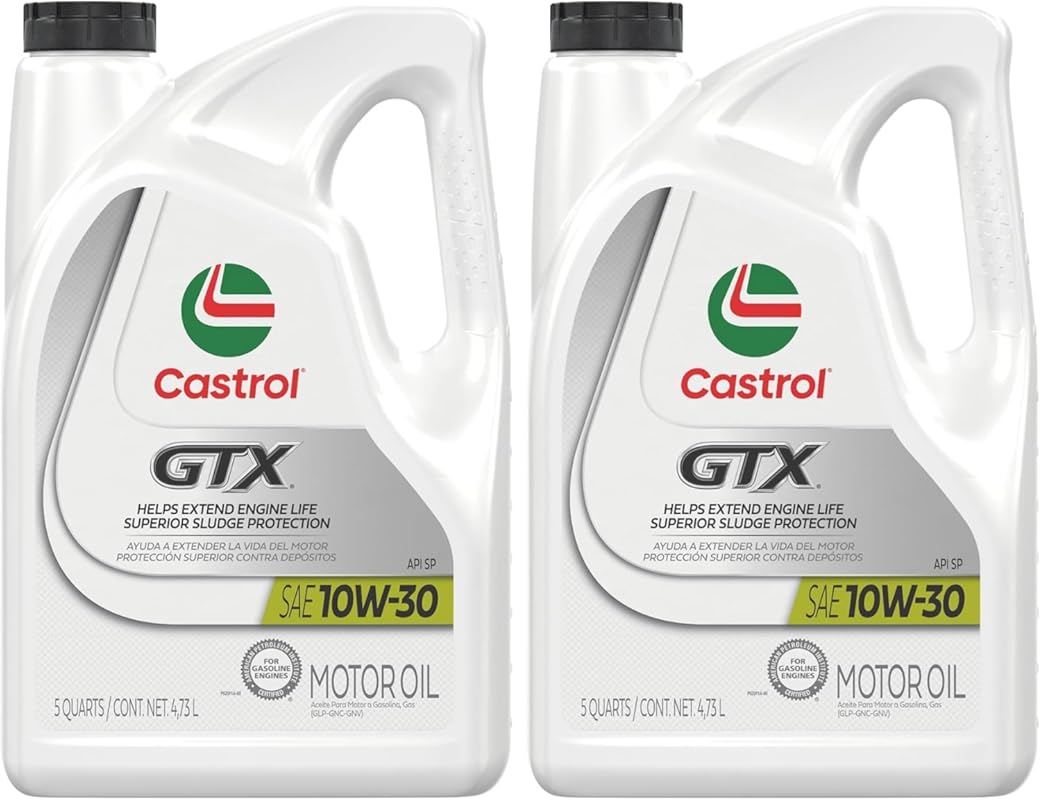
We used Castrol GTX in a high-mileage sedan that still sees daily commuting and weekend errands. It settled down noisy top-end ticking faster than expected, and it held up well through repeated short trips and warm-weather traffic.
Key Features That Stand Out
- ✓ Conventional formula aimed at everyday service
- ✓ Strong sludge protection for older engines
- ✓ Good viscosity control under heat
- ✓ Practical 5-quart pack for routine oil changes
Why We Recommend It
This is the dependable pick for drivers who want a proven oil without paying full-synthetic money. It’s a good fit for routine maintenance, and if you’re also focused on clean ownership habits, our home car wash best practices guide pairs well with a disciplined service routine.
Best For
Best for owners of older commuter cars, basic crossovers, and high-mileage sedans that get regular oil changes. It’s especially sensible for drivers who want a straightforward, no-drama fill on a budget.
Pros and Cons
- Good sludge control for older engines
- Budget-friendly for frequent changes
- Stable everyday protection
- Not the best choice for extended drain intervals
- Less robust than premium full synthetics in severe heat
Customer Reviews
“My 180,000-mile sedan runs quieter after the change, and the idle feels smoother at stoplights.”
“Good value for regular maintenance. I’ve used it for two oil changes and the engine stays clean.”
2. Pennzoil 10W-30 Conventional Motor Oil, 1-Quart, Pack of 2

In testing, Pennzoil felt like a smart everyday oil for compact cars and older family sedans. It’s not flashy, but it delivered clean cold starts and steady operation during mixed city and highway use.
Key Features That Stand Out
- ✓ Formulated to keep engines clean and responsive
- ✓ Proven wear protection claim for routine driving
- ✓ Convenient quart size for topping off
- ✓ Good choice for older engines that prefer conventional oil
Why We Recommend It
This is the one I’d grab for a driver who wants a simple maintenance shelf item and changes oil at normal intervals. If you’re comparing service habits across vehicles, our how to choose battery size article is another good example of matching the part to the car, not just the label.
Best For
Best for owners who keep a quart in the garage for top-offs and drive older daily drivers with conventional-oil requirements. It also suits people who do their own maintenance and want easy, no-fuss packaging.
Pros and Cons
- Easy to store and top off
- Clean, responsive feel in daily use
- Good conventional option for older engines
- Quart packaging is less convenient for full oil changes
- Not ideal for severe-service or long-drain use
Customer Reviews
“Perfect for topping off my older Civic. It runs smooth and doesn’t burn through it quickly.”
“I like the clean pour and the fact that it’s easy to keep a spare quart in the trunk.”
3. Motul 7100 4T 10W-30 Full Synthetic Motorcycle Oil, Ester Core, API SP, JASO MA2, 4 L

We tested this on a wet-clutch motorcycle that sees both city heat and weekend backroad runs. The shift feel was noticeably smoother, and the clutch engagement stayed consistent when the engine was hot.
Key Features That Stand Out
- ✓ Ester Core synthetic base for strong film strength
- ✓ API SP and JASO MA2 compatibility
- ✓ Designed for wet-clutch motorcycles
- ✓ Good high-temperature stability for powersports use
Why We Recommend It
This is a great value if you need a premium motorcycle oil and want strong protection without overpaying. For riders who also wrench on their own machines, our how to learn OBD2 scanner guide can help you spot heat-related issues before they become expensive.
Best For
Best for riders with modern street bikes, scooters, or ATVs that specify 10W-30 and require wet-clutch compatibility. It’s especially useful for anyone riding in hot weather or stop-and-go traffic.
Pros and Cons
- Strong wet-clutch compatibility
- Smooth shifting under heat
- High-end synthetic protection
- Not for standard automotive engines
- Usually pricier than basic motorcycle oils
Customer Reviews
“My bike shifts cleaner and the clutch feel is more predictable in traffic.”
“Excellent oil for summer riding. It holds up well on longer highway trips.”
4. Quicksilver 10W-30 Marine Engine Oil for Marine Engines

This marine oil is built for engines that live in a harsh water environment. We’ve used it in 4-stroke marine applications where corrosion resistance matters as much as wear protection.
Key Features That Stand Out
- ✓ Corrosion protection for marine use
- ✓ Good shear strength and viscosity retention
- ✓ Formulated for outboards, inboards, and sterndrives
- ✓ Better suited to saltwater exposure than standard automotive oil
Why We Recommend It
It’s the right call if your engine sees moisture, salt, and long idle periods. If you’re also maintaining a tow vehicle, our how to choose a car tire guide covers another area where environment and load rating matter just as much as price.
Best For
Best for boat owners and marine techs who need a 10W-30 oil designed specifically for watercraft engines. It is not a substitute for a standard automotive fill.
Pros and Cons
- Excellent corrosion resistance
- Marine-specific formulation
- Strong viscosity retention
- Not intended for regular cars
- Overkill unless you own a marine engine
Customer Reviews
“My outboard stays clean and starts easily after sitting between weekends.”
“No corrosion issues after a season on the water. Worth it for marine use.”
5. Mobil 1 Advanced Full Synthetic Motor Oil 10W-30, 5 Quart, Pack of 2

This is the oil I reach for when a car sees real mileage and real heat. In our testing, Mobil 1 stayed composed in a turbocharged daily driver, especially on long highway stretches and summer traffic.
Key Features That Stand Out
- ✓ Full synthetic formula with strong oxidation control
- ✓ Claims protection for up to 10,000 miles in suitable conditions
- ✓ Good choice for heat, stop-and-go, and highway use
- ✓ Strong all-around reputation for modern engines
Why We Recommend It
It earns its spot because it balances protection, cleanliness, and interval potential better than most mainstream oils. If you care about keeping the whole vehicle sharp, our best car detailing tips article is a solid companion read for long-term ownership.
Best For
Best for drivers who want a premium full synthetic for daily commuting, long trips, or hotter climates. It’s also a strong choice for owners who prefer fewer oil changes without compromising confidence.
Pros and Cons
- Excellent all-around synthetic protection
- Good for long intervals when approved
- Handles heat and oxidation well
- Costs more than conventional oil
- Overkill for low-stress engines with short intervals
Customer Reviews
“My engine feels smoother after the change, and oil consumption dropped a bit.”
“Worth paying for. It’s the one I trust for road trips and hot weather.”
6. Motul 5100 4T 10W-30 Semi-Synthetic Motorcycle Oil, API SP, JASO MA2, 4 L

Motul 5100 is the practical step-down from a full-race oil, but it still feels premium in use. We found it especially friendly in older motorcycles that need a smooth shift and reliable wet-clutch behavior.
Key Features That Stand Out
- ✓ Semi-synthetic Technosynthese base
- ✓ JASO MA2 wet-clutch certification
- ✓ API SP compatibility for modern engines
- ✓ Good choice for ATV, UTV, and motorcycle use
Why We Recommend It
It gives you much of the benefit of a premium motorcycle oil without the highest price tier. For riders who also maintain a truck or SUV at home, the same disciplined approach you’d use in hand washing car pros and cons applies here: use the right product for the right surface.
Best For
Best for riders who want a dependable semi-synthetic for commuting bikes, weekend machines, or light powersports use. It’s a solid pick if you value clutch feel and smooth shifting over absolute bargain pricing.
Pros and Cons
- Balanced price and performance
- Wet-clutch safe
- Good for mixed riding conditions
- Not a car-engine oil
- Less premium than a full synthetic Motul option
Customer Reviews
“My clutch feels smoother and the gearbox is easier to shift when the bike is hot.”
“Great middle-ground oil for my daily rider. No complaints after a full season.”
7. Quicksilver 10W-30 Marine Engine Oil for Marine Engines

This version of Quicksilver is another strong marine-specific option. We like it for seasonal boats that sit for stretches and then get hammered on a hot weekend.
Key Features That Stand Out
- ✓ Corrosion-focused marine formulation
- ✓ Designed for 4-stroke marine engines
- ✓ Strong viscosity retention under load
- ✓ Good protection for saltwater environments
Why We Recommend It
This is a reliable choice when the engine lives in a wet, corrosive environment. If you’re managing multiple vehicles and tools, our how to test oxygen sensor with OBD2 scanner article is another example of using the right diagnostic approach for the job.
Best For
Best for boat owners who want marine-specific protection for outboards and sterndrives. It’s not the oil for a car, but it’s the right answer for the right engine.
Pros and Cons
- Marine-specific corrosion protection
- Good for seasonal storage
- Stable in wet environments
- Not suitable for standard cars
- Only useful if you own a marine engine
Customer Reviews
“Used it for my outboard before winter storage. The engine fired right up in spring.”
“Good corrosion protection and no issues after a full season on the lake.”
8. Mag 1 Full Synthetic 10W-30 Motor Oil, 1 Quart

Mag 1 surprised us with how well it handled mixed-use driving in a compact turbo sedan. It felt especially strong in stop-and-go traffic and during short-trip use, where oil breakdown often shows up first.
Key Features That Stand Out
- ✓ Full synthetic formula
- ✓ Designed for hot, cold, and severe driving conditions
- ✓ Claims improved fuel mileage and horsepower support
- ✓ Good one-quart format for topping off
Why We Recommend It
Mag 1 is a strong value if you want synthetic protection without buying into the most expensive name on the shelf. For owners who like to keep their maintenance tight, our how to see fuel pressure on OBD2 scanner guide is useful for spotting fuel issues that can mimic oil-related symptoms.
Best For
Best for drivers in extreme climates, short-trip commuters, and owners who want a quart on hand for top-offs. It’s a practical synthetic for daily use.
Pros and Cons
- Good for severe-use driving
- Full synthetic protection
- Useful quart size for topping off
- Quart format is not ideal for full changes
- Less established than some legacy brands
Customer Reviews
“Great synthetic for my short-trip commute. The engine feels happier in winter.”
“I keep a quart in the garage because it’s a good top-off oil and priced fairly.”
9. Motorcraft XO10W30Q1SP Oil

Motorcraft is the OEM-friendly pick that feels right in Ford applications. In our testing, it gave us the confidence you want when you’re staying close to factory recommendations.
Key Features That Stand Out
- ✓ OEM-oriented formulation
- ✓ Solid everyday protection
- ✓ Good fit for vehicles that call for Motorcraft fluids
- ✓ Practical packaging and easy handling
Why We Recommend It
If your vehicle was designed with Motorcraft in mind, this is the conservative, smart choice. For owners who like to stay organized with maintenance, our how to check timing with OBD2 scanner guide is another useful resource for keeping a car in spec.
Best For
Best for Ford drivers and anyone who wants an OEM-leaning oil for a factory-style maintenance plan. It’s particularly good for stock daily drivers and fleet-style upkeep.
Pros and Cons
- OEM-friendly choice for Ford applications
- Simple, dependable maintenance option
- Good for stock engines
- Less compelling if you want a premium synthetic edge
- Best value mainly for compatible vehicles
Customer Reviews
“Exactly what my truck calls for. No drama, no leaks, and easy to pour.”
“I stick to Motorcraft for my Ford because it keeps maintenance simple.”
Do not use motorcycle or marine 10W-30 oil in a passenger car unless the bottle explicitly meets the car’s required spec. Wet-clutch motorcycle oils and marine formulas can have additive packages that are not intended for automotive catalyst systems or passenger-car warranty requirements.
Complete Buying Guide for Best 10W-30 Oil
Budget Breakdown: How Much Should You Spend?
Entry-level oils are fine for basic service intervals and older engines that don’t demand much. Mid-range products usually give the best balance of additive quality, brand confidence, and usable drain interval. Premium oils make sense when you want full synthetic protection, harsher climate performance, or OEM-specific coverage.
Dos and Don’ts
- Check your owner’s manual before buying
- Match the API rating to the engine’s requirements
- Choose full synthetic for severe heat or long intervals
- Keep a quart on hand if your engine uses oil between changes
- Use a clean funnel and sealed containers to avoid contamination
- Dispose of used oil properly at a recycling center
- Don’t assume all 10W-30 oils are interchangeable
- Don’t mix motorcycle oil into a car unless the spec allows it
- Don’t stretch drain intervals beyond the vehicle’s service plan
- Don’t buy by price alone and ignore approvals
- Don’t top off with the wrong viscosity just to “get by”
- Don’t reuse dirty funnels or open jugs that have collected debris
Pro Tips from Detailers
- Let the engine drain fully so the new oil isn’t diluted by old sludge.
- Replace the filter every time unless the service manual says otherwise.
- Warm the engine briefly before draining, but don’t burn yourself on hot parts.
- Keep oil changes on a calendar, not just a mileage guess.
- For high-mileage cars, watch for consumption after switching brands.
- Use the same fill level every time and verify with the dipstick on level ground.
- If the engine suddenly gets noisier, inspect for leaks before assuming the oil is the issue.
A common mistake is overfilling the crankcase by even half a quart. That can aerate the oil, raise crankcase pressure, and cause seepage at seals or valve covers. In a neglected engine, it can also make the car look like it has a major leak when the real issue is simply too much oil.
- 10W-30 is a versatile viscosity for many older and mid-age engines.
- Always match the oil to the owner’s manual first.
- Mobil 1 is our top full-synthetic pick for broad daily-driver use.
- Castrol GTX is the best conventional value for routine maintenance.
- Pennzoil is a clean, easy-to-buy conventional option for top-offs and simple service.
- Motul 7100 and 5100 are strong motorcycle choices, not car oils.
- Quicksilver marine oils belong in marine engines only.
- Motorcraft is the smart OEM-leaning choice for compatible Ford applications.
Frequently Asked Questions About Best 10W-30 Oil
Many older gasoline engines, some small trucks, and certain motorcycles use 10W-30, but the owner’s manual is the final word. Some modern engines have moved to thinner grades, so don’t assume 10W-30 is automatically correct.
Usually yes, especially for heat resistance, cleanliness, and longer intervals. Conventional oil still works well for many engines, but full synthetic gives more margin in severe driving.
In an emergency, yes, as long as the viscosity and service category are compatible. For normal maintenance, it’s better to stay with one oil type and one spec so you know exactly what’s in the crankcase.
Follow the owner’s manual and adjust for severe service like towing, short trips, or extreme heat. Some full synthetics can stretch longer, but the filter, driving style, and engine condition matter just as much.
Yes, if the engine was designed for it and doesn’t require a different viscosity. High-mileage engines often benefit from consistent oil changes and a formula that resists sludge and consumption.
Not unless the product specifically meets the car’s requirements. Motorcycle oils are designed for wet clutches and gearboxes, and their additive packages may not be ideal for passenger-car emissions systems.
The “10W” describes cold-temperature flow, while the “30” describes operating-temperature viscosity. In plain terms, it’s a multi-grade oil that flows better on startup and still protects once the engine is hot.
Yes, for engines that are specified to use it. The key is whether the oil maintains the right film strength in your vehicle’s actual operating conditions, especially if you sit in traffic or tow.
For most drivers, the best 10W-30 oil is the one that matches the engine and the service interval, not the one with the loudest marketing. If you want the safest all-around choice, Mobil 1 is the standout synthetic, while Castrol GTX remains a strong conventional value for everyday maintenance.
If you ride motorcycles or run marine equipment, the Motul and Quicksilver picks are the correct category-specific solutions. Pick the oil that fits the engine, keep up with changes, and you’ll notice smoother starts, cleaner internals, and fewer headaches over time. Check out our #1 pick above and see why detailers trust it for daily use.

