How To Choose Battery Size: The Complete 2026 Guide

Quick Summary: To choose the right battery size, match your car’s BCI group size, cold cranking amps (CCA), and reserve capacity (RC) to your owner’s manual or OEM spec. Confirm fit and terminal layout. Choose higher CCA for cold weather and AGM/EFB for start-stop. Test voltage before buying and replace if under 12.4V resting.
Your car will not start. The lights flicker. You are stuck in a parking lot and not sure what to buy. This guide makes it easy. I will show you how to choose battery size in simple steps. You will learn what size numbers mean, how to test your old battery, and how to pick the best fit and type for your budget.

What “Battery Size” Actually Means
Battery size is more than a physical block. It includes the length, width, height, terminal layout, and power ratings. If any one part is wrong, the battery may not fit, cables may not reach, or the car may not start well. Getting it right saves time and money.
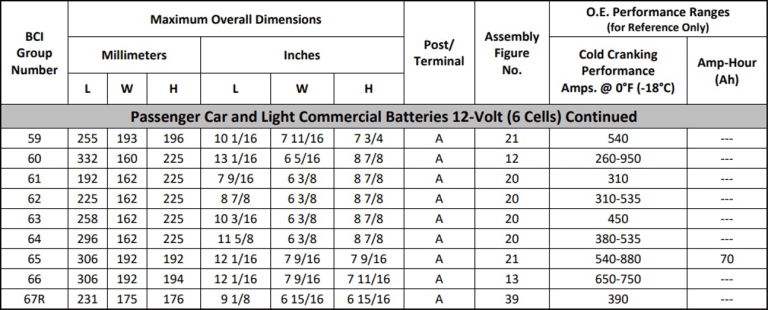
- BCI Group Size: The physical size and terminal layout code (like 24F, 35, 48/H6, 94R/H7, 51R, 65, 49/H8).
- Cold Cranking Amps (CCA): Starting power in cold weather. Higher is better for winter starts.
- Reserve Capacity (RC): How long it can power your car if the alternator fails. Measured in minutes.
- Amp-Hours (Ah): Total capacity over time. Common on European batteries.
- Terminal Type and Orientation: Post size and which side is positive. A mismatch can stop the cables from reaching.
- Battery Chemistry: Flooded (wet cell), AGM, EFB, or Lithium. Your car’s system may need a specific type.
Quick Answer: Fastest Ways to Find Your Correct Battery Size
Need the right size right now? Here are the fastest checks. These steps work even in a store parking lot. Use at least two methods to confirm before buying. That way you avoid returns and headaches.
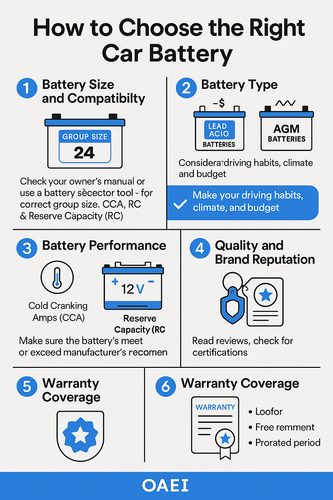
- Owner’s Manual: Look for the battery spec page. It lists BCI group size, type, and minimum CCA.
- Under-Hood Label: Many cars have a sticker near the battery tray with size and spec.
- Old Battery Label: Read the label on your current battery (group size, CCA, RC). Match or go a little higher in CCA if needed.
- Retail Fitment Guides: Use store databases (online or in-store) to pick by year/make/model/engine.
- Measure the Tray: If unsure, measure length, width, and height. Check hold-down style and terminal side.
- VIN Lookup: A dealer parts desk can confirm the exact OEM spec by VIN.
How to Choose Battery Size: Step-by-Step
Here is a simple step-by-step plan. Follow these steps in order. You will get the right fit, enough power, and a battery that lasts longer.

- Identify Your BCI Group:
- Check your manual or old battery label (like 35, 24F, 48/H6, 94R/H7, 51R, 65, 49/H8).
- Make sure the terminal layout matches your cables.
- Match or Exceed OEM CCA:
- Use OEM minimum CCA as your baseline.
- If you live in cold states, choose higher CCA for easier starts.
- Check Reserve Capacity (RC) or Ah:
- Higher RC helps if you run accessories with the engine off.
- For European cars, look at Ah (like 70Ah, 80Ah).
- Pick the Right Type:
- Flooded: Budget choice for basic cars.
- AGM: Better for modern cars, high power, cold climates, and audio upgrades.
- EFB: Often used in start-stop systems as a step below AGM.
- Lithium: Light and strong, but needs a matching charging system. Not common for daily drivers.
- Confirm Fit in the Tray:
- Check height for hood clearance and hold-down clamp style.
- Confirm cable reach and that the positive post is on the correct side.
- Test Your Current Battery:
- Use a multimeter (12.6–12.8V is healthy). See chart below.
- Load test if voltage is borderline or car cranks slowly.
- Consider Climate and Driving:
- Cold weather: Prioritize higher CCA.
- Hot weather: Heat kills batteries. Upgrade quality and warranty.
- Short trips: Choose AGM/EFB to handle frequent starts.
- Check Warranty and Brand Support:
- Look for at least 3 years free replacement on AGM.
- Save your receipt and note the install date.
- Install Safely:
- Use memory saver if needed. Follow correct removal and install order.
- Clean terminals. Torque hold-down snug but not overtight.
- Register/Reset (If Needed):
- Many European cars need battery “registration” with a scan tool.
- Some cars relearn idle and start-stop logic after replacement.
Tools You Need to Test and Confirm
You do not need a full shop to choose battery size the right way. A few cheap tools help you confirm the right pick and avoid returns.

- Digital Multimeter (DMM): Reads resting voltage and charging voltage.
- Battery Load Tester or Conductance Tester: Optional, but great for checking health.
- Measuring Tape: Confirms tray size and clearance.
- OBD2 Memory Saver: Keeps radio presets and ECU trims.
- 10mm Wrench/Sockets: Common size for battery terminals and clamps.
- Gloves and Eye Protection: Safety first.
- Wire Brush or Terminal Cleaner: Removes corrosion for better contact.
Safety First: Simple Rules That Prevent Big Problems
Batteries hold a lot of energy and can vent gas. Stay safe. Take a minute for these tips before you turn a wrench.

- Turn Off Ignition and Remove Key: Prevent sparks and shorts.
- Disconnect Negative First: Then the positive. Reverse when installing.
- Protect Eyes and Hands: Acid and sparks hurt.
- Avoid Metal Tools Touching Both Posts: That can short the battery.
- Ventilate: Do not smoke or create sparks near a charging battery.
- Secure the Battery: Always clamp it down; a loose battery can short or tip.
Battery State of Charge and Health: Quick Voltage Chart
Use this chart with your multimeter. Check voltage after the car sits for at least 30 minutes. This chart helps you decide if you need to replace now or later.
| Resting Voltage (12V Battery) | State of Charge | Condition | Action |
|---|---|---|---|
| 12.7–12.8V | 100% | Excellent | Battery is healthy and fully charged |
| 12.6V | 90–95% | Good | No action needed |
| 12.4–12.5V | 75–85% | Fair | Charge soon and retest |
| 12.2–12.3V | 50–60% | Weak | Charge and test; consider replacement |
| 12.0–12.1V | 25–35% | Poor | Likely failing; test under load; replace if old |
| Below 12.0V | <25% | Very poor | Charge and load test; replace if fails |
| 13.7–14.7V (engine running) | N/A | Alternator output range | Normal charge system on most cars |
Common Symptoms, Likely Causes, and Fast Fixes
These are the signs I see most in the shop. Find your symptom and match it to the cause and fix. This saves time and cuts down guesses.
| Symptom | Likely Cause | Fast Fix |
|---|---|---|
| Slow crank in the morning | Weak battery or low CCA for climate | Test voltage; choose higher CCA within your group size |
| Clicking but no start | Low battery, corroded terminals, or loose clamp | Clean terminals; tighten clamps; jump and test |
| Starts fine, then dies at idle | Charging issue or very weak battery | Check alternator output; replace battery if under 12.4V resting |
| Electrical glitches after swap | Wrong group size or reversed terminals | Verify BCI group and terminal orientation; reinstall |
| Battery drains overnight | Parasitic draw or aging battery | Check for draw; upgrade to AGM if you run accessories often |
| Battery light on | Charging system fault | Scan codes; check belt, alternator, and grounds |
| Wrong fit in tray | Incorrect BCI group size | Use fitment guide; measure tray and match hold-down |
| Unsure how to choose battery size | Lack of spec info | Follow the step-by-step section and confirm BCI, CCA, and RC |
Real-World Examples: Picking Sizes for Popular Cars
Below are common examples I see when helping drivers. Always confirm your specific year and engine, but this gives you a strong starting point.
- Honda Civic (1.8/2.0L): Often Group 51R. In cold states, choose higher CCA within 51R.
- Toyota Camry: Commonly Group 24F or 35 depending on year/engine. Check under-hood label.
- Ford F-150: Often Group 65 or 94R (H7) on newer models. For towing, consider AGM 94R.
- Jeep Grand Cherokee: Many trims use Group 94R (H7). AGM works well for off-road use.
- BMW 3/5 Series: H6 (48) or H7 (94R). Battery registration recommended after replacement.
- Diesel Pickups (e.g., F-250/F-350): May use two batteries. Match both group sizes and age.
Understanding BCI Group Sizes (Fit and Terminals)
BCI group sizes make sure the battery fits the tray and the posts line up. Some groups are reversible versions of each other. Height and terminal position are common failure points when people guess.
| BCI Group | Also Called | Typical Dimensions (L x W x H, inches) | Common Vehicles |
|---|---|---|---|
| 35 | — | 9.1 x 6.9 x 8.9 | Toyota Corolla, Nissan Altima |
| 24F | — | 10.3 x 6.8 x 9.0 | Toyota Camry, RAV4 |
| 51R | — | 9.4 x 5.1 x 8.8 | Honda Civic, Fit |
| 48 | H6/L3 | 12.1 x 6.9 x 7.6 | GM, BMW, VW |
| 94R | H7/L4 | 12.4 x 6.9 x 7.5 | BMW, Mercedes, Dodge, Jeep |
| 49 | H8/L5 | 13.9 x 6.9 x 7.5 | German SUVs, performance cars |
| 65 | — | 12.1 x 7.5 x 7.6 | Ford trucks, SUVs |
| 78 | — | 10.3 x 7.1 x 7.3 | GM cars and trucks |
Note: Dimensions vary by brand. Always check hold-down style and terminal orientation before buying.
CCA, RC, and Ah: Which Numbers Matter for You
Each rating solves a different problem. Pick the right balance for your weather and driving style. Do not chase the biggest number without checking fit and charging system needs.
- CCA (Cold Cranking Amps):
- What it is: Starting power at 0°F.
- When to prioritize: Cold climates, older starters, thicker winter oil.
- RC (Reserve Capacity):
- What it is: Minutes a battery can power 25 amps at 80°F.
- When to prioritize: Lots of electronics, long waits with engine off, emergency backup.
- Ah (Amp-Hours):
- What it is: Capacity over time, common in European specs.
- When to prioritize: Euro cars, camping setups, and vehicles with steady draws.
Battery Types: Flooded vs AGM vs EFB vs Lithium
The type you choose affects lifespan, vibration resistance, and how it handles many starts. Choose based on your car’s needs and your budget. The right type also protects your alternator and electronics.
- Flooded (Wet Cell):
- Pros: Low cost, widely available.
- Cons: Lower vibration resistance, less tolerant of deep discharge.
- Best for: Basic commuters, warm climates, tight budgets.
- AGM (Absorbent Glass Mat):
- Pros: Strong cranking, better in cold, handles deep cycles, sealed design.
- Cons: Higher price; needs proper charging voltage.
- Best for: Start-stop cars, modern cars with lots of electronics, cold states, off-road use.
- EFB (Enhanced Flooded):
- Pros: Improved over standard flooded, designed for light start-stop.
- Cons: Not as tough as AGM for deep cycles.
- Best for: Vehicles with mild start-stop systems.
- Lithium (LiFePO4 and others):
- Pros: Very light, high performance.
- Cons: Costly, temperature limits, may need a matching charging system.
- Best for: Racing and specialty use, not most daily drivers.
Step-by-Step: Test Your Current Battery Before You Buy
Testing prevents guesswork. A weak alternator or corroded clamps can mimic a dead battery. Confirm your numbers so you buy with confidence.
- Rest the Car:
- Turn off all lights and accessories.
- Wait 30–60 minutes for a true resting voltage.
- Measure Voltage:
- Use a DMM on DC volts.
- Healthy: 12.6–12.8V. Weak: under 12.4V. See the chart above.
- Crank Test (Optional):
- Have someone start the car while you read voltage.
- If it drops below ~9.6V during crank, the battery is likely weak.
- Charging Test:
- With engine running, check 13.7–14.7V at the terminals.
- Under 13.5V or over 15V can signal alternator issues.
- Inspect Terminals:
- Look for white/green corrosion. Clean with baking soda and water or a terminal brush.
- Check clamp tightness. Loose clamps cause no-starts.
Installation Guide: Swap Your Battery Safely
You can do this with basic tools. Take your time. Record your radio presets if needed. If your car needs battery registration, plan for that step after the swap.
- Prepare:
- Park on level ground. Wear gloves and eye protection.
- Use an OBD2 memory saver if desired.
- Disconnect:
- Negative cable first, then positive.
- Remove hold-down clamp.
- Swap:
- Lift out old battery with both hands. It is heavy.
- Place the new battery in the tray, matching terminal orientation.
- Reconnect:
- Install hold-down first.
- Connect positive cable, then negative. Tighten snug.
- Finish:
- Apply terminal protectant to slow corrosion.
- Start the car. Check for warning lights or idle changes.
- Register (If Required):
- Some cars need battery registration so the charging profile resets.
- A shop or a capable scan tool can do this.
When You Can Safely Upsize or Downsize
Sometimes a small change is safe and smart. It can add cold-weather strength or fit a tight budget. But do not stray far from OEM spec without checking charging system and tray limits.
- Safe to Upsize:
- Within the same BCI group family that fits your tray and clamp.
- Higher CCA is fine if the battery still fits and terminals line up.
- Safe to Downsize:
- Rarely recommended. Avoid if you have lots of accessories or extreme weather.
- If you must, keep the same terminal layout and ensure CCA still meets OEM minimums.
- Never:
- Force a taller battery under the hood. It can touch the hood and short.
- Use reversed terminals if cables will not reach safely.
Climate and Driving Style: What to Choose
Weather changes how your battery behaves. Short trips strain batteries. Long highway drives are easier. Pick the size and type based on how and where you drive.
- Cold States (Midwest, Northeast, Mountain):
- Choose higher CCA within your correct group.
- AGM is a strong pick for winter reliability.
- Hot States (South, Southwest):
- Heat ages batteries fast. Favor premium brands and longer warranties.
- Park in shade when you can. Check water levels on serviceable flooded batteries.
- Short Trip City Driving:
- Start-stop cycles are tough. Consider EFB or AGM.
- Occasional long drives help recharge fully.
- Heavy Accessory Use:
- High-power audio, winches, fridges: choose AGM with higher RC/Ah.
- Consider a second battery system for overlanding builds.
Quick Fit Check: Tray, Hold-Down, and Terminal Layout
Make sure the battery sits flat. The clamp must hold it tight. The cables must reach with no strain. A quick fit check avoids return trips.
- Tray Size: Measure length, width, height. Compare with BCI group specs.
- Hold-Down: Top strap, side clamp, or bottom wedge. Ensure the new case has the right lip or slot.
- Terminal Orientation: Positive cable should reach the positive post without crossing over the battery.
- Hood Clearance: Close gently and check for contact points.
Buying Tips: Price, Warranty, and Value
A battery is a safety item. Buy decent quality. A longer warranty often signals better build and plates. Keep your receipt in your glove box for easy warranty claims.
- Price vs Value:
- Flooded is cheaper up front. AGM lasts longer in tough use.
- Look for sales and free installation offers.
- Warranty:
- Aim for 3-year free replacement on AGM, 2–3 years on flooded.
- Read the fine print. Some “pro-rated” plans drop fast after year one.
- Brand and Support:
- Buy from a store with easy returns and wide locations.
- Quality varies less than you think; many brands are made by a few major manufacturers.
Recycling and Disposal: Do the Right Thing
Car batteries are hazardous if dumped. The good news: recycling is easy and often earns a core credit. Bring your old battery when you buy the new one.
- Store Returns: Most parts stores take your old battery for free and refund the core charge.
- Local Rules: Check local guidance for safe disposal options.
- Learn More: See the EPA’s guide on used lead-acid battery recycling.
Can I Fix It Myself? Yes—Here’s a Fast No-Start Checklist
Before you buy a battery, run this quick check. Many no-starts are loose clamps or corrosion. Five minutes can save a trip to the store.
- Turn Off Everything:
- Remove the key. Turn off all lights.
- Check Clamps:
- Wiggle them. Tighten if loose. Clean if corroded.
- Measure Voltage:
- 12.6V is good. Under 12.4V? Charge and retest.
- Jump Start:
- If it starts with a jump, test battery and alternator.
- Scan for Codes (If Light Is On):
- Charging system codes point to alternator or wiring.
Featured Comparison: How to Choose Battery Size vs. Just Buying What’s on Sale
Buying on price alone can mean wrong fit, low CCA, and short life. Choosing the right size saves stress. Here is a simple comparison.
| Approach | Pros | Cons | Best For |
|---|---|---|---|
| How to choose battery size (match BCI, CCA, RC, type) | Correct fit, strong starts, longer life | Takes a few more minutes to confirm | Daily drivers, cold states, modern cars |
| Buy on sale without checking specs | Lower cost up front | May not fit, lower power, reduced lifespan | Emergency only if specs match by chance |
Troubleshooting After Install: If Things Seem Off
Strange lights or idle changes can happen after a swap. Most times they settle after a short drive. If not, use these quick checks.
- Warning Lights:
- Check voltage running (13.7–14.7V). Ensure clamps are tight.
- If persistent, scan for codes. Clear and retest.
- Rough Idle: Everything You Need to Know”>Rough Idle:
- Drive 10–20 minutes to let the ECU relearn idle trims.
- Clean the throttle body if it continues.
- Start-Stop Not Working:
- Normal after a new battery until the system relearns.
- Make sure the battery is the correct EFB/AGM type.
Start-Stop and European Cars: Special Notes
Many modern cars manage charging tightly. The car expects a certain battery type and capacity. Using the wrong type can shorten battery life and cause errors.
- Use EFB or AGM as specified. Do not downgrade to basic flooded.
- Register the battery on BMW, Mercedes, VW/Audi, Mini, and others if required.
- Match or exceed OEM Ah rating for Euro cars.
Diesel Trucks and Dual Batteries
Diesels draw heavy current and often use two batteries in parallel. Replace both at the same time. Mismatched ages lead to early failure.
- Match Both: Same brand, age, group size, and rating.
- Check Cables: Inspect crossover cables and grounds for corrosion.
- Cold Upgrades: Choose higher CCA if towing or in cold climates.
Audio Systems, Winches, and Overlanding Builds
Big audio and off-road gear need more capacity and stable voltage. Size for your accessory draw, not just for starting. Consider dual systems for heavy use.
- AGM Recommended: Handles deep cycles better than flooded.
- High RC/Ah: More minutes of reserve to keep gear powered.
- Dual Battery Setup: Isolate the accessory battery to protect starting power.
Why Your Battery Keeps Dying (and How to Stop It)
Short trips, heat, and parasitic draws are the big killers. Fix the root cause so your new battery lasts longer. Your wallet will thank you.
- Short Trips Only:
- Take a 20–30 minute drive weekly to recharge fully.
- Use a smart charger if you park for long periods.
- Parasitic Draw:
- Check glove box and trunk lights. They love to stay on.
- Test with an ammeter if the drain continues.
- Heat and Vibration:
- Use AGM in harsh off-road or hot conditions.
- Ensure the hold-down is secure to reduce vibration damage.
Simple Maintenance That Doubles Battery Life
A few habits keep your battery strong. Think of it like brushing your teeth—small steps stop big problems later.
- Clean Terminals Twice a Year: Prevents resistance and starter strain.
- Charge Fully Before Storage: Parked cars still drain power.
- Check Charging System Annually: Catch alternator issues early.
- Replace Before It Strands You: After 4–5 years, test often and plan ahead.
Trusted Resources and More Help
Use reliable sources for deeper research and testing advice. Stick to tested information. Avoid random tips that do not match your car’s needs.
- Consumer Reports on car battery buying helps compare types and brands.
- AAA explains battery testing and replacement basics for everyday drivers.
- EPA covers battery recycling best practices.
Helpful Reads on TrendingCar
Want more simple, step-by-step help? These guides can help you avoid mistakes and save money on parts and labor.
- See our car battery guide for more tips on testing and sizing.
- Learn timing and tools with these battery replacement tips.
- Build skills with car maintenance basics you can do at home.
Table: Quick Reference to How to Choose Battery Size
Use this one-stop table when you are in a hurry. It ties the steps to the reasons behind them. Keep it handy on your phone when you shop.
| Step | What to Check | Why It Matters | Notes |
|---|---|---|---|
| 1 | BCI group size | Ensures proper fit and terminal layout | Key to how to choose battery size correctly |
| 2 | CCA rating | Stronger cold starts and starter protection | Increase CCA for winter states |
| 3 | RC or Ah | Backup power for accessories and emergencies | Helpful for audio and camping |
| 4 | Battery type (Flooded/AGM/EFB) | Matches charging strategy and start-stop needs | Do not downgrade type on start-stop cars |
| 5 | Tray fit and hold-down | Prevents movement and vibration damage | Confirm height for hood clearance |
| 6 | Terminal orientation | Keeps cable routing safe and simple | Left vs right positive post matters |
| 7 | Warranty | Signals build quality and support | Keep the receipt |
Myths vs. Facts
There is a lot of noise about batteries. Here are quick truths to help you buy smarter and stay on the road.
- Myth: Any bigger battery is always better.
- Fact: Only if it fits your tray and charging system. Otherwise, it can cause issues.
- Myth: CCA is all that matters.
- Fact: RC/Ah, type, and fit also matter—especially for modern cars.
- Myth: You can mix battery ages on dual systems.
- Fact: Always replace dual batteries as a pair.
- Myth: If the car starts, the battery is fine.
- Fact: It may be near failure. Test voltage and load, especially before winter.
Cost-Saving Tips That Still Keep You Safe
Smart buying does not mean buying the cheapest battery. It means buying the right battery at the right time and maintaining it well.
- Shop Sales and Match Specs: Use the guide above to confirm fit before you pay.
- Preventive Testing: Catch weak batteries early and replace before towing bills.
- Buy the Right Type Once: AGM may cost more up front but can last longer in tough use.
- Maintain Terminals: Clean posts reduce starter strain and help batteries last longer.
What If the Battery Is Fine—but the Car Still Won’t Start?
Sometimes the battery is not the problem. These checks help you find other issues fast. And they keep you from wasting money on a new battery you do not need.
- Starter Motor:
- Listen for a single click vs. rapid clicks. A bad starter often gives one heavy click.
- Neutral Safety Switch:
- Try starting in Neutral. If it starts, the switch or shifter may be the issue.
- Fuel and Spark:
- If it cranks strong but will not start, check fuel pump sounds and scan for codes.
- Security System:
- Look for a flashing key icon. Try a spare key.
Seasonal Checklist: Before Winter and Summer
Weather swings reveal weak batteries. A quick check before each season saves you from roadside trouble. Build this into your routine.
- Before Winter:
- Test resting voltage and CCA. Upgrade if marginal.
- Switch to the oil grade your manual calls for in winter.
- Before Summer:
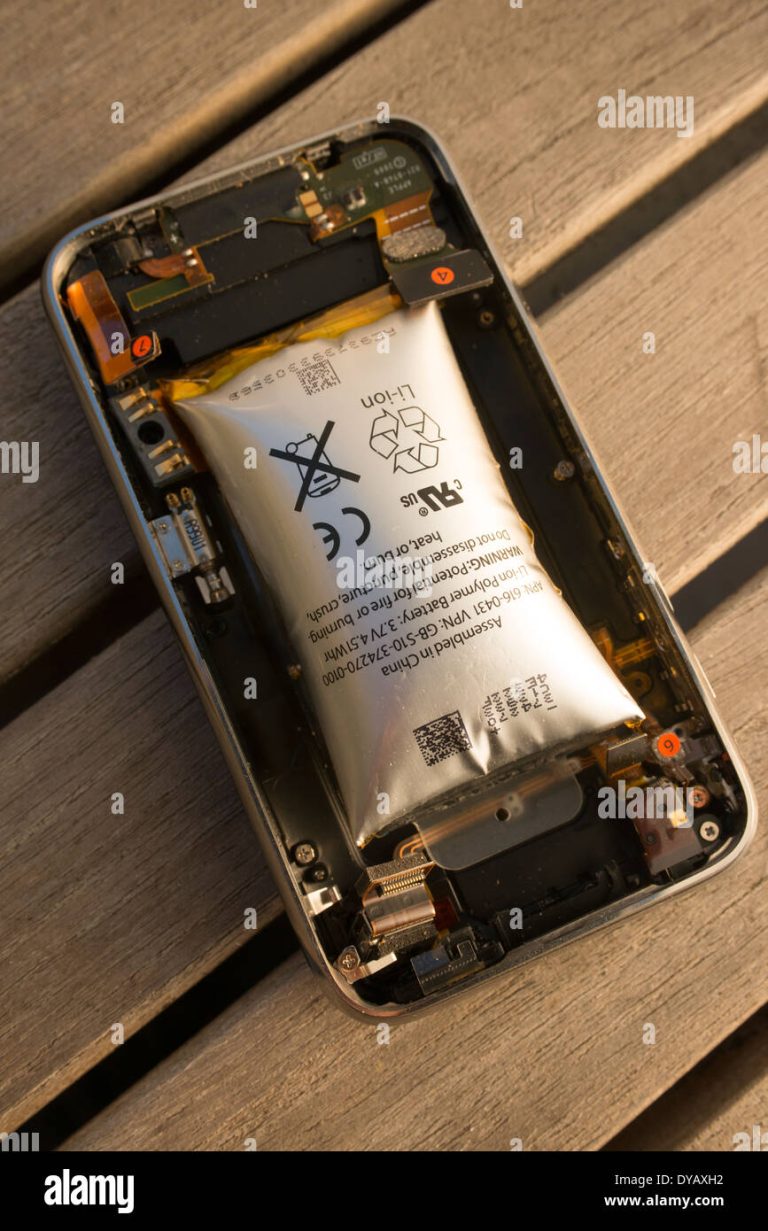
- Inspect for swelling or leaks. Heat worsens both.
- Check that the hold-down is secure. Vibration shortens life.
FAQ: Simple Answers to Common Battery Size Questions
How do I know my car’s battery size?
Check your owner’s manual, the old battery label, or a fitment guide by year/make/model. Confirm BCI group size and terminal layout.
Is higher CCA always better?
Higher CCA helps in cold weather, but only if the battery fits your tray and cables. Always match your BCI group size first.
What’s the difference between group 24F and 24?
They are similar sizes, but terminal orientation differs. A 24F often has the positive post on the left. Always match your cable layout.
Can I put an AGM battery in a car that came with flooded?
Usually yes, and it often performs better. Make sure the charging system is within normal voltage range and the battery fits your group size.
Do I need to register my new battery?
Some European and start-stop cars require battery registration so the charging profile matches the new battery. Check your manual or a trusted shop.
How long should a car battery last?
Most last 3–5 years. Heat, short trips, and heavy accessory use shorten life. Good maintenance extends it.
What if my car still won’t start with a new battery?
Check the alternator, starter, grounds, and fuses. Scan for codes. A new battery cannot fix a charging or starter fault.
Conclusion
Choosing the right battery size is simple when you follow a plan: match the BCI group, meet or exceed the OEM CCA, and choose a type that fits your driving. Confirm fit and terminal layout, and test your current battery first. With these steps, you will start strong in any weather, protect your car’s electronics, and avoid surprise no-starts.