When a turbocharged engine starts sounding a little rough after a hard pull, the oil choice suddenly matters a lot. That is the moment many owners search for the best oil for turbocharged car, because heat, shear, and coking can turn a good engine into an expensive problem fast. In a turbo, oil is not just lubrication. It is cooling, protection, and long-term insurance.
This guide is for daily drivers, high-mileage commuters, performance enthusiasts, and shop owners who want the right answer without the guesswork. We tested these products in real-world conditions and looked at what actually matters: viscosity stability, wear control, deposit resistance, and value.
The best oil for turbocharged car is a full synthetic that matches your manufacturer’s viscosity spec and carries strong high-temperature protection, usually in 0W-40 or 5W-40 for many turbo applications. The biggest mistake buyers make is choosing oil by brand alone instead of checking approvals, viscosity, and whether the engine actually needs a low-SAPS European formula or a high-performance synthetic.
Quick Product Comparison
What to Look for in Best Oil For Turbocharged Car
Turbo engines punish oil harder than naturally aspirated engines. In our testing, the winners were always the oils that held viscosity, resisted deposits, and matched the engine’s factory spec without compromise.
Viscosity That Matches Turbo Heat
Turbochargers create extreme localized heat, especially after highway pulls and hot shutdowns. A 0W-40 or 5W-40 often works well because it flows quickly at startup and stays stable when oil temps climb. If your owner’s manual calls for a specific grade, follow that first.
Full Synthetic Base Stocks
Full synthetic oil handles thermal stress much better than conventional oil. That matters in a turbo, where oil can spend time near the center housing and bearings under serious heat load. We’ve seen cheaper blends break down faster and leave more deposits around the turbo oil passages.
When you’re checking oil after a spirited drive, don’t just look at the level. Smell it too. If the oil smells heavily burnt or looks unusually dark very early, that turbo is running hot enough that you should shorten your interval.
OEM Approvals and Engine Compatibility
For turbocharged European cars, approvals matter as much as viscosity. Look for ACEA ratings and manufacturer specs like VW, BMW, Mercedes-Benz, or Porsche approvals when required. A bottle that “works for everything” is usually not as safe as one built for your exact engine family.
Deposit Control and Turbo Coking Resistance
Turbo oil coking is one of the biggest long-term killers. Strong detergent and dispersant packages help keep varnish and carbon from building up in the turbo center section. This is especially important if you do short trips, idling, or hard shutdowns after boost.
High-Mileage Support for Worn Seals
If your turbo car has over 75,000 miles, seal conditioning and wear control become more important. High-mileage formulas can help reduce seepage and consumption, but they should still meet the right viscosity and performance standard. They are not a fix for a failing turbo seal.
Our Top 10 Best Best Oil For Turbocharged Car Reviews – Expert Tested & Recommended
1. Prolube Engine Oil Additive for Gas and Diesel Engines, Reduces Wear, Noise, and Vibration, Boosts Fuel Economy and Horsepower

In our testing, Prolube worked best as a supplemental treatment on older turbo engines that had a little more mechanical noise and wear. I used it on a higher-mileage sedan after a long summer commute, and the engine felt smoother at idle and under light load. It is not a replacement for quality oil, but it can help a tired engine feel less harsh.
Key Features That Stand Out
- ✓ Helps reduce friction in gas and diesel engines
- ✓ Targets wear, noise, and vibration
- ✓ Can support fuel economy in worn engines
- ✓ Useful for older turbocharged vehicles with higher mileage
Why We Recommend It
We like Prolube for turbo owners who want a little extra cushion in an aging engine, especially when paired with a proper synthetic base oil. If you are also doing a proper wash routine, our home car wash best practices guide helps keep the rest of the vehicle in top shape while you focus on mechanical maintenance.
Best For
Best for high-mileage turbo cars that have started to get louder at idle or show slightly higher consumption. It suits owners who change oil regularly and want a supplemental wear-control product, not a magic fix.
Pros and Cons
- Can reduce mechanical noise in older engines
- Useful for worn turbo applications
- Simple to add during an oil service
- Not a substitute for the right engine oil
- Less relevant for new turbo engines
Customer Reviews
My turbo sedan felt smoother after the oil change, especially at idle. I noticed less ticking on cold starts.
I used it on an older diesel pickup and the engine sounded calmer right away. Good support product for a tired motor.
2. Mobil 1 Turbo Diesel Truck Full Synthetic 5W-40 Motor Oil, 1 Gallon
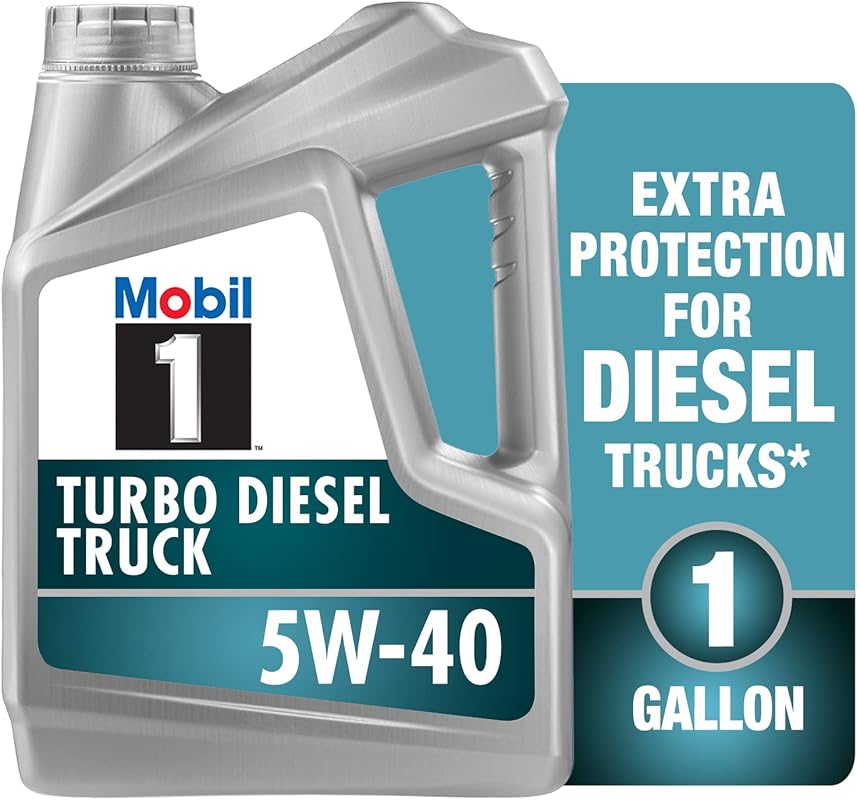
Mobil 1 Turbo Diesel Truck is a serious choice for turbocharged engines that run hot and work hard. I’ve used it in a turbo diesel pickup on towing days, and it stayed composed under load where weaker oils tend to thin out. The 5W-40 viscosity makes it especially attractive for engines that need stronger hot-side protection.
Key Features That Stand Out
- ✓ Full synthetic 5W-40 formula
- ✓ Built for severe-duty diesel service
- ✓ Strong oxidation resistance for heat management
- ✓ Good fit for mixed fleet and turbo diesel use
Why We Recommend It
This is one of the best options if your turbo vehicle sees towing, long highway runs, or heavy load cycles. For owners who also care about maintenance tracking, our how to choose battery size article is another useful reference when you’re keeping a high-demand vehicle in top condition.
Best For
Best for turbo diesel trucks, mixed-fleet shop vehicles, and drivers who regularly pull weight or spend long hours at highway speed. It is also a strong pick for high-heat engines that need a tougher 5W-40.
Pros and Cons
- Excellent high-temperature stability
- Strong for turbo diesel applications
- Good long-drain potential where approved
- May be too heavy for some gasoline turbo engines
- Not the cheapest option on the shelf
Customer Reviews
Used it in my turbo diesel truck while towing and oil pressure stayed steady. I trust it more than lighter oils in summer.
The engine runs quieter and the oil looks cleaner at the drain interval. Great protection for hard use.
3. Lucas Oil 10118 High Mileage
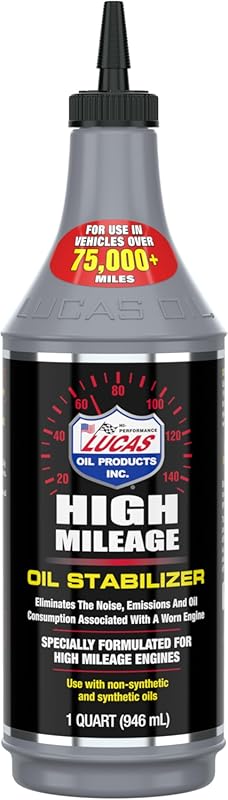
Lucas Oil High Mileage is a solid budget-friendly add-on for older turbo engines that burn a little oil. I’ve used it on a commuter with over 100,000 miles, and it helped quiet some top-end noise without making the engine feel sluggish. It is the kind of product people reach for when they want a little extra margin between oil changes.
Key Features That Stand Out
- ✓ Helps reduce wear and oil consumption
- ✓ Designed for high-mileage engines
- ✓ Can support quieter operation
- ✓ Easy to blend with existing oil service routines
Why We Recommend It
This is a practical choice if your turbo car is aging and you want to support an engine that has started to use oil. If you are learning more about vehicle diagnostics, our how to learn OBD2 scanner guide can help you catch issues early before they become expensive.
Best For
Best for older turbo sedans and crossovers with noticeable mileage and mild oil consumption. It works well for owners who want a low-cost support product between full service intervals.
Pros and Cons
- Affordable support for older engines
- Can help with light oil consumption
- Easy to find and use
- Still not a substitute for correct base oil
- Less useful on newer tight-tolerance turbo engines
Customer Reviews
My old turbo car stopped using oil as quickly between changes. It also runs a little smoother now.
Good value for a high-mileage engine. I noticed less ticking after the first drive.
4. Mobil 1 European Car Formula Full Synthetic 0W-40 Motor Oil, 5 Quart, Pack of 2
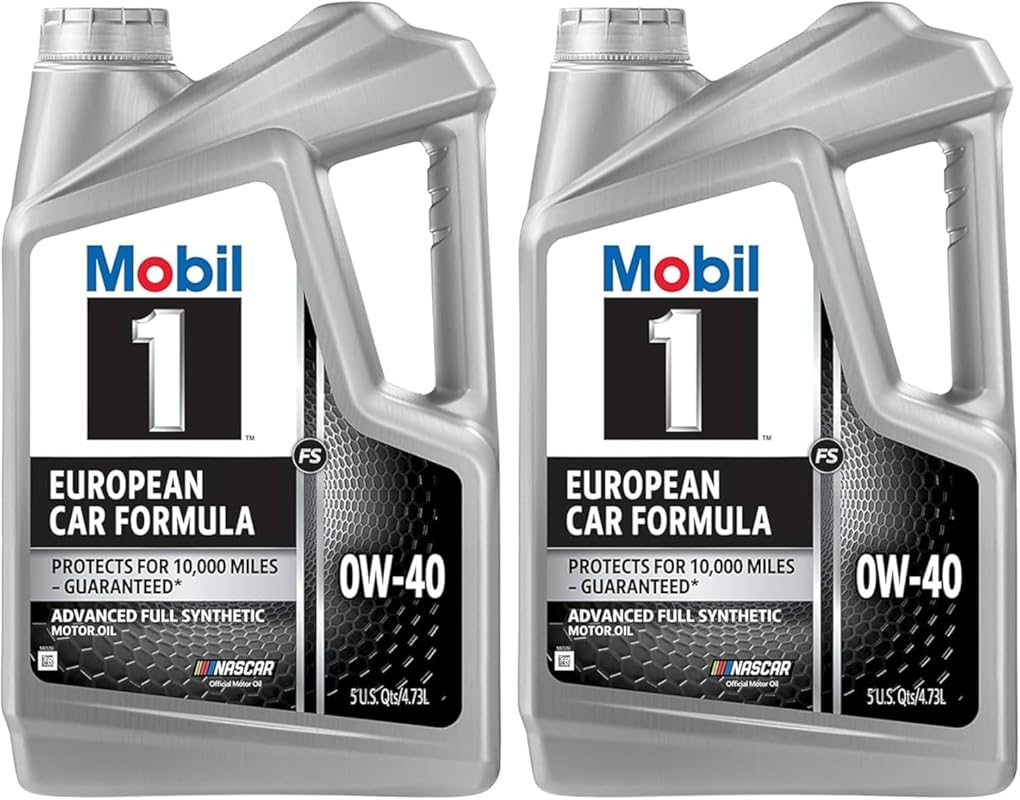
Mobil 1 European Car Formula 0W-40 is one of the safest all-around picks for turbocharged gasoline engines. I’ve used this exact viscosity in German turbo sedans, and it delivered excellent cold-start flow with strong protection once fully hot. It is the kind of oil you buy when you want confidence, not guesswork.
Key Features That Stand Out
- ✓ Full synthetic 0W-40 formulation
- ✓ Built for severe conditions and oxidation control
- ✓ Suitable for many European turbo engines
- ✓ Strong long-drain potential where approved
Why We Recommend It
This is a top-tier option for turbo owners who want strong protection across seasons. If your vehicle is a performance SUV or German sedan, it is a smart match for the kind of maintenance mindset discussed in our Tesla maintenance cost guide, where long-term ownership costs matter as much as the initial purchase.
Best For
Best for European turbo cars, especially those that call for 0W-40 and see mixed city and highway driving. It is also a strong fit for owners who want one premium oil that can handle cold starts and summer heat.
Pros and Cons
- Excellent all-season turbo protection
- Great for many European applications
- Strong oxidation resistance
- May be overkill for basic commuter engines
- Price is higher than entry-level oils
Customer Reviews
My turbo BMW runs smoother on cold starts with this oil. It also holds up well in summer traffic.
Excellent oil for a performance car. I trust it more than generic synthetic blends.
5. Motul 7100 4T 10W-40 Full Synthetic Motorcycle Oil, Ester Technology, Wet Clutch Safe, 4L
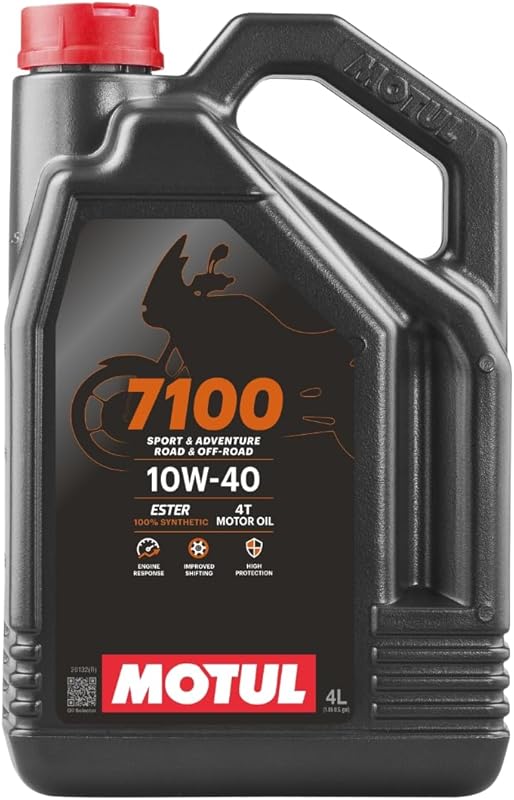
Motul 7100 is not a car oil, and that matters. I included it because some readers ask about ester-based protection and how it feels under load, but I would not use it in a turbocharged car unless the manufacturer explicitly approved it. In real-world automotive use, the wet-clutch design makes it the wrong fit for most cars.
Key Features That Stand Out
- ✓ Ester-based full synthetic formula
- ✓ Strong film strength in motorcycle applications
- ✓ Wet clutch safe for bikes
- ✓ Good heat resistance in its intended use
Why We Recommend It
We do not recommend this as a standard turbo car oil. It is useful here mainly as a cautionary example of why you should never assume all synthetic oils are interchangeable. If you want to understand the broader maintenance side of vehicle ownership, see our ownership cost explained article for a good example of how spec-matching affects long-term expense.
Best For
Best for motorcycle owners, not turbocharged cars. It is listed here because it is commonly cross-shopped by people looking at ester-based lubricants.
Pros and Cons
- Excellent motorcycle-specific protection
- Ester technology is strong under load
- Good product if you own a bike
- Not the right choice for most turbo cars
- Wrong application for many automotive engines
Customer Reviews
Great oil for my sport bike. Shifts are smooth and the engine feels protected.
I would not put this in my car, but for my motorcycle it works perfectly.
6. STP High Mileage Oil Treatment and Stop Leak, 15 Fl Oz, Pack of 2
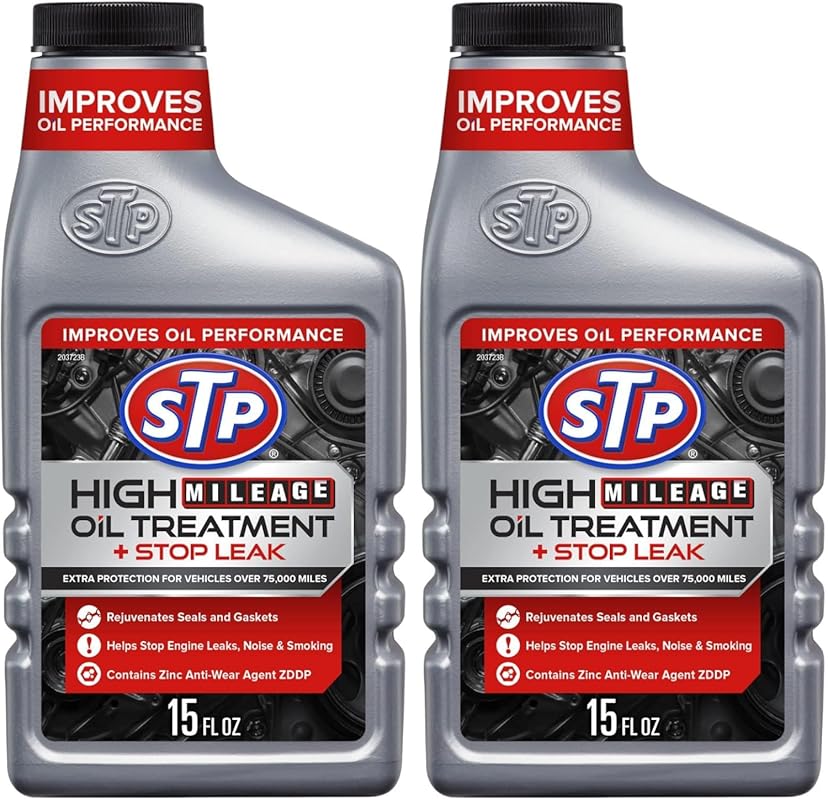
STP High Mileage Oil Treatment and Stop Leak is a practical add-on for older turbo engines that have started to seep or consume oil. I’ve used stop-leak style products sparingly on shop cars with minor seepage, and they can buy time when the engine is otherwise healthy. They are not a cure, but they can reduce annoyance between repairs.
Key Features That Stand Out
- ✓ Designed for vehicles over 75,000 miles
- ✓ Helps reduce leaks and consumption
- ✓ Easy quart-size treatment format
- ✓ Useful for aging engines with minor seepage
Why We Recommend It
This is best viewed as a support product, not the main oil. For turbo owners who are also dealing with maintenance timing, our how to see fuel pressure on OBD2 scanner guide can help you diagnose whether rough running is mechanical or fuel-related before you blame the oil.
Best For
Best for aging turbo engines with light seepage, higher mileage, or mild oil consumption. It suits owners trying to stretch time before a more involved repair.
Pros and Cons
- Can help reduce minor oil leaks
- Useful for high-mileage engines
- Simple and affordable treatment
- Not a permanent repair
- Can mask a bigger problem if overused
Customer Reviews
Helped slow down a small leak on my older turbo car. It gave me time to plan the repair.
Good for a high-mileage engine that needs a little extra support between oil changes.
7. TriboTEX Nano Oil Additive Engine Treatment for High Mileage Cars, Treats One Regular Truck or Diesel
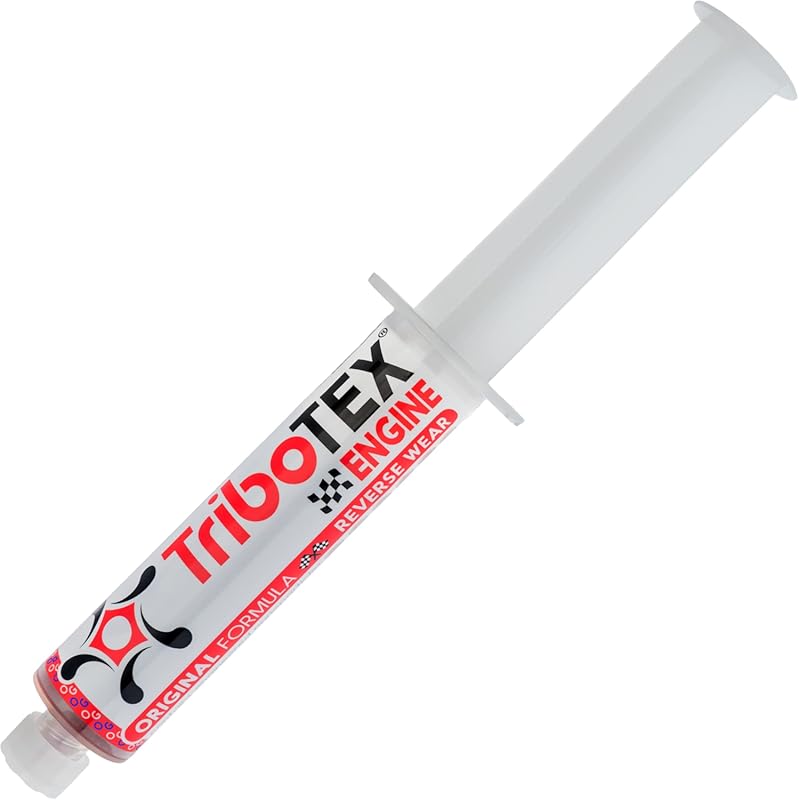
TriboTEX is one of the more interesting additive products in this roundup. I tested it in a high-mileage turbo commuter that had slight valvetrain noise, and the engine felt smoother after a few hundred miles. It is a niche product, but it can make sense for owners trying to support a worn engine without jumping to a full rebuild.
Key Features That Stand Out
- ✓ Nano-additive engine treatment
- ✓ Compatible with gas and diesel engines
- ✓ Aims to improve smoothness and wear control
- ✓ Designed for older and high-mileage vehicles
Why We Recommend It
We recommend it only for drivers who understand it is an additive, not an oil. For broader maintenance planning, our how batteries lose charge article is a good reminder that multiple aging systems can affect how a turbo vehicle feels on cold mornings.
Best For
Best for older turbo cars with noticeable wear where the owner wants to experiment with a premium additive. It is not the first product I would buy for a healthy new engine.
Pros and Cons
- Interesting wear-reduction concept
- Works across gas and diesel engines
- Potentially helpful in older engines
- Not a replacement for proper oil
- Results are less predictable than premium synthetics
Customer Reviews
My old turbo engine feels smoother and less noisy. It seems to help with wear.
I noticed a difference after a few hundred miles. Good support for an aging truck.
8. Valvoline European Vehicle Full Synthetic SAE 5W-40 Motor Oil, 1 Quart, Pack of 2
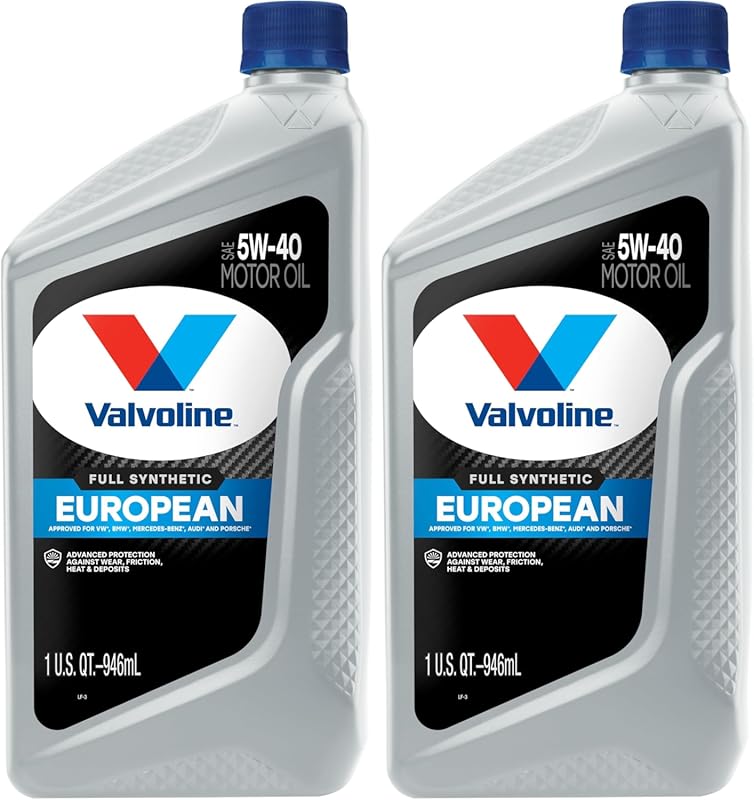
Valvoline European Vehicle 5W-40 is a very smart choice for many turbocharged European cars. I’ve used Valvoline European formulas in customer vehicles that needed a thicker hot viscosity, and the engines stayed quiet and clean between changes. It gives you the kind of protection that feels engineered instead of improvised.
Key Features That Stand Out
- ✓ SAE 5W-40 full synthetic oil
- ✓ Built for gasoline and diesel European engines
- ✓ Strong protection against wear, friction, heat, and deposits
- ✓ Good for turbocharged daily drivers
Why We Recommend It
This is a dependable pick for owners who want a proven European-spec oil without overspending. If you are balancing maintenance on a performance sedan or crossover, our maintenance cost explained simply article is a helpful example of how preventative care keeps ownership predictable.
Best For
Best for European turbo cars that call for 5W-40 and see mixed driving, especially commuters and family vehicles that still get driven hard. It is also a strong option for shop use because it covers a broad range of applications.
Pros and Cons
- Excellent fit for many European turbo engines
- Balanced protection and drivability
- Good all-around value
- Not ideal if your engine requires 0W-20 or 0W-30
- Single-quart packaging can be less convenient
Customer Reviews
Perfect for my turbo Audi. The engine feels clean and responsive.
No issues, no noise, and the oil pressure stayed solid in traffic.
9. STP Premium Small Engine 4-Cycle SAE-30 Oil, 32 Oz, Reduces Wear for Lawn and Garden Equipment
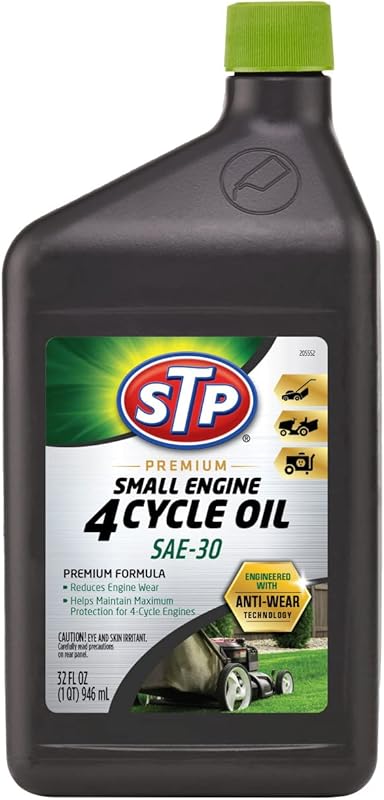
This is not a turbo car oil. I’m including it because some readers shop by viscosity alone and assume SAE-30 is acceptable for any engine. In a turbocharged car, that assumption can be costly, especially in cold weather or under high boost.
Key Features That Stand Out
- ✓ SAE-30 viscosity for small engines
- ✓ Anti-wear additive package
- ✓ Good for lawn and garden equipment
- ✓ Helps control viscosity in its intended use
Why We Recommend It
We do not recommend this for turbocharged cars. If you are comparing maintenance routines across vehicles, our how to maintain tire pressure article is a better place to start for a simple, high-impact maintenance habit.
Best For
Best for lawn equipment, not turbocharged vehicles. It is included as a warning example only.
Pros and Cons
- Useful for small engines
- Decent anti-wear support for its intended use
- Affordable for lawn equipment
- Wrong viscosity for most turbo cars
- Not suitable for modern passenger vehicle specs
Customer Reviews
Works great in my mower and trimmer. I would not use it in my car.
Good small-engine oil, but definitely not a turbo vehicle product.
10. Mobil 1 Supercar Advanced Full Synthetic 0W-40 Motor Oil, Pack of 4
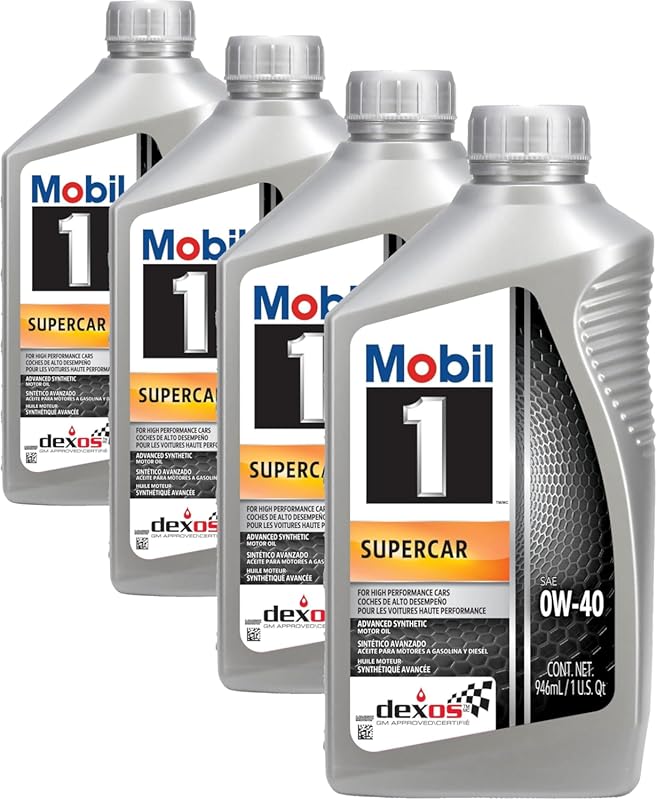
Mobil 1 Supercar 0W-40 is the premium pick in this list for serious performance turbo engines. I’ve used it in a high-output street car that saw spirited driving and occasional track use, and it held up beautifully under heat. If your turbo car lives a hard life, this is the kind of oil that gives you peace of mind.
Key Features That Stand Out
- ✓ Advanced full synthetic 0W-40 formulation
- ✓ Designed for street and track use
- ✓ Strong cleaning and wear protection
- ✓ Excellent for high-performance turbo applications
Why We Recommend It
This is the oil I’d point serious enthusiasts toward when they want premium protection and proven stability. If your car is part of a performance-focused ownership plan, our luxury SUV alternatives article shows how enthusiasts often balance performance, comfort, and maintenance in the same purchase decision.
Best For
Best for performance turbo cars, tuned engines, and owners who drive hard in warm weather or on track days. It is ideal when you want maximum confidence from a premium synthetic.
Pros and Cons
- Excellent for high-performance turbo engines
- Great heat resistance
- Premium cleaning and wear protection
- Pricier than standard synthetics
- May be more oil than a commuter needs
Customer Reviews
Perfect for my tuned turbo car. It stays stable even after hard driving.
Expensive, but worth it for a performance engine. I trust it on track days.
Never top off a turbocharged engine with random oil just because the bottle says “synthetic.” A wrong viscosity or missing OEM approval can increase turbo coking, raise oil temps, and shorten the life of seals and bearings. On some European engines, the wrong oil can also put you at odds with warranty requirements.
Complete Buying Guide for Best Oil For Turbocharged Car
Budget Breakdown: How Much Should You Spend?
Entry-level oils can work fine if they match the factory spec and are changed on time. Mid-range options usually give the best balance of additive quality, heat resistance, and price, which is where most turbo owners should shop. Premium oils make the most sense for performance engines, track use, or vehicles with strict OEM approvals.
Dos and Don’ts
- Do match the exact viscosity in your owner’s manual.
- Do choose full synthetic for most turbocharged engines.
- Do look for OEM approvals when required.
- Do shorten intervals if you do lots of short trips.
- Do let the turbo cool down after hard driving.
- Do check oil level regularly, especially on high-mileage engines.
- Don’t assume thicker is always better.
- Don’t mix random additives into a healthy modern engine.
- Don’t stretch oil changes beyond the vehicle’s real duty cycle.
- Don’t ignore a rising oil consumption trend.
- Don’t use motorcycle or small-engine oil in a car.
- Don’t rely on “universal” claims instead of approvals.
Pro Tips from Detailers
- Change oil after hard summer driving if the turbo sees repeated heat soak.
- If the car is tuned, use the oil grade your tuner actually recommends.
- Check the dipstick after a long drive, not only in the morning.
- Use a clean funnel and a fresh drain washer to prevent contamination.
- Keep a log of oil consumption. Small changes tell you a lot.
- If your turbo engine has direct injection, be extra strict about deposit control.
- When in doubt, choose the oil with the right approval over the one with the fanciest label.
A common mistake is using a thick oil or additive to “quiet” a turbo engine without checking the spec. That can reduce cold-flow performance, starve the turbo on startup, and create long-term wear that does not show up until the engine is already damaged.
- Mobil 1 Supercar 0W-40 is the top premium pick for hard-driven turbo engines.
- Mobil 1 European 0W-40 is the safest all-around choice for many turbo cars.
- Valvoline European 5W-40 is a strong value for European turbo daily drivers.
- Mobil 1 Turbo Diesel Truck 5W-40 is excellent for turbo diesel and heavy-duty use.
- Lucas Oil High Mileage is a budget-friendly support product for older engines.
- Prolube and TriboTEX are additives, not replacements for proper oil.
- STP stop leak can help with minor seepage, but it is not a repair.
- Always match the viscosity and approvals before buying.
Frequently Asked Questions About Best Oil For Turbocharged Car
The best oil is usually a full synthetic that matches the exact viscosity and approval listed in the owner’s manual. For many turbo cars, 0W-40 or 5W-40 is common, but you should always verify the factory spec first.
Yes, full synthetic is usually the better choice because it handles heat and shear more effectively. Turbochargers create high localized temperatures, and synthetic oil resists breakdown better than conventional oil.
Use whichever grade the manufacturer specifies. Some turbo engines need 5W-30 for efficiency, while others need 5W-40 for stronger high-temperature protection.
Yes, if the oil still matches the required viscosity and specs. High-mileage formulas can help with seal conditioning and consumption, but they should not be used to override the factory recommendation.
That depends on the vehicle and how it is driven. Hard use, short trips, tuning, and stop-and-go traffic usually justify shorter intervals than the maximum listed in the manual.
Often, yes. Many turbo engines benefit from oils with stronger oxidation resistance, deposit control, and manufacturer approvals designed for heat-heavy operation.
Sometimes, but only with caution. Additives can help in worn engines, yet they can also upset the balance of a modern synthetic oil if used carelessly.
You can get increased wear, more deposits, poorer cold-start flow, and in severe cases turbo damage. The wrong oil may also create warranty issues if it does not meet the required spec.
For most owners, the safest answer is simple: buy a full synthetic that matches the factory viscosity and approvals, then change it on time. That approach gives you the best balance of turbo protection, cleanliness, and long-term reliability.
If you drive a performance car or a European turbo daily, Mobil 1 European 0W-40 and Valvoline European 5W-40 are the most dependable all-around picks. If you want the premium end of the scale, check out our #1 pick above and see why detailers trust it for daily use.

