Direct answer phrase: The best ceramic coating is the one that fits your car’s condition, your climate, and your willingness to prep the paint correctly. It should improve gloss and maintenance, not promise to fix defects or replace proper care.
Ceramic coating can be a smart upgrade, but only if you buy the right product for your car, your climate, and how much prep work you’re willing to do. This Ceramic Coating Buying Guide for Smart Car Owners breaks down what matters most in 2025, what the marketing often leaves out, and when a professional detailer may be the better choice.
The best ceramic coating is the one that matches your vehicle’s condition, your driving habits, and your willingness to prep the paint properly. A coating can improve gloss, water beading, and UV resistance, but it will not fix scratches, remove defects, or replace good washing habits.
- Prep matters: clean, decontaminated paint is essential for strong bonding and better results.
- Match the product to use: daily drivers, garage-kept cars, and trucks all need different levels of durability and ease of care.
- Watch hidden costs: correction, tools, and maintenance products can change the real price significantly.
- Be skeptical of hype: unrealistic durability claims and vague instructions are warning signs.
- Ask for help when needed: professional advice is smart for expensive vehicles, damaged paint, or specialty surfaces.
This AAutomotives guide is written to help readers understand Ceramic Coating Buying Guide with clear, practical advice. Before publishing, review model-specific facts, dates, prices, safety points, and source links so the final article stays accurate and trustworthy.
- Ceramic Coating Buying Guide: What Smart Car Owners Should Know in 2025
- How Ceramic Coating Works and Why It Matters for Car Detailing
- Match the Right Ceramic Coating to Your Driving Habits and Vehicle Type
- Types of Ceramic Coatings: DIY Kits vs Professional-Grade Products
- Key Buying Factors That Separate a Good Coating from a Bad Purchase
- Price Breakdown: What Ceramic Coating Really Costs in 2025
- Common Mistakes Car Owners Make When Buying Ceramic Coating
- Expert Help, Safety Warnings, and Final Buying Checklist
Ceramic Coating Buying Guide: What Smart Car Owners Should Know in 2025
In 2025, ceramic coating products are more common than ever, and that makes buying more confusing, not less. You’ll see spray coatings, wipe-on formulas, professional systems, and bold durability claims that sound similar but perform very differently in real use.
The smartest approach is to think beyond the label. Focus on prep requirements, maintenance, compatibility with your paint and trim, and whether the product is realistic for your skill level. If you want a broader foundation on surface prep, our clay bar guide for beginners can help you understand why clean paint matters before any coating goes on.
If a coating promises effortless results, long life, and zero maintenance, read the fine print twice. Good coatings still need proper washing and periodic care.
How Ceramic Coating Works and Why It Matters for Car Detailing
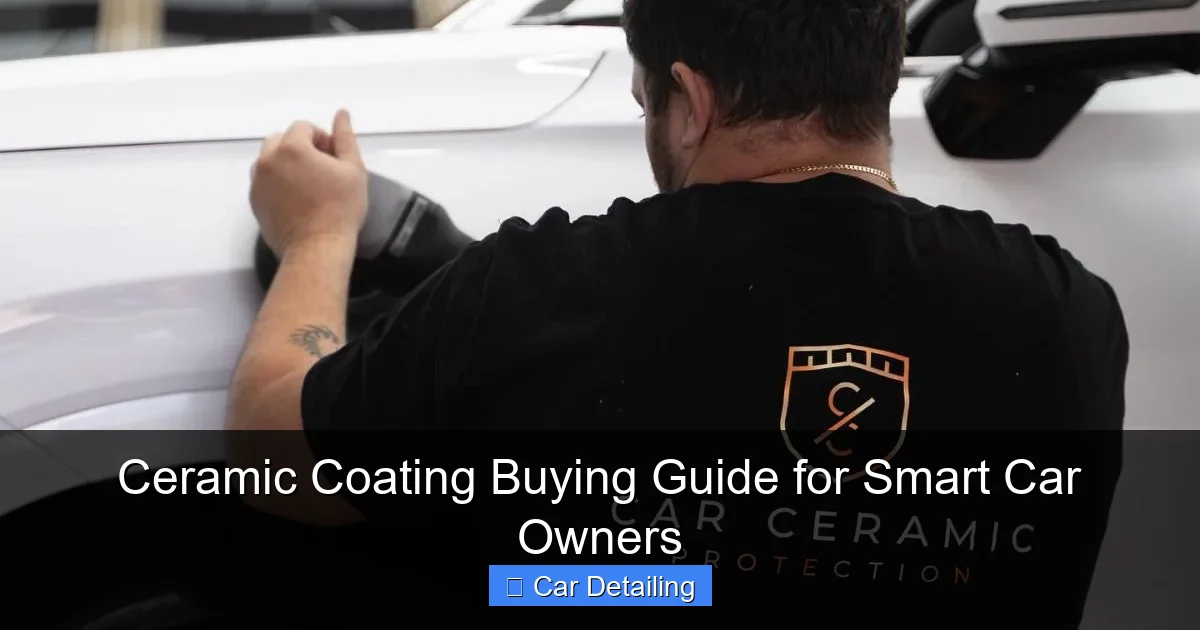
Ceramic coating is a protective layer that bonds to the vehicle’s surface and creates a slicker, more resistant finish than bare clear coat alone. In car detailing, it is valued because it can make cleaning easier and help the paint look sharper for longer.
Visual guide about Ceramic Coating Buying Guide for Smart Car Owners
Image source: carceramicprotection.com.au
It is not magic, though. The coating works best when applied to well-prepared paint, and its real-world performance depends heavily on how the car is used and maintained.
Hydrophobic protection, gloss, and UV resistance explained
One of the biggest reasons owners buy ceramic coating is hydrophobic behavior, which means water tends to bead and slide off more easily. That can make rinsing and drying faster, and it may reduce the amount of grime that clings to the surface.
Gloss is another major selling point. A good coating can deepen the paint’s look and make the finish appear more reflective, especially on darker colors. Many products also advertise UV resistance, which can help slow down fading and oxidation over time, though it is not a substitute for parking in shade or using a cover when appropriate.
What ceramic coating can and cannot do for your paint
Ceramic coating can help protect against environmental fallout, light chemical exposure, and everyday contamination. It can also make regular washing easier, which is one reason many detailers recommend it for owners who like a cleaner-looking car with less effort.
What it cannot do is just as important. It will not eliminate swirl marks, deep scratches, rock chips, or poor bodywork. If the paint already has visible defects, those issues usually need correction first, which is why many owners start with a proper wash and decontamination process such as a clay bar before and after guide before thinking about coating.
Do not buy a coating expecting it to hide paint damage. On neglected paint, a coating can actually lock in the look of existing defects if prep is skipped.
Match the Right Ceramic Coating to Your Driving Habits and Vehicle Type
The best ceramic coating for one car may be a poor choice for another. A garage-kept weekend coupe has very different needs from a daily-driven SUV that sees rain, road salt, and parking lot abuse.
Before buying, think about how often the car is washed, where it is parked, and how much contamination it faces. That context matters more than brand hype.
Daily drivers, garage-kept cars, SUVs, trucks, and performance vehicles
Daily drivers benefit most from coatings that make washing easier and help resist the grime that builds up from regular commuting. If you drive in mixed weather, a durable but manageable product is often a better fit than an ultra-fussy professional system.
Garage-kept cars may not need the most aggressive protection, but they can benefit from a coating that boosts gloss and makes maintenance simple. SUVs and trucks often collect more dirt, road film, and lower-panel contamination, so ease of cleaning can matter more than the highest possible shine. Performance vehicles and enthusiast cars may justify a higher-end finish if appearance and long-term upkeep are top priorities.
Climate, road salt, sun exposure, and urban parking considerations
Weather should influence your purchase. If you live where road salt is common, you’ll want a coating that supports frequent winter washing and resists harsh contamination as well as possible. In hot, sunny regions, UV resistance and heat tolerance become more relevant.
Urban parking adds another layer of difficulty. Tree sap, bird droppings, dust, and tight parking spaces can all affect how much maintenance the coating will need. In those conditions, a product that is easy to clean and maintain may be more useful than one that only looks impressive on paper.
Types of Ceramic Coatings: DIY Kits vs Professional-Grade Products
Not all ceramic coatings are the same. Some are designed for simple weekend use, while others require careful prep, controlled conditions, and experience to apply correctly.
Choosing the wrong type can lead to streaking, uneven coverage, or disappointment when the product does not perform the way the ad suggested.
Consumer spray coatings, wipe-on coatings, and multi-layer systems
Consumer spray coatings are usually the easiest starting point. They are typically faster to apply, easier to correct if you make a mistake, and more forgiving for beginners. The tradeoff is that they often do not last as long as more involved systems.
Wipe-on coatings sit in the middle. They usually offer stronger protection and better longevity than sprays, but they demand more careful application. Multi-layer systems are the most demanding and may offer the most robust finish, but they are also the least forgiving and often require very clean paint, controlled conditions, and patience.
| Option | Best For | Limit |
|---|---|---|
| Spray coating | Beginners and maintenance boosts | Usually shorter durability |
| Wipe-on coating | DIY owners wanting stronger protection | More prep and application care needed |
| Multi-layer system | Enthusiasts and professional installs | Higher complexity and risk of mistakes |
Professional installation: when it is worth the extra cost
Professional installation is worth considering when the paint needs correction, the vehicle is expensive, or you want the best chance of a clean, even finish. It may also make sense if you do not have a dust-free workspace, proper lighting, or the time to prep the car carefully.
For some owners, the extra cost is really paying for reduced risk. A pro can often handle paint correction, contamination removal, and application more consistently than a first-time DIY installer. If your vehicle already has heavy swirl marks or bonded contamination, professional help can be the safer money decision.
Key Buying Factors That Separate a Good Coating from a Bad Purchase
Marketing can make many coatings sound similar, but a few practical factors usually separate the better buys from the disappointing ones. The most important are durability claims, prep requirements, application difficulty, and compatibility with the surfaces you want to protect.
Durability claims, SiO2 content, cure time, and real-world longevity
Durability claims should be treated carefully because real-world life depends on washing habits, weather, storage, and prep quality. A coating that claims long protection may still fail early if it is applied over dirty paint or maintained aggressively.
Many buyers also focus on SiO2 content, but that number alone does not guarantee performance. Cure time matters too, because the coating may need hours or longer to fully set before water exposure or heavy use. The best way to judge longevity is to look for realistic instructions, clear maintenance guidance, and product information that avoids vague promises.
Ease of application, maintenance requirements, and finish quality
If you are applying the coating yourself, ease of use should be high on the list. Some products flash quickly, streak easily, or require very specific conditions, which can be frustrating if you are working in a garage at home.
Maintenance matters just as much. A coating that needs special toppers, frequent refreshers, or strict washing routines may be a poor fit if you want low-effort ownership. Finish quality also matters, especially if you care about slickness, gloss, and how the car looks after repeated washes.
Compatibility with paint, PPF, wheels, glass, and trim
Check what surfaces the product is actually meant for. Some coatings are designed for painted panels only, while others can be used on plastic trim, wheels, glass, or paint protection film.
That detail matters because a coating that works well on paint may behave differently on matte trim or coated wheels. If your vehicle has PPF, aftermarket trim, or specialty surfaces, confirm compatibility before buying. When in doubt, ask a professional detailer or the product maker for surface-specific guidance.
Compatibility can vary by formula and surface condition, so always follow the product instructions rather than assuming all coatings work the same way.
Price Breakdown: What Ceramic Coating Really Costs in 2025
Price is one of the easiest ways to compare ceramic coatings, but it is also one of the easiest ways to be misled. The sticker price may look reasonable until you factor in prep products, tools, correction work, and ongoing maintenance.
Budget, mid-range, and premium options compared
Budget coatings are usually the most accessible and can be a good entry point for owners who want better water behavior and easier cleaning without a major investment. These products may be ideal for beginners or for cars that are not expected to stay perfect for years.
Mid-range options often strike the best balance between durability, application difficulty, and finish quality. Premium coatings may offer stronger performance or longer service life, but they often assume better prep, more skill, or professional installation. The right choice depends less on the price tag and more on whether the product fits the car and the owner.
Hidden costs: prep work, paint correction, tools, and maintenance products
Prep work can cost more than many buyers expect. At minimum, you may need wash supplies, iron remover, clay tools, microfiber towels, panel prep solution, and applicators. If the paint has swirls or oxidation, paint correction can add significant time and cost.
There are also maintenance costs after application. Some coatings work best with pH-friendly soaps, drying aids, or topper products. If you want a better sense of how routine washing affects long-term results, our safe car wash frequency guide is a useful companion read.
Actual pricing varies widely by product size, vehicle size, prep condition, and whether you do the work yourself or hire a detailer. Always budget for the full job, not just the coating bottle.
Common Mistakes Car Owners Make When Buying Ceramic Coating
Many coating disappointments come from buying the wrong product, not from the coating concept itself. A little planning can prevent wasted money and a lot of frustration.
Believing marketing hype instead of checking prep requirements
One common mistake is assuming the coating will perform well without major prep. In reality, many products require a clean, decontaminated, oil-free surface to bond properly.
If the product page focuses on shine and water beading but skips prep instructions, that is a red flag. A trustworthy coating should explain what the surface needs before application and how to care for it afterward.
Skipping paint correction and expecting flawless results
Another frequent mistake is applying coating over swirls, water spots, or oxidation and hoping the finish will improve on its own. Coatings protect the surface; they do not usually restore it.
If your paint already looks tired, correction may be worth the effort before you coat. Without that step, you may end up sealing in the exact flaws you were trying to avoid.
Choosing the wrong product for the vehicle’s condition or usage
A high-maintenance coating may be a bad match for a busy daily driver. Likewise, a basic spray coating may feel underwhelming on a collector car that deserves a more durable finish.
Think about how you actually use the vehicle, not just how you hope to use it. The best product is the one you will maintain correctly, not the one with the most impressive label.
- Improves gloss and water beading
- Can make washing easier
- Helps protect against UV and contamination
- Does not fix paint defects
- Often requires careful prep
- Durability depends on maintenance and conditions
Expert Help, Safety Warnings, and Final Buying Checklist
There are times when professional help is the smarter move. That is especially true if the paint is heavily damaged, the vehicle is expensive, or you are unsure which product is safe for a specific surface.
If you are new to detailing, a professional consultation can save money by preventing failed application, wasted product, or unnecessary correction work.
When to consult a professional detailer before applying coating
Ask a professional if the vehicle has severe swirl marks, oxidation, etched water spots, or prior coating layers that may need removal. The same advice applies if the car has matte paint, specialty trim, PPF, or a finish that you do not want to risk.
A detailer can also help if you are unsure whether your garage conditions are suitable for application. Temperature, dust, humidity, and lighting can all affect results, and those factors vary by location and season.
Warning signs of low-quality products and unrealistic claims
Be cautious if a product promises extreme durability with almost no prep, no maintenance, and perfect results on neglected paint. Those claims usually oversimplify how coatings actually work.
Also watch for vague labels, missing application steps, and no clear mention of cure time or surface compatibility. Good products usually explain limitations, because honest instructions are often a sign of better formulation and better support.
- Confirm the coating matches your driving habits and climate
- Check whether the product is DIY-friendly or better left to a pro
- Review prep requirements before buying
- Budget for correction, tools, and maintenance products
- Verify compatibility with paint, trim, PPF, wheels, or glass
Final recap: how to choose the best ceramic coating with confidence
The best ceramic coating is not always the most expensive one. It is the one that fits your vehicle, your environment, and your ability to prep and maintain the surface properly.
If you want a simple rule, start with your usage, then compare prep demands, durability expectations, and compatibility. That approach will help you avoid hype-driven purchases and choose a coating that actually makes ownership easier.
- Choose based on real driving conditions, not marketing claims.
- Prep work matters as much as the coating itself.
- Professional help is worth considering for costly or complex vehicles.
🎥 Related Video: Ceramic Coating vs PPF: Scam or Smart?
📺 TheAutoBharat
“PPF vs Ceramic Coating: Full Guide” . . . . “Ceramic Coating vs PPF: Scam or Smart? Expert Guide on Car Paint Protection” .
Frequently Asked Questions
Yes, it can be worth it if you want easier washing, better gloss, and more resistance to everyday contamination. The value depends on your climate, parking situation, and how well you maintain the finish.
In many cases, it reduces or replaces the need for traditional wax. Some owners still use maintenance products or toppers, depending on the coating and the care routine.
Not always, but it is strongly recommended when the paint has swirls, scratches, or oxidation. Ceramic coating usually does not hide those defects, so correction helps the finish look better before sealing it.
Some products are compatible with those surfaces, but not all are. Always check the instructions because compatibility can vary by formula and surface type.
DIY can work well for simple products and careful owners, while professional installation is often better for expensive vehicles, difficult paint, or when correction is needed. If you are unsure, ask a detailer before starting.

