A clay bar is used to remove bonded contaminants from a car’s paint surface that washing alone cannot remove. It helps make the paint feel smooth and prepares it for polishing, waxing, or sealing. It is not a cleaner for scratches or heavy defects.
What is a clay bar used for in car detailing? In simple terms, it is used to remove contamination that sticks to the paint after a normal wash. These bonded particles can make the surface feel rough even when it looks clean.
Detailers use a clay bar to restore a smoother finish before polishing or protecting the paint. It is a prep step, not a repair step, and it works best when used correctly on a properly washed vehicle.
If you have ever run a hand across freshly washed paint and still felt tiny grit, that is the kind of issue a clay bar is designed to address. Understanding what it does, and what it does not do, helps you avoid damage and get better results.
- Point 1: Clay bars remove embedded grime like rail dust, overspray, and industrial fallout from painted surfaces.
- Point 2: They are used after washing, not as a replacement for normal car washing.
- Point 3: Claying improves surface smoothness and helps waxes, sealants, and coatings bond better.
- Point 4: Using too much pressure or a dirty clay bar can create marring on the paint.
- Point 5: Clay bars work best on paint, glass, and some smooth exterior surfaces, but not on rough trim.
- Point 6: Frequency depends on driving conditions, storage, and contamination level, not a fixed schedule.
- Point 7: If paint is heavily damaged or you are unsure about the finish, a detailing professional can help.
This AAutomotives guide is written to help readers understand What Is a Clay Bar Used For with clear, practical advice. Before publishing, review model-specific facts, dates, prices, safety points, and source links so the final article stays accurate and trustworthy.
- What a Clay Bar Does to Car Paint
- When You Should Use a Clay Bar
- How a Clay Bar Works
- Clay Bar vs. Washing, Polishing, and Waxing
- Where You Can and Cannot Use a Clay Bar
- How to Use a Clay Bar Safely
- Common Mistakes People Make With Clay Bars
- Cost, Frequency, and When to Ask for Help
- Final Recommendation
What a Clay Bar Does to Car Paint
A clay bar removes bonded contaminants sitting on top of the clear coat. These particles are often too stuck to come off with shampoo, rinse water, or a microfiber towel.
Common examples include brake dust fallout, industrial pollution, tree sap mist, rail dust, and road film that has hardened onto the finish. A clay bar lifts these particles when used with lubricant and light pressure.
The biggest change is tactile. After claying, the paint usually feels noticeably smoother. That smoother surface can make the car look cleaner and can improve the way wax, sealant, or coating sits on the paint.
A clay bar does not remove scratches, swirl marks, oxidation, or water spots by itself. It is for bonded contamination, not defect correction.
When You Should Use a Clay Bar
Claying is usually done after a thorough wash and before polishing or applying paint protection. If the paint still feels rough after washing, that is a strong sign claying may help.
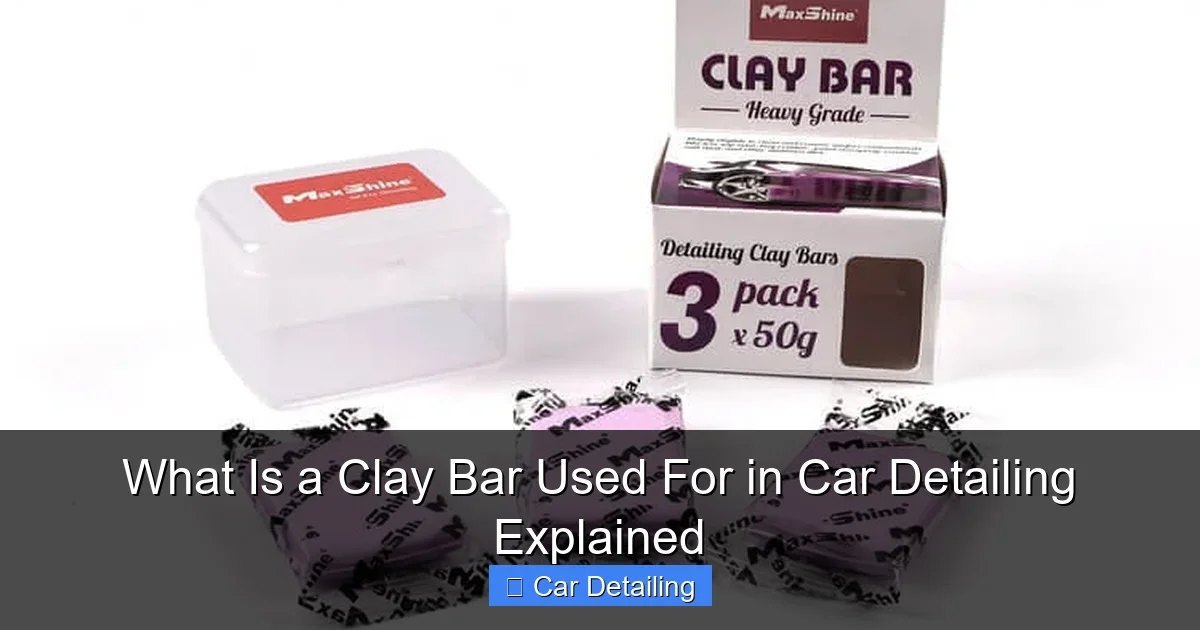
Visual guide about What Is a Clay Bar Used For in Car Detailing Explained
Image source: detailingsource.ca
Many drivers use a clay bar when preparing for wax before a season change, after parking under trees, following a long period of highway driving, or after the car has been exposed to fallout from nearby construction or rail traffic.
It can also be useful before selling a car, because a smoother finish often improves the overall presentation. If you are already doing a deep clean, it makes sense to include claying in the process, along with interior maintenance such as learning what a car vacuum cleaner is and using the right tools for the job.
- Wash the car first
- Inspect paint with clean hands or a plastic bag test
- Use clay lubricant or a clay-safe detail spray
- Work in small sections
- Dry and protect the paint after claying
How a Clay Bar Works
A clay bar is a pliable detailing material that grabs contaminants protruding from the paint surface. As you glide it across lubricated paint, it shears off or pulls out the particles that are bonded to the clear coat.
The process is mechanical, not chemical. That is why lubrication matters so much. Without enough slip, the clay can drag and increase the risk of marring.
Clay bars come in different grades, usually ranging from mild to aggressive. A mild clay is often enough for routine maintenance, while a more aggressive clay may be needed for neglected or heavily contaminated paint. The right choice depends on the vehicle’s condition, age, and how it is stored.
If the paint only feels slightly rough, start with the mildest clay option you can. Using a stronger clay than necessary can increase the chance of visible marks.
Clay Bar vs. Washing, Polishing, and Waxing
It helps to separate the role of each step. Washing removes loose dirt. Claying removes bonded contamination. Polishing corrects paint defects. Waxing or sealing protects the finish.
Because these steps do different jobs, one does not replace the other. If you skip washing and go straight to claying, you can trap grit in the clay and grind it over the paint. If you skip claying before waxing, the protection may not bond as well to the surface.
| Detailing Step | Main Purpose |
|---|---|
| Wash | Remove loose dirt and surface grime |
| Clay bar | Remove bonded contaminants |
| Polish | Reduce swirls, haze, and light defects |
| Wax/sealant | Add protection and gloss |
For drivers who are also focused on efficient cleaning routines, this is similar to understanding the difference between a basic tool and a specialized one. Just as good car vacuum features matter for interior cleaning, the right clay and lubricant matter for exterior paint care.
Where You Can and Cannot Use a Clay Bar
Clay bars are commonly used on painted surfaces, glass, headlights, and smooth body panels. They can also help on chrome and some smooth plastics if the surface is safe for claying.
They are not ideal for rough-textured trim, matte finishes, or delicate surfaces unless the product instructions specifically allow it. On those materials, a clay bar can leave marks or alter the look of the surface.
- Clear coat paint
- Glass
- Smooth chrome
- Headlight lenses
- Textured plastic trim
- Matte paint
- Dirty, unwashed panels
- Hot surfaces in direct sun
Always check the product instructions, because some modern coatings, wraps, or specialty finishes may need different treatment. When in doubt, test a small hidden area first.
How to Use a Clay Bar Safely
The safest method is simple: wash the car, keep the surface cool, use plenty of lubricant, and work one small section at a time. Fold the clay often so a clean side stays in contact with the paint.
If the clay drops on the ground, discard it. Even a tiny piece of grit can scratch the finish if it gets trapped in the clay and dragged across the paint.
Do not use a clay bar on a dry panel. Dry claying can scratch the clear coat and create avoidable paint damage.
Simple Safe Process
Start by washing and drying the vehicle. Spray lubricant on a small section, then gently glide the clay with light pressure until the surface feels smooth. Wipe the area clean and inspect it before moving on.
After claying, the paint should be reprotected with wax, sealant, or another finish product. Claying removes contamination, but it also leaves the surface bare and more exposed until protection is reapplied.
Common Mistakes People Make With Clay Bars
One common mistake is using too much pressure. A clay bar should glide, not scrub. Heavy pressure can leave haze or marring, especially on softer paint systems.
Another mistake is trying to clay a dirty car. If loose grit is still on the surface, the clay can pick it up and act like sandpaper. Washing first is essential.
People also sometimes assume a clay bar is a fix for everything. It is not. If the paint has deep scratches, oxidation, or clear coat failure, claying will not solve those problems.
Using a contaminated or dropped clay bar is another avoidable issue. Once dirt gets inside the clay, the risk of scratching rises quickly.
Keep a separate clay bar for heavily contaminated jobs and routine maintenance. That way, you are less likely to reuse a dirty bar on a cleaner vehicle.
Cost, Frequency, and When to Ask for Help
Clay bar kits are usually affordable, though prices vary based on brand, clay grade, lubricant, and whether the kit includes towels or protection products. Costs can also vary by location and store type.
How often you clay depends on driving conditions. A car parked outdoors near trees, construction, rail lines, or heavy traffic may need claying more often than a garage-kept vehicle. There is no universal schedule that fits every car.
For many owners, claying once or twice a year is enough. Some vehicles may need it more often, while others may go longer between treatments if they stay clean and protected.
If you are unsure whether the paint has contamination, defects, or coating issues, a professional detailer can inspect the finish and recommend the least risky approach.
Expert help is especially worth considering if the car has expensive paintwork, a matte finish, a ceramic coating, or visible damage. In those cases, the wrong technique can cost more than a professional service.
Final Recommendation
A clay bar is used to remove bonded contaminants that washing cannot remove, making the paint feel smoother and better prepared for protection. It is one of the most useful steps in detailing when the goal is to restore surface cleanliness without correcting paint defects.
The best results come from using it on a properly washed, cool surface with enough lubrication and light pressure. If you treat it as a prep tool rather than a cure-all, it can make a clear difference in how the paint looks and feels.
For most car owners, the right approach is simple: wash first, clay only when needed, protect the paint afterward, and ask for expert help if the finish is delicate or heavily damaged. That keeps the process effective, safe, and worth the effort.
🎥 Related Video: What is a Clay bar and how to use it
📺 Autoclean Academy
Frequently Asked Questions
A clay bar is used to remove bonded contaminants from paint, glass, and other smooth exterior surfaces. It helps make the surface feel smoother after washing.
No, a clay bar does not remove scratches or swirl marks. It removes contamination sitting on top of the clear coat, not paint defects inside the finish.
Yes, that is usually recommended. Claying removes contamination and leaves the surface unprotected, so wax, sealant, or another protectant should be applied afterward.
There is no fixed schedule, because it depends on how and where the car is driven and stored. Many vehicles only need claying once or twice a year.
Yes, many detailers use clay on glass to remove bonded grime and improve clarity. Always use proper lubrication and follow the product directions.
It should usually be discarded. Dirt and grit can stick to it, and using it again may scratch the paint.

