A clay bar removes bonded contamination from paint that washing cannot, helping restore a smoother finish. Used correctly, it is a simple detailing step for beginners before waxing or sealing. The key is using enough lubricant, working gently, and checking the paint for dirt first.
Clay bar treatment is one of the most useful beginner-friendly detailing steps for improving paint smoothness. If your car feels rough after washing, a clay bar can remove contamination that sits on top of the clear coat and makes the surface feel clean again.
This clay bar guide for beginners explains what a clay bar does, when to use it, and how to do it safely. It is not a repair for scratches or faded paint, but it is a practical way to prep your vehicle for wax, sealant, or ceramic protection.
For readers who already follow safe washing habits, such as the steps in our home car wash beginners safe guide and two bucket method beginners, claying is often the next step in improving the finish.
- Point 1: Clay bar treatment helps remove tar, overspray, brake dust, and other bonded contaminants.
- Point 2: It should be used after a proper wash, not as a replacement for washing.
- Point 3: Lubrication matters because dry claying can mar the paint.
- Point 4: Small sections and light pressure give the best beginner results.
- Point 5: A clay bar improves smoothness, but it does not fix scratches or swirl marks.
- Point 6: After claying, protect the paint with wax, sealant, or coating.
- Point 7: If the paint is heavily contaminated or delicate, professional help may be worth it.
This AAutomotives guide is written to help readers understand Clay Bar Guide for Beginners with clear, practical advice. Before publishing, review model-specific facts, dates, prices, safety points, and source links so the final article stays accurate and trustworthy.
- What a Clay Bar Does and Why It Matters
- When You Should Clay Your Car
- What You Need Before You Start
- Step-by-Step Clay Bar Guide for Beginners
- Common Mistakes Beginners Should Avoid
- Clay Bar vs Clay Mitt vs Clay Towel
- How Much Does Clay Bar Detailing Cost?
- When to Get Expert Help
- Conclusion: A Simple Step That Improves the Finish
What a Clay Bar Does and Why It Matters
A clay bar is a detailing tool made from a synthetic resin compound. It grabs bonded debris that washing alone cannot remove, such as rail dust, tree sap mist, tar specks, industrial fallout, and paint overspray. These particles can sit on the surface even when the car looks clean.
When the paint is contaminated, it often feels rough to the touch. In some cases, dark paint will also show tiny specks more clearly under sunlight. Clay bar treatment helps create a smoother surface, which can improve the look and feel of the paint before protection is applied.
The main benefit is not dramatic visual correction. Instead, it prepares the surface so waxes and sealants bond more evenly. That can help protection last longer and look more consistent.
A clay bar removes bonded contamination, but it does not remove deep scratches, oxidation, or swirl marks. Those usually need polishing or paint correction.
When You Should Clay Your Car
You do not need to clay every wash. Most cars only need it occasionally, depending on where they are driven and parked. A vehicle parked outdoors near trees, rail traffic, construction, or busy roads may pick up contamination faster than a garage-kept car.
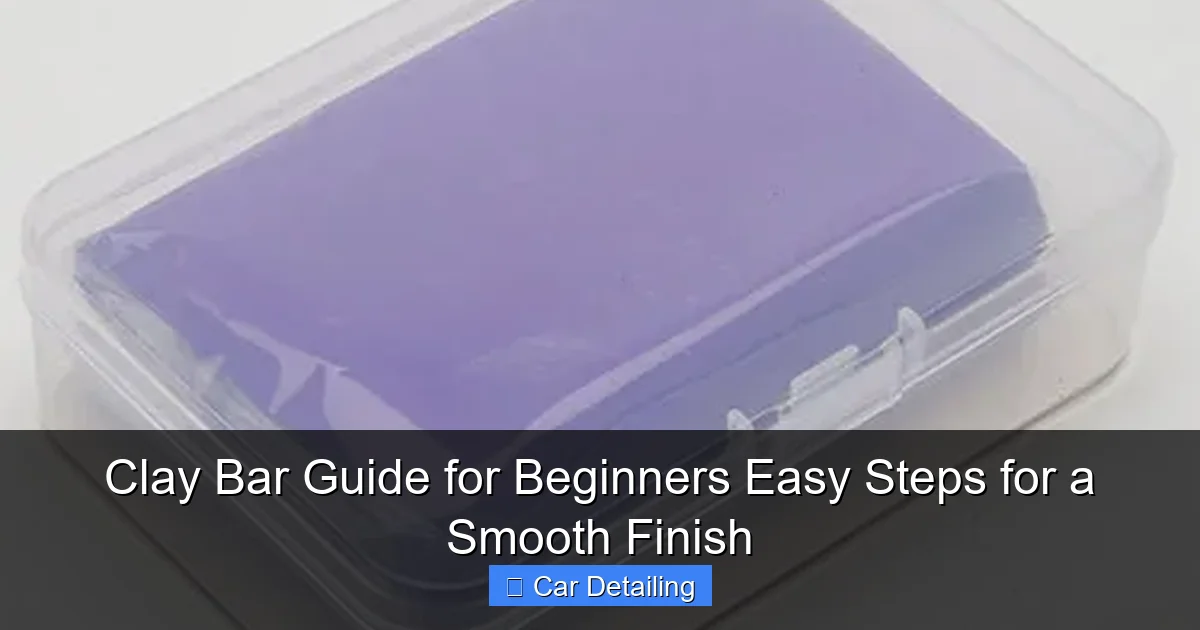
Visual guide about Clay Bar Guide for Beginners Easy Steps for a Smooth Finish
Image source: 5.imimg.com
A simple test is to wash and dry the car, then lightly place your hand in a thin plastic bag and glide it over the paint. If the surface feels gritty or bumpy, claying may help. The roof, hood, and rear bumper are common areas where contamination builds up first.
Claying is also useful before applying wax or sealant. If you are already planning a full exterior detail, this step can make the final finish feel noticeably smoother.
- Wash and dry the car first
- Inspect paint for roughness or specks
- Use clay before waxing or sealing
- Work in shade when possible
- Keep lubricant ready in generous amounts
What You Need Before You Start
Beginners do not need a complicated setup. A basic clay bar kit usually includes the clay itself and a lubricant spray. Some kits also include microfiber towels, which are helpful for wiping residue after each section.
You will also need a clean bucket of water, car shampoo, microfiber drying towels, and a shaded work area. If the car is dirty, do not clay it immediately. Washing first reduces the risk of dragging loose grit across the paint.
- Light to moderate surface contamination
- Beginner detailing projects
- Paint prep before waxing or sealing
- Improving surface smoothness
- Heavy scratches or paint defects
- Dirty, unwashed vehicles
- Hot panels in direct sunlight
- Dry claying without lubricant
Clay bars come in different grades. Fine clay is usually safer for beginners and regular maintenance. Medium or aggressive clay can remove heavier contamination, but it may increase the chance of marring if used carelessly. The right choice depends on paint condition, climate, and how often the vehicle is washed.
Step-by-Step Clay Bar Guide for Beginners
The process is simple, but patience matters. Work on one small section at a time, and do not rush across the whole vehicle. The goal is controlled, gentle contact rather than pressure.
1. Wash and dry the vehicle
Start with a proper wash to remove loose dirt. If you want a safer routine, the safe washing guide step by step complete guide can help you avoid common mistakes. Dry the car fully before claying so the lubricant works properly and you can see the surface clearly.
2. Inspect the paint
Check for heavy tar spots, sap, or stuck-on debris. If you see thick contamination, remove what you can with a dedicated tar remover or ask a professional for help. Clay is best for light bonded material, not thick lumps of grime.
3. Flatten a small piece of clay
Break off a manageable piece and knead it until it becomes soft. Flatten it into a small disc so it covers more surface area. If you drop the clay on the ground, discard it. Even tiny grit can scratch paint.
Never reuse clay that has touched the ground. Contaminated clay can trap debris and cause paint damage on the next pass.
4. Spray lubricant generously
Use plenty of clay lubricant on both the panel and the clay. The surface should stay wet enough for the clay to glide without grabbing. If it starts to feel sticky, stop and add more lubricant.
5. Glide the clay lightly across the surface
Move the clay in straight lines or gentle back-and-forth motions with almost no pressure. You should feel the paint becoming smoother as the clay picks up contamination. If the clay sticks, do not force it.
6. Wipe and inspect the section
After a few passes, wipe the panel with a clean microfiber towel. Run your hand over the area again. If it still feels rough, repeat the process lightly. If it feels smooth, move to the next section.
7. Fold the clay often
As the clay picks up contamination, fold it to expose a clean side. This helps reduce the chance of dragging grit across the paint. Once the clay becomes heavily dirty, replace it with a fresh piece.
8. Protect the paint afterward
Claying leaves the surface clean but unprotected. Apply wax, sealant, or another paint protection product soon after. This helps preserve the smooth finish and makes future washing easier.
Work in sections about the size of a door or half a hood. Smaller areas make it easier to keep the surface lubricated and reduce missed spots.
Common Mistakes Beginners Should Avoid
One of the biggest mistakes is claying a dirty car. If loose dirt remains on the paint, the clay can drag it across the surface and create marks. Washing first is not optional.
Another common issue is using too much pressure. A clay bar should glide, not scrub. If you feel resistance, the fix is usually more lubricant, not more force.
Some beginners also try to clay hot panels in direct sun. That makes the lubricant dry quickly and increases the risk of sticking. Shade is much safer, and early morning or late afternoon conditions are often easier to work in.
Finally, do not expect clay to solve every paint problem. If the finish has oxidation, heavy swirl marks, or etching, a polish may be needed. In those cases, a detailer can advise whether claying alone is enough.
Clay Bar vs Clay Mitt vs Clay Towel
Traditional clay bars are inexpensive and widely available, but they require more care. Clay mitts and clay towels are often faster to use and can cover larger panels more quickly. They are popular for maintenance details, especially when the paint only has light contamination.
For a beginner, the best choice depends on comfort and budget. A clay bar is usually the most affordable option and gives good control. A clay mitt may be easier if you want a reusable tool, but it still needs proper lubrication and careful washing.
| Option | Best Use | Beginner Notes |
|---|---|---|
| Clay Bar | Light to moderate contamination | Low cost, more hands-on |
| Clay Mitt | Faster maintenance claying | Easy to handle, still needs care |
| Clay Towel | Large panels and repeated use | Efficient, but technique still matters |
If you prefer a routine built around regular cleaning, our weekly wash routine checklist complete guide can help you decide when claying fits into your maintenance schedule.
How Much Does Clay Bar Detailing Cost?
Clay bar kits are generally affordable, though prices vary by brand, size, and whether lubricant is included. Basic kits are usually cheaper than full detailing packages, making this one of the more accessible paint-prep steps for beginners.
The total cost also depends on whether you already have towels, shampoo, and wax. If you need to buy everything at once, the price rises a bit. Still, compared with machine polishing or professional correction, claying is usually a lower-cost way to improve paint feel and prep the surface for protection.
Professional detailing costs vary widely by location, vehicle size, and condition. Heavily contaminated vehicles or cars with delicate paint may benefit from expert service, especially if the owner is worried about marks or uneven results.
Prices can vary by country, store, kit size, and whether the product includes lubricant or protective spray. It is worth comparing a few options before buying.
When to Get Expert Help
Most beginners can clay a car safely if they work slowly and follow the steps above. However, professional help makes sense if the vehicle has expensive paint, visible defects, or severe contamination that does not respond well to gentle cleaning.
It is also smart to ask a detailer if you are unsure whether the surface needs claying, polishing, or both. On newer luxury cars, repainted panels, or soft clear coats, the wrong approach can create extra work and added cost.
If the car has overspray from bodywork, tree sap that has hardened, or stubborn industrial fallout, a professional may use a more complete correction process. That can save time and reduce the chance of making the finish worse.
Conclusion: A Simple Step That Improves the Finish
Clay bar treatment is one of the easiest ways for beginners to improve the feel of a car’s paint. It does not replace washing, polishing, or protection, but it fills an important gap by removing bonded contamination that normal cleaning leaves behind.
If you keep the process gentle, use plenty of lubricant, and work on a clean surface, the results are usually straightforward: smoother paint and better prep for wax or sealant. For most owners, that makes claying a worthwhile part of occasional detailing rather than a weekly job.
The best recommendation is simple: wash first, clay only when the paint feels rough, and protect the finish afterward. If the contamination is heavy or the paint is valuable and delicate, get expert help before you risk avoidable damage.
🎥 Related Video: How To Clay Bar Your Car – Chemical Guys Auto Detailing
📺 Chemical Guys
NEW UPDATED VIDEO: https://www.youtube.com/watch?v=T8LyHX0eHl8 Auto detailing clay is the detailer’s secret for …
Frequently Asked Questions
A clay bar removes bonded contaminants stuck to the paint surface, such as tar, overspray, and industrial fallout. It makes the paint feel smoother and prepares it for wax or sealant.
Yes, washing first is important because loose dirt can scratch the paint during claying. A clean surface also helps the clay work more effectively.
Most cars only need claying occasionally, not every wash. The right interval depends on driving conditions, parking location, and how rough the paint feels.
No, a clay bar does not remove scratches or swirl marks. It only removes surface contamination, not paint defects.
It is generally safe when used correctly with plenty of lubricant and light pressure. Delicate, repainted, or heavily contaminated surfaces may need extra care or professional advice.
Apply wax, sealant, or another protective product soon after claying. The paint is clean at that point, so protection helps preserve the smooth finish.
