Direct answer phrase: A clay mitt is usually best for speed and ease, while a clay bar is better for precision and stubborn spots. For most drivers, the best choice depends on paint condition, comfort level, and whether you want a faster full-car decontamination or a more controlled finish.
Clay Bar vs Clay Mitt is one of the most common comparisons in car detailing because both tools remove bonded contaminants that washing alone leaves behind. The right choice depends on your paint condition, your experience level, and how much time you want to spend chasing a smooth finish.
A clay mitt is usually faster and easier for most drivers, while a clay bar often gives more precise control on stubborn spots and delicate finishes. If you want the best balance of speed and safety, many detailers start with a mitt and keep a clay bar for problem areas or final touch-ups.
- Speed: Clay mitts cover large panels faster and are usually easier for beginners.
- Control: Clay bars give more tactile feedback and are better for tight or delicate areas.
- Safety: Both tools can mar paint if used dry, dirty, or with too much pressure.
- Value: Clay bars cost less upfront; clay mitts often offer better long-term convenience.
- Best practice: Wash first, lubricate well, and stop if contamination will not clear safely.
This AAutomotives guide is written to help readers understand Clay Bar vs Clay Mitt with clear, practical advice. Before publishing, review model-specific facts, dates, prices, safety points, and source links so the final article stays accurate and trustworthy.
- Clay Bar vs Clay Mitt: What Each Tool Does in Modern Car Detailing
- Clay Bar vs Clay Mitt: Key Differences in Performance, Speed, and Finish
- Which Is Better for Your Car? Best Use Cases by Vehicle Type and Condition
- Cost, Durability, and Value: Clay Bar vs Clay Mitt in 2025
- How to Use Each Tool Correctly Without Damaging Paint
- Common Mistakes That Cause Scratches, Marring, or Wasted Time
- Expert Recommendation: Which Tool AAutomotives Recommends for Most Drivers in 2025
- Final Verdict: Clay Bar vs Clay Mitt for the Best Balance of Results, Time, and Safety
Clay Bar vs Clay Mitt: What Each Tool Does in Modern Car Detailing
Both tools are designed to remove contamination that sits on top of the clear coat, not to fix scratches or oxidation. That contamination can include industrial fallout, brake dust, tree sap mist, road film, and other particles that bond to the surface after repeated driving and washing.
In modern detailing, claying is still a prep step rather than a finishing step. If the paint feels rough after washing, a clay bar or clay mitt helps restore a cleaner surface before polishing, waxing, sealant application, or coating prep.
How surface contaminants bond to paint in 2025 vehicles
Today’s clear coats are durable, but they still collect bonded debris from traffic, weather, and urban pollution. Even new cars can arrive with rail dust, transport residue, or dealership contamination that a normal wash will not remove.
Once contaminants embed into the upper layer of the clear coat, they create a gritty texture. That roughness can reduce gloss, interfere with protection products, and make the paint look less refined even when it is technically clean.
Why decontamination still matters before polishing or waxing
Polishing over bonded contamination can reduce the effectiveness of the polish and increase the chance of dragging debris across the paint. Waxing or sealing over a contaminated surface can also trap grime underneath the protection layer.
For that reason, decontamination is still a smart step before any serious paint correction or protection routine. If you want a smoother finish and more even product bonding, claying is often worth the time.
If the paint already has visible scratches, etched water spots, or peeling clear coat, claying will not repair those issues. In those cases, ask a professional detailer or body shop whether polishing or paint repair is a better next step.
Clay Bar vs Clay Mitt: Key Differences in Performance, Speed, and Finish
The biggest difference is how each tool feels and how much surface area it covers. A clay bar is a moldable piece of detailing clay that you knead and refold as it picks up debris. A clay mitt uses a synthetic surface on a glove or pad, which can cover more area faster and is easier to hold.
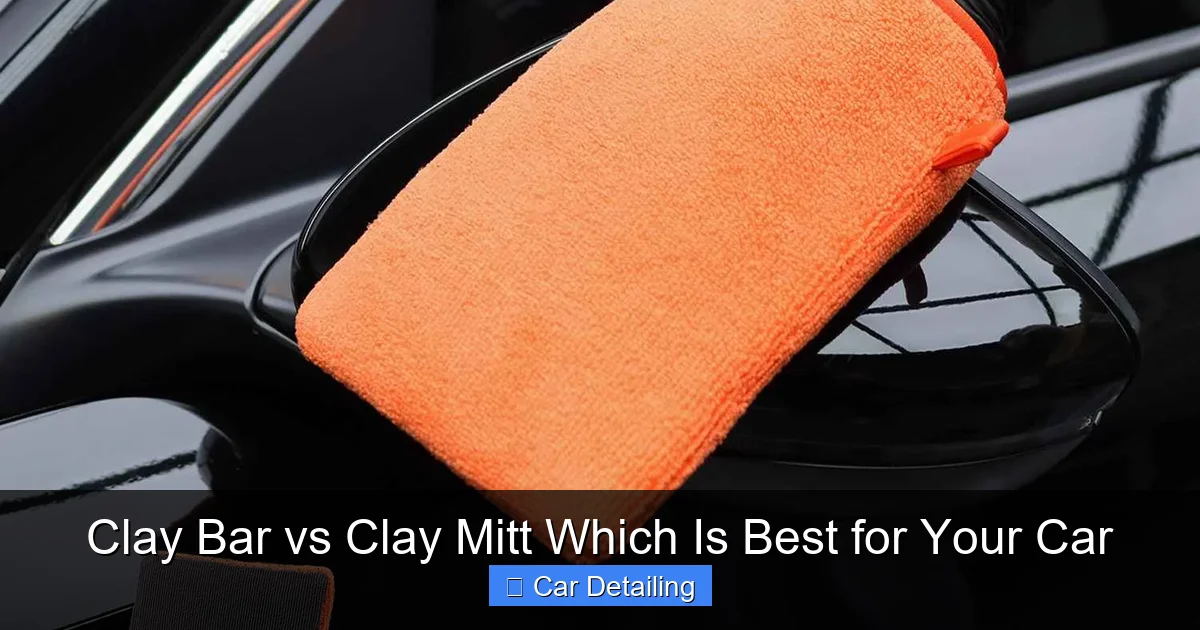
Visual guide about Clay Bar vs Clay Mitt Which Is Best for Your Car
Image source: ueeshop.ly200-cdn.com
That difference affects everything from user confidence to final finish quality. For many owners, the choice is less about which tool is “better” in theory and more about which one matches the vehicle and the job.
Contamination removal power and tactile feedback
Clay bars usually provide stronger tactile feedback because you can feel the bar glide and notice when the surface starts to smooth out. That makes it easier to focus on stubborn areas and to judge whether a panel is fully decontaminated.
Clay mitts can still remove bonded contamination effectively, but the feedback is less direct. They are often more forgiving for beginners, though some users prefer the more hands-on feel of a clay bar when working on specific problem spots.
Work speed on large panels, curves, and tight areas
A clay mitt is generally faster on hoods, roofs, doors, and other large flat panels because it covers more area with less effort. It is also easier to keep moving in a consistent pattern when you are doing an entire vehicle.
A clay bar takes more time because you must knead it often and work smaller sections. On the other hand, a clay bar can be easier to manipulate around badges, complex body lines, and narrow areas where a mitt may feel bulky.
Finish quality on soft, hard, and ceramic-coated paint
Finish quality depends on the paint, the contamination level, and how aggressively the tool is used. On softer paint, both tools can leave light marring if lubrication is poor or if too much pressure is used.
On harder paint, either option may leave fewer visible marks, but that does not mean the surface is risk-free. Ceramic-coated paint can still collect contamination, and claying a coating may reduce some of its slickness or even affect the top layer of protection depending on the product used.
| Option | Best For | Limit |
|---|---|---|
| Clay Bar | Precise work, stubborn contamination, tight areas | Slower and easier to drop or overload with debris |
| Clay Mitt | Fast full-vehicle decontamination and beginner-friendly use | Less tactile feedback and can be awkward in small spaces |
Which Is Better for Your Car? Best Use Cases by Vehicle Type and Condition
The right tool depends on how the car is used, how much contamination has built up, and how much finish quality matters to you. In many real-world situations, both tools can work well if used correctly.
If you are comparing clay bar guide for beginners style techniques with a mitt-based approach, think about your comfort level first. A tool that you will use safely is usually better than a “better” tool that you handle aggressively.
Daily drivers with light bonded contamination
For daily drivers that are washed regularly, a clay mitt is often the practical choice. It can remove light bonded grime quickly, especially if the vehicle is only mildly rough to the touch after washing.
If the car is driven in mixed weather and sees normal road exposure, the mitt saves time without sacrificing much in results. A clay bar can still be useful for mirror caps, bumpers, and other areas where contamination tends to be heavier.
Black paint, luxury finishes, and show-car prep
Black paint and high-visibility finishes show marring more easily, so the safest approach is usually the one that gives you the most control. A clay bar may be preferred for careful, section-by-section work when the goal is a show-ready finish.
That said, a clay mitt can still be a great first pass if you are comfortable with it and plan to polish afterward. For owners chasing a very refined result, the final choice often comes down to how much correction work will follow.
Heavily contaminated vehicles, neglected paint, and winter buildup
Cars that have sat through winter road salt, industrial fallout, or months of neglect may need more than a quick clay pass. In those cases, the contamination may be too heavy for a light mitt pass alone.
A clay bar can help target rough sections more carefully, but if the surface feels extremely gritty or has embedded debris across the whole vehicle, multiple passes may be needed. If the paint feels like sandpaper after washing, consider whether professional detailing is safer than forcing the issue.
New cars, used cars, and cars with existing protection
New cars are not always contamination-free, so they may still benefit from a gentle decontamination step before protection is applied. A clay mitt is often enough for light prep, especially if the goal is to preserve time and avoid unnecessary abrasion.
Used cars vary widely. If the vehicle already has wax, sealant, or coating, claying may remove some of that protection, so it should be followed by a fresh protectant if needed. If you are unsure how the surface is protected, test a small area first.
- Wash the car thoroughly before claying
- Inspect the paint with clean hands or a plastic bag test
- Use plenty of lubrication
- Work one small panel at a time
- Stop if the surface still feels rough after several passes
Cost, Durability, and Value: Clay Bar vs Clay Mitt in 2025
Price matters because claying is not a one-time purchase for most detailers. Clay bars are usually cheaper up front, while clay mitts tend to cost more but may last longer depending on the model and how carefully they are cleaned.
Value also depends on how often you detail. A weekend DIY user may prioritize low cost, while a professional or frequent enthusiast may care more about speed and repeatable results.
Upfront price differences and replacement frequency
Clay bars are typically the lower-cost option, but they are also more disposable. Once a clay bar is dropped or heavily loaded with debris, many users replace it rather than risk scratching the paint.
Clay mitts usually cost more initially, but they may be reusable for multiple jobs if maintained properly. Exact lifespan varies by brand, care, and contamination level, so it is better to think in terms of condition rather than a fixed number of uses.
Long-term value for DIY detailers vs professionals
For DIY detailers, a clay bar can be the most economical entry point. It is especially attractive if you only decontaminate the car occasionally and do not need to save time on every wash day.
For professionals or enthusiasts detailing multiple vehicles, a clay mitt may offer better workflow efficiency. The time saved on larger surfaces can justify the higher cost, especially when the finish goal is consistent rather than ultra-precise on every panel.
When a clay mitt is worth the extra cost
A clay mitt is worth the extra cost when you regularly detail full vehicles, want a faster process, or prefer a tool that is easier to handle with less kneading. It can also be a good choice if you want one tool for broad panels and a separate clay bar for tight spots.
If you are still learning how to decontaminate paint safely, a mitt may feel less intimidating. Just remember that easier handling does not eliminate the need for lubrication and careful inspection.
Pricing varies by brand, size, and whether the tool is sold as part of a kit. Instead of chasing the cheapest option, compare how much surface area you can cover safely and how often the tool is likely to be replaced.
How to Use Each Tool Correctly Without Damaging Paint
Most claying damage comes from technique, not from the tool itself. Whether you choose a bar or a mitt, the main goals are to keep the paint wet, avoid pressure, and stop as soon as the surface feels smooth.
If you have already learned hand washing car safely basics, claying becomes much easier because the panel is already cleaner before the decontamination step begins.
Proper lubrication, pressure, and panel-by-panel technique
Use a dedicated clay lubricant or a slick detailing spray that is safe for the task. Work in small sections so the lubricant does not dry out before you finish the area.
Use only light pressure. Let the tool glide over the surface and do not scrub aggressively. If the tool starts to drag, add more lubricant instead of forcing it.
Wash and rinse the section first so loose dirt does not get trapped under the clay or mitt.
Apply enough clay lube to keep the surface slick from start to finish.
Move the tool in straight, overlapping passes until the paint feels smooth.
Use a clean microfiber towel to remove residue and check whether the panel is fully decontaminated.
Safe washing and inspection before claying
A proper wash is the best insurance against scratches. If the car is still dusty or muddy, claying can grind that dirt into the paint and create unnecessary marring.
If you want a broader prep routine, the weekly car wash without scratching paint approach is a good companion to claying because it reduces the amount of contamination you have to remove later.
When to stop and switch tools instead of forcing contamination removal
If a panel still feels rough after several careful passes, stop and reassess. The contamination may be too heavy for the current tool, or the surface may need polishing rather than more claying.
For stubborn spots like tar, paint overspray, or industrial fallout, a dedicated remover may be safer than repeatedly rubbing the area with clay. When the issue seems beyond normal detailing, ask a professional before making it worse.
Common Mistakes That Cause Scratches, Marring, or Wasted Time
Most problems happen when people rush, skip lubrication, or use contaminated tools on already dirty paint. The good news is that these mistakes are easy to avoid once you know what to watch for.
Using a clay bar or mitt on dry paint
Dry claying is one of the fastest ways to induce marring. Without lubrication, the tool can grab at the surface and drag debris across the clear coat.
Even if the panel looks clean, it still needs a slick layer of lubricant. If the product starts flashing or drying, reapply before continuing.
Dropping the tool and reusing it
If a clay bar hits the ground, it often picks up grit that can scratch the paint. Many detailers discard it immediately because the risk is not worth the small savings.
A clay mitt may be easier to rinse, but it is not automatically safe after a drop. Inspect it carefully, and if you cannot be sure it is clean, replace it.
Skipping test spots on delicate or repainted panels
Repainted panels, fresh bodywork, and older soft paint can react differently than the rest of the car. A quick test spot helps you see whether the tool is leaving marks before you commit to the whole vehicle.
This is especially important on black paint or on cars with unknown repair history. If the panel seems unusually sensitive, a professional detailer may be the safer choice.
Using the wrong level of aggressiveness for the paint condition
Not every car needs an aggressive approach. If the contamination is light, a gentler pass is usually enough.
Using too much pressure or too many passes can create more work later because you may need to polish out the marks you introduced during claying. A careful, minimal approach usually gives the best balance of results and safety.
Do not clay over visible dirt, heavy mud, or gritty residue. If the paint is not fully washed first, the tool can trap abrasive particles and scratch the clear coat.
Expert Recommendation: Which Tool AAutomotives Recommends for Most Drivers in 2025
For most drivers, the best answer is not “always the bar” or “always the mitt.” It is the tool that matches the paint condition, your comfort level, and the amount of time you have available.
As a general rule, AAutomotives recommends choosing the simplest safe method that gets the job done. If you want to compare your approach with other prep habits, our why clay bar matters for car owners guide explains why decontamination remains important even for routine maintenance.
Best choice for beginners and weekend detailers
A clay mitt is usually the better starting point for beginners because it is faster, easier to hold, and less fussy on large panels. It can reduce the amount of time you spend kneading or reshaping the tool.
Weekend detailers who only decontaminate a few times a year often appreciate that convenience. Still, a clay bar remains useful if you want more control on tricky areas or if you prefer a traditional feel.
Best choice for enthusiasts seeking the cleanest finish
Enthusiasts who want the most refined result often use both tools strategically. A mitt can handle the broad decontamination pass, while a clay bar can address stubborn spots or detail-sensitive sections.
If your goal is a polished, show-ready finish, the best result usually comes from careful prep followed by polishing and protection. For some owners, that combination is more effective than relying on one tool alone.
When professional detailing is the safer option
Professional help makes sense when the paint is heavily contaminated, repainted, damaged, or expensive enough that a mistake would be costly. It is also worth considering if you are unsure whether the surface has a coating, film, or delicate finish.
Ask a professional if you notice deep roughness that does not improve, overspray that may require chemical removal, or any sign that the clear coat is already compromised. In those cases, forcing a clay tool across the paint can create more problems than it solves.
If you are undecided, buy the tool that fits your most common job. A clay mitt is the better all-around choice for speed, while a clay bar is the better precision tool for smaller, more sensitive areas.
Final Verdict: Clay Bar vs Clay Mitt for the Best Balance of Results, Time, and Safety
Clay Bar vs Clay Mitt comes down to tradeoffs. A clay bar usually offers more control and is excellent for targeted work, while a clay mitt is faster and more convenient for full-vehicle decontamination.
Neither tool is automatically safer or better in every situation. The best option is the one you can use with enough lubrication, patience, and attention to avoid marring the paint.
Quick recap of who should choose each option
Choose a clay bar if you want precision, work on delicate or complex areas, or prefer a traditional detailing method. Choose a clay mitt if you want faster coverage, easier handling, and a more efficient routine for regular maintenance.
If your vehicle has heavy contamination, unknown paint history, or expensive finishes, a careful test spot or professional consultation is smart before you commit to a full decontamination session.
Practical takeaway for choosing the right decontamination tool
The smartest choice is often a combination approach: use the mitt for broad panels, then keep a clay bar for problem areas and finishing touches. That gives you speed without giving up control where it matters most.
For most drivers in 2025, the right answer is the tool that helps you clean the paint thoroughly while keeping risk low. If you can do that consistently, you are choosing well.
- Clay mitts are faster and easier for most full-car jobs.
- Clay bars give better precision and tactile control on tight or stubborn areas.
- Good lubrication and a clean wash matter more than the tool alone.
- For expensive, repainted, or heavily damaged paint, consider professional help.
🎥 Related Video: Clay Bar vs Clay Towel vs Clay Mitt : What is the best ??
📺 Pan The Organizer
Clay bar vs Clay towel vs Clay Mitt: What is the best? In this video, you will learn everything there is to know about a clay bar, how …
Frequently Asked Questions
A clay mitt is often easier for beginners because it covers larger areas faster and feels less fussy to use. A clay bar still works well, but it usually takes more time and more careful handling.
Yes, either tool can leave marring or scratches if used on dry paint, dirty panels, or with too much pressure. Proper washing, lubrication, and gentle technique reduce the risk.
Either tool can be used before waxing if the paint feels rough after washing. The goal is to remove bonded contamination so the wax or sealant bonds to a cleaner surface.
Not always, but polishing can help remove any light marring left behind by claying. If the paint already looks perfect and no marks are visible, you may only need to reapply protection.
