Detailing Checklist vs Alternatives Which Is Best

A detailing checklist is best when you want a thorough, repeatable clean with better long-term protection. Alternatives are better when speed, convenience, or budget matter more than a full-detail result.
Choosing between a detailing checklist and faster alternatives depends on what your car needs right now, how much time you have, and how much finish quality matters. In 2025, drivers are balancing convenience, cost, and long-term protection more than ever, so the “best” method is usually the one that fits the vehicle’s condition and your routine.
- Best for deep cleaning: A checklist keeps washing, decontamination, interior care, and protection in order.
- Best for speed: Quick-detail routines and mobile services save time but usually do less.
- Best for value: DIY checklists often cost less over time if you already own the basics.
- Best for maintenance: Alternatives work well for light upkeep between full details.
- Best hybrid approach: Use a checklist for seasonal resets and simpler methods for weekly care.
- Detailing Checklist vs Alternatives: What Drivers Actually Need in 2025
- What a Car Detailing Checklist Includes and Why It Still Matters
- Popular Alternatives to a Detailing Checklist
- Detailing Checklist vs Alternatives: Side-by-Side Comparison
- When a Detailing Checklist Is the Better Choice
- When an Alternative Makes More Sense
- Common Mistakes When Choosing Between a Checklist and Alternatives
- Expert Advice: How to Choose the Right Detailing Method Safely
- Final Verdict: Detailing Checklist vs Alternatives Which Is Best for You
Detailing Checklist vs Alternatives: What Drivers Actually Need in 2025
A detailing checklist is still the most reliable way to clean a car thoroughly and repeat the same results over time. But alternatives like quick-detail sprays, mobile packages, and digital planners can make more sense when the goal is speed, not a full reset.
The real question is not whether a checklist is “better” in every case. It is whether you need a structured process for deep cleaning, or a lighter system that keeps a car presentable with less effort.
What a Car Detailing Checklist Includes and Why It Still Matters
A proper checklist breaks detailing into repeatable steps so nothing gets skipped. That matters because missed steps often show up later as swirl marks, leftover grime, streaking, odors, or worn-looking trim.
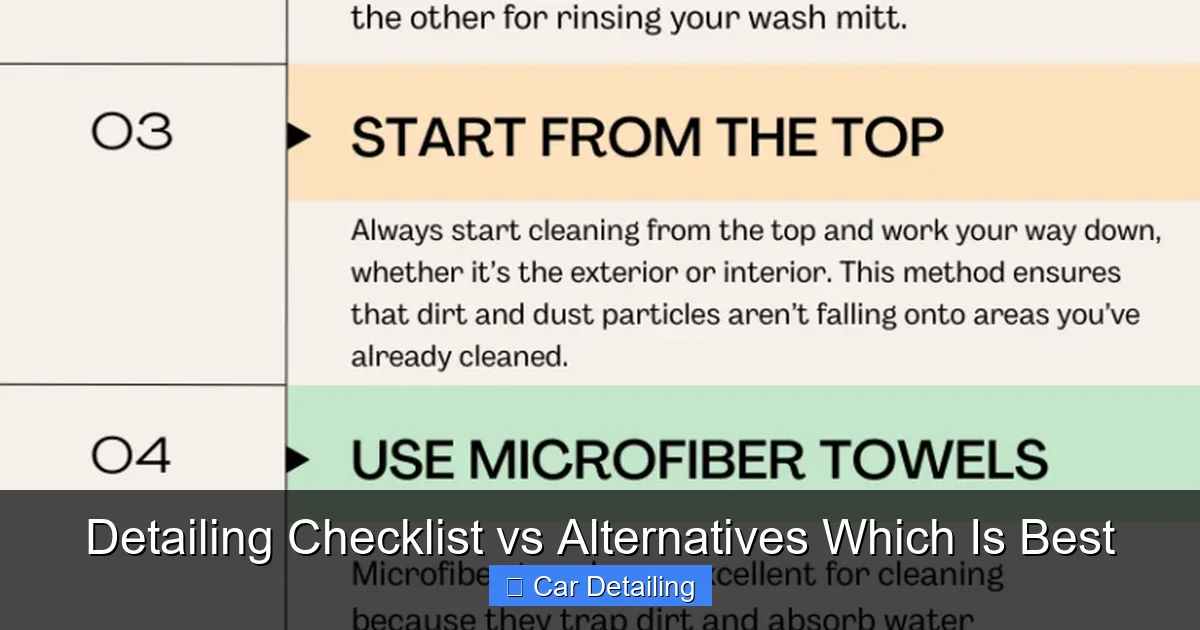
Visual guide about Detailing Checklist vs Alternatives Which Is Best
Image source: vehiclefreedom.com
For readers who prefer a structured wash routine, this approach works especially well alongside a weekly wash routine checklist and safe washing habits. It also helps drivers who want a cleaner, more predictable result without guessing what to do next.
Core exterior steps: wash, decontaminate, dry, protect
Most exterior checklists start with a careful wash, then move to decontamination if needed, followed by drying and protection. That sequence helps remove loose dirt first, then bonded contamination, then finish with a layer that slows future buildup.
In practice, this may include bug removal, wheel cleaning, tar or iron removal, clay treatment when needed, and a sealant or wax. The exact products and order can vary by paint condition, climate, and how often the vehicle is driven.
If the paint feels rough after washing, a checklist makes it easier to decide whether a clay step is actually needed instead of overdoing it every time.
Interior steps: vacuum, surfaces, glass, odor control
Interior detailing checklists usually cover vacuuming, dust removal, plastics, screens, vents, glass, and odor control. This prevents the common “looks clean from a distance” problem where crumbs, film, and smells remain in high-touch areas.
For family cars and work vehicles, the interior sequence matters just as much as the exterior. Once dirt gets into carpet fibers, seat seams, and cupholders, a casual wipe-down often is not enough.
Why checklists help consistency for DIY and pros
Checklists reduce skipped steps, rushed work, and product overlap. They are useful for DIY owners who detail only a few times a year, and for pros who want the same process across different vehicles.
They also make it easier to spot what was actually done last time. If you are comparing routine care with more advanced paint prep, a checklist can support better decisions than memory alone, especially before using a clay bar or protection product.
Popular Alternatives to a Detailing Checklist
Alternatives can be practical when the car only needs maintenance, not a full detail. They often trade completeness for speed, simplicity, or convenience.
Quick-detail sprays and express wash routines
Quick-detail sprays are useful for light dust, fingerprints, and maintaining gloss between washes. Express wash routines can also save time, especially for drivers who mainly want the vehicle to look tidy.
The limitation is that these methods do not replace a full process when the car is heavily soiled. They can improve appearance fast, but they usually do not remove bonded contamination or restore neglected interiors.
Mobile detailing packages and subscription services
Mobile detailing is a strong alternative for owners who want professional-level labor without visiting a shop. Subscription services can be appealing for people who want regular maintenance and predictable scheduling.
The tradeoff is that package contents vary widely. Some services are maintenance-focused, while others include deeper cleaning, so it is worth checking exactly what is included before paying for recurring visits.
Full-service detail shops vs at-home routine systems
Detail shops are often the best fit when the car needs more than maintenance, such as stain removal, heavy buildup, or paint correction prep. At-home systems are better for owners who want more control and lower ongoing cost.
If you are comparing shop work with DIY maintenance, the decision often comes down to time and condition. A clean, well-kept car may only need a routine system, while a neglected one may benefit from a professional reset before going back to maintenance mode.
AI apps, maintenance logs, and digital car-care planners
Digital planners and AI-based reminders can help owners stay on schedule. They are especially useful for tracking wash dates, protection intervals, interior cleanups, and seasonal tasks.
These tools do not clean the car for you, but they can reduce forgetfulness. For people who like systems, a digital log can work well with a physical checklist and make long-term care easier to manage.
Detailing Checklist vs Alternatives: Side-by-Side Comparison
There is no universal winner here. The best option depends on how dirty the car is, how much time you have, and whether you want a quick refresh or a complete detail.
| Option | Best For | Limit |
|---|---|---|
| Detailing checklist | Deep cleaning, consistency, protection | Takes longer and needs more effort |
| Quick-detail routine | Fast upkeep between full cleans | Not enough for heavy dirt or contamination |
| Mobile detailing | Convenience and professional labor | Costs more and package quality varies |
| Digital planner | Scheduling and maintenance tracking | Does not replace the actual cleaning process |
Time required, effort level, and skill needed
A checklist-based detail usually takes the most time because it covers more steps. It also requires more effort and some basic product knowledge, especially if you are handling decontamination, interior cleaning, or protection products.
Alternatives can be much faster. Quick-detail sprays and express washes are low effort, while professional services reduce your labor but still require you to choose the right package.
Cost comparison: DIY supplies vs paid services in 2025
DIY detailing usually has a lower cost per wash or per detail once you already own the basics, but the upfront supply list can add up. Paid services cost more per visit, though they save time and may deliver a more consistent finish.
Pricing varies a lot by location, vehicle size, condition, and service level, so compare what is included rather than focusing only on the base price.
For budget-minded owners, the best value is often a hybrid approach: do routine maintenance at home and pay for professional help only when the car truly needs it.
Results, consistency, and long-term paint/interior protection
A checklist usually wins on consistency because it helps you do the same protective steps each time. That matters for paint, trim, glass, carpets, and leather or leatherette surfaces that wear faster when neglected.
Alternatives can still produce good results, but they are often optimized for speed. If protection is skipped too often, the car may look fine today and age faster over the next season.
Best option by vehicle type: daily driver, family SUV, luxury car, work truck
Daily drivers often benefit from a checklist plus occasional shortcuts, because they need a balance of maintenance and speed. Family SUVs usually need more interior attention, so a structured process helps with crumbs, spills, and odor control.
Luxury cars often justify more careful detailing because finishes, screens, and delicate trim can be more expensive to correct. Work trucks may need a tougher, simpler routine focused on heavy dirt, mats, and utility surfaces rather than show-car perfection.
When a Detailing Checklist Is the Better Choice
There are times when a checklist is clearly the smarter tool. When the vehicle needs a reset rather than a touch-up, structure matters more than speed.
Seasonal deep cleans and paint correction prep
Seasonal detailing is a strong use case because winter salt, spring pollen, and summer road film can build up in layers. A checklist helps you address each layer in the right order instead of masking the problem.
If paint correction or ceramic coating prep is the goal, a checklist is even more important. For those situations, a more careful process similar to a clay bar checklist for beginners smooth paint can help ensure the surface is ready before protection is applied.
Used car refreshes, road-trip recovery, and salt removal
Used cars often need a full interior and exterior reset because you may not know what products were used before or how long the car went without care. A checklist helps remove old grime and restore a clean baseline.
After a road trip, the vehicle may need bug removal, dust cleanup, vacuuming, and glass care all at once. Salt removal is another case where a methodical process matters, because residue can hide in seams, wheel wells, and lower panels.
Owners who want control over products and process
Some owners prefer to choose their own shampoos, interior cleaners, dressings, and protectants. A checklist supports that because it gives structure without forcing one brand or one service package.
This is especially useful if you are protecting sensitive trim or maintaining a coated vehicle. If you already use a coating, it can help to follow a maintenance plan like a ceramic coating maintenance guide long lasting shine so you do not accidentally shorten its life with the wrong products.
When an Alternative Makes More Sense
Alternatives are not “lesser” choices when the goal is simply to keep the car presentable. They become the better answer when time, budget, or convenience matter more than a full-detail finish.
Busy owners who need speed and convenience
If your schedule is tight, a quick-detail routine may be the only realistic option between full cleans. That is better than letting the car get worse while waiting for the perfect free weekend.
Mobile services are also a good fit for busy owners who want the work done at home or at the office. Just make sure the package matches the condition of the vehicle, not just the marketing language.
Vehicles with light maintenance needs only
Some cars simply do not need full detailing very often. If a garage-kept vehicle only picks up light dust and occasional fingerprints, a maintenance routine may be enough most of the time.
In that case, a checklist can still be useful as a seasonal reset, but it does not need to be the weekly standard. A lighter system keeps costs and effort under control.
Budget limits, leasing concerns, or fleet maintenance needs
Budget is a real factor, and not every owner wants a full detail every month. Alternatives can stretch your dollars further, especially if the vehicle only needs to look clean enough for daily use.
Fleet maintenance often benefits from repeatable, fast service rather than highly customized detailing. Leasing concerns can also push owners toward maintenance-focused care, though you should still ask the lease provider or a professional detailer if you are unsure about acceptable products or methods.
Common Mistakes When Choosing Between a Checklist and Alternatives
The biggest mistakes usually happen when owners choose a method that does not match the vehicle’s condition. Fast shortcuts are fine for light upkeep, but they can create problems when used on neglected surfaces.
Skipping decontamination or protection steps
One common mistake is using a wash-only routine forever and never decontaminating or protecting the paint. That can leave bonded grime behind and reduce the long-term appearance of the finish.
Another issue is skipping interior protection after cleaning. Surfaces may look clean, but without appropriate follow-up care they can fade, dry out, or show wear sooner than expected.
Using fast methods on heavily soiled vehicles
Quick-detail sprays are not meant to replace a proper wash on a dirty car. Using them on heavy dust, mud, or road film can smear contamination instead of removing it.
Do not use a shortcut method on gritty paint or dirty towels, because rubbing trapped debris can create scratches or dull trim.
If the car is deeply soiled, start with a safer cleaning sequence first. When in doubt, a fuller checklist is usually the safer choice.
Overpaying for services that do not match the vehicle’s condition
Another mistake is buying a premium package when the car only needs maintenance, or choosing a basic package when the vehicle clearly needs more work. Both can be frustrating because the result does not match the money spent.
Before booking, ask what is included and what is not. If the car has stains, pet hair, heavy contamination, or neglected paint, it may be worth asking a professional what level of service is actually appropriate.
Expert Advice: How to Choose the Right Detailing Method Safely
The safest choice is the one that matches your skill level and the car’s condition. If a job seems beyond your tools, time, or comfort level, it is better to pause than to risk damage.
Warning signs that a pro detailer is worth it
Consider professional help if the paint has visible defects, the interior has stubborn stains or odors, or the vehicle needs correction before sale or coating. Heavy contamination, mold concerns, and delicate materials are also signs that a pro may be worth the cost.
If you are unsure how to handle a specific issue, asking a professional can save money in the long run by preventing damage from the wrong product or technique.
Product and tool mistakes that can damage paint or trim
Common mistakes include using dirty wash mitts, rough towels, harsh cleaners on sensitive trim, and too much pressure on delicate surfaces. These errors can leave scratches, haze, discoloration, or streaking.
For paint decontamination, it helps to understand the basics before starting. A careful, beginner-friendly process like how to use a clay bar safely for a flawless finish can reduce the chance of marring the paint while still improving smoothness.
How to build a practical hybrid routine for 2025
For many drivers, the best setup is a hybrid routine. Use a checklist for seasonal deep cleaning, then rely on quick-detail sprays, express washes, or digital reminders to stay ahead of buildup between bigger sessions.
This approach gives you the structure of a checklist without making every wash a major project. It is often the most realistic option for owners who want both good results and manageable upkeep.
Final Verdict: Detailing Checklist vs Alternatives Which Is Best for You
There is no single winner for every driver. The best choice depends on whether your priority is value, convenience, or the highest possible finish quality.
Best overall choice by goal: value, convenience, or finish quality
If you want the best long-term value and consistency, a detailing checklist is usually the strongest choice. If convenience matters most, alternatives like mobile detailing or quick-maintenance routines make more sense.
If finish quality is the priority and the car needs serious work, a checklist or a professional detail service is usually better than a shortcut. The right answer is the one that matches the vehicle’s condition, not just the fastest option available.
Practical recap for readers deciding their next detailing approach
Use a checklist when the car needs a true reset, when protection matters, or when you want repeatable results. Use an alternative when the car only needs upkeep, when time is tight, or when professional labor is the most efficient solution.
For most owners, the smartest plan is not choosing one method forever. It is knowing when to deep clean, when to maintain, and when to ask for professional help so the car stays clean without wasting time or money.
Frequently Asked Questions
Yes, if you want a deeper clean and longer-lasting protection. Quick-detail sprays are better for light dust and fast touch-ups.
Choose mobile detailing when convenience matters and the car needs more than basic upkeep. It is especially useful when your schedule is tight or the vehicle needs a more complete refresh.
Yes, and that is often the most practical choice. Use a checklist for deep cleans and alternatives for regular maintenance in between.