Simple paint correction starts with careful inspection, gentle prep, and the least aggressive product that improves the finish. For deep scratches or delicate paint, it is safer to stop and ask a professional.
Simple paint correction can make tired paint look dramatically cleaner, but it is not magic. For most car owners, the goal is to reduce visible defects safely, not to chase perfection at the cost of thinning the clear coat.
- Inspect first: Identify swirls, scratches, and oxidation before polishing.
- Prep matters: Wash, decontaminate, and dry the paint before correction.
- Start mild: Use the least aggressive pad and product that works.
- Protect edges: Tape trim and avoid heavy pressure or high heat.
- Maintain results: Seal the finish and wash gently afterward.
Simple Paint Correction Tips: What It Actually Means for Car Owners in 2025
Paint correction is the process of improving the look of painted surfaces by reducing defects such as swirls, light scratches, haze, and oxidation. In practical terms, it usually means polishing the clear coat with the right combination of pad, product, and technique.
For everyday drivers, simple paint correction tips are about choosing a safe starting point. If the paint only has light wash marks or dullness, a mild polish may be enough. If the damage is deeper, the right answer may be to stop and ask a professional rather than keep removing material.
This matters because modern clear coats vary by vehicle, age, and condition. Some finishes respond quickly, while others are harder, softer, or already worn thin from years of polishing or poor washing habits. A careful first pass is usually smarter than an aggressive one.
How to Inspect Paint Defects Before You Start Correction
Before touching a machine or compound, inspect the paint in a controlled way. The defect type tells you how much correction is realistic and how aggressive your approach should be.
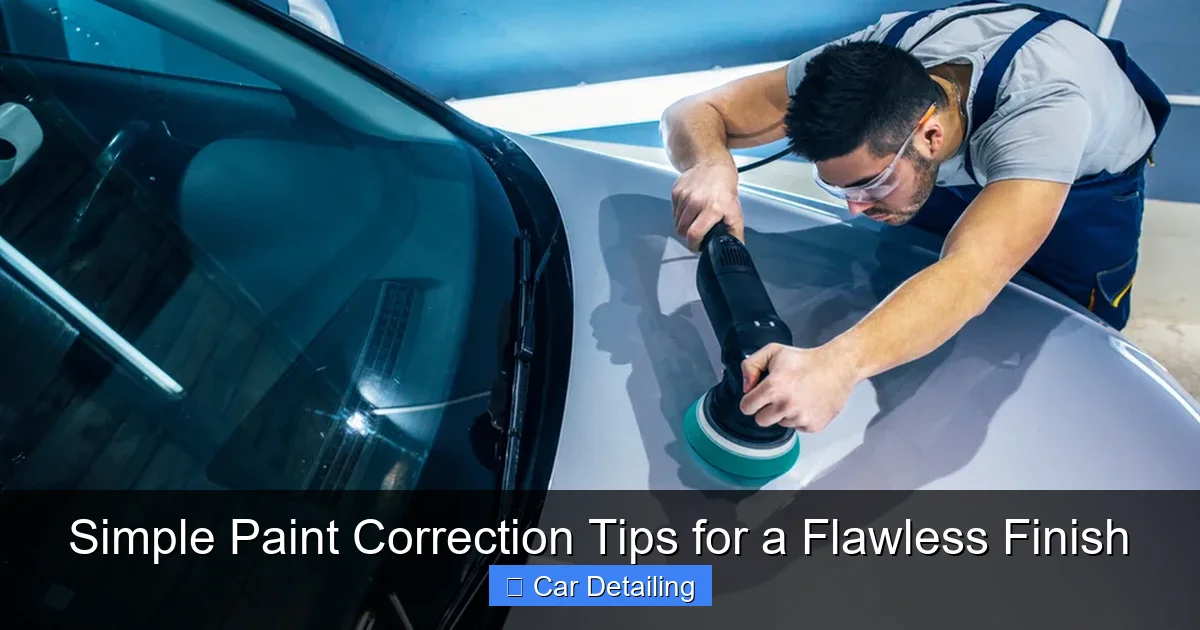
Visual guide about Simple Paint Correction Tips for a Flawless Finish
Image source: detailerdirectory.com
Swirl Marks, Light Scratches, Oxidation, and Water Spots
Swirl marks are the fine circular lines often seen under sunlight or bright shop lighting. Light scratches are usually more defined and may come from brushes, dirty towels, or poor drying habits.
Oxidation looks like faded, chalky, or dull paint, especially on older vehicles or neglected clear coats. Water spots can range from simple mineral residue on the surface to etching that has actually marked the clear coat.
Not every mark is worth chasing. If a scratch catches a fingernail, may be through the clear coat, or appears very deep, simple paint correction tips will not fully solve it. That is the point where touch-up work or professional repair may be the better option.
Choosing the Right Lighting and Surface Conditions
Use bright, direct lighting when inspecting paint. Sunlight, LED inspection lights, or a strong handheld light can reveal defects that are hard to see in shade or overcast conditions.
The surface should be cool and clean before evaluation. Hot panels can hide defects, cause products to dry too quickly, and make it harder to judge the true finish.
A clay bar checklist for beginners can also help you decide whether contamination is making the surface look worse than it really is. Sometimes the finish needs decontamination before any correction work begins.
Tools and Products You Need for a Basic DIY Paint Correction
You do not need a huge detailing setup to get started, but you do need the right basics. The safest approach is to assemble a simple kit and avoid mixing too many products before you understand how each one behaves.
Dual-Action Polisher vs. Hand Correction: Which Makes Sense
A dual-action polisher is the most practical tool for many beginners because it spreads product more evenly and reduces the risk of creating uneven results. It is still possible to damage paint with poor technique, but it is generally more forgiving than a rotary machine.
Hand correction can work for very small spots, trim edges, or isolated light marks. The limitation is consistency: by hand, it is harder to generate enough controlled correction across larger panels.
If you only have a few isolated marks, hand work may be enough. For an entire vehicle, a dual-action polisher usually makes more sense if you want more even results.
Pads, Compounds, Polishes, and Microfiber Towels Explained
Pads determine how much mechanical cut the process has. Foam pads are common for beginners because they are easier to control, while microfiber or more aggressive pads can cut faster but may leave more haze if used incorrectly.
Compounds are more aggressive and are used to reduce heavier defects. Polishes are milder and are often used to refine the finish after compounding or to handle lighter imperfections on their own.
Microfiber towels matter more than many beginners expect. A clean, soft towel helps remove residue without adding fresh scratches, while a dirty or rough towel can undo part of your progress.
- Dual-action polisher or clean hand applicator
- Foam pads in at least one mild and one medium option
- Light polish and, if needed, a mild compound
- Several clean microfiber towels
- Painter’s tape for trim and edges
Simple Paint Correction Tips for a Safe First Pass
The safest correction process is usually the least aggressive one that still improves the finish. That means starting with proper prep, working in small sections, and checking your results before expanding to the rest of the vehicle.
Wash, Decontaminate, and Dry the Vehicle Properly
Correction should never begin on dirty paint. Wash the car carefully, remove bonded contamination if needed, and dry it with a clean microfiber drying towel or similar safe method.
If the surface still feels rough after washing, contamination may be interfering with your results. A proper decontamination step can make polishing more effective and help you avoid grinding dirt into the clear coat.
For a safer wash process, many owners also review a hand wash fast without hurting paint guide first. A better wash routine often prevents the defects you are trying to correct later.
Test a Small Section Before Working on the Whole Car
Always test on a small, representative area before committing to the entire vehicle. A door section, hood corner, or trunk area can show you whether your pad and polish combination is enough.
This test spot helps you avoid over-correcting the whole car when a milder method would have worked. It also shows whether the paint is soft, hard, or inconsistent from panel to panel.
After your first pass, wipe the area clean and inspect it under the same light you used earlier. If the defect is still visible, step up only one level at a time.
Use the Least Aggressive Method That Gets Results
This is one of the most important simple paint correction tips for beginners. Start with a light polish and a soft pad, then move up only if the finish is not improving enough.
Using the least aggressive method helps preserve clear coat thickness and reduces the chance of haze, micro-marring, or uneven gloss. It also makes it easier to stop once the paint looks clean and consistent.
If you are also trying to improve surface smoothness before polishing, a careful clay bar safely for a flawless finish approach can help. Just remember that claying removes contamination, not scratches.
Common Paint Correction Mistakes That Cause More Damage
Most correction mistakes come from rushing. The paint usually looks worse when the process is too aggressive, too dirty, or too broad for a beginner’s skill level.
Overusing Compound, Pad Pressure, or Machine Speed
More pressure and more speed do not automatically equal better correction. In many cases, they create heat, haze, or uneven results without fixing the defect more effectively.
Compound should be used only when the paint actually needs it. If a polish can remove or reduce the issue, using a heavier product first is unnecessary and can make refinement harder.
Too much pressure or too much machine speed can damage edges, trim-adjacent areas, and already-thin clear coat. Keep your passes controlled and stop if the panel becomes hot.
Working on Dirty Paint or Skipping Tape Protection
Polishing dirty paint can drag contamination across the surface and create fresh marks. Even tiny bits of grit can undo careful work, especially on softer paint systems.
Painter’s tape is also useful around trim, sharp body lines, emblems, and textured plastic. These areas are more likely to catch product residue or get burned through by an aggressive pad.
For more on keeping the surface safer during routine cleaning, a wash car home without scratching paint routine is worth following before correction ever starts.
Chasing Deep Scratches That Need Professional Repair
Not every defect should be polished out. If a scratch is deep, wide, rusting, or clearly through the clear coat, correction may only reduce its visibility rather than remove it.
Trying to “fix” a deep scratch by heavy compounding can create more problems than it solves. In those cases, a professional can advise whether touch-up paint, wet sanding, refinishing, or another repair method is appropriate.
DIY Paint Correction vs. Professional Detailing: Cost and Results
DIY correction can be rewarding, but it is not always the cheapest or safest route for every car owner. The right choice depends on how much damage is present, how much time you have, and whether you want to buy tools for future use.
What a Beginner Can Realistically Fix at Home
Most beginners can realistically improve light swirls, mild haze, shallow wash marks, and some oxidation with careful work. A one-step polish often makes a noticeable difference on vehicles that are otherwise in decent shape.
What home correction usually cannot do is restore damaged paint, remove deep scratches without risk, or fully correct heavily neglected finishes in one pass. The more severe the defect, the more likely it is that professional help will give a better outcome.
- Lower upfront cost if you already own basic tools
- Good for light defects and maintenance-level improvement
- Helps you learn your paint’s behavior over time
- Results vary with skill and paint type
- Risk of creating haze or new marks
- Limited ability to fix deep damage safely
When the Cost of Tools Makes Professional Help Worth It
If you only need correction once, buying a polisher, pads, compounds, towels, tape, and inspection lighting may not make financial sense. In that case, professional detailing can be the simpler route.
Professional help is also worth considering when the vehicle has valuable paint, delicate finishes, or defects that are difficult to assess. A detailer may still recommend a light correction rather than a full aggressive service, depending on the condition.
Tool costs vary widely by brand, package, and quality level, so it is smart to compare the price of a basic DIY setup against a one-time professional correction before deciding.
How to Finish and Protect Corrected Paint for a Lasting Shine
Correction is only part of the process. Once the paint looks better, it should be refined and protected so the finish lasts longer and stays easier to maintain.
Polish Refinement, Sealants, and Ceramic-Friendly Protection
After compounding, a refinement polish can remove haze and improve gloss. Even if you only used a single polishing step, a finishing product can help bring out a cleaner, sharper look.
Protection matters because corrected paint is still exposed to washing, UV, road film, and water spotting. Sealants, waxes, and ceramic-friendly toppers all have different strengths, and the best choice depends on how you maintain the car.
If you are comparing longer-lasting options, it may help to read about Ceramic Coating Guide — Complete Guide”>Ceramic Coating Guide Explained Simply”>ceramic coating for beginners before deciding whether a coating, sealant, or wax fits your routine.
Maintenance Washing Habits That Preserve the Finish
The best correction job can be undone by poor washing habits. Use clean mitts, safe drying towels, and gentle washing methods to reduce the chance of reintroducing swirls.
Regular maintenance also matters. Dirt left on the paint for too long can increase the chance of spotting, staining, and fine marring during the next wash.
For owners who want a cleaner routine after correction, a weekly car wash without scratching paint approach can help preserve the finish with less effort over time.
Final Recap: The Smartest Simple Paint Correction Tips for a Flawless Finish
The smartest simple paint correction tips are the ones that protect the clear coat while improving the finish. Inspect carefully, prep the surface well, test a small area, and use the least aggressive method that gives a real result.
That approach will not fix every defect, but it will help most car owners get a cleaner, glossier finish without making avoidable mistakes. When the damage is deep, the paint is delicate, or the cost of tools no longer makes sense, asking a professional is the safer call.
Frequently Asked Questions
The easiest starting point is a light polish with a soft pad on a small test section. This is often enough for mild swirls and dullness without needing aggressive compound.
Usually not completely. If a scratch catches a fingernail or looks through the clear coat, it may need touch-up or professional repair instead of polishing alone.
You do not always need one, but it is often the best beginner-friendly choice for larger areas. Hand correction can work for small spots, but it is less consistent on full panels.
Yes, if the paint feels rough or has bonded contamination. Claying removes surface contamination so polishing works more evenly, but it does not remove scratches by itself.
Use the least aggressive product first, keep the paint clean, tape off sensitive areas, and work in small sections. Stop if the panel gets hot or the finish starts to haze.
Hire a professional when the damage is deep, the paint is valuable or delicate, or the cost of tools does not make sense for a one-time job. A pro can also help when you are unsure whether a mark is safe to correct.

