How to Follow a Detailing Checklist Safely and Easily

Follow a detailing checklist safely by preparing your workspace, using the right tools, and cleaning from the top down one section at a time. The biggest safety wins come from reading product labels, avoiding heat and direct sun, and stopping when a surface looks delicate or damaged.
Following a detailing checklist safely is about more than getting a clean finish. It helps you protect paint, trim, glass, and interior surfaces while reducing the chance of scratches, chemical mistakes, and avoidable damage.
For many owners, the safest approach is simply the most organized one: prep the space, use the right products in the right order, and slow down when a surface looks delicate or unfamiliar.
- Prep first: Shade, airflow, gloves, and clean tools reduce risk.
- Use the right order: Inspect, rinse, clean, dry, then protect.
- Match products to surfaces: Paint, wheels, leather, and screens need different care.
- Avoid shortcuts: Dirty towels, mixed chemicals, and hot panels create damage.
- Ask for help: Visible damage or electrical concerns deserve professional attention.
- Why a Detailing Checklist Matters for Safe Car Care in 2025
- Preparing Your Workspace, Tools, and Protective Gear Before You Start
- How to Read and Follow a Detailing Checklist in the Right Order
- Safe Cleaning Methods for Exterior Surfaces, Wheels, and Trim
- Interior Detailing Safety: Fabrics, Leather, Screens, and Electronics
- Common Mistakes That Make a Detailing Checklist Unsafe
- When to Stop and Ask for Expert Help
- Final Safety Recap: The Easiest Way to Follow a Detailing Checklist Correctly
Why a Detailing Checklist Matters for Safe Car Care in 2025
A detailing checklist gives you a repeatable process, which matters because car materials and cleaning products vary widely. What works on one vehicle may be too aggressive for another, especially if the paint is soft, the trim is fragile, or the interior uses sensitive electronics.
It also helps you avoid the common “cleaning while guessing” problem. When you know the next step before you start, you are less likely to overapply product, reuse a dirty towel, or skip a rinse that should have happened first.
How a step-by-step checklist reduces scratches, swirl marks, and chemical mistakes
Most detailing damage happens when dirt is dragged across a surface or when a product is used too strongly. A checklist helps you remove loose grit before touching paint, then move through washing, drying, and protection in a controlled order.
It also reduces chemical mistakes. For example, using a wheel cleaner on paint, mixing products, or leaving a cleaner on too long can create staining or dulling that is hard to reverse.
Who benefits most: DIY owners, weekend detailers, and first-time users
DIY owners benefit because a checklist keeps the job manageable. Weekend detailers benefit because they can stop and restart without losing track of what has already been cleaned.
First-time users benefit the most from structure. If you are still learning how different surfaces react, a checklist gives you a safer pace and makes it easier to notice warning signs before damage spreads.
Preparing Your Workspace, Tools, and Protective Gear Before You Start
Safe detailing starts before the first spray bottle is opened. The workspace, tools, and protective gear all affect how much risk you take on while cleaning.
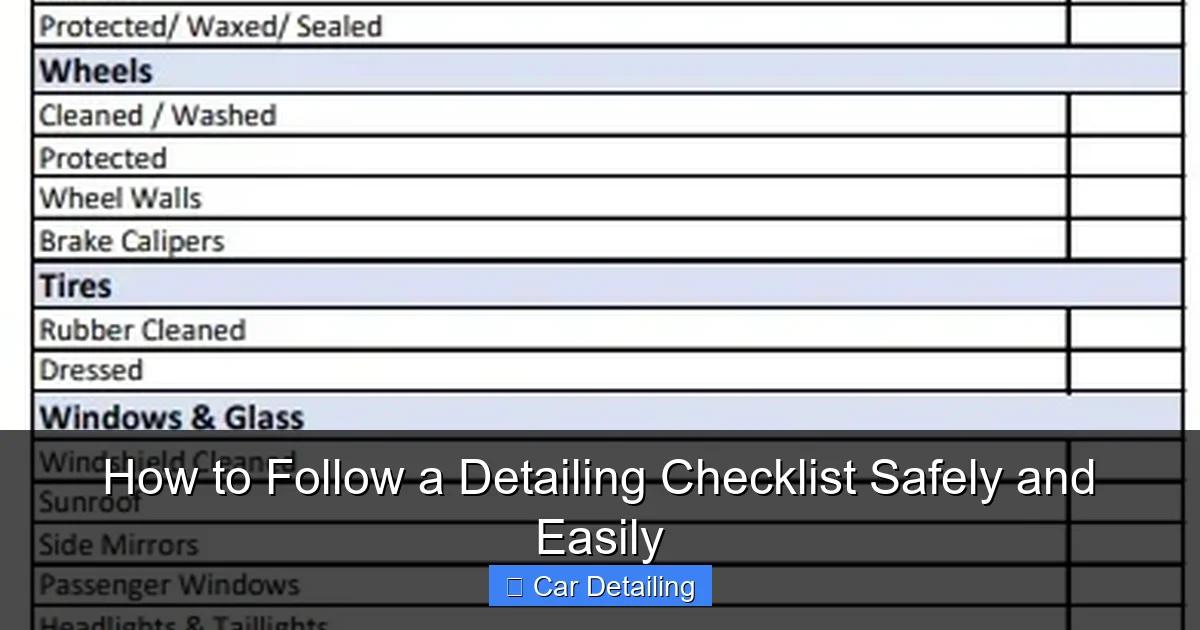
Visual guide about How to Follow a Detailing Checklist Safely and Easily
Image source: exceltmp.com
This is also the best time to organize your products so you are not reaching for chemicals with wet hands or setting brushes on dirty ground.
Choosing a shaded, well-ventilated area and avoiding hot panels
Whenever possible, work in shade or indoors with good airflow. Hot panels can make soap, cleaners, and dressings dry too quickly, which can leave spots, streaks, or residue.
Ventilation matters even more when using interior sprays, wheel cleaners, or tar removers. If fumes build up, step away and let fresh air move through the area before continuing.
Essential safety gear: gloves, eye protection, masks, and non-slip footwear
Gloves help protect your hands from strong cleaners, degreasers, and prolonged water exposure. Eye protection is useful when spraying upward, scrubbing wheel wells, or working under mirrors and trim.
A mask can be helpful when you are sensitive to dust or product mist, especially in enclosed spaces. Non-slip footwear matters too, since wet pavement, soap overspray, and microfiber runoff can make the ground slick.
Setting out microfiber towels, wash mitts, brushes, and labeled chemicals
Lay out clean microfiber towels, separate wash mitts, and the brushes you actually plan to use. Keep heavier-duty tools away from delicate ones so they do not get mixed up mid-job.
Label your chemicals clearly if the bottles are not already marked. That simple habit reduces the chance of using the wrong product on glass, leather, plastic, or paint.
Set up two zones: one for clean tools and one for used tools. That makes it much easier to avoid cross-contamination during the job.
How to Read and Follow a Detailing Checklist in the Right Order
The safest checklist is usually the one that starts with inspection and ends with protection. If you jump around, you can undo your own work or miss contamination that should have been removed earlier.
For extra context on wash order and common mistakes, some readers also review a weekly wash routine checklist before moving into deeper detailing steps.
Starting with inspection, pre-rinse, and decontamination before washing
Begin by looking over the vehicle for heavy dirt, tar, bug buildup, brake dust, and any existing damage. This helps you choose the mildest effective method instead of reaching for a strong cleaner too early.
A pre-rinse removes loose debris before contact washing. If the paint feels rough after rinsing, decontamination may be needed before polishing or waxing, but the exact method depends on the vehicle’s condition.
Working top-to-bottom to prevent recontamination and missed spots
Top-to-bottom cleaning is safer because the dirtiest runoff usually falls downward. If you clean lower panels first, debris from the upper surfaces can drip onto the areas you already finished.
The same idea applies inside the cabin. Start with high-dust areas such as vents, dashboards, and screens, then move down to lower panels, seats, and floor mats.
Using one section at a time to stay organized and avoid rushing
Section-by-section work keeps you from over-drying products or forgetting where you stopped. It also makes it easier to rinse, wipe, and inspect each area before moving on.
If you want a safer hand-washing workflow, a guide like hand washing car safely can help reinforce the order of operations before you start a full detail.
- Inspect the vehicle first
- Rinse off loose dirt
- Clean from top to bottom
- Work one section at a time
- Switch towels when they get dirty
Safe Cleaning Methods for Exterior Surfaces, Wheels, and Trim
Exterior detailing is where most people move too fast. The safest method is not the strongest product, but the one matched to the surface and used with the right amount of pressure.
If you are comparing safer wash methods, it can also help to read a safe car washing checklist so you can see how careful washing supports the rest of the detail.
Using the right dilution ratios and applying products without overuse
Always follow the product label for dilution, dwell time, and rinse instructions. Stronger does not automatically mean better, and overconcentrated chemicals can stain trim or leave residue behind.
Apply only enough product to do the job. Saturating a panel, towel, or brush can waste product and increase the chance of streaking, runoff, or accidental contact with nearby surfaces.
Handling wheel cleaners, tar removers, and bug removers with care
Wheel cleaners, tar removers, and bug removers are often more aggressive than general wash soap. Use them only where needed, and avoid letting them dry on the surface unless the label specifically allows it.
Rinse thoroughly after use, especially around painted wheel faces, polished trim, and nearby plastics. If you are unsure how a cleaner will react, test it in a small hidden area first when possible.
Protecting paint, glass, plastics, and rubber from harsh abrasion
Use soft microfiber towels, clean wash mitts, and appropriate brushes for each surface. A stiff brush that is fine for wheel barrels may be too harsh for emblems, piano-black trim, or rubber seals.
For paint correction steps such as clay use, safer technique matters even more. A detailed safe clay bar method can help you avoid dragging grit across the clear coat.
Do not use one dirty towel across multiple surfaces. Trapped grit can scratch paint, haze glass, and scuff soft interior trim in just a few passes.
Interior Detailing Safety: Fabrics, Leather, Screens, and Electronics
Interior detailing requires a lighter touch than many people expect. Too much liquid, too much pressure, or the wrong cleaner can damage stitching, coating, sensors, or display surfaces.
Because interiors vary so much by model and trim package, safe cleaning is less about a universal formula and more about matching the method to the material.
How to clean dashboards, vents, and buttons without damaging sensors
Use a lightly damp microfiber towel rather than spraying directly onto dashboards or control panels. That helps keep liquid out of seams, switches, and sensor openings.
For vents and buttons, use soft detailing brushes and gentle passes. If a control area feels loose, sticky, or unusually sensitive, stop and clean around it instead of pressing harder.
Safe use of interior cleaners around leather, Alcantara, and touchscreens
Leather, Alcantara, and touchscreens each need different care. A cleaner that is acceptable for one surface may be too wet, too strong, or too abrasive for another.
When in doubt, use the mildest approved product and apply it to the towel first, not directly to the surface. This reduces overspray and gives you more control over how much product reaches the material.
Preventing moisture buildup, mildew, and electrical issues inside the cabin
Excess moisture is one of the easiest interior mistakes to make. If carpets, foam, or seat seams stay damp too long, odor and mildew can develop, and some electronics may be affected if liquid reaches the wrong place.
Use only what you need for cleaning, then dry the area thoroughly with clean towels and airflow. If water gets into a switch, Charging Port Door Not Opening”>Charging Port Door Not Opening”>charging port, or under-seat connector, stop and let the area dry fully before using the vehicle.
Interior materials vary by trim level and model year. Always check the owner’s manual or product label if a surface has a special coating, sensitive display, or unusual finish.
Common Mistakes That Make a Detailing Checklist Unsafe
Most unsafe detailing habits come from rushing, guessing, or assuming all cleaners behave the same way. A checklist helps, but only if you follow it carefully and avoid shortcuts.
Mixing chemicals, using dirty towels, or skipping product label instructions
Never mix cleaners unless the label clearly says it is safe. Some combinations can create harmful fumes, reduce cleaning performance, or leave difficult residue behind.
Dirty towels are another common problem. If a towel hits the ground or picks up grit, retire it from delicate surfaces immediately and use a fresh one instead.
Detailing in direct sun, on hot paint, or with poor ventilation
Direct sun and hot panels can make products flash too fast, which leads to streaks and uneven cleaning. It can also make you overwork the surface while trying to remove dried residue.
Poor ventilation is risky for both interior and exterior chemicals. If the area feels stuffy or fumes become noticeable, pause the job and improve airflow before continuing.
Applying too much pressure or using the wrong brush on delicate surfaces
More pressure does not equal better cleaning. On soft paint, delicate plastics, and coated trim, heavy pressure can leave visible marks that are harder to fix than the original dirt.
Use the softest effective brush and let the cleaner do the work. If a spot does not come off easily, switch methods rather than scrubbing harder.
- Cleaner results with less surface damage
- Better control over chemicals and tools
- Fewer missed spots and repeat work
- Slower than rushing through the job
- Requires more organization up front
- Some surfaces need special products
When to Stop and Ask for Expert Help
Some detailing issues are beyond routine cleaning. If the problem looks like damage rather than dirt, it is usually safer to stop and get a professional opinion.
This is especially true when the fix could affect paint integrity, upholstery condition, or vehicle electronics.
Warning signs of paint damage, stained upholstery, or electrical concerns
Stop if you see peeling clear coat, deep scratches, bubbling trim, or discoloration that does not respond to gentle cleaning. Those issues may need correction, not more scrubbing.
Inside the cabin, stubborn stains, water intrusion, warning lights, or malfunctioning buttons can indicate a deeper issue. If liquid reaches electrical components, do not keep testing switches repeatedly.
Situations where professional detailing is safer than a DIY approach
Professional help is often the safer choice for delicate luxury interiors, severe contamination, heavily stained seats, and paint that already has visible damage. It can also make sense when you do not know what previous products were used on the vehicle.
If you are unsure how to compare approaches, the safest question is not “Can I clean this?” but “Can I clean this without making it worse?” If the answer is unclear, a pro may be the better option.
How to compare DIY supply costs versus professional service pricing in 2025
DIY can be cost-effective if you already own basic tools and are doing regular maintenance. But the total cost rises when you need multiple specialty cleaners, fresh towels, brushes, protection products, and replacement items.
Cost Note Professional pricing can vary a lot by vehicle size, condition, and service level, so it is best to compare quotes locally rather than assume one fixed number. In some cases, the time saved and the lower risk of mistakes make professional detailing the better value.
Final Safety Recap: The Easiest Way to Follow a Detailing Checklist Correctly
The safest way to follow a detailing checklist is to prepare first, clean in the right order, and use the mildest effective method for each surface. That approach protects the vehicle and makes the job easier to finish without rushing.
Quick review of the safest workflow from prep to finish
Start with shade, airflow, and protective gear. Then inspect the vehicle, rinse away loose dirt, clean one section at a time, and move from the top downward before finishing with drying and protection.
If you want a broader reference for avoiding routine wash errors, a checklist of wash mistakes can also help you spot habits that create scratches or wasted effort.
Simple habits that keep detailing efficient, clean, and damage-free
Keep clean towels separate from used ones, read product labels before opening anything, and stop when a surface looks unusual. Those small habits prevent most avoidable detailing problems.
When the checklist feels too complex for the condition of the car, slow down or hand the job to a professional. Safe detailing is not about doing everything at once; it is about doing each step carefully enough to avoid damage.
Frequently Asked Questions
Start with inspection, pre-rinse, and decontamination if needed, then wash, dry, and finish with interior cleaning and protection. Working top to bottom helps keep dirt from falling onto areas you already cleaned.
No. Different surfaces need different products, dilution levels, and application methods. Always check the label and avoid assuming a cleaner safe for paint will also be safe for leather, screens, or trim.
Stop if you see paint damage, electrical problems, water intrusion, or stains that do not respond to gentle cleaning. A professional detailer is often the safer choice for delicate interiors or severe contamination.