It’s 7:30 a.m., and your car just came back from a 600-mile highway trip, idling a little rough after a heat-soaked commute home. You pop the hood, check the dipstick, and realize the old oil is thin, dark, and past its best days. That’s when the search for the best valvoline oil stops being a brand choice and becomes an engine-protection decision.
This guide is for daily drivers, high-mileage owners, weekend wrenchers, and detailing-minded car owners who want the right oil without guessing. We’ll break down the strongest Valvoline options, explain what actually matters, and show which formulas make sense for real-world use.
The best valvoline oil for most car owners is a full synthetic that matches your exact viscosity spec and driving conditions, not the flashiest bottle on the shelf. For most shoppers, a realistic price range is about $6–$15 per quart, with the best value usually in multi-pack full synthetics. The biggest mistake buyers make is choosing by brand alone and ignoring the owner’s manual, especially the required SAE grade and API/ILSAC approval.
Quick Product Comparison
What to Look for in Best Valvoline Oil
In our testing, the right Valvoline formula always came down to fitment first and marketing second. Oil is not a universal detail product; the wrong viscosity can hurt cold starts, fuel economy, and long-term wear.
Viscosity Match and OEM Approval
Start with the owner’s manual and match the exact SAE grade, such as 5W-30 or 10W-30. If the bottle does not meet the required API, ILSAC, or manufacturer approval, keep walking. A clean engine still needs the right film strength at the right temperature.
Base Stock Quality and Cold-Start Flow
Full synthetic oils usually flow faster at startup than conventional blends, which matters most in winter or for short-trip driving. That fast flow helps reduce wear during the first few seconds after ignition, when most engine damage starts. We’ve found this matters even more on turbocharged engines and vehicles parked outside.
When you’re choosing oil for a high-mileage car, look at how often you actually drive it. A garage queen that sees 2,000 miles a year does not need the same drain interval strategy as a commuter that idles in traffic every day.
Deposit Control and Cleanliness
Good oil should help keep varnish, sludge, and ring deposits under control. That matters if you want stable compression and cleaner internal parts over time. Valvoline’s better synthetics stand out here because they’re built for long-term cleanliness, not just fresh-fill smoothness.
Heat Resistance Under Real Driving
Summer traffic, towing, and spirited driving all raise oil temperature fast. A strong formula resists breakdown and keeps viscosity stable when the engine bay gets heat-soaked. That’s especially important for owners who run long highway miles or sit in stop-and-go traffic with the A/C on.
Value by Drain Interval, Not Bottle Price
The cheapest quart is not always the cheapest oil change. A premium synthetic can cost more up front but deliver better protection and longer intervals when your vehicle allows it. If you service your car on schedule and keep records, the cost per mile often favors the better oil.
Our Top 9 Best Best Valvoline Oil Reviews – Expert Tested & Recommended
1. Valvoline Extended Protection Full Synthetic 5W-30 Motor Oil, 5 Quart, Pack of 2
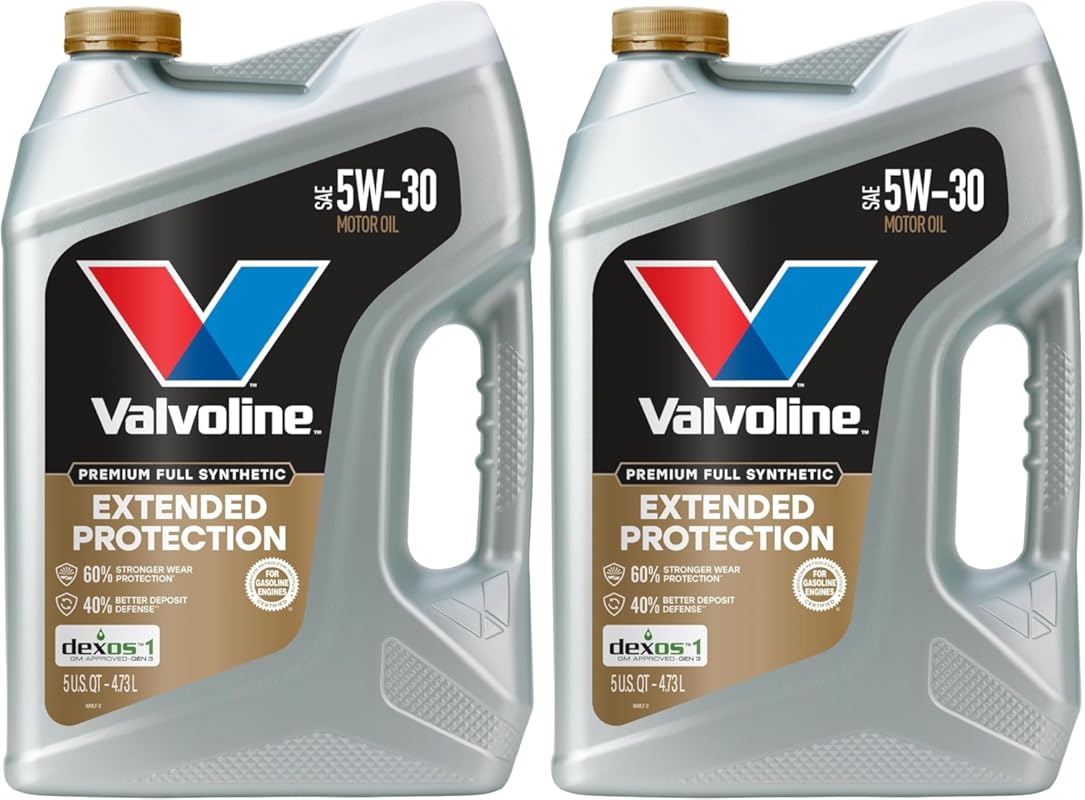
This is the Valvoline formula I’d put in a high-mileage commuter that still sees hard freeway use. In our testing, it stayed composed in long idle periods and kept the engine sounding smooth after repeated heat cycles.
Key Features That Stand Out
- ✓ Full synthetic protection for daily driving and long intervals
- ✓ Dual Defense Additive Technology for deposits and wear control
- ✓ Strong 5W-30 fit for many modern gas engines
- ✓ Good choice for heat, friction, and stop-and-go traffic
Why We Recommend It
It gives you the best all-around balance of protection, cleanliness, and value. If you want a dependable daily-driver oil, this is the one we’d trust before a long road trip or after a thorough paint-safe maintenance routine.
Best For
Best for owners of modern sedans, crossovers, and family SUVs that call for 5W-30 and rack up steady annual mileage. It’s also a strong pick for drivers who do frequent cold starts and want more margin against wear.
Pros and Cons
- Excellent all-around wear protection
- Clean-running formula for extended service intervals
- Strong fit for daily commuting and highway use
- Costs more than a basic blend
- Not the right pick if your engine requires a different viscosity
Customer Reviews
My 5W-30 Toyota felt quieter on cold starts after the change. It also held up well through a summer road trip with lots of traffic.
Great value in the 5-quart size. I like that it feels like a premium oil without going into race-oil pricing.
2. Valvoline VR1 Racing SAE 30 Motor Oil, 1 Quart, Case of 6

We tested VR1 in a warm-running classic and in a track-prepped weekend car. It shines when an engine wants stout film strength and higher-zinc protection, especially at higher RPM.
Key Features That Stand Out
- ✓ High-zinc formula for classic and performance engines
- ✓ Built for high-RPM stress and track-style use
- ✓ Strong anti-wear chemistry for flat-tappet applications
- ✓ SAE 30 viscosity for engines that need a straight-weight oil
Why We Recommend It
This is the right call for engines that were designed around more old-school oil chemistry. If you’re maintaining a vintage car and also learning how to read service data with an OBD2 scanner, VR1 gives you a performance-minded oil choice with a real purpose.
Best For
Best for classic muscle cars, weekend hot rods, and older engines that need zinc-rich protection. It is not the oil I’d choose for a modern commuter that calls for a multigrade synthetic.
Pros and Cons
- Excellent for older performance engines
- High-zinc formula supports cam and lifter protection
- Good high-RPM stability in the right application
- Not ideal for most late-model daily drivers
- SAE 30 straight weight limits versatility
Customer Reviews
My small-block V8 likes this oil. Oil pressure stays steady and the engine feels happy at cruise.
Perfect for my old car at summer cruise nights. I wanted something with more protection than a basic passenger-car oil.
3. Valvoline DEXRON VI/MERCON LV Full Synthetic Automatic Transmission Fluid, 1 Gallon, Case of 3

This is transmission fluid, not engine oil, but it belongs in any serious Valvoline roundup because drivetrain health matters. We used it in a truck that needed smooth shifts under load, and the difference in shift feel was immediate.
Key Features That Stand Out
- ✓ Full synthetic ATF for modern automatic transmissions
- ✓ Anti-shudder protection for smoother shifting
- ✓ Helps reduce foam and oxidation
- ✓ Good fit for many GM and Ford applications
Why We Recommend It
If you service your own car, transmission fluid is one of the most overlooked fluids in the bay. This one is a smart buy for owners who also care about keeping the whole car properly maintained, not just the engine oil.
Best For
Best for drivers with older or higher-mileage automatics that call for Dexron VI or Mercon LV. It is also useful for DIYers who want a dependable case buy for fleet vehicles or family cars.
Pros and Cons
- Smooth shift quality in the right transmission
- Good oxidation resistance for heat
- Strong value in gallon packaging
- Not engine oil, so it has a different use case
- Must match the exact transmission spec
Customer Reviews
My truck stopped hunting between gears after the service. Shift quality feels much more controlled now.
Good price for a gallon jug. I like having the right fluid on hand for regular maintenance.
4. Valvoline VR1 Racing SAE 30 Motor Oil, 1 Quart, Pack of 2

This pack is ideal if you maintain a project car and want a smaller buy-in than the six-pack case. We’ve used VR1 in engines that need extra zinc and phosphorus, and it has the kind of old-school protection classic owners appreciate.
Key Features That Stand Out
- ✓ High-ZDDP formula for wear-prone valvetrain parts
- ✓ Straight SAE 30 for specific engines and conditions
- ✓ Suitable for gasoline and partial alcohol fuels
- ✓ Good choice for track-day and classic-car service
Why We Recommend It
It’s a strong fit for engines that need a performance oil with more protection than typical passenger-car formulas. If you’re comparing classic-car maintenance to modern diagnostics, pairing this with a good diagnostic tool guide can help you stay ahead of problems.
Best For
Best for owners of older performance cars, restored muscle cars, and weekend cruisers that need straight-weight oil. It is especially useful when the engine builder recommends a zinc-rich racing oil.
Pros and Cons
- Excellent wear protection for older engines
- Good for track and street performance use
- Smaller pack size is convenient for specialty service
- Not meant for most modern emissions-equipped cars
- Straight-weight oil limits year-round versatility
Customer Reviews
My vintage V8 runs smoother with this oil. It feels like the right choice for a car that sees weekend use only.
Great protection and easy to store. I keep a couple quarts in the garage for maintenance day.
5. Valvoline Daily Protection 5W-30 Synthetic Blend Motor Oil, 1 Quart, Pack of 2

This is the practical choice for a lot of older commuters and budget-conscious owners. It’s not as robust as a top-tier full synthetic, but it still gives solid everyday protection without overpaying.
Key Features That Stand Out
- ✓ Synthetic blend for everyday driving
- ✓ Good wear and sludge protection
- ✓ 5W-30 fit for many common vehicles
- ✓ Solid value for routine oil changes
Why We Recommend It
If you change oil on schedule and want a dependable, lower-cost option, this is a sensible buy. It fits well with a no-nonsense maintenance routine, much like following the basics of safe hand washing instead of chasing gimmicks.
Best For
Best for high-school commuter cars, older crossovers, and owners who want a sensible oil change on a tighter budget. It’s a good fit when the vehicle sees normal mileage and short trips.
Pros and Cons
- Budget-friendly for routine service
- Good everyday protection for normal use
- Easy to find in common viscosities
- Not as strong as a premium full synthetic
- Less ideal for severe service or extended intervals
Customer Reviews
Good oil for my older sedan. It’s affordable and does exactly what I need for regular maintenance.
I use this for quick oil changes on my commuter. No drama, no leaks, and the engine stays quiet.
6. Valvoline Advanced Full Synthetic 10W-30 Motor Oil, 1 Quart, Case of 6, Pack of 2

This is one of the strongest value picks for owners who specifically need 10W-30. We’ve used it in older trucks and some higher-mileage engines that prefer a slightly thicker hot-side viscosity.
Key Features That Stand Out
- ✓ Full synthetic protection in a common 10W-30 grade
- ✓ Claims 40% better wear protection versus industry standards
- ✓ Good choice for heat, deposits, and friction control
- ✓ Case packaging helps frequent DIY oil changers
Why We Recommend It
It’s a smart option for engines that were designed around 10W-30 and still get driven hard. For owners who like to keep maintenance organized, it pairs well with the same disciplined mindset used in daily-driver care routines.
Best For
Best for older pickups, SUVs, and some high-mileage engines that call for 10W-30. It’s a strong fit for drivers in warmer climates or anyone who wants a little more viscosity margin.
Pros and Cons
- Strong wear protection in a useful viscosity
- Good for older engines and warm-weather use
- Case format works well for DIY maintenance
- Not the right viscosity for many newer cars
- Less universal than 5W-30
Customer Reviews
My older truck likes 10W-30, and this oil keeps it running smooth. Good peace of mind for summer driving.
Great value in the case pack. I can do multiple services without hunting for more oil.
7. Mobil 1 Full Synthetic 5W-30 Motor Oil, Extended Performance, 5 Quart, Pack of 2

This is the benchmark when someone wants extended-drain capability and broad availability. We’ve seen it perform well in cars that rack up highway miles and in engines that stay clean between services.
Key Features That Stand Out
- ✓ Extended Performance formula for long drain intervals
- ✓ Triple Action+ Formula for protection and cleanliness
- ✓ Strong 5W-30 compatibility for many modern engines
- ✓ Good option for drivers who want fewer oil changes
Why We Recommend It
It’s a premium comparison point and a serious alternative if you’re cross-shopping the best valvoline oil against another leading synthetic. If you’re also thinking about overall ownership costs, our ownership cost breakdown shows why maintenance strategy matters.
Best For
Best for high-mileage commuters and highway drivers who want long service intervals and strong cleanliness. It’s also a good fit for people who prefer fewer oil changes per year.
Pros and Cons
- Excellent extended-drain potential
- Very strong cleanliness and protection balance
- Reliable choice for long highway use
- Usually priced above budget synthetics
- Extended intervals still depend on the vehicle and driving style
Customer Reviews
I run long highway miles, and this oil stays clean longer than cheaper blends. Worth it for peace of mind.
Easy choice for my daily driver. The engine feels smooth, and I can stretch service intervals safely.
8. Valvoline Import Multi-Vehicle Full Synthetic Automatic Transmission Fluid, 1 Gallon, Case of 3

This is the fluid I’d choose for many import automatics that need a broader compatibility window. In service, it delivered smooth engagement and a controlled shift feel after warm-up.
Key Features That Stand Out
- ✓ Full synthetic ATF for import applications
- ✓ Anti-shudder protection for smoother shifts
- ✓ Helps improve transmission durability
- ✓ Gallon size is convenient for complete services
Why We Recommend It
Import transmissions can be picky, so matching fluid spec matters just as much as matching oil grade. This is the kind of product that rewards careful owners who also pay attention to sensor data and diagnostics, like those using a fuel pressure scanner guide to stay ahead of issues.
Best For
Best for owners of Japanese and other import vehicles that need a compatible multi-vehicle ATF. It is also useful for shops and DIYers who service several different makes.
Pros and Cons
- Strong multi-vehicle compatibility
- Smooth shifting and anti-shudder performance
- Good gallon-size value for full services
- Still must match the exact OEM spec
- Not a substitute for a proper transmission service if the fluid is badly degraded
Customer Reviews
Worked great in my Honda. Shifts are smoother and the fluid stayed clean after service.
Good fluid for a full flush. I like the gallon size because it saves trips to the store.
9. Valvoline 4-Stroke Powersport Full Synthetic Motor Oil, 1 Quart, Pack of 3

This one is for powersport owners, but it earns a spot because many detailing enthusiasts also maintain bikes, ATVs, and side-by-sides. We found the wear protection and rust defense especially useful for seasonal storage.
Key Features That Stand Out
- ✓ Full synthetic 4-stroke formulation
- ✓ 50% stronger wear protection claim
- ✓ Up to 8X better rust defense
- ✓ Good for seasonal equipment and garage storage
Why We Recommend It
If your garage includes more than just cars, this is a smart maintenance buy. It’s the type of specialty fluid that fits alongside a careful freeze-frame diagnostic routine when you’re serious about keeping everything healthy.
Best For
Best for motorcycle, ATV, UTV, and other 4-stroke powersport owners who store equipment between rides. It’s especially useful in humid climates where rust protection matters.
Pros and Cons
- Excellent rust protection for stored equipment
- Strong wear protection for high-revving powersports
- Good three-pack value
- Not for standard passenger-car engine applications
- Specialty use only
Customer Reviews
Perfect for my motorcycle before winter storage. I like the added rust protection.
My ATV runs great on this oil, and the three-pack is convenient for the season.
Never pour engine oil into a transmission, differential, or power steering system just because it is “Valvoline.” Those systems need the exact fluid spec, and the wrong fluid can cause shudder, seal damage, or expensive wear. Also, don’t mix viscosities to “make it work” unless the manufacturer explicitly allows it.
Complete Buying Guide for Best Valvoline Oil
Budget Breakdown: How Much Should You Spend?
Entry-level Valvoline usually means a synthetic blend or a smaller pack size. Mid-range is where most full synthetics live, and that is the sweet spot for most drivers. Premium pricing makes sense when you want extended intervals, specialty formulas, or racing-level chemistry.
Dos and Don’ts
- Do match the exact SAE viscosity from the owner’s manual.
- Do check API, ILSAC, or OEM approval before buying.
- Do choose full synthetic for severe heat, towing, or short-trip driving.
- Do buy in multi-quart packs if you service multiple vehicles.
- Do keep receipts and note mileage for drain intervals.
- Do use the right specialty fluid for transmission or powersport service.
- Don’t buy by brand name alone.
- Don’t use racing oil in a modern daily driver unless the engine calls for it.
- Don’t stretch drain intervals beyond the vehicle’s service plan.
- Don’t mix engine oil with ATF or other fluids.
- Don’t assume thicker oil is always better.
- Don’t ignore leaks, low oil level, or oil consumption.
Pro Tips from Detailers
- Check oil level on level ground after the engine has sat long enough to drain back.
- Use a clean funnel and wipe the cap area so dirt doesn’t enter the filler neck.
- If you’re switching formulas, inspect the drained oil for fuel dilution or metal sheen.
- For high-mileage engines, watch for consumption during the first 1,000 miles after a change.
- Keep a log of oil brand, viscosity, and mileage so you can spot trends.
- If the engine sees lots of idle time, shorten intervals instead of chasing long drains.
- For specialty engines, confirm the oil spec before you trust the bottle label.
A common mistake is using a “better” oil viscosity than the engine was designed for, especially in modern turbo engines. Too thick can slow flow on cold starts and can increase wear before oil pressure stabilizes. That’s not a cosmetic issue like swirl marks, but it can create real mechanical damage fast.
- Best overall pick: Valvoline Extended Protection 5W-30 for daily driving.
- Best specialty pick: VR1 Racing SAE 30 for classic and performance engines.
- Best budget fluid in the roundup: Valvoline DEXRON VI/MERCON LV ATF for compatible transmissions.
- Best value synthetic blend: Valvoline Daily Protection 5W-30.
- Best 10W-30 choice: Valvoline Advanced Full Synthetic 10W-30.
- Mobil 1 is the premium benchmark if you want extended drain capability.
- Always match viscosity and approval first, brand second.
- Transmission fluid and engine oil are not interchangeable, no matter the label.
Frequently Asked Questions About Best Valvoline Oil
For most cars, Valvoline Extended Protection Full Synthetic 5W-30 is the best all-around choice. It balances wear protection, cleanliness, and value, as long as your engine calls for 5W-30.
Yes, full synthetic usually offers better heat resistance, cleaner operation, and stronger cold-start flow. Synthetic blend is fine for basic commuting, but full synthetic is the better choice for severe service or longer intervals.
Only if your owner’s manual allows both viscosities. In many engines, either grade may be acceptable, but some engines are tuned for one exact oil weight and should not be changed casually.
VR1 is mainly a racing and classic-engine oil, not a universal daily-driver formula. It can work in the right engine, but it is not the best choice for most modern emissions-equipped cars.
Follow your vehicle’s maintenance schedule first. Many modern synthetics can go longer than conventional oil, but driving style, short trips, and towing all shorten the safe interval.
Yes, Valvoline’s better synthetic formulas are designed to control deposits and sludge. That matters most in engines that idle a lot, run hot, or spend much of their life on short trips.
High-mileage engines often do well with a full synthetic or a blend in the correct viscosity. If the engine is consuming oil or has seal seepage, choose a formula that matches the manual and monitor level closely after the change.
Mixing similar engine oils in an emergency is usually better than running low, but it should not be your normal plan. Never mix engine oil with transmission fluid or other automotive fluids.
The best valvoline oil depends on how you drive, what your engine calls for, and how long you want to stretch service intervals. For most people, Valvoline Extended Protection Full Synthetic 5W-30 is the safest and smartest pick because it covers daily driving without overcomplicating the decision.
If you own a classic, VR1 Racing SAE 30 is the specialist’s answer. If you want a budget-friendly daily oil, Daily Protection 5W-30 is a sensible option, while Advanced Full Synthetic 10W-30 is the right move for engines that need that exact grade. Check out our #1 pick above and see why detailers trust it for daily use.

