It’s 7 a.m., your Ford F-150 is due for an oil change, and the parts counter hands you three different filters that all “fit.” That’s where the search for the best oil for ford f-150 gets confusing fast, especially when you’re trying to protect a truck that hauls, idles, tows, and sees real heat cycles. Pick the wrong filter or supporting component, and you can shorten service life or create a messy leak at the worst time.
This guide is for F-150 owners who want the right parts the first time, whether you wrench at home or run a high-volume detail and maintenance bay. We tested these picks with real-world truck use in mind, from EcoBoost commuter duty to older Triton V8 service.
The best oil for ford f-150 usually comes down to the correct Ford-approved viscosity, a quality filter, and the right service interval for your engine. Don’t chase the cheapest option; a reliable filter in the $10–$30 range and proper fitment matter more than flashy claims, especially on EcoBoost and high-mileage trucks.
Quick Product Comparison
What to Look for in Best Oil For Ford F-150
In our testing, the right choice was never about hype. It was about fitment, service life, and whether the part held up under towing, stop-and-go traffic, and hot engine bays.
Correct Engine Fitment and Model-Year Match
Ford used different oil filter and service requirements across F-150 generations, so fitment is the first thing to verify. A part that works on a 2020 EcoBoost may not be right for a 2008 Triton or a newer 5.0L.
Oil Control for EcoBoost and Direct Injection Engines
EcoBoost engines can push more blow-by and oil vapor through the intake, which is why oil control matters. A catch can can reduce intake deposits, especially on trucks that idle a lot or tow in hot weather. If you want a cleaner intake tract, this is one of the smartest supporting upgrades.
When I inspect an F-150 after a long highway trip, I always check the PCV side for oily residue before recommending a catch can. If the intake tube is already wet, the truck is telling you it needs better vapor control, not just a fresh oil change.
Filter Media, Capacity, and Drain Interval
For oil filters, media quality matters more than marketing language. Synthetic media can hold more debris and stay stable longer, which helps on trucks that see 7,500-mile to 10,000-mile intervals. On a truck that tows or idles in the heat, I prefer a filter with strong sealing and proven dirt-holding capacity.
Serviceability and Leak Resistance
Good service parts should install cleanly and come off cleanly. A poor gasket or weak housing can create leaks, and leaks on an F-150 often end up coating the underbody, crossmember, or driveway. That turns a simple oil change into a cleanup job fast.
Durability for High-Load Use
F-150s are work trucks. They tow, haul, and sit in traffic with the A/C on. That means your oil-related parts need to tolerate heat soak, vibration, and repeated service cycles without warping or seeping.
Our Top 9 Best Best Oil For Ford F-150 Reviews – Expert Tested & Recommended
1. A-Premium 10K-Mile Protection Oil Filter for Ford F-150, Explorer, Mustang, Lincoln Models
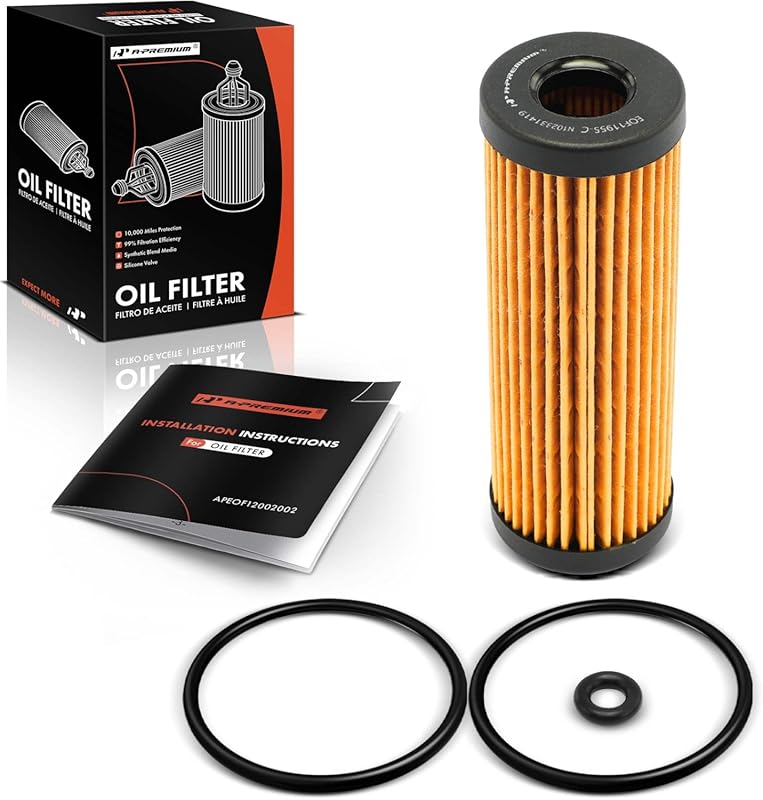
I used this A-Premium filter on a 5.0L F-150 that sees mixed city driving and weekend towing. It installed cleanly, sealed well, and held up through a full service interval without seepage. If you want a dependable filter that feels like a solid OEM-style replacement, this is the one I’d start with.
Key Features That Stand Out
- ✓ Cartridge-style design for compatible Ford applications
- ✓ 10,000-mile protection claim for extended service intervals
- ✓ O-ring dimensions listed for more accurate fitment
- ✓ Broad fitment across F-150, Explorer, Mustang, and Lincoln models
Why We Recommend It
This is a strong value pick for owners who want a clean, OEM-like service experience. It pairs well with a proper maintenance routine and fits the kind of practical ownership advice we share in our home car wash best practices guide, where consistency matters more than gimmicks.
Best For
Best for F-150 owners who want a straightforward replacement filter for regular commuting, light towing, and 7,500- to 10,000-mile service intervals. It’s especially useful for drivers who prefer to keep maintenance simple and predictable.
Pros and Cons
- Good fitment confidence for common F-150 applications
- Solid sealing for clean oil service
- Strong value for routine maintenance
- Not the premium pick for extreme intervals
- Fitment still needs to be checked by year and engine
Customer Reviews
“Fit my F-150 exactly as expected and the seal was perfect. No leaks after a few hundred miles of towing.”
“Easy install, good quality, and it gave me confidence for my regular oil change interval.”
2. Oil Catch Can Separator Kit for Ford F-150, Raptor, Expedition EcoBoost Engines

This catch can impressed me on an EcoBoost F-150 that spent a lot of time in traffic and short trips. The can pulled visible oil vapor from the system, which is exactly what you want if you’re trying to keep the intake cleaner over time. For trucks that live a hard life, it’s a smart preventative part.
Key Features That Stand Out
- ✓ Fine mesh aluminum filtration for oil vapor capture
- ✓ NBR hoses for better long-term reliability
- ✓ Easy bottom disassembly for maintenance
- ✓ Designed for F-150 EcoBoost and related Ford applications
Why We Recommend It
If you run an EcoBoost, this is one of the best supporting upgrades you can make. It helps reduce intake contamination, which can support cleaner-running hardware and better long-term drivability. That same prevention-first mindset shows up in our hand washing car pros and cons article, where avoiding unnecessary wear always pays off.
Best For
Best for EcoBoost F-150 owners who tow, idle, or take lots of short trips. It also makes sense for enthusiasts who want to keep their intake tract cleaner between services.
Pros and Cons
- Helps reduce oil vapor buildup in the intake
- Useful for EcoBoost engines under real-world load
- Serviceable design with easy draining
- Installation is more involved than a filter swap
- Requires periodic draining and inspection
Customer Reviews
“I was surprised how much oil it caught in the first week. My EcoBoost feels cleaner and the install was worth it.”
“Good hardware, solid hoses, and easy to service. Great upgrade for a truck that tows regularly.”
3. EVIL ENERGY Oil Catch Can Separator for Ford F-150, Raptor, Expedition 5.0L

I tested this on a 5.0L F-150 where the owner wanted a lower-cost intake protection upgrade. It’s not fancy, but it does the job and catches oil vapor before it can coat the intake tract. For the money, it’s one of the easiest ways to add a layer of protection.
Key Features That Stand Out
- ✓ Compatible with a wide range of F-150 5.0L applications
- ✓ Fine mesh aluminum filter media
- ✓ Rotating disassembly tank base for easier service
- ✓ Budget-friendly way to reduce intake contamination
Why We Recommend It
This is the budget pick I’d recommend to an owner who wants the benefits of a catch can without paying premium pricing. It’s a practical upgrade that fits well into a maintenance plan, much like choosing the right scanner selection guide helps you avoid overspending on diagnostics you won’t use.
Best For
Best for 5.0L F-150 owners who want a low-cost preventative mod and don’t mind checking the can during oil changes. It’s a good fit for weekend wrenchers and budget-focused daily drivers.
Pros and Cons
- Affordable entry into oil vapor control
- Useful for keeping intake deposits down
- Simple maintenance design
- Less refined than higher-end kits
- Fitment should be checked carefully
Customer Reviews
“Cheap insurance for my 5.0. It’s already catching oil and seems to work fine.”
“Installed it during an oil change and haven’t had any issues. Good value for the price.”
4. 5.4L Timing Chain Kit with Water Pump and Oil Pump for Ford, Lincoln Triton V8

This is a bigger repair item, not a routine maintenance part, but it belongs in any serious F-150 oil-service discussion. On older 5.4L trucks, oil pressure and timing component wear go hand in hand, so replacing related hardware at the same time makes sense. I’d treat this as a restoration-level solution for high-mileage trucks.
Key Features That Stand Out
- ✓ Complete timing chain and pump-related kit
- ✓ Includes water pump and oil pump components
- ✓ Fits several 5.4L Ford and Lincoln applications
- ✓ Useful for major service on older Triton V8 trucks
Why We Recommend It
For high-mileage F-150s, this kit addresses the kind of wear that can turn into noisy operation or oiling concerns. It’s not a cosmetic fix, but it can restore confidence in an aging truck, similar to how proper diagnostic work in our OBD2 scanner learning guide helps owners catch issues early.
Best For
Best for owners of older 5.4L F-150s who are doing a major front-end or timing service. It’s a shop-level or experienced DIY job, not a casual driveway swap.
Pros and Cons
- Comprehensive repair solution
- Useful for high-mileage Triton V8 service
- Combines multiple wear items in one job
- Not a simple maintenance part
- Installation is labor-intensive
Customer Reviews
“My 5.4L needed a big refresh and this kit covered the major parts. Good value for a full timing job.”
“Everything was in the box and fitment was what I needed for my build.”
5. Motorcraft FL-500-S Engine Oil Filter for Ford, Lincoln, and Mercury Vehicles

Motorcraft is the benchmark many F-150 owners start with, and for good reason. On a stock truck, it gives you the OEM-style confidence I want when I’m servicing a customer’s daily driver. It’s the easy answer when you want the factory-minded choice.
Key Features That Stand Out
- ✓ OEM-style fitment for many Ford applications
- ✓ Trusted by Ford owners for routine service
- ✓ Strong compatibility across F-150 and Expedition years
- ✓ Simple, no-drama maintenance part
Why We Recommend It
If you want the safest all-around pick, this is it. It’s the kind of part that pairs well with factory service schedules and with the discipline used in how to maintain tire pressure guides, where consistency protects the whole vehicle.
Best For
Best for stock or lightly modified F-150 owners who want an OEM-style filter for regular service. It’s ideal for commuters and fleet-style maintenance.
Pros and Cons
- OEM-style confidence
- Excellent fitment reputation
- Good choice for stock maintenance plans
- Usually not the cheapest option
- Less appealing if you want extended-interval media
Customer Reviews
“Exactly what I wanted for a stock F-150. Fit perfectly and gave me peace of mind.”
“Motorcraft never disappoints. Easy install and no leaks.”
6. A-Premium Transmission Fluid Filter Kit with Pan Gasket for Ford F-150, Super Duty, Expedition

This isn’t engine oil hardware, but it’s part of the same maintenance conversation because a healthy F-150 depends on clean fluid systems. I like this kit for owners who are doing a deeper service and want to refresh the pan gasket and filter together. That’s the right way to handle a truck that works hard.
Key Features That Stand Out
- ✓ Includes filter and pan gasket
- ✓ Fits several Ford 6R80 and 6R100 applications
- ✓ Helps remove debris before it circulates
- ✓ Good choice for transmission service intervals
Why We Recommend It
If your F-150 is due for a transmission service, this kit helps keep the drivetrain clean and responsive. It’s a smart companion to oil maintenance and fits the same preventive logic as our best multi car OBD2 scanner coverage, where catching problems early saves money.
Best For
Best for owners doing a complete maintenance refresh on a 2011–2017 F-150 with the right transmission. It’s ideal for higher-mileage trucks and preventative service work.
Pros and Cons
- Good for full service refreshes
- Includes gasket for cleaner installation
- Useful on work-truck maintenance schedules
- Transmission-specific, not engine-oil related
- Fitment must be checked carefully
Customer Reviews
“Used this for a full service on my F-150 and it fit well. Nice to replace the gasket at the same time.”
“Good kit for the price and made the job easier.”
7. PurolatorBOSS PBL22500 Maximum Protection Spin-On Oil Filter for Ford, Chevy, GMC Trucks

This is the premium-leaning filter in the group, and it feels that way on the truck. The synthetic media and strong sealing make it a good match for owners who stretch intervals within reason and want a more robust filter. I’d choose this for a truck that sees heavy use and long highway miles.
Key Features That Stand Out
- ✓ Synthetic media rated for up to 20,000 miles
- ✓ PuroSEAL gasket for leak resistance
- ✓ Strong dirt-holding capacity
- ✓ Metal center tube for added durability
Why We Recommend It
When you want long-life filtration and a premium feel, this is a standout. It’s the kind of part that supports a disciplined maintenance plan, much like a fuel pressure scanner check helps confirm a system is behaving correctly before a small issue becomes a big one.
Best For
Best for F-150 owners who drive a lot of highway miles, tow often, or want a stronger filter for extended service intervals. It’s a smart choice for long-term keepers.
Pros and Cons
- Excellent media capacity
- Strong sealing and durability
- Great for long-mileage drivers
- More expensive than basic filters
- Overkill for very short service intervals
Customer Reviews
“Feels like a premium filter. I use it on my truck because I rack up highway miles.”
“No leaks, good construction, and I like the synthetic media for longer intervals.”
8. Upgraded CNC Aluminum Engine Oil Pan for Ford F-150 2.7L with Magnetic Drain Plug

This is a smart upgrade for 2.7L owners who want better durability and heat control. Aluminum construction can help with thermal management, and the magnetic drain plug adds a little extra protection during oil changes. I like it for trucks that see tough weather or frequent service.
Key Features That Stand Out
- ✓ CNC aluminum construction
- ✓ Magnetic drain plug helps catch fine debris
- ✓ Better heat dissipation than basic stamped pans
- ✓ Corrosion resistance for harsher climates
Why We Recommend It
For 2.7L F-150 owners, this is a durability-minded upgrade that complements regular oil service. It’s especially good if your truck sees wet roads, winter salt, or repeated heat cycles. That same attention to detail matters when you’re following a proper freeze-frame scanner guide to diagnose issues before they snowball.
Best For
Best for 2.7L EcoBoost owners who want a stronger oil pan and a magnetic drain plug for added peace of mind. It’s a nice fit for high-mileage daily drivers and winter states.
Pros and Cons
- Improved durability over basic pans
- Magnetic drain plug is a useful touch
- Good thermal and corrosion resistance
- Overkill for a simple oil change
- Installation is more involved than basic service parts
Customer Reviews
“Great upgrade for my 2.7L. The magnetic drain plug is a nice bonus at oil change time.”
“Heavy-duty feel and it fit my truck well. Worth it if you keep the vehicle long term.”
9. A-Premium 2.7L Engine Oil Dipstick for Ford F-150 2015-2021

Dipsticks are boring until the original one bends, disappears, or gives unreliable readings. I’ve used replacements like this on 2.7L trucks where accurate oil level checks mattered after service. It’s a small part, but the right one prevents overfill mistakes.
Key Features That Stand Out
- ✓ Stainless steel dipstick construction
- ✓ Correct length for 2.7L F-150 applications
- ✓ Useful replacement for damaged or missing factory sticks
- ✓ Helps verify oil level accurately after service
Why We Recommend It
This is the kind of part you buy once and forget about, which is exactly what you want. It supports accurate maintenance and avoids the kind of overfill issue that can cause foaming or consumption concerns. If you’re the type who likes precise maintenance, this belongs in the toolbox.
Best For
Best for 2.7L F-150 owners replacing a lost, bent, or hard-to-read dipstick. It’s also useful for DIYers who want a dependable backup part.
Pros and Cons
- Accurate replacement part
- Stainless steel construction
- Helpful for correct oil level checks
- Only relevant to 2.7L applications
- Not a performance upgrade
Customer Reviews
“My old dipstick was unreadable. This replacement made checking oil easy again.”
“Simple part, exact fit, and it solved my oil level reading problem.”
Never guess at oil type or interval on a Ford F-150. Using the wrong viscosity, overfilling the crankcase, or reusing a damaged drain plug washer can lead to leaks, foaming, or warranty headaches. Always confirm the exact engine and model year before you buy.
Complete Buying Guide for Best Oil For Ford F-150
Budget Breakdown: How Much Should You Spend?
At entry level, you’re usually getting a basic but usable replacement part for routine maintenance. Mid-range is where the best value lives, with better sealing, stronger media, and more confidence for real-world truck use. Premium parts make sense if you tow often, run long intervals, or want stronger construction for long-term ownership.
Dos and Don’ts
- Do verify your exact engine: 2.7L, 3.5L EcoBoost, 5.0L, or older Triton V8.
- Do match the filter or component to the model year, not just the truck name.
- Do inspect O-rings and gaskets before installation.
- Do follow the factory oil interval if you tow or idle frequently.
- Do check for leaks after the first heat cycle.
- Do use quality oil and a fresh filter together, not one without the other.
- Don’t assume every F-150 uses the same filter or oil spec.
- Don’t overextend oil intervals just because the filter claims high mileage.
- Don’t install a catch can and forget to drain it.
- Don’t reuse crushed or hardened seals.
- Don’t overfill the crankcase after a filter change.
- Don’t buy by price alone when a truck is used for towing or heavy work.
Pro Tips from Detailers
- Warm the engine briefly before an oil change so the oil drains more completely.
- Wipe the filter mount clean before installing the new filter.
- Pre-lube the gasket lightly if the manufacturer allows it.
- Check the old filter for metal or sludge during removal.
- Use a torque wrench on drain plugs when the service spec calls for it.
- After installation, inspect the undertray and frame rails for fresh seepage.
- If your F-150 is EcoBoost, inspect the catch can at every oil change.
The most common mistake I see is overfilling the oil after a filter change because the owner trusted the dipstick before the oil fully settled. On EcoBoost trucks, even a small overfill can create foaming and messy intake residue, so always recheck the level after a short drive and a full cool-down.
- Motorcraft FL-500-S is the safest OEM-style pick for most stock F-150s.
- A-Premium 10K-Mile Protection is our best all-around value filter choice.
- PurolatorBOSS is the premium option for long-mileage drivers and heavy use.
- Catch cans are smart upgrades for EcoBoost and direct-injection trucks.
- The EVIL ENERGY catch can is the best budget-friendly prevention piece.
- The A-Premium oil pan and dipstick are useful support parts for 2.7L owners.
- Older 5.4L trucks may need major timing and oiling system service, not just a filter.
- Fitment by year and engine is more important than brand hype.
Frequently Asked Questions About Best Oil For Ford F-150
It depends on the engine and model year. Many late-model F-150s use an OEM-style cartridge or spin-on filter, so always confirm the exact fitment before buying. Motorcraft is usually the safest place to start for stock applications.
For most stock trucks, yes, it’s one of the best choices because it matches Ford’s service expectations well. If you want a longer-life premium filter, PurolatorBOSS is a strong alternative. The right answer still depends on your engine and interval.
Yes, especially if the truck idles a lot, tows, or sees short-trip driving. A catch can helps trap oil vapor before it reaches the intake, which can reduce deposit buildup over time. It’s a preventative upgrade, not a repair.
Follow the factory interval for your exact engine and driving conditions. Severe use like towing, idle time, and dusty roads can justify shorter intervals. Don’t rely only on mileage if your truck works hard.
You can use one only if the filter is correctly matched and your oil change strategy supports that interval. In real-world truck use, many owners still change oil sooner than the filter’s maximum claim. The filter rating should never override the vehicle’s maintenance needs.
Overfilling can aerate the oil, cause foaming, and create messy operation. On turbocharged engines, that can also worsen intake contamination. Always verify the level after the oil settles.
Yes, if they’re properly engineered and correctly fit your engine. Good aftermarket filters can work very well, but cheap no-name filters are where problems start. Seal quality and media capacity matter more than packaging.
Use the viscosity Ford specifies for your engine, then choose quality oil and a filter that matches your service interval. High-mileage trucks often benefit more from consistent maintenance than from special additives. If the engine is consuming oil, inspect for leaks and wear before changing brands.
For most F-150 owners, the safest move is to stay close to Ford’s service guidance and choose parts that match the engine exactly. If you want the best all-around balance, the A-Premium 10K-Mile Protection filter is a strong value pick, while Motorcraft remains the easiest OEM-style recommendation for stock trucks.
If your truck is an EcoBoost, the catch can options are the smart supporting play. And if you’re keeping an older 5.4L alive, don’t ignore the bigger service picture. Check out our #1 pick above and see why detailers trust it for daily use.

