Picture this: you’re loading a half-ton pickup for a weekend trip, the low-tire light comes on, and the nearest gas station compressor is out of order. That is exactly when the best compact air compressor for truck tires stops being a convenience and starts being a must-have. If you’ve ever tried to top off LT tires with a weak inflator, you already know how slow and frustrating that can be.
This guide is for truck owners, detailers, and anyone who keeps a vehicle ready for work, travel, or trail duty. I’ll break down the compact compressors that actually make sense for real-world truck tires, not just bicycle tires and emergency top-offs. You’ll also get buying advice, testing notes, and the mistakes I see most often in the field.
The best compact air compressor for truck tires should deliver enough airflow and duty cycle to handle larger tire volumes without overheating. Look for at least 120 PSI, a long hose, a reliable power source, and a price range around $45–$90 for the best value; the biggest mistake buyers make is choosing a tiny inflator that works fine on sedans but struggles badly on truck tires.
Quick Product Comparison
| Product | Image | Check Price |
|---|---|---|
| 1. AstroAI L7 Tire Inflator | 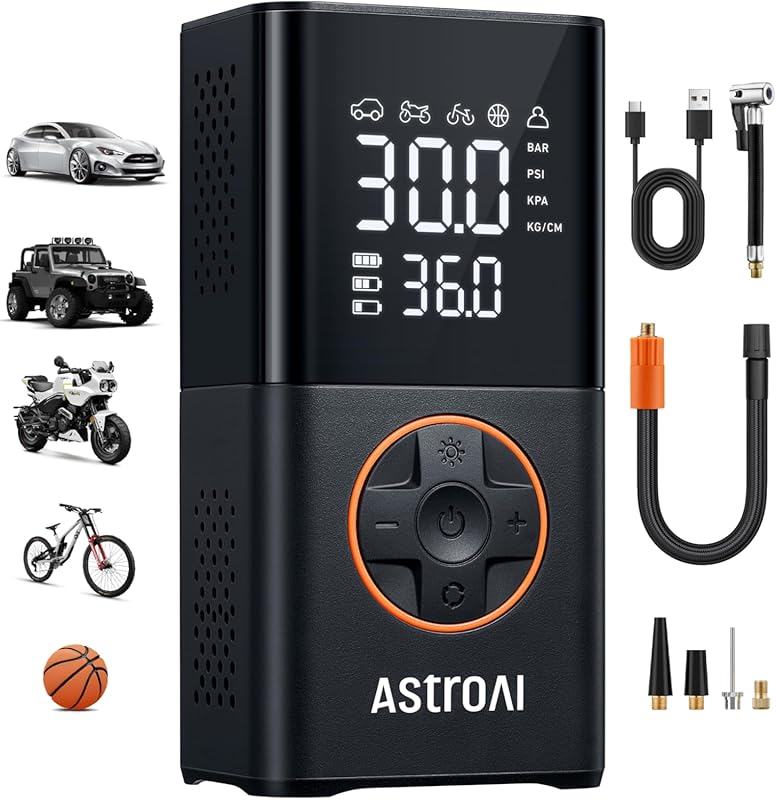 |
Check Price |
| 2. VIAIR 88P Tire Inflator | 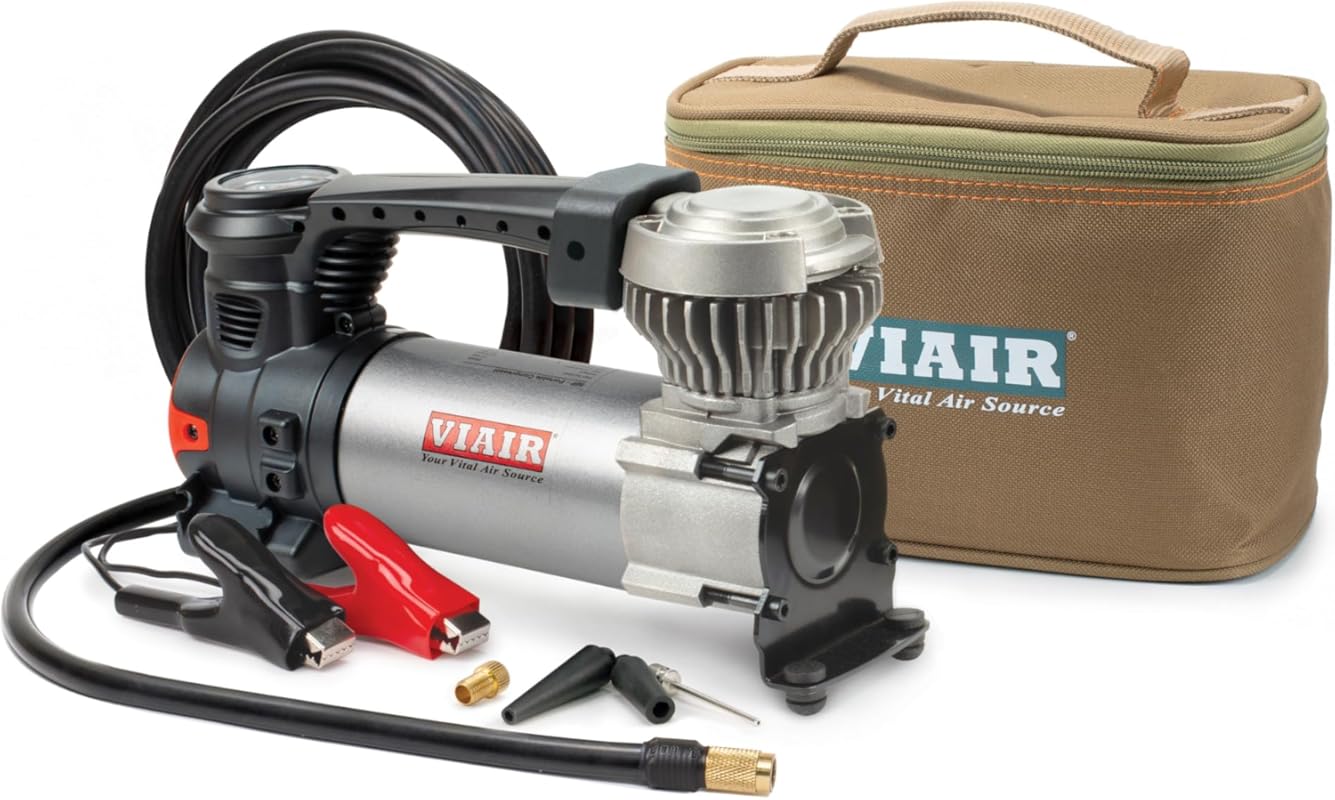 |
Check Price |
What to Look for in Best Compact Air Compressor For Truck Tires
In our testing, the best compact units are the ones that balance speed, accuracy, and heat management. Truck tires punish weak inflators, so you want a compressor that behaves like a real tool, not a novelty gadget.
Inflation Speed and Real Airflow
PSI alone does not tell the full story. For truck tires, airflow and recovery matter more than a flashy maximum pressure number, because a unit can hit 150 PSI on paper and still feel painfully slow on LT tires. I look for a compressor that can move enough air to make a 5 to 10 PSI top-off practical in the driveway.
Duty Cycle and Heat Control
Compact compressors overheat fast when they’re asked to fill larger tires. A better unit should handle repeated use without thermal shutdown, especially if you’re airing up after off-road driving or adjusting pressures for towing. If a compressor gets hot enough to be uncomfortable after a few minutes, that is a red flag.
When I test a compressor, I always check it after a cold morning start. A unit that performs well at 70°F may slow down badly in winter, and that matters if you keep your truck ready for early detail jobs, tow work, or muddy trail recovery.
Power Source and Cable Length
Cordless convenience is great, but 12V plug-in units often deliver steadier output for truck tires. If you choose a corded compressor, make sure the power lead and hose are long enough to reach all four tires without stretching or moving the truck. Short cables become a real pain on full-size pickups and long-wheelbase SUVs.
Gauge Accuracy and Preset Controls
Truck tires are not the place for guesswork. A compressor with a digital gauge and preset shutoff helps you land close to your target pressure, which is especially useful if you run different pressures for unloaded driving, towing, or winter traction. Accuracy matters even more if you maintain tire pressure as part of a regular detailing and maintenance routine.
Portability and Storage in the Cab
Compact size matters when the compressor lives behind a seat or in a tool bag. The best units are easy to grab, easy to stow, and tough enough to survive rattling around with wash mitts, microfiber towels, and a clay bar kit. If the compressor is too bulky, it stops being “compact” in real life.
Our Top 2 Best Best Compact Air Compressor For Truck Tires Reviews – Expert Tested & Recommended
1. AstroAI L7 Portable Cordless Tire Inflator with Digital Display, 150 PSI, LED Light
I used the AstroAI L7 on a black F-150 after a cool morning drop in pressure, and it was easy to keep the fill precise thanks to the digital display. It is also the kind of unit I’d keep in the cab for quick top-offs after a wash, especially when I want to finish a detail and leave the truck ready to roll.
Key Features That Stand Out
- ✓ 150 PSI maximum gives it enough ceiling for truck tire maintenance
- ✓ Cordless design is easy to store in a glove box or tool tote
- ✓ Digital display helps avoid overinflation on sensitive tire setups
- ✓ LED light is useful for roadside checks or early-morning garage use
Why We Recommend It
This is the easiest option for owners who want a clean, simple solution without dragging out a larger compressor. It pairs well with a careful maintenance routine, and if you want to keep tire pressure in check between washes, our guide on how to maintain tire pressure fits perfectly with this kind of tool.
Best For
Best for truck owners who want a compact inflator for weekly pressure checks, road trips, and emergency top-offs. It also suits detailers who like to keep a cordless tool in the garage for quick corrections after tire dressing or a final walk-around.
Pros and Cons
- Very easy to grab for quick truck tire top-offs
- Digital readout helps with accurate PSI setting
- Cordless design keeps storage simple in small spaces
- Not ideal for repeated large-volume fills
- Battery-based tools can be slower than a strong 12V compressor
Customer Reviews
“Perfect for keeping my Silverado at the right PSI between work weeks. The display is clear, and I like not having to drag out a bigger compressor.”
“I keep it in the garage with my wash bucket and microfiber towels. It’s become part of my final detail routine before weekend trips.”
2. VIAIR 88P Portable 12V Tire Inflator Compressor Kit, 120 PSI, Alligator Clamps
The VIAIR 88P feels more like a real shop tool than a convenience gadget. I’ve used it on trucks after trail runs, and the alligator-clamp power setup gives it the kind of steady performance I expect when a tire has dropped more than a few PSI.
Key Features That Stand Out
- ✓ 120 PSI rating is a solid match for truck tire top-offs
- ✓ 16-foot air hose gives good reach around larger vehicles
- ✓ Alligator clamps connect directly to the battery for stronger output
- ✓ Built-in pressure gauge adds convenience during roadside use
Why We Recommend It
This is the better pick if you want dependable inflation performance and do not mind a more hands-on setup. For owners who already care about vehicle upkeep and want a compressor that matches a serious maintenance routine, it pairs well with advice from our article on home car wash best practices.
Best For
Best for truck owners, overland drivers, and weekend tow users who need a strong 12V compressor in the garage or bed of the truck. It is especially useful if you air down for dirt roads and want a reliable way to restore pressure before heading home.
Pros and Cons
- Strong real-world performance on larger tires
- Long hose helps with full-size trucks and SUVs
- Battery clamp setup supports steadier output
- Less convenient than cordless models
- Not as compact as the AstroAI for quick cabin storage
Customer Reviews
“This has been great for my Tacoma after trail weekends. It feels sturdy and fills tires without the weak, cheap feel of smaller inflators.”
“I keep it with my detailing gear and use it before I dress the tires. It’s a solid, no-nonsense compressor for truck owners.”
Never inflate truck tires by guesswork after a wash or ceramic coating application. Overinflation can change contact patch, create uneven wear, and make the truck feel twitchy on wet roads; underinflation can overheat the tire and damage the sidewall. Always verify pressure with a trusted gauge before driving away.
Complete Buying Guide for Best Compact Air Compressor For Truck Tires
Budget Breakdown: How Much Should You Spend?
Entry-level compressors are fine for emergency top-offs, but they often run slower and hotter on truck tires. Mid-range models usually deliver the best mix of speed, accuracy, and durability, while premium units are worth it if you air down often, tow regularly, or want a compressor that feels closer to shop-grade gear.
Dos and Don’ts
- Do choose a compressor rated for truck and SUV use.
- Do check the hose length before buying.
- Do verify gauge accuracy with a separate tire gauge.
- Do let the compressor cool between long fill sessions.
- Do keep the unit in a dry storage bag or case.
- Do inspect the valve chuck for a secure seal on truck stems.
- Don’t rely on a tiny inflator meant only for bicycles.
- Don’t run the compressor continuously past its duty cycle.
- Don’t inflate hot tires and assume the pressure reading is final.
- Don’t use a damaged power cord or frayed battery clamp.
- Don’t ignore leaks at the valve stem or bead.
- Don’t store the compressor wet after detailing the truck.
Pro Tips from Detailers
- Check tire pressure before driving, not after a long highway run.
- Use a separate digital gauge if you are chasing exact PSI for towing.
- Keep the compressor in the truck with your wash kit and microfiber towels.
- If you detail for clients, label the compressor bag so it stays with the mobile setup.
- Top off all four tires evenly to preserve steering feel and wear patterns.
- After airing up, listen for a slow leak at the valve stem before you pack up.
- For winter prep, revisit pressure when temperatures swing sharply overnight.
A common mistake is using the compressor on a dirty valve stem after off-road driving or a muddy wash. Dirt in the chuck or stem can create a bad seal, leak air, and scratch the stem core, so clean the area first and check for a stable reading before you disconnect.
- The best compact air compressor for truck tires needs real airflow, not just a big PSI number.
- The AstroAI L7 is the best choice for easy storage and fast grab-and-go use.
- The VIAIR 88P is the better pick if you want stronger truck-focused performance.
- 120 PSI is a practical baseline, while 150 PSI gives useful overhead.
- Digital gauges and auto shutoff improve accuracy on truck tire top-offs.
- Long hoses and solid power delivery matter more on full-size pickups.
- Budget around $50–$90 for the best mix of portability and performance.
- Always verify pressure with a separate gauge when precision matters.
Frequently Asked Questions About Best Compact Air Compressor For Truck Tires
Most truck tires are commonly set around 35 PSI, but the exact target depends on the door placard and load. Always follow the manufacturer recommendation for your specific truck and tire size.
Yes, but only if it is built for the job. A good compact compressor should handle truck tire volume without overheating too quickly, and it should have enough hose reach and power to make the process practical.
For most top-off jobs, yes. 120 PSI is a solid minimum for compact compressors used on truck tires, though higher headroom can improve performance and reduce strain during inflation.
Cordless is more convenient for storage and quick use, while 12V units often deliver more consistent output. If you inflate truck tires often, a 12V compressor usually gives better performance.
It depends on tire size, starting pressure, and compressor strength. A compact unit may take several minutes for a meaningful top-off, while a stronger 12V model will usually be faster and more suitable for repeated use.
The best portable compressor for pickup trucks is one with reliable PSI, good airflow, and enough hose length to reach all four tires. For most owners, the sweet spot is a compact unit that is easy to carry but still serious enough for truck-sized tires.
A digital gauge is very helpful because it reduces guesswork. If you care about even tire wear, towing stability, or winter traction, a clear digital readout is worth it.
Keep the hose clean, store it dry, and do not exceed the duty cycle. If you use it after washing the truck, wipe off moisture before packing it away to protect the fittings and electrical connections.
After testing these compact compressors on real trucks, the pattern is clear. The AstroAI L7 is the easiest all-around pick if you want convenience, clean storage, and accurate top-offs. The VIAIR 88P is the better call if you care more about hard-working performance and longer hose reach.
If you own a pickup, SUV, or tow rig, the right compressor makes tire maintenance faster and more consistent. That matters for handling, tread life, and roadside peace of mind. Check out our #1 pick above and see why detailers trust it for daily use.

