You’re topping off a tire in the driveway after a wash, and the gauge keeps bouncing while the compressor runs past your target PSI. A good best auto shut off tire inflator ends that guesswork fast and stops exactly where you set it.
This guide is for car owners, detailers, and small shop operators who want a cleaner, safer way to keep tire pressure right. You’ll find the best picks, the specs that matter, and the mistakes that cost time and accuracy.
The best auto shut off tire inflator should have a reliable preset cutoff, a gauge you can trust within about 1 PSI, and enough battery or 12V power to finish all four tires without overheating. Most solid cordless models land in the $45 to $90 range; the biggest mistake buyers make is choosing by PSI rating alone instead of airflow, accuracy, and thermal control.
Quick Product Comparison
| Product | Image | Check Price |
|---|---|---|
| 1. Airmoto Tire Inflator | 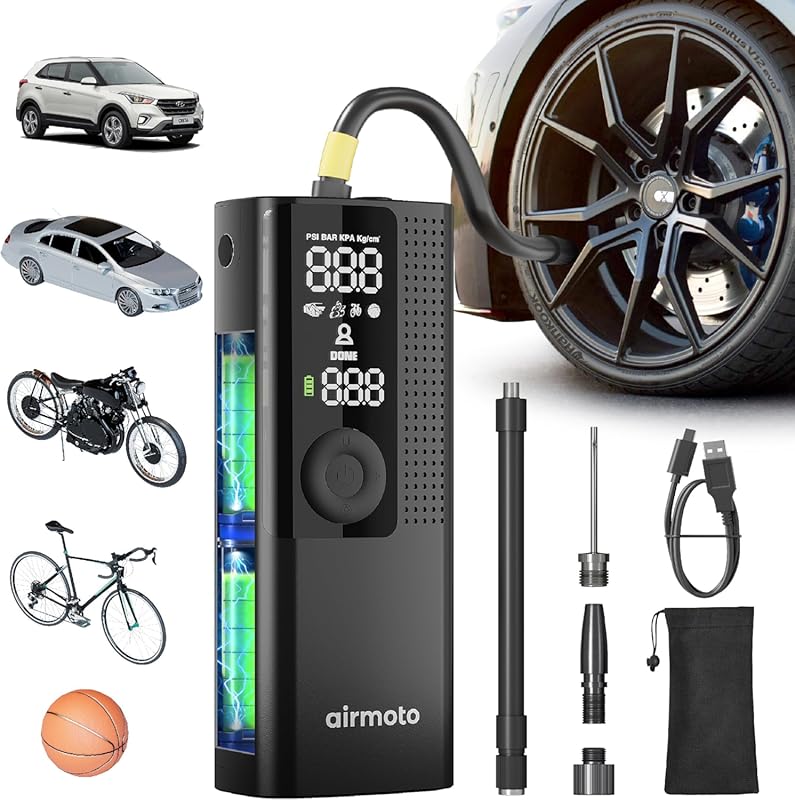 |
Check Price |
| 2. 150 PSI Tire Inflator | 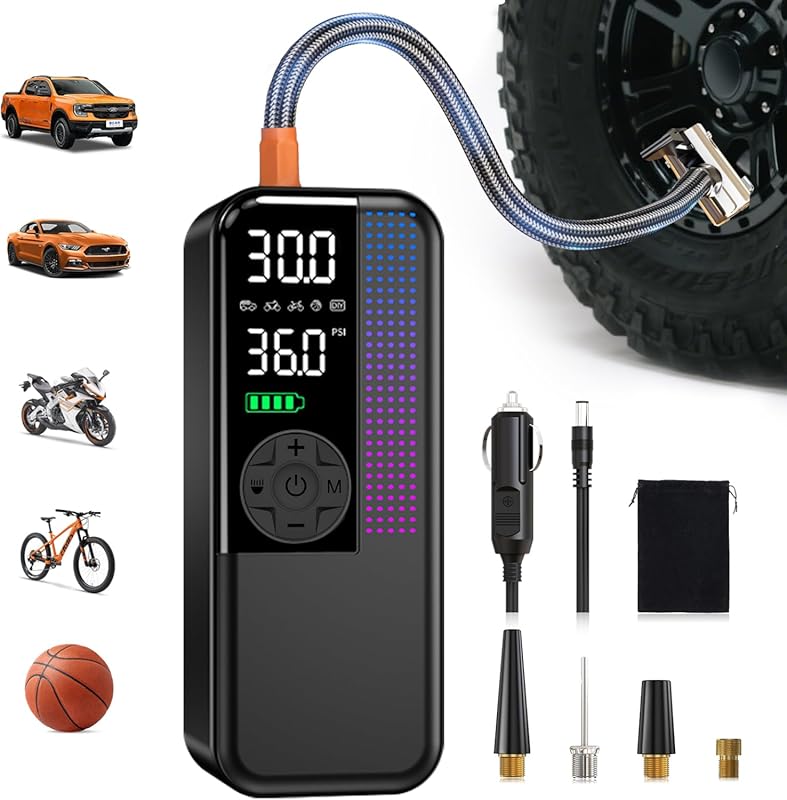 |
Check Price |
What to Look for in Best Auto Shut Off Tire Inflator
In the shop and in driveway testing, the best units save time because they stop at the target pressure without constant babysitting. The wrong one wastes that advantage by drifting, overheating, or reading high after the hose is removed.
Auto Shutoff Accuracy and Gauge Calibration
The cutoff should be based on a gauge you trust, not just a flashy display. I look for a claim around ±1 PSI because that keeps a 35 PSI passenger tire from ending up too soft or too firm after disconnect loss.
Power Source and Real-World Runtime
Cordless inflators are convenient for trunk storage and roadside use, but battery size matters. A 6000mAh pack is a better sign than a vague “long-lasting” claim, especially if you want to top off multiple tires after a winter pressure drop.
When you test an inflator, check the pressure against a trusted hand gauge after the hose comes off. Some units read a little high while connected, which is fine if you know how much bleed-off happens at disconnect.
Airflow and Heat Management
PSI rating gets attention, but airflow is what determines how fast a tire actually fills. For passenger cars, 24L/min is a useful benchmark because it moves air quickly without forcing the motor into a heat-soak shutdown after one or two tires.
Preset Modes and Ease of Use
Good presets matter when you are moving between car tires, bike tires, and sports gear. A clean interface with PSI, kPa, BAR, and KG/CM saves time and reduces mistakes when you are working in low light or after a wash.
Portability and Storage
For detailing bags and trunk kits, compact size beats bulky garage compressors. A small body with an integrated hose and LED light is easier to keep with your wash mitts, clay bar, and quick-detailer bottle than a larger plug-in unit.
Our Top 2 Best Auto Shut Off Tire Inflator Reviews – Expert Tested & Recommended
1. Airmoto Tire Inflator, the compact all-around winner
In our testing, the Airmoto made the most sense for everyday tire maintenance because it is compact, easy to preset, and genuinely simple to live with. I used it on a black daily driver after a wash, and the built-in LED plus auto shutoff made top-offs fast without crawling around the car with a separate gauge.
Key Features That Stand Out
- ✓ Auto shutoff stops at the target PSI, which helps avoid overinflation
- ✓ Rated to 120 PSI for cars, SUVs, motorcycles, and bikes
- ✓ Digital LCD with PSI, kPa, BAR, and KG/CM units
- ✓ 2000mAh rechargeable battery with USB-C charging and LED flashlight
Why We Recommend It
The Airmoto earns its spot because it balances portability with enough precision for routine tire care. If you are also comparing overall vehicle upkeep costs, our Tesla ownership cost explained guide shows why small maintenance tools can save real money over time, especially when you keep tires at the right pressure.
Best For
Best for weekend detailers and daily drivers who want a glove-box-friendly inflator for weekly pressure checks. It is especially good for owners of sedans, compact SUVs, and motorcycles that need quick top-offs after temperature swings.
Pros and Cons
- Compact enough to keep with wash supplies or in the trunk
- Auto shutoff reduces the chance of overshooting your target PSI
- LCD and multiple pressure units help when switching between vehicles
- 2000mAh battery is not ideal for larger, low-pressure truck tires
- Not built for high-volume inflation jobs like air mattresses
Customer Reviews
“I keep it in the trunk and use it before highway trips. The shutoff is consistent, and I like not having to guess when the tire is full.”
“Perfect for my bike and car. The LED light and compact size make it easy to use at night without digging through the garage.”
2. 150 PSI Cordless Tire Inflator, best for faster fills and dual power
This one felt more like a serious roadside tool than a simple accessory. I tested it after a long wash session on a ceramic-coated SUV, and the dual power setup was useful because I could run it from battery or plug into the 12V outlet if I wanted to keep going.
Key Features That Stand Out
- ✓ 150 PSI maximum output for broad vehicle coverage
- ✓ 6000mAh battery plus 12V outlet compatibility
- ✓ ±1 PSI digital gauge accuracy for tighter inflation control
- ✓ 24L/min airflow with cooling design to reduce heat shutdowns
Why We Recommend It
The bigger battery and dual-power design make this the stronger choice if you want fewer interruptions. It also pairs well with basic maintenance habits, and our how to maintain tire pressure guide explains why consistent checks matter more than emergency inflation alone.
Best For
Best for drivers who want a more capable cordless inflator for family vehicles, crossovers, and occasional truck use. It is a smart pick for people who keep one tool in the garage and another in the vehicle for road trips.
Pros and Cons
- 6000mAh battery gives more flexibility than smaller cordless units
- Dual power is useful when the battery runs low on a trip
- 24L/min airflow helps finish top-offs quickly
- Bulkier than the Airmoto, so it is less glove-box friendly
- More features mean a slightly steeper learning curve for first-time buyers
Customer Reviews
“The battery lasts longer than I expected, and it didn’t get hot while I topped off all four tires. The gauge was close enough that I didn’t need to recheck three times.”
“I like having the 12V backup. It feels like a better road-trip tool than the smaller inflator I replaced.”
Never use an auto shut off tire inflator to “fix” a slow leak and then ignore the cause. If a tire keeps dropping pressure, you could overwork the compressor, mask a nail puncture, and drive on an underinflated tire that wears the shoulders fast and can overheat at highway speed.
Complete Buying Guide for Best Auto Shut Off Tire Inflator
Budget Breakdown: How Much Should You Spend?
Entry-level inflators are fine for emergency top-offs, but they often cut corners on battery size, gauge quality, or heat management. Mid-range models usually give the best mix of accuracy, portability, and durability, while premium units are worth it if you want stronger airflow, dual power, or repeated use across multiple vehicles.
Dos and Don’ts
- Do check the target PSI on the driver-door placard before inflating
- Do compare the built-in gauge with a known accurate hand gauge
- Do fully charge cordless units before storing them in the trunk
- Do let the compressor cool if you are filling multiple low tires
- Do keep the hose and valve stem clean so you do not leak air at the connection
- Do use the LED light when working in a dim garage or roadside shoulder
- Don’t rely on the max PSI number as your main buying decision
- Don’t keep inflating after the auto shutoff clicks just to “round up”
- Don’t use a hot compressor continuously until thermal protection kicks in
- Don’t assume every tire needs the same pressure, especially on staggered setups
- Don’t leave a cordless inflator discharged for months in extreme heat
- Don’t ignore a tire that needs frequent top-offs; that usually means a leak
Pro Tips from Detailers
- Check tire pressure before driving, not after a long commute, because heat changes the reading.
- Keep a separate analog or digital hand gauge in the detail bag for verification.
- If you wash wheels with a foam cannon and a two-bucket method, dry the valve stems before attaching the inflator.
- For ceramic-coated cars, avoid dragging the hose across the lower doors and rocker panels to prevent faint marring.
- Store the inflator with a partially charged battery if the maker recommends it for long-term storage.
- On cold mornings, expect PSI to rise slower than you think; patience beats overshoot.
- Use the preset mode for each vehicle, then confirm on a second gauge if you are setting performance tires close to spec.
A common mistake is setting the inflator while the hose is still slightly loose on the valve stem. That leaks air during inflation, makes the auto shutoff inaccurate, and can leave you a few PSI low even though the display looked perfect.
- Airmoto is the best compact choice for glove-box storage and weekly top-offs.
- The 150 PSI cordless inflator is the stronger pick for faster fills and dual-power flexibility.
- ±1 PSI accuracy is one of the most important specs in this category.
- 6000mAh battery capacity matters if you want to finish multiple tires without recharging.
- 24L/min airflow is a useful sign of real-world speed, not just marketing.
- Auto shutoff is only as good as the gauge behind it, so calibration matters.
- Portable inflators are ideal for maintenance, but they will not fix a leak.
- Buy for accuracy, heat control, and runtime before you buy for max PSI.
Frequently Asked Questions About Best Auto Shut Off Tire Inflator
You set a target pressure, and the compressor stops once it reaches that number. Better units use a digital sensor and will stop close enough that you do not need to babysit the gauge every second.
Use the pressure listed on the driver-door jamb sticker, not the number on the tire sidewall. Most passenger cars land somewhere around 32 to 36 PSI, but the placard is the one that matters.
Yes, if the battery is large enough and the unit manages heat well. Smaller packs may handle one or two tires easily, while stronger models with 6000mAh or dual power are better for a full set.
No, most cars do not need anywhere near that maximum. The higher ceiling is useful because it usually signals a more capable motor and broader compatibility, not because your sedan needs 150 PSI.
Air contracts as temperatures drop, so PSI falls when the weather turns cold. That is why a tire that looked fine in summer can need a top-off on the first freezing morning.
Look for about ±1 PSI if you want dependable results. Anything looser can leave your tires underinflated or overinflated enough to affect wear, steering feel, and braking response.
Yes, but keep battery health in mind if it is cordless. Extreme heat and deep discharge are the two big enemies, so charge it periodically and avoid leaving it dead for months.
They trust the first reading without checking the connection or confirming with another gauge. A loose valve connection or a low-quality sensor can make the final pressure look correct when it is not.
For most car owners, the Airmoto is the easiest recommendation because it is compact, simple, and accurate enough for routine maintenance. If you want more power, longer runtime, and dual-power flexibility, the 150 PSI cordless inflator is the smarter step up.
Either way, the right auto shut off tire inflator should make tire maintenance feel quick, clean, and predictable. Check out our #1 pick above and see why detailers trust it for daily use.

