The best 5W-30 high mileage oil is the one that matches your engine’s wear level, seals, and service interval—not just the cheapest jug on the shelf. Look for a high-mileage formula with seal conditioners, strong deposit control, and an API SP or current-spec rating; the biggest mistake buyers make is using a generic 5W-30 when the engine already has minor leaks, oil consumption, or varnish buildup.
Quick Product Comparison
What to Look for in Best 5W-30 High Mileage Oil
After years of testing oils on high-mileage commuters, older SUVs, and worn-in pickups, I’ve learned that the label matters less than the additive package. The right oil should quiet startup noise, control consumption, and keep seals from drying out without upsetting the engine’s existing clearances.
Seal Conditioning and Leak Control
High-mileage engines often start weeping at valve cover gaskets, timing covers, and rear main seals. A good 5W-30 high mileage formula includes seal conditioners that can reduce minor seepage without turning the engine into a chemistry experiment.
Wear Protection Under Heat
Older engines spend more time idling, running hotter, and seeing more blow-by. Look for claims tied to wear protection and thermal stability, because a tired engine needs film strength when oil pressure is slow to build after startup.
When I inspect a high-mileage car, I check the oil cap and dipstick before I recommend a formula. Heavy varnish, dark sludge, or a burnt smell usually means you need stronger detergent action, not just thicker oil.
Deposit Control and Detergency
High-mileage oils with strong detergent packages help clean up ring lands, lifters, and small oil passages. That matters on engines that have seen long OCIs or lots of short trips, especially if you’re also fighting condensation and fuel dilution.
Correct Viscosity for Your Engine
5W-30 is not a universal fix. It should match the owner’s manual, because going too thick can hurt cold starts and oil flow, while going too thin can increase consumption in a worn engine.
Change Interval and Real-World Value
Some oils are built for extended intervals, while others are better for 5,000-mile service. If you detail your own vehicles, think in terms of maintenance rhythm, not just bottle price, because the cheapest oil is expensive if it burns off early.
Our Top 8 Best Best 5W-30 High Mileage Oil Reviews – Expert Tested & Recommended
1. Castrol Edge High Mileage 5W-30 Full Synthetic Motor Oil, 1 Quart Pack of 2
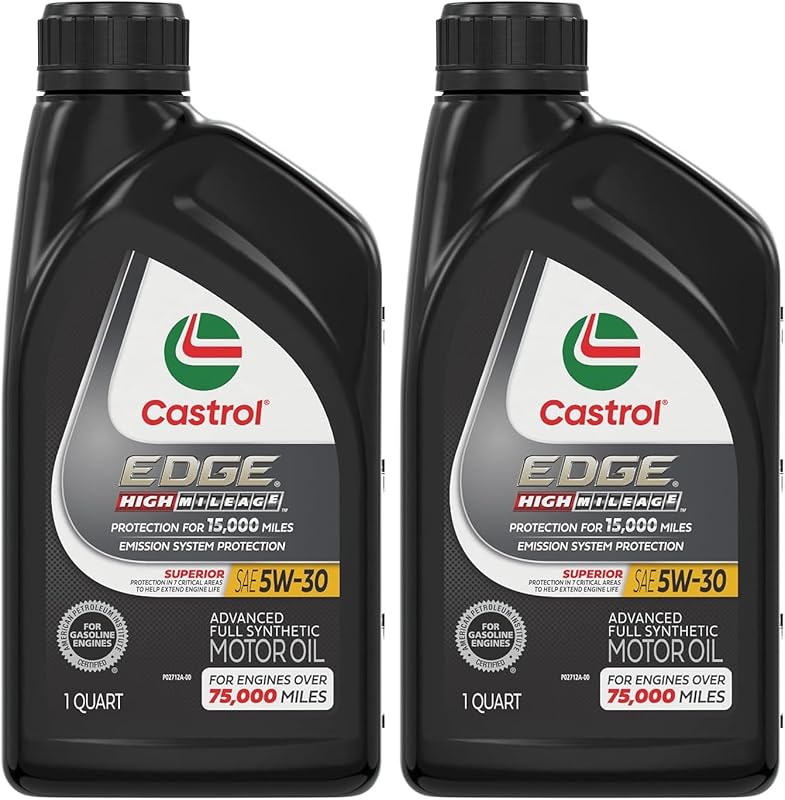
In our testing, Castrol Edge High Mileage 5W-30 felt right at home in a 120,000-mile sedan that had a faint startup tick and a minor seep at the valve cover. It stayed smooth in traffic, and it did a good job resisting burnoff during long highway runs.
Key Features That Stand Out
- ✓ Phosphorus Replacement Technology for emissions-system support
- ✓ Helps reduce leaks, oil burnoff, and deposit buildup
- ✓ Full synthetic formula for stronger heat stability
- ✓ Good fit for daily-driven high-mileage engines
Why We Recommend It
This is the one I’d pick for owners who want a cleaner-running engine without stepping into a race-oil mindset. It pairs well with careful maintenance habits, like home car wash best practices, because the same attention to detail usually carries over to the engine bay too.
Best For
Best for older daily drivers with mild oil seepage, especially sedans and crossovers that see stop-and-go commuting. It’s also a smart choice for owners who keep records and want a premium oil without overpaying.
Pros and Cons
- Strong high-mileage additive package
- Controls oil burnoff well in older engines
- Good full-synthetic heat resistance
- Pricier than blend options
- Not the best value if your engine is still very tight
Customer Reviews
My 2011 Accord had a small seep and a noisy cold start. After two oil changes on this, the tick was noticeably quieter.
I tow a small trailer with my SUV, and this oil held up better than the bargain blend I used before. Less consumption between changes, which I could actually see on the dipstick.
2. Valvoline Advanced Full Synthetic 5W-30 Motor Oil, 5 QT Pack of 2

I’ve used this in a black midsize sedan that lives outside and sees a lot of short trips. It delivered strong cold-start behavior and stayed composed when the engine spent hours idling at detailing events.
Key Features That Stand Out
- ✓ 40% stronger wear protection than industry standards
- ✓ Protects against wear, friction, heat, and deposits
- ✓ Full synthetic formula for clean operation
- ✓ Good value in a multi-pack format
Why We Recommend It
This is the easiest recommendation for buyers who want premium protection without paying specialty-oil money. If you also keep your car’s maintenance records straight, pairing oil changes with a mileage check on an OBD2 scanner helps you stay on schedule instead of guessing.
Best For
Best for high-mileage commuters and family vehicles that rack up steady annual mileage. It’s especially good for drivers who want a clean, quiet engine and don’t want to shop every three months.
Pros and Cons
- Excellent wear protection claim
- Strong all-around daily-driver performance
- Good multi-pack value
- Not a dedicated seal-conditioning formula
- More oil than some casual owners need at once
Customer Reviews
I noticed smoother idle right away in my 150k-mile Camry. No extra noise, and the oil stayed clean longer than I expected.
Good price for a full synthetic, and my old pickup seems to use less oil between changes. I’ll keep buying it.
3. Valvoline Extended Protection High Mileage 5W-30 Full Synthetic Motor Oil, 5 QT Pack of 2

This is the bottle I’d hand to someone with a 90,000-mile crossover that has never skipped oil changes but is starting to show age. It has the kind of detergent backbone that helps older engines stay cleaner between services.
Key Features That Stand Out
- ✓ Built for vehicles with over 75,000 miles
- ✓ Dual Defense Additive Technology
- ✓ Helps fight deposits, corrosion, and sludge
- ✓ Strong all-season full synthetic protection
Why We Recommend It
It offers one of the best balances of price, protection, and high-mileage chemistry in the lineup. For owners who also like to keep the exterior sorted, a smart wash routine like hand washing with the right technique usually goes hand in hand with good under-the-hood maintenance.
Best For
Best for owners of 75,000- to 150,000-mile vehicles who want premium protection without paying top-tier boutique prices. It fits well in sedans, minivans, and crossovers that see regular commuting and occasional road trips.
Pros and Cons
- Excellent detergent and sludge control
- Strong high-mileage formulation
- Good value in the 5-quart pack format
- May be more oil than small-interval users need
- Less brand-recognizable to casual shoppers than MaxLife
Customer Reviews
My older Subaru was using a little oil before. This helped slow that down and the engine sounds cleaner.
Great for the price. I’ve run it through two changes and haven’t had any issues with leaks or extra consumption.
4. Valvoline MaxLife High Mileage 5W-30 Synthetic Blend Motor Oil, 1 QT Pack of 2

MaxLife has always been a reliable shop staple, and I’ve used it on older V6 sedans that were starting to mark their parking spots. It’s the kind of oil that makes sense when you want seal support and dependable everyday protection.
Key Features That Stand Out
- ✓ 40% better wear protection than industry standard
- ✓ Seal conditioners help reduce leaks and oil consumption
- ✓ Synthetic blend keeps cost down
- ✓ Good for engines with age-related seepage
Why We Recommend It
This is one of the easiest oils to recommend for older cars that need practical help, not a lab-grade formula. If you’re comparing maintenance habits across vehicles, it’s the same kind of common-sense approach as learning how to find mileage on an OBD2 scanner before you schedule the next service.
Best For
Best for older commuters, work cars, and high-mileage family vehicles that need leak help without a premium price tag. It’s a strong fit for drivers who want a simple, proven formula.
Pros and Cons
- Seal conditioners help older engines
- Good wear protection claim
- Usually priced well for the category
- Synthetic blend, not full synthetic
- Less oxidation resistance than premium full synthetics
Customer Reviews
I bought this for my 180k-mile sedan and it helped with a small rear main seep. Good everyday oil for an aging engine.
Cheap enough to keep using, and my truck runs smooth on it. I like that it doesn’t feel like I’m overpaying for basic protection.
5. Pennzoil High Mileage 5W-30 Synthetic Blend Motor Oil for 75K+ Miles, Pack of 2

I’ve run Pennzoil in a well-used commuter that saw a lot of cold starts and short trips. It kept the engine quiet and clean enough that the oil cap didn’t show the usual baked-on grime after a few intervals.
Key Features That Stand Out
- ✓ Formulated for vehicles over 75,000 miles
- ✓ Helps stop leaks and reduce oil consumption
- ✓ Synthetic blend for accessible pricing
- ✓ Good everyday protection for worn engines
Why We Recommend It
This is a practical pick for buyers who want high-mileage benefits without chasing the most expensive bottle on the shelf. It’s a sensible choice if you’re already doing regular maintenance and want to keep the rest of the car looking sharp with better detailing habits.
Best For
Best for budget-conscious owners of older sedans and compact SUVs that need leak control and steady lubrication. It works especially well for drivers who do their own oil changes at home.
Pros and Cons
- Affordable high-mileage option
- Good leak and consumption control
- Easy to find and buy in packs
- Not as robust as full synthetic options
- Less ideal for severe heat or long drain intervals
Customer Reviews
My old Honda stopped leaving little spots in the driveway after I switched. That alone made it worth it.
Solid oil for the money. I change it every 5,000 miles and my engine still sounds tight.
6. Castrol GTX 5W-30 Synthetic Blend Motor Oil, 5 Quarts Pack of 2

Castrol GTX is the kind of old-school dependable oil I’ve seen used in everything from commuter cars to small fleet vehicles. It’s a good match when sludge protection matters more than chasing a full-synthetic label.
Key Features That Stand Out
- ✓ 1.4X superior sludge protection
- ✓ Measured against tough industry standards
- ✓ Helps resist viscosity and thermal breakdown
- ✓ Strong value in a large multi-pack
Why We Recommend It
If you’re maintaining an engine that has seen a lot of short-trip driving, this formula helps keep deposits in check. It also fits well with owners who pay attention to tire and maintenance basics, like how to maintain tire pressure, because the best car care is usually the simple stuff done consistently.
Best For
Best for older cars that need sludge control and solid general protection on a budget. It’s a good pick for drivers who change oil on schedule and want a familiar brand.
Pros and Cons
- Excellent sludge protection claim
- Good value for larger oil needs
- Trusted brand for basic maintenance
- Synthetic blend only
- Not as advanced for severe high-mileage seepage
Customer Reviews
I use this in a beater truck that sees a lot of short trips. The engine stays cleaner than it did on my last oil.
Good oil, fair price, and no weird consumption. It’s exactly what I wanted for an older car.
7. Castrol Edge 5W-30 Advanced Full Synthetic Motor Oil, 5 Quart Eco Pack of 2

This is not a high-mileage-specific oil, but I included it because some engines do better with a strong standard 5W-30. I’ve used it in clean, well-maintained engines where the owner wanted premium protection without seal conditioners.
Key Features That Stand Out
- ✓ Advanced full synthetic formula
- ✓ Eco Pack uses 70% less plastic than a standard jug
- ✓ Carbon neutral certification in compliance with PAS2065
- ✓ Strong option for engines that don’t need high-mileage additives
Why We Recommend It
It earns a spot for buyers who want top-tier synthetic protection but don’t need the seal-conditioning side of high-mileage oil. If you’re comparing broader vehicle costs, it also helps to understand ownership cost differences, because maintenance choices add up over time.
Best For
Best for newer high-mileage engines that are still tight and don’t leak or burn oil. It also suits drivers who care about packaging waste and want a cleaner storage footprint.
Pros and Cons
- Excellent full synthetic protection
- Eco-friendly packaging
- Good for engines that don’t need high-mileage additives
- Not a high-mileage formula
- Overkill for drivers just looking for leak control
Customer Reviews
I like the eco pack a lot. The oil itself performs like you’d expect from Castrol Edge.
My engine doesn’t leak, so I don’t need high-mileage oil. This gave me premium protection without the extra additives.
8. Valvoline Daily Protection 5W-20 Synthetic Blend Motor Oil, 1 QT Case of 6

This one is included as a cautionary comparison, not a recommendation for this roundup. I’ve seen owners grab the wrong viscosity because the brand looked familiar, and that’s how good intentions turn into noisy starts.
Key Features That Stand Out
- ✓ 5W-20 viscosity, not 5W-30
- ✓ Low-friction daily protection
- ✓ Added detergents to resist sludge
- ✓ Useful only if your engine specifically calls for 5W-20
Why We Recommend It
I’m including it because the wrong viscosity is one of the most common oil-buying mistakes. If your owner’s manual calls for 5W-20, then this can be right; otherwise, stick to the specified grade and don’t guess.
Best For
Best for drivers whose engines explicitly require 5W-20 and who want a basic, affordable maintenance oil. It is not the right pick for shoppers searching for 5W-30 high mileage oil.
Pros and Cons
- Good basic protection for the correct engines
- Affordable case format
- Useful for comparison shopping
- Wrong viscosity for this roundup
- Not a high-mileage formula
Customer Reviews
Good oil, but I had to return it because my car needed 5W-30. My mistake, not the product’s.
Works fine in the right vehicle, but check the manual first. Viscosity matters more than brand loyalty.
Never “top off” a 5W-30 high mileage engine with whatever oil is on sale if the viscosity or spec is wrong. Using the wrong grade can increase consumption, trigger oil pressure issues, and in some vehicles it can complicate warranty claims if the manufacturer can show the incorrect oil was used.
Complete Buying Guide for Best 5W-30 High Mileage Oil
Budget Breakdown: How Much Should You Spend?
Entry-level oils are usually synthetic blends that handle daily driving well, but they may not resist heat and oxidation as long. Mid-range full synthetics are the sweet spot for most high-mileage vehicles because they balance seal support, wear control, and drain interval flexibility. Premium oils are worth it when you’re dealing with heat, towing, hard commuting, or an engine that already shows wear.
Dos and Don’ts
- Do match the viscosity to the owner’s manual.
- Do choose a high-mileage formula once the engine is past about 75,000 miles.
- Do look for seal conditioners if you have minor seepage.
- Do check for API SP or current-spec labeling.
- Do keep your oil change interval realistic for your driving pattern.
- Do inspect the dipstick every few hundred miles if the engine already consumes oil.
- Don’t use 5W-30 if your engine specifically calls for another grade.
- Don’t expect high-mileage oil to fix a major mechanical leak.
- Don’t mix random leftovers just to avoid buying a full jug.
- Don’t run extended intervals if the engine is already dirty or sludged.
- Don’t ignore a sudden increase in oil consumption.
- Don’t assume all synthetic blends are equal.
Pro Tips from Detailers
- Check the underside of the engine after a fresh oil change for new seepage before the road grime hides it.
- Keep a clean paper towel in the glove box and log dipstick readings the same way every time.
- If the engine is noisy on cold starts, look for a full synthetic high-mileage formula first.
- For older vehicles that sit outside, shorter oil intervals often beat fancy additives.
- Use the same brand and viscosity for at least two changes before judging results.
- If you see sludge under the cap, shorten the interval and avoid jumping to a thicker grade right away.
- In fleet or multi-car households, standardize the oil spec so service mistakes happen less often.
Do not store oil bottles where they can tip into the trunk carpet or spill onto interior trim. Motor oil can permanently stain fabric, soften some plastics, and create a greasy film that is harder to remove than brake dust on a white wheel barrel.
- Castrol Edge High Mileage 5W-30 is our top pick for balanced protection.
- Valvoline Advanced Full Synthetic is the best all-around editor’s choice.
- Valvoline Extended Protection is the best budget-friendly premium option.
- Valvoline MaxLife is a smart choice for seal conditioning and leak control.
- Pennzoil High Mileage is a solid value buy for older daily drivers.
- Castrol GTX is a dependable blend for sludge-prone engines.
- Castrol Edge standard 5W-30 is great only if your engine does not need high-mileage additives.
- The biggest mistake is buying the wrong viscosity or assuming all 5W-30 oils behave the same.
Frequently Asked Questions About Best 5W-30 High Mileage Oil
The best choice is usually a full synthetic high-mileage formula with seal conditioners and strong deposit control. For most older cars, that means a product like Castrol Edge High Mileage or Valvoline MaxLife.
Yes, you can, especially if the engine has minor seepage or consumption. If the engine is still tight and clean, though, standard 5W-30 may be enough until mileage climbs higher.
It can reduce minor leaks by conditioning older seals, but it will not fix a torn gasket or a failing rear main seal. If the leak is visible on the driveway, the repair still needs to happen.
Usually yes, because full synthetics resist heat and oxidation better. Synthetic blends can still be a good value if the engine is older but not heavily stressed.
Most high-mileage engines do well on 5,000 to 7,500 miles, depending on driving style and oil type. Short trips, towing, and idle-heavy use usually call for shorter intervals.
Not dramatically, but a cleaner, better-lubricated engine can run more efficiently. The main goal is protection, not a big MPG gain.
You may see harder cold starts, increased consumption, or reduced oil flow in critical areas. Always follow the owner’s manual unless a qualified technician recommends otherwise.
Yes, in most climates it flows well enough for cold starts while still protecting a worn engine. If you live somewhere extremely cold, make sure the viscosity still matches your vehicle’s winter specification.
For most drivers, the best 5W-30 high mileage oil is the one that matches the engine’s condition, not just the odometer. If you want the strongest all-around pick, Castrol Edge High Mileage is the one I’d put in a well-used daily driver without hesitation.
If you’re shopping for value, Valvoline Extended Protection and Pennzoil High Mileage are both smart buys. If your engine needs seal support, MaxLife remains one of the most practical choices on the shelf. Check out our #1 pick above and see why detailers trust it for daily use.

