Direct answer phrase: Clay bar is best for removing bonded surface contamination, while polishing is best for correcting swirls, light scratches, and dull paint. If your car has both roughness and visible defects, the best result is often clay first, then polish if needed.
When people compare Clay Bar vs Polishing, they’re often trying to solve two different paint problems. Clay removes bonded contamination from the surface, while polishing corrects visible defects in the paint itself. Knowing the difference helps you choose the right step, avoid unnecessary work, and get better detailing results.
Clay bar treatment is best for rough paint that feels contaminated, while polishing is best for paint with swirls, light scratches, and dullness. In many cases, the best result comes from claying first and polishing only if the paint still needs correction.
- Clay bar: removes contamination that washing leaves behind and makes paint feel smooth.
- Polishing: improves gloss and reduces visible defects, but removes a thin layer of paint.
- Best order: clay first, then polish only if the paint still needs correction.
This AAutomotives guide is written to help readers understand Clay Bar vs Polishing with clear, practical advice. Before publishing, review model-specific facts, dates, prices, safety points, and source links so the final article stays accurate and trustworthy.
- Clay Bar vs Polishing: What Each Process Actually Does to Your Paint
- When to Use a Clay Bar vs When to Polish a Car
- How Clay Bar Treatment Works in Car Detailing
- How Polishing Works and What It Can Fix
- Clay Bar vs Polishing: Key Differences in Results, Risk, and Cost
- Which Is Best for Your Car Based on Paint Condition and Goals
- Expert Recommendation: Should You Clay First, Polish Later, or Do Both?
- Final Verdict: Clay Bar vs Polishing for the Best Car Detailing Results
Clay Bar vs Polishing: What Each Process Actually Does to Your Paint
Clay bar treatment and polishing both improve how a car looks, but they work in very different ways. A clay bar does not “fix” scratches or restore faded clear coat. Instead, it removes stuck-on contaminants that washing alone cannot lift.
Polishing, on the other hand, uses mild abrasives to level the paint surface and reduce visible imperfections. It can improve gloss, clarity, and the appearance of light damage, but it will not remove embedded tar or rail dust the way clay can.
That difference matters because many owners assume one product can do both jobs. In reality, a rough-feeling finish may need claying even if the paint looks fine, while a smooth finish may still need polishing if it has swirl marks or oxidation.
Clay bar treatment is a surface decontamination step. Polishing is a paint correction step. They solve different problems, so the “best” choice depends on what your paint actually needs.
When to Use a Clay Bar vs When to Polish a Car
Start by checking the paint condition, not the product label. If the paint feels gritty after washing, claying is usually the more logical next step. If the paint feels smooth but looks hazy, scratched, or dull, polishing may be the better choice.
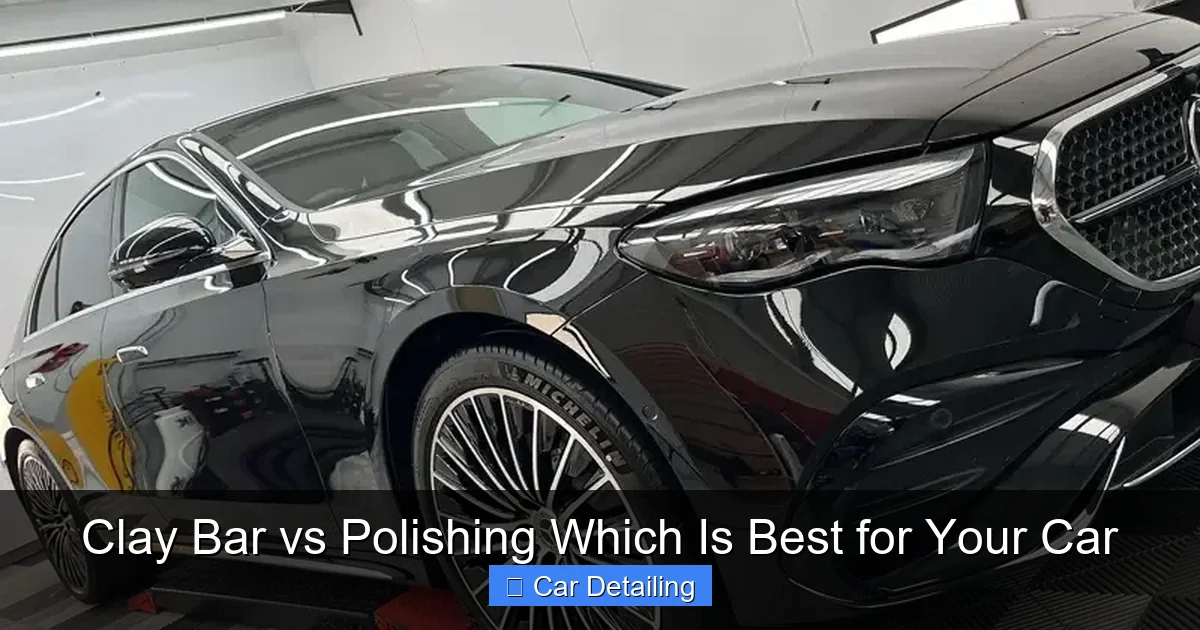
Visual guide about Clay Bar vs Polishing Which Is Best for Your Car
Image source: sybonbest.com
For many vehicles, claying is a maintenance step used before wax, sealant, or coating. Polishing is more often used when the finish has visible defects that you want to reduce before protection goes on.
Signs Your Paint Needs Claying
Clay is usually the right move when the car looks clean but doesn’t feel clean. Run your hand inside a plastic bag over the washed paint; if it feels rough or bumpy, contaminants are likely bonded to the surface.
Other signs include brake dust fallout, tree sap mist, industrial dust, overspray, or a finish that seems less slick than it should after a proper wash. If wax or sealant seems to stop working quickly, contamination may also be part of the issue.
Signs Your Paint Needs Polishing
Polishing is more appropriate when the paint has visible swirls, fine scratches, water-spot etching, or a cloudy look in direct sunlight. Oxidized paint can also benefit from polishing if the clear coat still has enough thickness left.
If the surface is smooth but the gloss looks flat, polishing can often restore clarity better than another coat of wax. When defects are deep, however, polishing may only lessen them rather than remove them completely.
- Paint feels rough after washing: consider claying
- Paint looks scratched or hazy: consider polishing
- Not sure? Inspect in bright light before choosing
- Severe damage? Ask a professional before correcting
How Clay Bar Treatment Works in Car Detailing
A clay bar works by gliding across lubricated paint and grabbing contaminants that are stuck above the surface. The clay’s pliable material pulls away particles that normal shampooing leaves behind.
This process is gentle when used correctly, but it does require lubrication and patience. If the paint is dry or the clay is dropped and reused, it can scratch the finish instead of improving it.
What Contaminants a Clay Bar Removes
Clay is useful for removing bonded debris such as brake dust, rail dust, industrial fallout, tree sap residue, road grime, and some overspray. It can also help remove tiny particles that make the paint feel gritty even after a careful wash.
It is important to note that clay does not correct paint damage below the surface. It won’t remove scratches, swirls, or oxidation, because those issues are in the paint or clear coat itself rather than sitting on top of it.
Best Use Cases for Clay Bar Treatment in 2025
In 2025, clay bar treatment remains a practical choice for daily drivers, vehicles parked outdoors, and cars that have recently been exposed to road fallout, construction dust, or seasonal contamination. It is also helpful before applying a ceramic spray, sealant, or wax.
If you are preparing a vehicle for a sale, photo shoot, or show-day presentation, claying can make the paint feel noticeably smoother and help the protection layer bond more evenly. For owners who follow a regular wash routine, claying may only be needed occasionally rather than every month.
If the paint is rough but visually decent, clay before you decide to polish. Sometimes contamination makes the finish look worse than it really is.
How Polishing Works and What It Can Fix
Polishing removes a very thin layer of paint or clear coat to reduce visible defects and improve reflectivity. That is why it can make a car look deeper and glossier, but it also means the process must be done carefully.
The amount of correction depends on the product, pad, machine, paint hardness, and how much damage is present. Some finishes respond quickly, while others need multiple passes or a more aggressive setup.
Light Scratches, Swirl Marks, and Oxidation
Polishing is most effective on light to moderate defects. It can reduce swirl marks from poor washing, soften fine scratches, and revive paint that has started to look chalky or dull from oxidation.
Deeper scratches that catch a fingernail may not disappear fully, especially if they go through the clear coat. In those cases, polishing may improve appearance but not create a perfect finish.
Single-Stage vs Dual-Action Polishing Results
Single-stage polishing usually refers to one correction step, often chosen for light defect removal and gloss improvement. It is a good option when the goal is better appearance without chasing a show-car finish.
Dual-action machine polishing is often used because it is more forgiving than aggressive rotary work, especially for beginners. Results vary widely based on paint condition, but dual-action tools are commonly preferred for balancing correction and safety.
Polishing removes paint material. Over-polishing, using the wrong pad, or working too aggressively can damage the finish, especially on thin or previously corrected paint.
Clay Bar vs Polishing: Key Differences in Results, Risk, and Cost
The main difference between clay bar treatment and polishing comes down to what you want to change. Clay improves texture and cleanliness. Polishing improves appearance by correcting defects.
Clay usually carries less risk to the paint when done properly, but it can still mar the finish if the surface is dirty or the lubricant is insufficient. Polishing offers bigger visual improvement, but it also carries more risk because it removes paint.
| Option | Best For | Limit |
|---|---|---|
| Clay Bar | Rough paint, bonded contamination, prep before protection | Does not remove scratches or oxidation |
| Polishing | Swirls, light scratches, haze, gloss restoration | Removes paint and may not fix deep defects |
Paint Safety and Common Mistakes to Avoid
One of the biggest clay bar mistakes is using too little lubricant or working on a dirty panel. That can drag contamination across the paint and create marks. Another common issue is dropping clay and continuing to use it, which can trap debris and scratch the surface.
With polishing, the most common mistakes are using too much pressure, choosing the wrong pad, or assuming more passes always mean better results. If you are unsure about your paint type, test a small area first and inspect the finish under strong light.
DIY Cost vs Professional Detailing Cost
DIY clay bar kits are usually less expensive than machine polishing setups, especially once you factor in pads, compounds, polish, microfiber towels, and a machine if you do not already own one. Clay is often the more budget-friendly entry point for improving paint feel.
Professional detailing costs vary widely by vehicle size, paint condition, and the level of correction requested. A basic decontamination service is usually simpler than a full correction job, while multi-step polishing can become significantly more involved. If pricing matters, ask what is included before booking.
Costs vary by region, vehicle condition, and service level. A quick clay treatment is usually simpler and cheaper than polishing, while full paint correction can be a much larger investment.
Which Is Best for Your Car Based on Paint Condition and Goals
The best choice depends on what your paint needs and what result you want. If your goal is a cleaner-feeling surface and better protection prep, clay is often enough. If your goal is visibly better gloss and defect removal, polishing is usually the better tool.
Many owners try to choose one or the other when the right answer is actually “it depends.” A newer car with rough paint may need claying, while an older car with smooth but dull paint may need polishing first.
For Newer Cars and Routine Maintenance
Newer cars often benefit from claying when the finish has collected transport residue, brake dust, or general road contamination. If the paint is otherwise in good shape, polishing may be unnecessary and could remove more clear coat than you want to spend.
For routine maintenance, claying before wax or sealant can help the protection layer bond more evenly. If you wash carefully and use a good maintenance routine, you may only need polishing occasionally, if at all.
For Older Cars, Neglected Paint, and Show-Ready Finishes
Older or neglected cars often need both steps because they may have contamination plus visible defects. In that case, clay helps clean the surface first, and polishing helps restore gloss and reduce the damage that remains.
For a show-ready finish, the sequence matters. A smooth, decontaminated surface allows polishing to work more evenly, and the final protection layer usually looks better on properly prepared paint. If the paint is heavily oxidized, severely scratched, or repainted, ask a professional before attempting aggressive correction.
- Clay bar removes bonded contamination and smooths the surface.
- Polishing corrects visible defects like swirls, haze, and light scratches.
- Many cars benefit from claying first, then polishing only if needed.
Expert Recommendation: Should You Clay First, Polish Later, or Do Both?
For most detailing projects, claying first is the safer and more logical starting point. Once the contamination is gone, you can judge the paint more accurately and decide whether polishing is worth the extra work.
If the paint looks good after claying, you may be able to skip polishing and move straight to protection. If the finish still has swirls, haze, or oxidation, polishing can take the results to the next level.
Why Detailing Pros Often Combine Both Steps
Detailing pros often combine claying and polishing because each step prepares the surface for the next. Clay removes the bonded debris that could interfere with polishing pads or make defects harder to read.
After polishing, the paint usually accepts wax, sealant, or coating more evenly. That is why the two steps are often treated as part of a full paint prep process rather than separate alternatives.
If you are still building a safe wash-and-detail routine, it can help to review related guides on hand washing car best practices, clay bar guide for beginners, and clay bar mistakes to avoid. These can help you avoid the most common prep errors before you touch the paint.
Warning Signs to Leave Polishing to a Professional
Leave polishing to a professional if the paint is very thin, the car has complex previous repairs, or the finish already shows signs of failing clear coat. You should also be cautious if you are dealing with deep scratches, heavy oxidation, fresh paint, or a vehicle with expensive specialty finishes.
If you are not comfortable using a machine polisher, a pro can often recommend a safer one-step or spot-correction approach. That may cost more upfront, but it can reduce the chance of making the paint worse.
Final Verdict: Clay Bar vs Polishing for the Best Car Detailing Results
In the Clay Bar vs Polishing debate, there is no universal winner because the two processes do different jobs. Clay is best when the paint feels contaminated. Polishing is best when the paint looks worn, scratched, or dull.
If your goal is a smoother surface and better protection prep, clay bar treatment is usually the first step. If your goal is real visual correction, polishing is the stronger option. For the best detailing results, many cars need both in the right order.
When in doubt, start with the least aggressive option and inspect the result. If the paint still needs improvement after claying, polishing can be the next step. If the damage looks severe or the finish seems delicate, ask a professional before correcting it yourself.
- Rough paint: clay first
- Swirls or haze: polish
- Both contamination and defects: do both in order
- Unsure about paint condition: get a professional opinion
🎥 Related Video: Should You Polish Your Car's Paint After Using a Clay Bar?
📺 Pan The Organizer
Should You Polish Your Car’s Paint After Using a Clay Bar? In this video, I’ll be discussing the process of clay barring your paint to …
Frequently Asked Questions
Clay bar treatment usually comes first because it removes bonded contamination from the surface. That makes it easier to inspect the paint and decide whether polishing is actually necessary.
No. A clay bar removes contaminants sitting on the paint, but it does not correct scratches, swirl marks, or oxidation.
Not really. Polishing can improve the look of the paint, but it is not designed to remove the same bonded debris that clay is made to lift.
That depends on how contaminated the paint gets and how the car is used. Some vehicles need it only occasionally, while others parked outdoors may need it more often.

