Choose a clay bar based on paint condition, contamination level, and your comfort with detailing. Mild bars are safer for regular maintenance, while medium or aggressive bars remove heavier bonded dirt faster. Match the clay bar to your paint, use plenty of lubricant, and stop if the surface feels rough or the paint is delicate.
Choosing a clay bar is less about picking the “best” product and more about matching the right level of cleaning power to your paint. A clay bar removes bonded contamination that washing alone leaves behind, such as rail dust, overspray, tar mist, and industrial fallout.
If you choose the wrong grade, you can waste time or create unnecessary marring. If you choose the right one, the paint feels smoother, looks cleaner, and is better prepared for polish, wax, sealant, or ceramic coating.
This guide explains how to choose a clay bar based on paint condition, vehicle use, and your detailing goals. It also covers common mistakes, costs, safety, and when a professional detailer may be the better option.
- Point 1: The right clay bar depends on how contaminated the paint is, not just the car’s age.
- Point 2: Mild clay is best for routine care and lower risk, while stronger clay works faster on stubborn contamination.
- Point 3: Always use clay lubricant to reduce marring and help the bar glide smoothly.
- Point 4: If the paint is badly rough, a professional detailer may be the safer choice before polishing or waxing.
- Point 5: Clay bars remove bonded contaminants, but they do not fix scratches, oxidation, or swirl marks.
- Point 6: The best clay bar is one that balances cleaning power, safety, and how often you plan to detail.
- Point 7: Budget matters, but a low-cost clay bar can still perform well if it matches the job.
This AAutomotives guide is written to help readers understand How to Choose a Clay Bar with clear, practical advice. Before publishing, review model-specific facts, dates, prices, safety points, and source links so the final article stays accurate and trustworthy.
- What a Clay Bar Actually Does
- Start With Paint Condition, Not Product Labels
- Understand Clay Bar Grades
- Choose Between Traditional Clay Bars, Clay Towels, and Clay Mitts
- Match the Clay Bar to Your Paint Type and Vehicle Use
- Look at Lubrication, Size, and Ease of Use
- Compare Cost, Value, and How Often You Will Use It
- Common Mistakes to Avoid
- When to Get Expert Help
- Conclusion: The Best Clay Bar Is the Safest One That Solves the Problem
What a Clay Bar Actually Does
A clay bar is a detailing tool designed to lift bonded contaminants from the paint surface. These contaminants sit on top of the clear coat and are often too stuck to remove with normal washing.
When you glide clay with proper lubricant across a lubricated panel, it shears off the particles and traps them in the clay. The result is a smoother surface that is more ready for finishing products.
Clay bars are often used before polishing or waxing. That step matters because wax or sealant adheres better to a clean, smooth surface than to one covered in embedded grime.
Clay bars remove contamination, but they do not repair scratches, chips, water spots etched into the clear coat, or oxidation. Those issues usually need polishing or paint correction.
Start With Paint Condition, Not Product Labels
The first step in choosing a clay bar is to assess the paint. A car that is washed regularly and parked in a garage usually needs less aggressive clay than a work truck parked outside near industrial areas or rail lines.
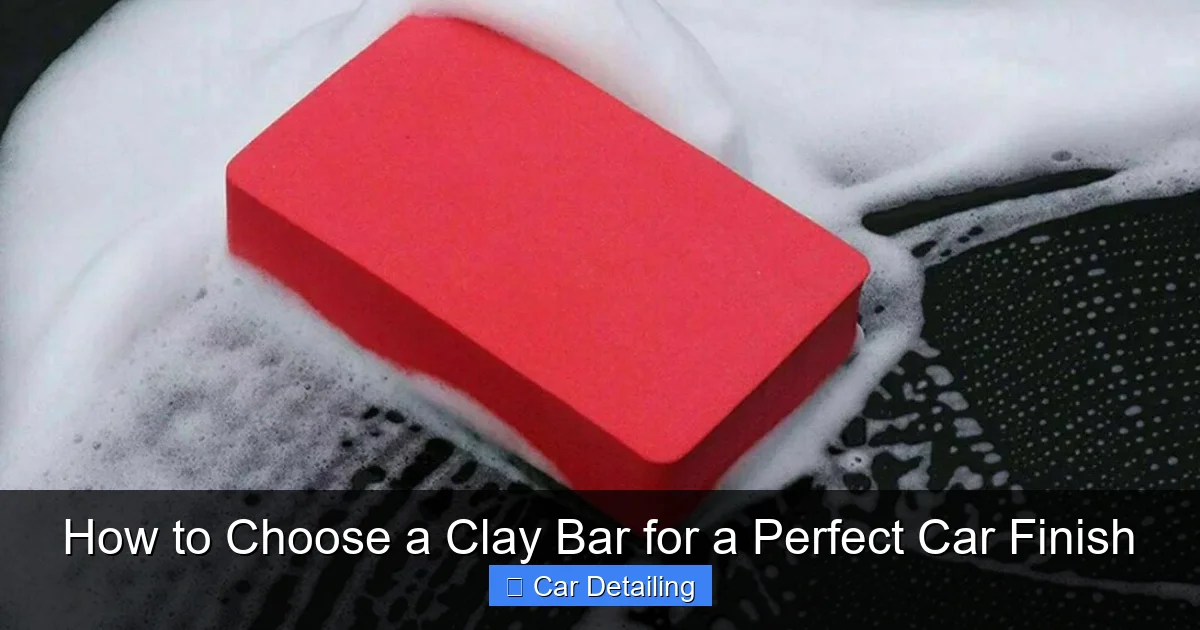
Visual guide about How to Choose a Clay Bar for a Perfect Car Finish
Image source: images.nexusapp.co
Run your hand inside a thin plastic bag over a clean, dry panel. If the paint feels lightly gritty, a mild clay bar may be enough. If it feels heavily rough or sticky, you may need a medium or aggressive clay bar.
Also consider the vehicle’s history. A recently repainted panel, soft black paint, or older paint in poor condition may be more sensitive to marring. In those cases, a gentler approach is safer even if it takes longer.
- Wash the car first
- Inspect paint under good light
- Feel for roughness using a baggie test
- Decide how contaminated the surface is
- Choose the least aggressive clay that can do the job
Understand Clay Bar Grades
Clay bars are usually sold in mild, medium, and aggressive grades. Some brands use different names, but the idea is the same: more cleaning power usually means more risk of marring.
Mild clay is designed for regular maintenance and lightly contaminated paint. It is the safest choice for many daily drivers. Medium clay is a middle-ground option for cars that have more bonded dirt but still need a balanced approach. Aggressive clay is for heavily contaminated surfaces, but it can leave more visible haze or fine marks.
| Clay Grade | Best Use | Main Tradeoff |
|---|---|---|
| Mild | Light contamination, routine detailing | Slower on stubborn buildup |
| Medium | Moderate contamination, mixed use | More chance of light marring |
| Aggressive | Heavy fallout, neglected paint | Highest risk of surface marks |
If you are unsure, start with mild clay. You can always move up only if the paint still feels rough after a careful pass. That approach is usually safer than beginning with a stronger grade and creating avoidable haze.
If the panel feels rough after claying but before polishing, stop and inspect in direct light. If you see haze, you may need a finishing polish before waxing.
Choose Between Traditional Clay Bars, Clay Towels, and Clay Mitts
Clay bars are the classic option, but they are not the only choice. Clay towels and clay mitts use synthetic materials that can be easier to handle on larger panels.
Traditional clay bars are flexible and effective, especially for tight areas and careful work. They are also inexpensive. However, they can be dropped and contaminated more easily, and they require a bit more technique.
Clay towels and mitts are often faster for beginners because they cover more surface area and are easier to grip. They may be better for full-vehicle maintenance, especially if you want a quicker process on a clean daily driver.
For readers comparing detailing tools, it can help to think the same way you would when choosing other car care gear. For example, just as you might compare options in how to choose a car vacuum cleaner, the best clay tool depends on your goals, budget, and how often you will use it.
- Mild clay bars: regular maintenance
- Clay towels: faster coverage on larger panels
- Clay mitts: easy handling for beginners
- Mild clay bars: heavy contamination
- Clay towels: very tight or detailed areas
- Clay mitts: extremely rough, neglected paint without inspection
Match the Clay Bar to Your Paint Type and Vehicle Use
Not all paint behaves the same. Softer clear coats can mar more easily, while harder paint may tolerate a slightly stronger clay. The exact behavior varies by manufacturer, model year, repaint quality, and even color.
Black and dark-colored vehicles often show marring more easily, so a mild clay and careful lighting are smart choices. Newer vehicles with ceramic coating or fresh sealant may also need a gentler touch, because you want to preserve the protective layer when possible.
Daily drivers exposed to highway traffic, brake dust, and outdoor parking often accumulate more contamination than weekend cars. A truck that sees construction sites or industrial roads may need more frequent decontamination than a garage-kept sedan.
If you are also trying to keep the rest of the car cleaner between details, related upkeep matters too. For instance, a cleaner interior and less dust buildup can reduce the overall time spent on maintenance, which is why guides like how long it takes to vacuum a car thoroughly can help with planning a full detail.
When mild clay is the best choice
Choose mild clay if the paint feels only slightly rough, the vehicle is relatively new, or you detail regularly. It is also a good choice if you are learning and want the lowest practical risk of surface marring.
When medium clay makes sense
Medium clay is useful when the paint has noticeable roughness but is not severely neglected. It can save time on cars that are driven often and cleaned only every few months.
When aggressive clay is justified
Aggressive clay is best reserved for heavier contamination, such as overspray, industrial fallout, or neglected paint. Use it carefully and be prepared to polish afterward if needed.
Do not use aggressive clay on delicate paint unless you are prepared for possible marring. If the panel is valuable, freshly painted, or uncertain in condition, a professional detailer may be the safer option.
Look at Lubrication, Size, and Ease of Use
A clay bar is only as safe as the lubrication you use with it. Proper clay lubricant reduces friction and helps the bar glide instead of dragging across the paint.
Many clay kits include lubricant, but some users prefer a dedicated clay spray or a diluted quick detailer approved by the manufacturer. The exact choice varies by product, so always check the label.
Size matters too. A larger bar can be easier to hold, but smaller pieces are less expensive to replace if dropped. Many detailers break a clay bar into smaller sections so only a small piece is exposed at a time.
Ease of use is important if you are claying a large SUV, truck, or van. A clay mitt or towel may be faster on broad panels, while a clay bar gives more control on mirrors, bumpers, and tight curves.
Work one small section at a time, keep the panel wet with lubricant, and fold the clay often to expose a clean surface. That helps reduce the chance of dragging trapped debris back over the paint.
Compare Cost, Value, and How Often You Will Use It
Clay bars are usually inexpensive, but price still matters when you are choosing between grades and formats. A basic clay bar can be a low-cost way to improve paint prep, while premium kits may include lubricant, microfiber towels, and multiple grades.
If you only clay your car once or twice a year, a modestly priced mild or medium clay bar may be the best value. If you maintain several vehicles or detail often, a clay mitt or towel may save time even if it costs more up front.
Do not assume the most expensive product is automatically the best. In many cases, the right fit is the one that matches your paint condition and your process, not the one with the fanciest packaging.
For budget-minded owners, it is similar to other car care decisions: the goal is to spend where it matters and avoid overbuying. That same thinking is useful in guides like how to wash safely on a budget without wasting money.
Common Mistakes to Avoid
One common mistake is claying dirty paint. Clay is for bonded contamination after washing, not for removing loose grit. If you skip the wash, you can grind dirt into the finish and create scratches.
Another mistake is using too much pressure. The clay should glide with light hand pressure. If you have to force it, the panel may need more lubricant or a stronger grade only if the paint can safely handle it.
Dropping clay on the ground is another issue. Once clay touches the floor, it can pick up abrasive debris. In most cases, it should be discarded rather than reused.
Some people also expect clay to fix everything. It will not remove swirls, oxidation, or etched water spots. If the paint still looks dull after claying, polishing may be needed.
If you are preparing paint for a ceramic coating, claying is often helpful, but the coating manufacturer may also require polishing or a specific prep cleaner first. Always follow the product instructions.
When to Get Expert Help
Most car owners can safely use a mild clay bar on a well-washed vehicle. But expert help is worth considering when the paint is valuable, uncertain, or visibly damaged.
If the car has fresh paint, heavy overspray, a matte finish, or delicate custom work, a professional detailer can choose the safest decontamination method. The same is true if the surface feels extremely rough and you are not sure whether claying alone is enough.
Professional help may also be worthwhile if the car needs paint correction after claying. A detailer can inspect for marring, recommend polishing, and reduce the risk of making the finish worse.
Conclusion: The Best Clay Bar Is the Safest One That Solves the Problem
Choosing a clay bar comes down to one simple rule: use the least aggressive option that can clean the paint effectively. For most drivers, that means starting with a mild clay bar and moving up only when the contamination is clearly heavier.
Think about the paint condition, the vehicle’s use, your experience level, and whether you want a traditional bar or a faster synthetic alternative. Use plenty of lubricant, work in small sections, and inspect the finish as you go.
If the paint is delicate, newly refinished, or heavily contaminated, do not force the job. A professional detailer can be the better investment when safety and finish quality matter most. For everyday maintenance, though, a well-chosen clay bar is one of the simplest ways to improve the feel and finish of your car’s paint.
In short: choose mild for routine care, medium for moderate contamination, and aggressive only when needed. That balanced approach gives you the best chance at a clean, smooth, and well-prepared finish.
🎥 Related Video: How To Choose The Right Clay Bar For YOUR Car
📺 Chemical Guys
Clay bars are a crucial tool for removing contaminants from your vehicle’s paint, leaving it with a super smooth finish, and getting it …
Frequently Asked Questions
Start by checking how rough the paint feels after washing. If it is only lightly gritty, mild clay is usually enough. If the surface feels heavily rough, you may need a medium grade.
Yes, it can if used incorrectly or if the paint is too sensitive for the clay grade. Using plenty of lubricant and light pressure lowers the risk. Dropping the clay on the ground is another common way damage happens.
That depends on where you drive and park. Many cars only need claying a few times a year, while vehicles exposed to heavy fallout may need it more often. Always base the interval on how the paint feels, not just the calendar.
Not always. A clay mitt is often faster and easier for large panels, while a traditional clay bar gives more control in tight areas. The better choice depends on your comfort level and the condition of the paint.
Not always, but sometimes yes. If the paint looks hazy or shows fine marring after claying, a light polish can restore clarity. If the finish still looks good, polishing may not be necessary.
Some people do, but it depends on the product and the manufacturer’s guidance. Dedicated clay lubricant is usually safer because it is designed to reduce friction more effectively. Always check the label before substituting.

