It’s 6:45 a.m., the dash light is on, and your front tire is sitting at 28 PSI before a highway commute. That is exactly when a most reliable tire inflator with pressure gauge earns its keep, because guesswork and weak chucks waste time fast.
This guide is for car owners, weekend detailers, and shop-minded enthusiasts who want accurate tire inflation without fuss. You’ll find the best picks, the specs that actually matter, and the mistakes that can leave tires underinflated or overinflated.
The most reliable tire inflator with pressure gauge is the one that reads accurately near your normal tire range, seals tightly on the valve stem, and does not rely on batteries for basic use. For most buyers, a realistic sweet spot is about $25–$60 for a dependable hose-and-gauge setup, or a bit more for a cordless unit with auto shut-off and a digital display. The biggest mistake is buying by max PSI alone instead of checking gauge accuracy, chuck quality, and hose length.
Quick Product Comparison
| Product | Image | Check Price |
|---|---|---|
| 1. Heavy Duty Tire Inflator |  |
Check Price |
| 2. Portable Air Compressor | 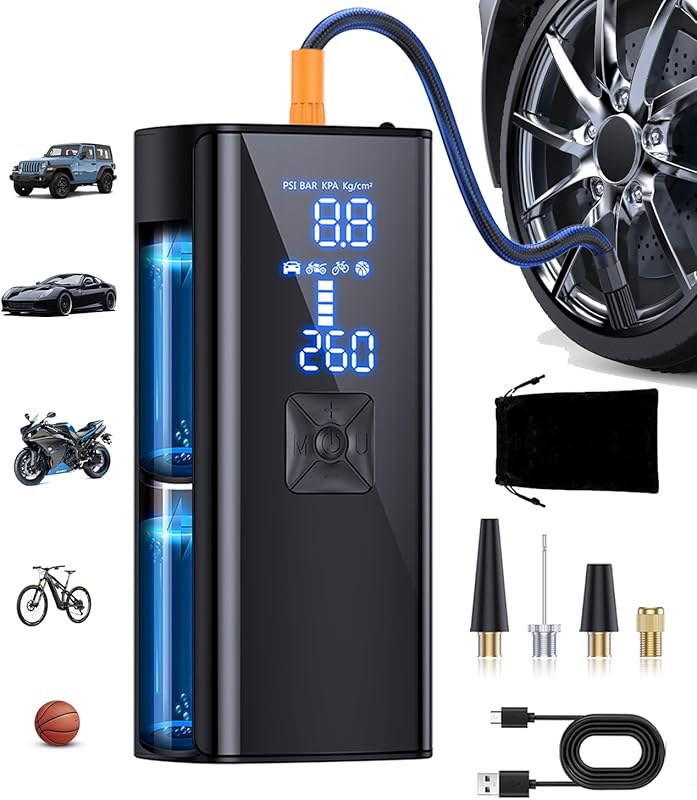 |
Check Price |
What to Look for in Most Reliable Tire Inflator With Pressure Gauge
In our testing, the best tire inflators were not the flashiest ones. They were the tools that sealed well, read close to true pressure, and stayed useful after months in a trunk or garage.
Gauge Accuracy at Real Tire Pressures
What matters is not the biggest PSI number on the box. It is how well the gauge reads around 30 to 35 PSI, which is where most passenger cars live. A gauge that is off by 3 PSI can leave you with vague steering, uneven wear, or a TPMS light that keeps coming back.
Chuck Seal, Hose Length, and Valve Access
A good chuck should lock on without leaking, especially on tight wheel designs and low-profile tires. Longer hoses help when you are reaching around brake calipers or deep wheel barrels, and a 360-degree swivel head makes the job less awkward. If you have ever fought a cheap inflator on a hot wheel after a wash, you know why this matters.
When you are shopping, pay attention to the chuck shape as much as the gauge. A tight-sealing chuck saves more time than a fancy display, especially if you are topping off multiple cars after a full wash and decontamination session.
Power Source and Emergency Use
Corded models are usually more consistent for garage use. Cordless inflators are better for roadside emergencies, track days, and trunk storage, but battery health becomes part of the equation. If you drive long distances or manage multiple vehicles, choose the power setup that matches your actual routine.
Auto Shut-Off and Preset Control
Auto shut-off is a real convenience feature, not a gimmick. It keeps you from overinflating when you are distracted, and it is especially helpful if you are bouncing between different tire sizes. For detailers who like repeatable results, preset inflation is the easiest way to keep every car at the same target pressure.
Build Quality and Long-Term Reliability
Rubberized gauge guards, reinforced hoses, and solid connectors usually outlast bargain-bin tools. If you keep a tire inflator in a detailing kit or service van, durability matters more than a few dollars saved up front. Reliability is what keeps you from replacing the tool right when you need it most.
Our Top 2 Best Most Reliable Tire Inflator With Pressure Gauge Reviews – Expert Tested & Recommended
1. Heavy Duty Tire Inflator with Pressure Gauge, Longer Hose, 100 PSI Air Chuck
I used this style of inflator on a weekly-driven sedan with 18-inch wheels and on a truck that needed frequent pressure checks after towing. The long hose and 360 swivel chuck make it much easier to get a clean seal without scraping your knuckles against a wheel spoke. It feels like a shop tool, not a toy.
Key Features That Stand Out
- ✓ Built with sturdy materials for long-lasting performance in garage or mobile use
- ✓ Large rubber gauge case adds protection when the tool gets tossed in a trunk or service cart
- ✓ 100 PSI gauge range is well matched to everyday passenger tire pressures
- ✓ No batteries required, so it is ready when you need a quick top-off
Why We Recommend It
This is the most dependable pick for buyers who want a simple, accurate, no-nonsense setup. The ±2 PSI accuracy claim and the middle-of-range gauge behavior make it well suited for real-world tire work, and that matters more than a giant max PSI number. If you want to keep tire maintenance consistent, our tire pressure maintenance guide pairs well with this tool.
Best For
Best for owners who keep one inflator in the garage and another in a work truck, especially if they service multiple daily drivers. It is also a strong fit for detailers who want a durable, battery-free tool they can use after a wash without waiting on a charge.
Pros and Cons
- Very solid seal on standard valve stems
- Battery-free operation avoids dead-tool problems
- Long hose helps on larger wheels and awkward angles
- No digital readout for those who prefer exact presets
- 100 PSI range is fine for cars, but not ideal for heavy-duty specialty use
Customer Reviews
“The chuck locks on firmly, and I do not lose air while checking pressure. It feels much more accurate than the cheap inflator I replaced.”
“I keep it in the garage and use it after every wash. The hose length makes it easy to reach all four tires without moving the car.”
2. Cordless Tire Inflator Portable Air Compressor, 150 PSI, LED Light, Digital Gauge
This cordless unit is the one I would keep in a trunk for roadside use or quick pressure corrections between jobs. The digital display and auto shut-off make it easy to hit the target without babysitting the gauge, which is useful when you are juggling a wash bucket, drying towel, and a busy schedule. It is especially handy on cars that sit for a week or two between drives.
Key Features That Stand Out
- ✓ Up to 150 PSI output for quick inflation and broad compatibility
- ✓ Dual digital display shows preset and real-time pressure at once
- ✓ Auto shut-off reduces overinflation risk
- ✓ Cordless rechargeable design with USB-C charging and LED light
Why We Recommend It
This is the better pick for drivers who value convenience and portability more than a shop-style hose setup. The preset modes, pressure unit switching, and automatic shut-off make it easy to use on cars, bikes, and even some non-automotive inflation tasks. If you are comparing inflation habits with other maintenance routines, our guide to choosing the right car tire setup helps put pressure targets in context.
Best For
Best for commuters, apartment dwellers, and anyone who wants a compact inflator stored in the cargo area. It also suits owners of newer cars with TPMS who want a fast roadside fix without dragging out a compressor and hose.
Pros and Cons
- True grab-and-go portability
- Auto shut-off makes inflation more repeatable
- LED light helps at night or in dark parking lots
- Battery management matters if it sits unused for long periods
- Less hose reach than a traditional garage compressor
Customer Reviews
“I like that it stops on its own. I used it in a dark parking lot and the light plus digital screen made the whole job easy.”
“Perfect trunk tool for my sedan. It is compact, and the preset function keeps me from overfilling my tires.”
Never inflate a tire to the number molded on the sidewall. That is the maximum cold inflation rating, not your vehicle’s recommended pressure, and overinflation can reduce grip, accelerate center wear, and create a harsher ride. If you are checking pressure after a drive, remember the tire will read higher when hot, so set final pressure cold whenever possible.
Complete Buying Guide for Most Reliable Tire Inflator With Pressure Gauge
Budget Breakdown: How Much Should You Spend?
Entry-level inflators can work for occasional top-offs, but the gauge and chuck quality often show their limits fast. Mid-range models usually bring better seals, more consistent readings, and more durable housings, which is where most car owners should shop. Premium cordless units add convenience, presets, and better portability, but you pay for that battery system.
Dos and Don’ts
- Check your door-jamb tire placard before setting pressure
- Use the inflator on cold tires for the most accurate reading
- Choose a chuck that locks on without constant hand pressure
- Look for a gauge range centered around normal car pressures
- Keep the tool in a dry trunk or cabinet after use
- Test the inflator on one tire before relying on it for all four
- Do not trust the sidewall number as your target pressure
- Do not use a leaky chuck and assume the gauge is wrong
- Do not inflate hot tires and call the reading final
- Do not buy a gauge that is too wide for normal passenger tire pressures
- Do not leave a cordless inflator discharged for months
- Do not keep using a damaged hose or cracked fitting
Pro Tips from Detailers
- Set tire pressure before you start tire dressing or wheel cleaning so you are not handling a hot wheel later.
- If you just finished a wash, dry the valve stem area first so the chuck seals cleanly.
- For black or ceramic-coated cars, keep a compact inflator in the trunk so pressure checks happen more often.
- Use the same gauge on all four tires to keep readings consistent.
- After a long drive, wait for the tires to cool before making final adjustments.
- Check the spare too. It is often the most neglected tire on the car.
- If a tire loses pressure repeatedly, inspect the valve core, bead, and wheel for leaks instead of just topping it off.
A common mistake is pressing a hard metal chuck sideways against a dirty valve stem. That can scratch the wheel finish, nick the valve core, and create a slow leak that looks like a bad tire. Clean the stem area first, then seat the chuck straight and let the seal do the work.
- The Heavy Duty Tire Inflator with Pressure Gauge is the best all-around choice for garage use and repeatable tire checks.
- The Cordless Tire Inflator Portable Air Compressor is the better trunk companion for roadside emergencies.
- Gauge accuracy around 30 to 35 PSI matters more than a huge max PSI number.
- A secure chuck and long hose can save more frustration than extra features.
- Auto shut-off is useful if you want consistent results across multiple vehicles.
- Battery-free tools are often more dependable for long-term garage storage.
- Cordless tools win on portability, but they need charging discipline.
- Buy based on your real use case, not just the biggest PSI rating on the box.
Frequently Asked Questions About Most Reliable Tire Inflator With Pressure Gauge
Use the pressure listed on the driver-side door placard, not the tire sidewall. Most passenger cars land around 30 to 35 PSI, but the correct number depends on the vehicle and tire size. Check pressure when the tires are cold for the most accurate reading.
Not automatically, but digital models are easier to read and often include preset shut-off features. A well-made analog gauge can be very accurate if it is centered in its working range. The real difference is build quality and calibration, not just display type.
Yes, as long as the inflator has enough pressure range and a secure chuck. Trucks and SUVs often need a bit more air volume, so hose length and motor strength matter more than on small cars. A 150 PSI cordless unit or a sturdy hose-and-gauge setup both work well for most light-duty truck tires.
Compare it against a known-good gauge or a trusted shop tool. If two readings are close and repeatable, you are usually in good shape. The best test is to check the same tire twice in a row and see whether the number stays consistent.
Not if you mainly inflate tires in a garage with easy access to power or air. Cordless units are best for roadside use, apartment storage, and quick trunk-based top-offs. If you already have a compressor at home, a corded gauge inflator may be the more reliable buy.
That depends on how low the tire is, the inflator’s motor, and the tire size. A small pressure correction may take less than a minute, while a low tire can take several minutes. High-output units with 150 PSI capability usually feel faster, but actual airflow matters more than the headline PSI.
Yes. Overinflation can reduce grip, increase center tread wear, and make the ride harsher, especially on rough roads. It can also throw off handling, which is why auto shut-off and careful gauge use are worth paying for.
A compact cordless inflator with a digital gauge and LED light is usually the best trunk choice. It is easy to store, fast to grab, and useful in low-light situations. Just keep it charged and check it every few months so it is ready when you need it.
The best overall pick here is the Heavy Duty Tire Inflator with Pressure Gauge if you want a reliable garage tool that feels built for repeated use. It is the one I would hand to someone who values consistency, a strong chuck seal, and battery-free simplicity.
If portability matters more, the Cordless Tire Inflator Portable Air Compressor is the smarter buy. It is easier to keep in the car, easier to use at night, and better for drivers who want fast pressure corrections without dragging out garage gear. Check out our #1 pick above and see why detailers trust it for daily use.

