Want to make your car stereo louder without breaking the bank? This guide covers easy upgrades like better speakers, amplifiers, and sound tuning to boost volume and clarity on the road.
Key Takeaways
- Upgrade your speakers: Factory speakers often limit volume and sound quality. Replacing them with high-sensitivity models can dramatically increase loudness.
- Add a quality amplifier: Amps provide clean power to your speakers, allowing them to play louder without distortion.
- Tune your equalizer settings: Adjust bass, treble, and midrange to maximize perceived volume and clarity.
- Use high-quality audio files: Low-bitrate music compresses sound. Use 320kbps MP3s or lossless formats for better dynamic range.
- Soundproof your car: Reducing road noise helps you hear more detail at lower volumes, making your system feel louder.
- Check wiring and connections: Poor wiring can limit power delivery. Ensure proper gauge wires and secure connections.
- Consider a digital signal processor (DSP): A DSP fine-tunes audio signals for optimal performance from your existing setup.
How to Make Car Stereo Louder with Simple Upgrades
If you’ve ever cranked up the volume in your car only to be met with distortion or weak sound, you’re not alone. Many factory car stereos are designed for basic listening, not high-volume performance. The good news? You don’t need to spend thousands to make your car stereo louder. With a few smart upgrades and adjustments, you can enjoy powerful, clear sound that turns heads—without blowing your budget.
In this guide, we’ll walk you through practical, step-by-step methods to boost your car’s audio volume. Whether you’re a weekend driver or a daily commuter, these tips will help you get the most out of your system. From upgrading hardware to fine-tuning settings, you’ll learn how to maximize volume while maintaining sound quality.
1. Start with a Speaker Upgrade
One of the most effective ways to make your car stereo louder is by replacing your factory speakers. Most stock speakers are made from low-quality materials and have low power handling, which limits how loud they can play without distorting.
Why Factory Speakers Fall Short
Car manufacturers often cut costs by installing basic speakers that can’t handle high volumes. These speakers usually have low sensitivity (measured in dB), meaning they need more power to produce the same volume as higher-quality models.
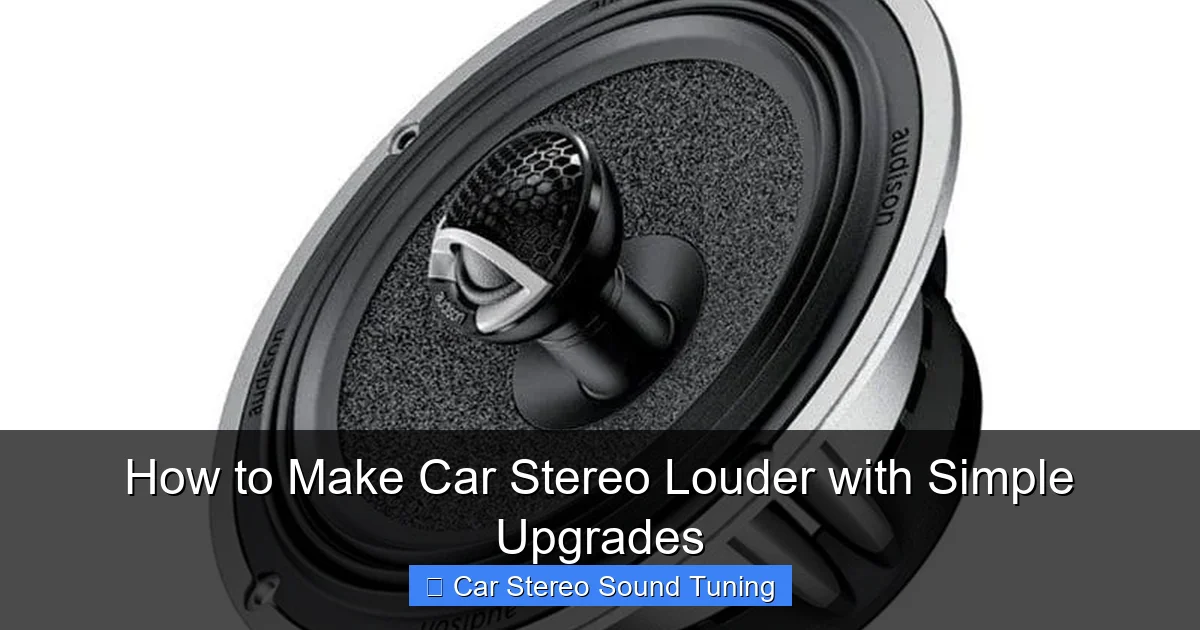
Visual guide about How to Make Car Stereo Louder with Simple Upgrades
Image source: bestcaraudio.com
Choose High-Sensitivity Speakers
Look for aftermarket speakers with a sensitivity rating of 90 dB or higher. These speakers convert more power into sound, so they play louder with the same amount of amplifier power. For example, a 93 dB speaker will sound noticeably louder than an 87 dB model, even if both receive the same wattage.
Consider Component vs. Coaxial Speakers
Coaxial speakers are easier to install and work well for most drivers. But if you want better sound separation and volume, go for component speakers. They include separate tweeters and woofers, giving you more control over sound imaging and clarity.
Tip: Match Impedance and Power Ratings
Make sure your new speakers match your head unit’s power output (usually 15–25 watts RMS per channel). If you plan to add an amp later, choose speakers that can handle 50–100 watts RMS for future-proofing.
2. Add a Dedicated Amplifier
Even the best speakers can’t reach their full potential without enough power. That’s where an amplifier comes in. A dedicated amp delivers clean, consistent power to your speakers, allowing them to play louder and clearer.
Why Amplifiers Make a Difference
Factory head units typically output only 10–20 watts per channel. That’s not enough to drive high-performance speakers to their full volume. An external amplifier can deliver 50–100 watts or more per channel, giving your system the power it needs to make your car stereo louder.
Choose the Right Amp
For most cars, a 4-channel amplifier is ideal. It can power your front and rear speakers. If you’re adding a subwoofer, consider a 5-channel amp that powers both speakers and the sub.
Installation Tips
- Use a wiring kit with the correct gauge power and speaker wires (usually 8–10 gauge for power).
- Install a fuse within 18 inches of the battery to protect against electrical fires.
- Ground the amp securely to the car’s chassis using a clean, unpainted metal surface.
Pro Tip: Match Amp Power to Speaker Ratings
Don’t overpower your speakers. Aim for an amplifier that delivers 75–100% of your speaker’s RMS rating. Too much power can damage speakers; too little won’t let them shine.
3. Tune Your Equalizer and Audio Settings
Sometimes, the simplest way to make your car stereo louder is by adjusting the settings on your head unit. Proper tuning can enhance volume perception and reduce distortion.
Adjust Bass, Treble, and Midrange
Boosting the midrange (around 1–3 kHz) can make vocals and instruments sound louder and clearer. Avoid over-boosting bass, as it can muddy the sound and cause distortion at high volumes.
Use a Preset or Custom EQ
Many modern head units come with EQ presets like “Rock,” “Pop,” or “Vocal.” Try these first. For more control, create a custom EQ curve that emphasizes clarity and volume without clipping.
Enable Loudness or Dynamic Range Compression
Some stereos have a “Loudness” button that boosts low and high frequencies at lower volumes. This can help you hear more detail when driving at highway speeds. However, use it sparingly—overuse can reduce sound quality.
Turn Off Volume Limiting Features
Check your head unit settings for volume limiters or “safe volume” modes. These are designed to protect hearing but can cap your maximum volume. Disable them if you want full control.
4. Use High-Quality Audio Sources
No amount of hardware upgrades will help if your music files are low quality. Compressed audio files (like 128kbps MP3s) lack dynamic range and detail, making your system sound quieter and less impressive.
Choose High-Bitrate Files
Aim for 320kbps MP3s or lossless formats like FLAC or WAV. These files retain more audio information, allowing your system to reproduce sound more accurately and at higher volumes.
Stream from Reliable Services
If you use streaming apps, choose high-quality settings. Spotify’s “Very High” quality (320kbps), Apple Music’s lossless option, or Tidal’s HiFi tier all deliver better sound than standard streaming.
Avoid Bluetooth Compression
Bluetooth can compress audio, especially on older devices. If possible, use a wired USB connection or a high-quality Bluetooth codec like aptX or LDAC for better sound.
5. Soundproof Your Car
Road noise, wind, and engine sounds compete with your music, forcing you to turn up the volume. By reducing external noise, you can enjoy louder, clearer sound at lower volume levels.
Install Sound Deadening Material
Apply butyl rubber or foam-based sound deadening mats to your doors, floor, and trunk. These materials reduce vibrations and block outside noise, improving overall sound quality.
Focus on Key Areas
Doors are the most important area to treat—they house your speakers and are prone to vibration. Adding sound deadening here can dramatically improve speaker performance and perceived volume.
Upgrade Window Seals
Loose or worn window seals let in wind noise. Replacing them can reduce cabin noise, making your music easier to hear at lower volumes.
6. Check and Upgrade Wiring
Poor wiring can limit power delivery and reduce volume. Even with a great amp and speakers, thin or corroded wires can bottleneck your system.
Use Proper Gauge Wires
For amplifiers, use 8–4 gauge power wires depending on amp size. Speaker wires should be at least 16 gauge, but 14 gauge is better for longer runs or high-power systems.
Inspect Connections
Loose or corroded connections can cause signal loss. Check all terminals, RCA cables, and ground points. Clean them with electrical contact cleaner if needed.
Upgrade RCA Cables
Cheap RCA cables can introduce noise and signal loss. Invest in shielded, high-quality cables to ensure clean signal transfer from your head unit to the amp.
7. Consider a Digital Signal Processor (DSP)
A DSP is like a sound engineer for your car. It fine-tunes audio signals to match your car’s acoustics, improving volume, clarity, and imaging.
What a DSP Does
A DSP adjusts time alignment, equalization, and crossover settings to optimize sound for your specific setup. It can make your system sound louder and more detailed, even without hardware upgrades.
When to Use a DSP
If you’ve upgraded your speakers and amp but still aren’t satisfied, a DSP can take your system to the next level. It’s especially useful in cars with uneven speaker placement or reflective interiors.
Installation Tips
- Choose a DSP with enough channels for your setup (e.g., 6-channel for front, rear, and sub).
- Use a tuning microphone and software for precise calibration.
- Start with factory settings and adjust gradually to avoid over-processing.
Troubleshooting Common Issues
Even with upgrades, you might run into problems. Here’s how to fix common issues when trying to make your car stereo louder.
Distortion at High Volume
This usually means your speakers or amp are underpowered or mismatched. Check power ratings and ensure your amp isn’t clipping. Reduce EQ boosts, especially in the bass.
No Volume Increase After Upgrades
Double-check wiring and connections. Make sure your head unit is set to “full range” output and that your amp is properly grounded. Also, verify that your source files are high quality.
Blowing Fuses or Amp Shutting Off
This indicates a power or grounding issue. Check your fuse rating, ensure the power wire is thick enough, and verify the ground connection is secure and clean.
Conclusion
Making your car stereo louder doesn’t require a complete overhaul. With smart upgrades—like better speakers, an amplifier, and proper tuning—you can enjoy powerful, clear sound that enhances every drive. Start with the basics: upgrade your speakers, add an amp, and tune your EQ. Then, improve your audio sources and reduce cabin noise for the best results.
Remember, louder isn’t always better—quality matters. Focus on clean, distortion-free sound, and you’ll get the volume you want without sacrificing fidelity. Whether you’re cruising down the highway or stuck in traffic, these simple upgrades will help you make your car stereo louder and more enjoyable than ever.
🎥 Related Video: How to make your door speakers hit HARDER (Cheap Fix!)
📺 Hi-Tech Car Audio
So you want to make your door speakers sound louder WITHOUT replacing them??? Then tune in!

