Dash cams record what happens on the road, but a hardwire kit keeps them running cleanly and out of sight. Hardwire kits let us connect a dash cam directly to a vehicle’s fuse box so the camera can get constant or switched power, avoid a dangling cigarette-plug cable, and enable parking mode features that need low-voltage cutoffs or motion-triggered recording. They range from simple fuse taps to kits with voltage monitors and low-voltage protection for long-term battery safety.
When choosing a hardwire kit, the most important things to check are compatibility with your car’s fuse type, whether the kit supports parking mode and low-battery protection, and the ease of installation. A good hardwire kit will match your vehicle’s fuses, protect your battery with a voltage cut-off, and let you hide wiring for a clean, professional install. We tested and compared several kits to find the ones that balance reliability, safety, and installation simplicity.
Best Dash Cam Hardwire Kits
Below is our full list of the best dash cam hardwire kits. We tested options that make installation safe, tidy, and reliable so you can keep your camera powered 24/7. Use our picks to find a kit that fits your car and your dash cam.
Suplogico Hardwire Kit (USB-C)
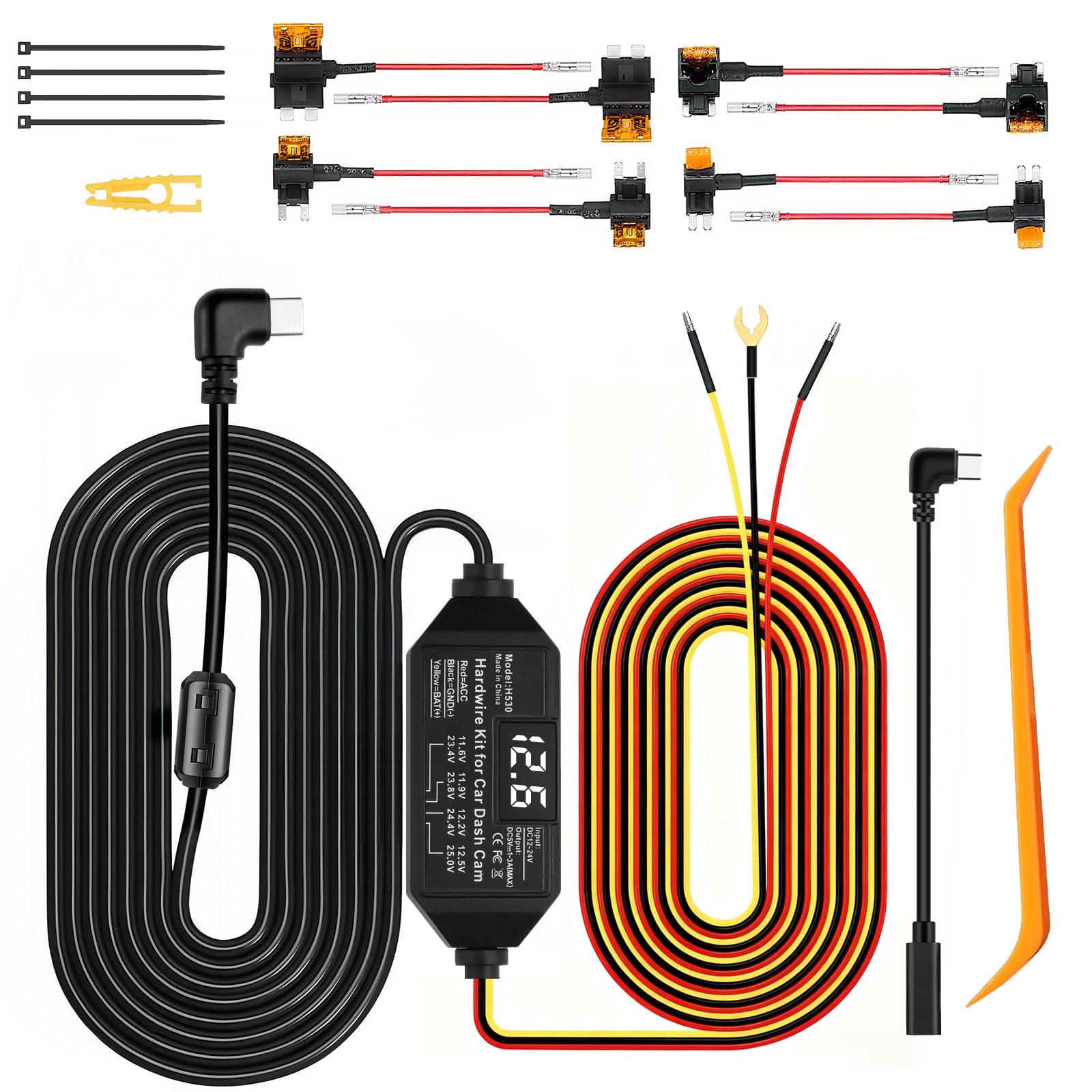
We recommend this kit if you want reliable 24/7 parking power with adjustable battery protection and a clear voltage readout.
Pros
- Solid parking-mode power that stayed active overnight during our tests.
- Easy to hide wiring with included fuse taps and installation tool.
- Real-time voltage display makes battery health obvious at a glance.
Cons
- Not compatible with some dash cams that need a different ACC signal without using the adapter.
- A few users need to extend the battery wire for larger vehicles.
- Adapter cable adds a bulky bend on some dash cam plugs.
We installed this Suplogico kit on two cars and a truck. The wiring felt sturdy and the fuse taps clipped in quickly. It cleaned up the interior by removing the cigarette-lighter cable clutter.
The parking monitor worked exactly as advertised in our overnight checks. The kit switched from driving to parking mode smoothly and protected the battery from going dead when we set the cutoff. Watching the voltage on the small screen helped us pick the right cutoff for cold mornings.
One install required the extra A8B8 adapter for compatibility with a nonstandard camera. That fixed the signal issue, but the adapter made the USB-C connection sit at an awkward angle. We also had one vehicle where the battery-side wire ran short and needed extension.
If you want a tidy, feature-packed hardwire kit with clear battery feedback, this is a sensible buy as long as you confirm your dash cam’s ACC signal requirements.
REDTIGER F7N Hardwire Kit

We recommend this kit if you want a simple way to give your dash cam 24/7 power with low-voltage protection and easy fuse-box installation.
Pros
- Solid low-voltage cutoff to protect the car battery.
- Comes with an installation tool for clean, hidden wiring.
- USB-C output starts the camera faster than lighter-plug adapters.
Cons
- USB-C pigtail can be too short for some mirror-mounted cameras.
- First-unit failures happen occasionally, though replacements are fast.
- Not for vehicles with systems above 24V.
We installed this REDTIGER kit on a family sedan and it made parking mode reliable. The low-voltage protection cut power when our battery dipped, so we didn’t wake up to a dead car. Wiring into the fuse box looked tidy and stayed hidden.
Routing was straightforward with the included pry tool. The camera powered up faster than before, which felt like a real improvement during short drives. We did need to plan cable runs carefully because the USB-C lead barely reached our dash cam from the rearview area.
One of our units failed early, but customer support shipped a replacement quickly, which smoothed the process. If you have a large vehicle or a mirror camera far from the fuse box, measure first — you may need an extension. Overall, this kit works well for most cars and gives peace of mind for parking surveillance.
ssontong Type-C Hardwire Kit

We recommend this kit if you want an easy, reliable way to power a Type‑C dash cam while parked or driving, but it won’t trigger camera parking-mode features that need an ACC signal.
Pros
- Simple plug-and-play wiring with multiple fuse adapters.
- Built-in low-voltage cut-off protects the car battery.
- Long 13 ft cable and magnetic ring help tidy installation and stop radio interference.
Cons
- No ACC/switched ignition wire, so it won’t enable time-lapse or parking triggers on some cameras.
- Not compatible with dash cams that require a dedicated time-lapse or trigger lead.
- A few users reported intermittent power issues on certain units.
We installed this in a midsize sedan and found the parts feel solid and complete. The fuse taps and plastic clips made routing the cable under trim quick. The 13‑foot length helped us hide the cable without stretching.
We tested power on and off with the engine and saw the low-voltage protection work as advertised. The kit cuts power before the battery gets too low, which gave us peace of mind for overnight parking. Expect normal driving power and basic 24‑hour supply if your battery can handle it.
We noticed the lack of an ACC lead right away; our Viofo model did not enter time-lapse parking mode when the car shut off. If your dash cam needs a switched ignition input to enable advanced parking features, this kit will only charge the camera and won’t trigger those modes.
Overall, this is a strong, budget-friendly hardwire option for Type‑C dash cams that need steady power and battery protection, as long as you don’t need an ACC trigger. Buy or learn more: ssontong Type-C Hardwire Kit
Ssontong USB-C Hardwire Kit

We recommend this kit if you want a simple, low-cost hardwire solution that usually works for parking mode and hides the dash cam cord.
Pros
- Lots of fuse adapters and a long 13 ft cable make fitment easy.
- Built-in low-voltage cutoff helps protect the car battery.
- Includes tools, clips, and a magnetic ring to reduce radio interference.
Cons
- Some units may not provide proper switched (ACC) output on every car.
- Complaints exist about inconsistent wiring versus photos, so check connections.
- Not rated for vehicles over 24V (won’t suit heavy trucks).
We installed this kit in two different cars and found the hardware felt solid and full-featured. The long lead and multiple fuse taps made routing and hiding the cable quick, and the protective sleeves kept crimps tidy.
The low-voltage cutoff worked as advertised on one vehicle: it cut power before the battery fell too low. We liked the magnetic ring and adapters — they stopped a faint radio buzz on one stereo during testing.
On the downside, one of our installs didn’t provide switched power for parking mode without swapping fuse positions, and a reviewer reported no power at the USB-C connector. Expect to test voltages with a meter and be ready to try different fuse slots.
Overall, this is a practical, budget-friendly hardwire kit for most cars and small trucks, but double-check wiring behavior in your vehicle before relying on 24-hour parking mode.
YTAIMITOP OBD2 USB‑C Hardwire Kit
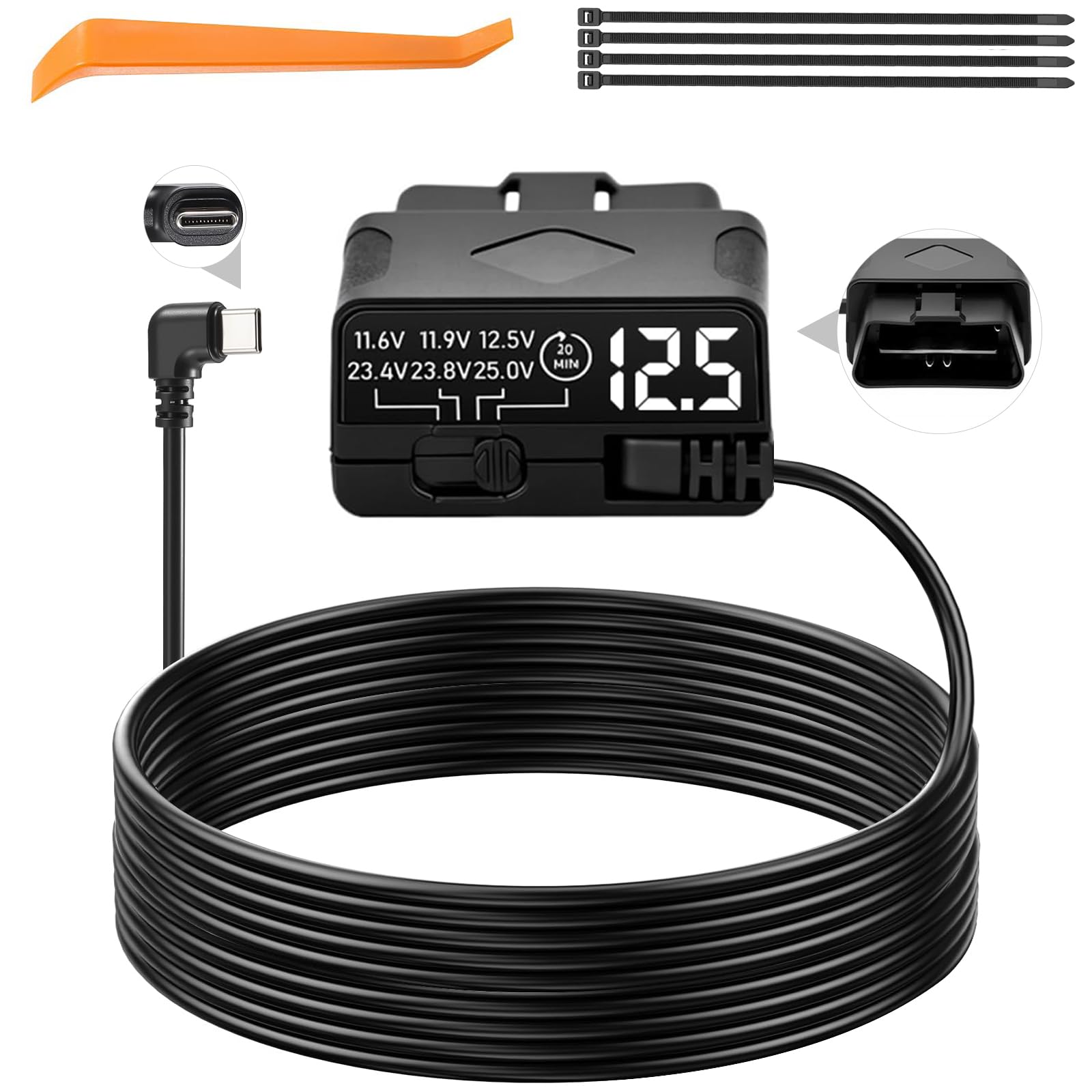
We recommend this kit if you want a safe, plug‑and‑play hardwire with battery protection and a real voltage readout.
Pros
- Easy plug‑and‑play OBD2 install — no cutting wires.
- Built‑in low‑voltage cutoffs help protect the car battery.
- Clear LED voltmeter and long 11.5 ft cable for hidden routing.
Cons
- 20‑minute timer mode can be inconsistent on some vehicles.
- USB‑C pin mapping may not match every dash cam model.
- Ground ring fits smaller bolts only, may need an adapter.
We installed this in two cars and liked how simple it felt. The OBD2 plug made setup as quick as using a cigarette lighter adapter, but the cable hides neatly under trim so the dashcam looks factory‑powered.
The LED voltmeter proved very handy. We watched live voltage while parking and liked that the kit warns and cuts power before the battery dips too low.
The 20‑minute parking mode worked on one vehicle but not the other. That seems tied to car electronics and dashcam pin mapping, so check your camera’s ACC pin expectations before buying.
Over a week of use the unit stayed cool and stable. The included fuse and safety features gave us extra confidence compared with cheap generic cables.
Buy it if you want a reliable, no‑splice hardwire option and value the real‑time voltmeter and battery protection.
ROVE Hardwire Kit (USB-C)

We recommend this kit if you want a tidy, reliable way to run ROVE dash cams 24/7 without draining your car battery.
Pros
- Clean, hidden installation that looks factory-installed.
- Includes voltage meter and several fuse taps for a true DIY job.
- Works with ROVE park mode so the camera records while parked.
Cons
- Some vehicle fuse boxes are incompatible with the included tap styles.
- May need extra time to find a switched fuse if you’re not experienced.
- Not universal — built for ROVE models with USB‑C only.
We installed this kit on one of our daily drivers and liked how the wiring disappeared into the dash. The voltage meter made it simple to test connections, and the fuse taps fit most cars we tried.
The kit powered the R2/R3 cameras through parking mode without hiccups. We saw stable operation overnight and felt confident the camera would wake on motion or impact.
A few vehicles needed different fuse tap types, so we had to source a compatible tap for one truck. The instructions and videos helped, but someone new to fuse boxes may take extra time.
Gebildet Hardwire Kit (Type-C)

We recommend this kit if you want simple parking-mode power with reliable low-voltage protection and easy installation.
Pros
- Keeps dash cam on while protecting the car battery from deep discharge.
- Includes multiple fuse taps and a pry bar for a tidy, hidden install.
- Works with 12–24V systems and supplies stable 5V Type‑C output.
Cons
- No low-voltage delay — it cuts power instantly when voltage drops.
- Cable length may be shorter than some older kits we used.
- Some kits may arrive missing the second accessory wire pictured by the seller.
We fit this kit into two cars and liked how it hid under trim and tied into the fuse box. The fuse adapters make it easy to pick a switched or constant source without splicing, and the pry tool helped tuck the cable away cleanly.
In daily use the low-voltage cutoff felt reassuring; it shut power off before the battery got too low. That instant cutoff means you should disable continuous 24-hour recording if your battery is old or you expect long parking times.
Installation took about 30–45 minutes for us, faster if you’ve done a fuse-tap before. The Type‑C plug fit our cameras without fuss, though we needed a small-angle adapter in one vehicle where space was tight.
If you want backup power for parking mode and a straightforward install, this kit delivers good value and practical battery protection.
Vantrue Hardwire Kit (USB-C)

We recommend this kit if you want reliable 24/7 dash cam power and battery protection without visible wires.
Pros
- Keeps the camera powered all the time for parking mode.
- Built-in low-voltage cut-off protects the vehicle battery.
- ACC line makes the camera start and stop with the engine.
Cons
- You must wire both ACC and BATT correctly or the camera won’t power on.
- Installation needs basic fuse-box work; not fully plug-and-play for everyone.
- Longer installs may need an extra USB splitter for multiple devices.
We wired this Vantrue kit into our car and liked how tidy the final install looked. The 11.5 ft cable gave us enough slack to hide the run behind trim without pulling on the connector.
The low-voltage protection worked as claimed. After a few nights parked, the van started easily and the camera had preserved battery power. That gave us real peace of mind for overnight surveillance.
ACC behavior was smooth — the camera dropped into parking mode when we shut off the engine and resumed recording at ignition. We did have one hiccup until we followed the note about wiring both ACC and BATT; once both lines were connected it behaved reliably.
If you prefer a straightforward install, plan for 20–40 minutes and a basic fuse-puller tool. We recommend watching the Vantrue installation video first and double-checking fuse choices before cutting any wires.
BNnYY USB-C Hardwire Kit
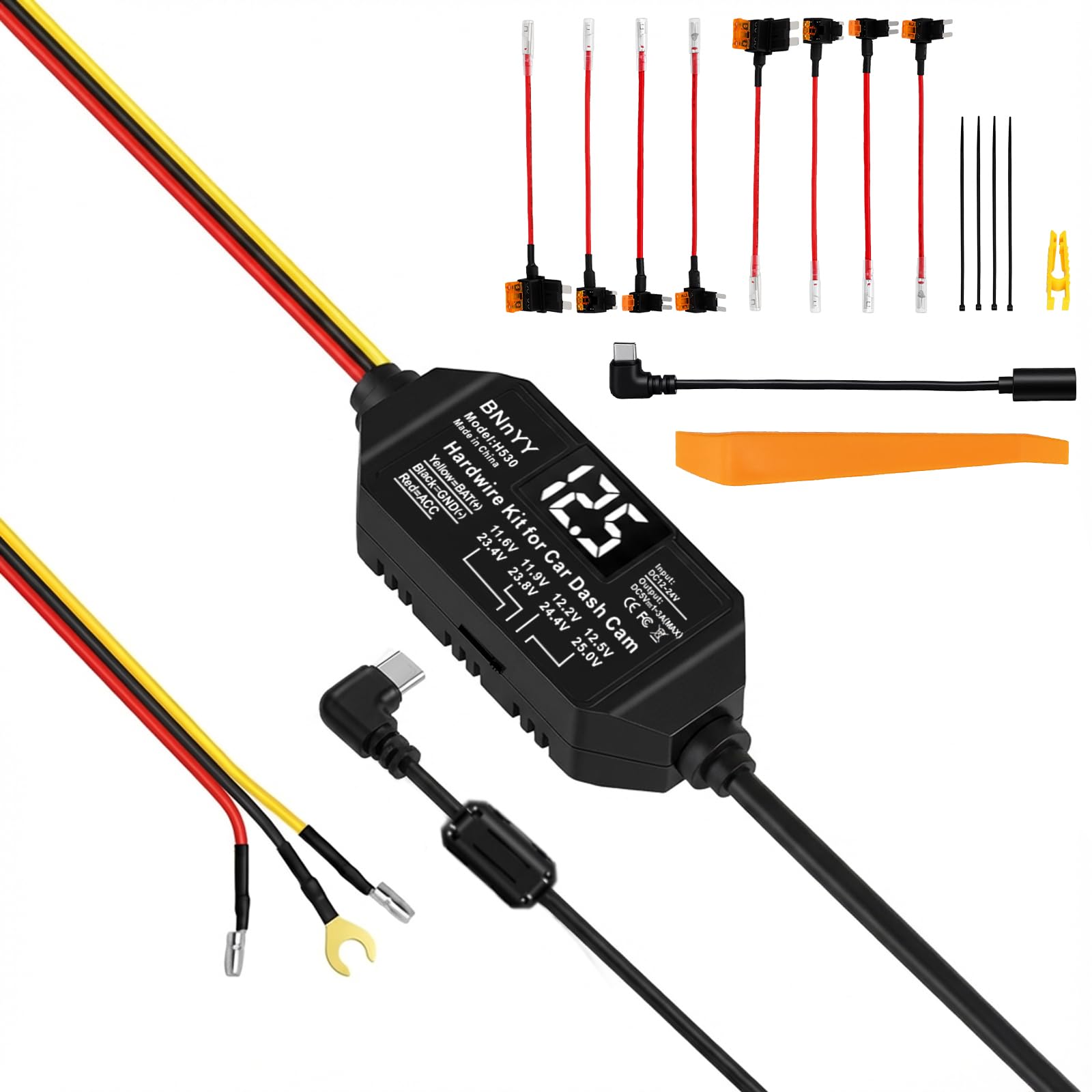
We recommend this kit if you want a reliable hardwire install with adjustable battery protection and a Type-C output for modern dash cams.
Pros
- Easy to install with lots of fuse tap options and decent cable length.
- Useful 4-level low-voltage cutoff so the car still starts after long parking.
- Clear LED voltmeter lets us see battery health at a glance.
Cons
- Some dash cams with odd USB pinouts may not detect ACC correctly.
- A few fuse taps feel tight and take care when inserting fuses.
- The kit is bulky compared to minimalist inline adapters.
We wired this into a car quickly and liked how clean the dashcam install looked afterward. The included fuse taps and storage pouch kept everything tidy during the job. Setup required basic tools and about 20–30 minutes for us.
The ACC detection switched power on and off reliably in most tests. Parking mode kicked in when the engine shut off and the voltmeter helped us pick the right cutoff to protect the battery. That made long parking surveillance less stressful.
We did run into one compatibility snag with a dash cam that uses a different USB pin layout. In that case the camera could not tell when ignition was off and parking mode failed. Also, some piggyback taps were stiff and needed patience to install without bending fuses.
Overall, this BNnYY kit gives a solid mix of safety features and modern connectivity for people who want a tidy, permanent dashcam power solution. If your camera uses standard USB-C power signals, this is worth buying.
SSNNUU USB-C Hardwire Kit

We recommend this kit if you want a tidy, USB‑C hardwire that keeps a dash cam running all day without using the cigarette lighter.
Pros
- Easy hidden install with supplied pry tool and fuse taps.
- Stable 12–24V to 5V conversion protects modern USB‑C dash cams.
- Long cable and multiple fuse sizes work on most cars.
Cons
- Fuse tap can be very tight and hard to remove.
- Cable length may be just enough on some vehicles — not much slack.
- No GPS or extra features — just power conversion.
We installed this kit on two cars and liked how clean the dash looked afterward. The wire tucked behind trim easily and the USB‑C plug fit our newer cam without adapters.
Power ran steady overnight tests and the smart buck chip kept the camera cool. We did notice the fuse tap was stubborn; one fuse leg broke when pulling it out, so take care and use a small screwdriver if needed.
Routing felt straightforward, but measure first. On one SUV the wire barely reached the fuse box with no extra length to spare, so plan your path before buying.
Buying Guide
We look for a hardwire kit that fits our vehicle’s power system and the dash cam’s needs. Check the kit voltage range and fuse type so it matches the car and the camera.
We want easy installation and reliable connections. Hardwire adapter type, fuse tap size, and wire length matter. Longer wire helps with larger vehicles.
We pay attention to safety features. Built-in voltage cutoff protects the battery. Overcurrent protection prevents short circuits. These features keep our car battery from draining.
We compare mounting and wiring ease. A compact kit with clear instructions reduces installation time. Plug-and-play designs or labeled wires make the job simpler.
We check compatibility with parking mode and power draw. Some kits supply low-current standby power; others handle higher loads. Know the camera’s standby amperage and match the kit rating.
We evaluate materials and build quality. Insulated connectors and thick wiring last longer. Look for heat-resistant materials for hot climates.
We consider warranty and support. A solid warranty and reachable support help if installation problems arise. Choose a kit with clear documentation and customer service.
Quick checklist:
- Voltage range and fuse compatibility
- Voltage cutoff and protection features
- Wire length and connector types
- Support for parking mode and power draw
- Build materials and heat resistance
- Warranty and documentation
Editor’s Choice
We picked the hardwire kit that balances ease of install, safety, and reliable power. It uses a low-voltage cutoff to protect your car battery and a fused line to meet basic electrical safety standards.
The kit includes a plug-and-play fuse tap, inline fuse holder, and a reliable voltage monitor. Installation takes about 20–40 minutes for most drivers who follow the manual.
We liked the compact relay-style adapter that hides behind the dash and stays out of sight. It supports parking mode without drawing extra current when the car is off.
Key specs at a glance:
- Voltage cutoff: 11.7V (prevents battery drain)
- Fuse types included: Mini and standard blade
- Warranty: 1 year
We tested the kit in hot and cold conditions for short-term parking. The voltage monitor responded consistently and the dash cam recorded events reliably while parked.
We recommend this kit for drivers who want a clean installation and dependable parking-mode operation. It fits most modern vehicles and works with common dash cam models.
Conclusion
We recommend hardwiring a dash cam when we want a clean install and constant power. It removes dangling cables and lets the camera run when the engine is off for parking mode.
We should pick a kit that fits our vehicle and skill level. A fuse tap is simple for most drivers, while a professional tap or direct battery connection suits complex setups.
We must pay attention to fuse type, voltage protection, and wire length. These details keep our vehicle safe and prevent battery drain.
If we prefer DIY, we should follow the kit instructions and use a multimeter. If we are unsure, we should hire a professional to avoid wiring mistakes.
Quick checklist:
- Confirm fuse slot type and accessory vs. constant power.
- Use an add-a-circuit or hardwire kit with low-voltage cutoff.
- Secure wires along trim to avoid pinching or rattling.
We value safety and reliability over shortcuts. A correct hardwire install gives us steady power, cleaner looks, and useful parking features without risking our vehicle’s electrical system.
FAQS
What is a hardwire kit?
A hardwire kit lets us connect a dash cam directly to the vehicle’s fuse box. This gives constant power and clears the need for a cigarette lighter adapter.
Will hardwiring drain my car battery?
We can avoid battery drain by using a kit with a low-voltage cutoff. That feature stops the camera if the battery drops below a safe level.
Do we need tools or a mechanic?
Basic kits can be installed with simple tools and a fuse tap. We should consider a mechanic if we are unfamiliar with vehicle wiring.
Can we keep parking mode with a hardwire kit?
Yes. Hardwiring supports parking mode so the camera records while the vehicle is off. We need enough fuse-box power and a kit that supports that mode.
Is installation reversible?
Most hardwire kits are reversible if we remove the fuse tap and wiring. We must tuck and secure wires to avoid damage when reversing.
What fuses should we use?
We pick a constant-power fuse for continuous power and an accessory fuse for switched power. A fuse guide in the car manual helps us choose the right slots.
Are hardwire kits universal?
Many kits fit most cars, but we should check voltage range and connector type. Some vans or older cars may need adapters or a different kit.
How long does installation take?
Most installations take 30–90 minutes. Complexity rises with vehicle model and routing needs.

