Motorcycle dash cams record your rides and protect you from false claims after crashes or traffic disputes. They mount to the bike or helmet and capture forward, rear, or dual views, plus GPS and speed data on some models. Riders use them for safety, insurance evidence, and logging scenic trips.
When choosing a dash cam, pay attention to video quality, mounting stability, weather resistance, and power options like hardwiring or battery life. Reliable image quality in low light and a secure, vibration-resistant mount offer the most value because they determine whether footage is usable after an incident. We tested and compared several popular motorcycle dash cams to find models that balance clear footage, durable mounts, and easy power setups to guide your purchase.
Best Motorcycle Dash Cams
Below is our full list of the best motorcycle dash cams. We tested models for video quality, mounting stability, and weather resistance to help riders find reliable options. Use our picks to compare features and choose the camera that fits your ride and budget.
Vantrue F1 Motorcycle 4K Dash Cam

We recommend this if you want rugged, high-res front and rear footage and can handle a bit of wiring to install it.
Pros
- Very sharp 4K front footage and useful rear coverage.
- IP67 waterproofing means it keeps working in bad weather.
- Built-in GPS and app make trip data and video transfer easy.
Cons
- Installation can take time and needs access to your battery.
- No display on the unit so setup relies on the app.
- Occasional firmware or hardware hiccups reported.
We installed the Vantrue F1 on a sport tourer and rode it through rain and night runs. The front 4K image captured road signs and license plates clearer than other cams we’ve used. The rear camera filled blind spots well and the wide 160° views cut down on missed lanes.
Routing the cable took patience. We removed a few fairings, hid the wires, and secured the control unit under the seat. That process added about an hour to our install time, but the wired remote made locking clips on the fly very convenient.
Using the app felt modern and handy. GPS stamps and trip exports were accurate and useful when reviewing rides. We did hear occasional notes about firmware or defective units; when that happened, Vantrue’s support was reachable and updates come over the air.
Overall the F1 suits riders who want strong video and weatherproof durability and who don’t mind spending time to install and tweak settings.
Magellan M820 Pro
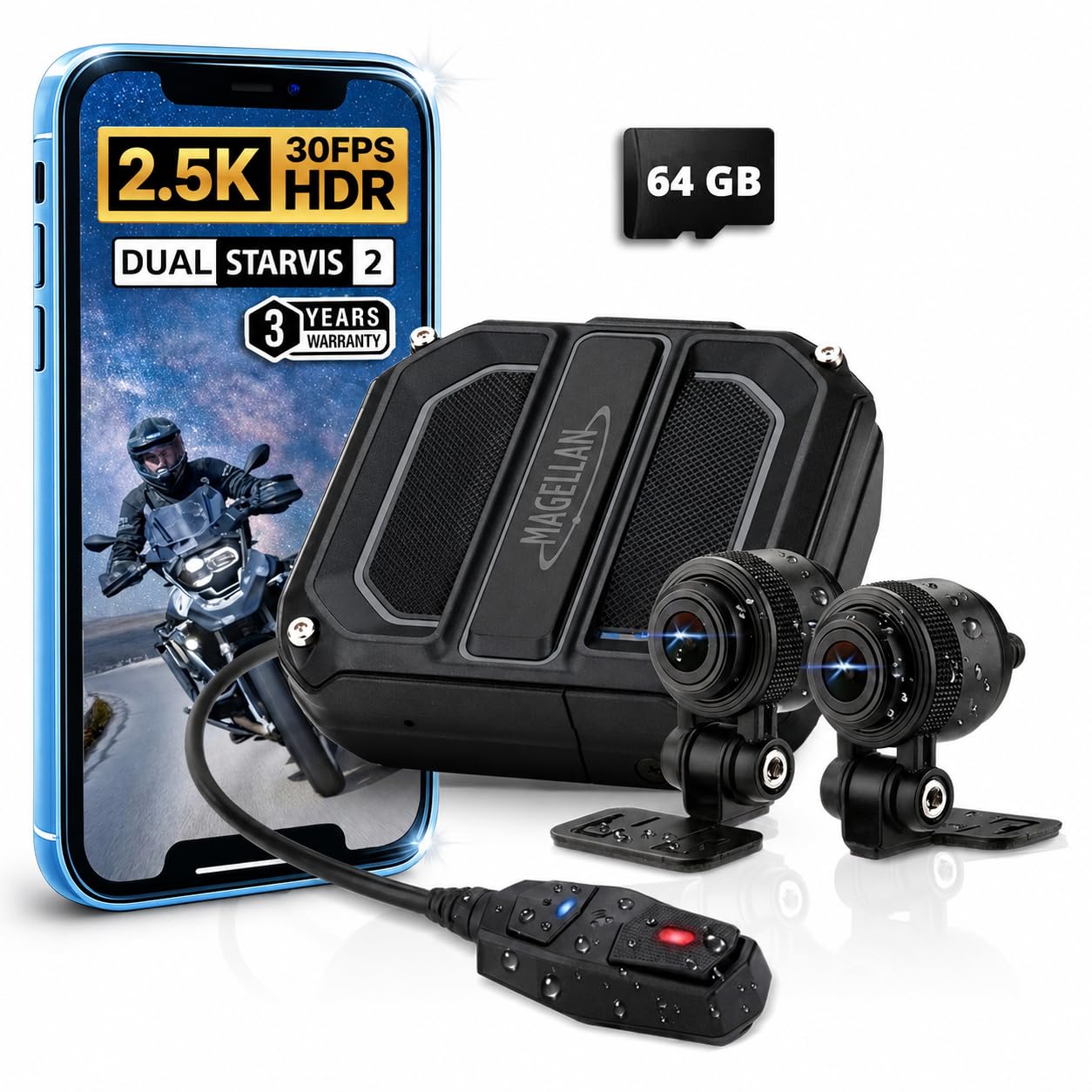
We recommend this if you want solid day/night footage, reliable waterproofing, and built-in GPS for rides and long trips.
Pros
- Very clear night and daytime video from both front and rear.
- Stays working in heavy rain or dusty rides thanks to IP67 build.
- Built-in GPS and Wi‑Fi make sharing trips easy without removing the card.
Cons
- Installation on some bikes took more time than we expected.
- Menu and app controls felt a bit fiddly at first.
- Parking mode needs hardwiring to work best for long-term protection.
We mounted the Magellan M820 Pro on a sport bike and a touring rig to test it in town and on long rides. The picture quality impressed us right away—license plates and road signs were readable at night and in harsh sun. Dual Sony Starvis 2 sensors made low‑light scenes much clearer than older cams we’ve used.
The IP67 housing handled a heavy downpour without a blink. We rode through rain and dusty back roads; the unit kept recording and didn’t fog up. The included 64GB card and all mounting parts meant we rode out of the box without extra trips to the shop.
GPS logging and instant Wi‑Fi transfer sped up how we reviewed clips. We liked that route and speed were tracked automatically. Parking mode caught a small bump when our bike was in the garage, though we recommend professional hardwiring if you want true long‑term battery protection.
Overall, we found the Magellan M820 Pro to be a mature, durable motorcycle dash cam that feels built for real use rather than weekend testing. It takes a little time to install neatly and learn the app, but the core recording quality and ruggedness make it worth considering for riders who want reliable front-and-rear coverage.
VSYSTO D6L Dual Dash Cam

We recommend this if you want a compact, dual-camera setup that records both front and rear with decent low-light performance.
Pros
- Clear day and night video for a small system
- Simple wired controller for quick emergency saves
- Wi‑Fi lets us pull clips to phone without removing the card
Cons
- App can be flaky and slow to connect
- Unit can run warm under long use
- Power setup needs care to avoid draining the bike battery
We installed the VSYSTO D6L on two bikes and ran it for months. The 1080p front and rear footage looked solid on daytime rides and held up better than expected at dusk. Night clips were usable; not perfect, but they showed license plates and lane details in most cases.
Mounting took a short afternoon. The small host fits under the seat and the wired controller sits neatly by the bars. We liked the emergency button: one press locks a file and we didn’t worry about important clips getting overwritten.
Connecting via the Wi‑Fi app worked when the phone and unit cooperated, but the app sometimes took a few attempts to link. We saved time by testing the system on a bench before final install. Also, if you wire it to switched power, the camera turns on and off with the bike; that helped avoid battery drain during multi-day parking.
Overall, the VSYSTO D6L felt like a solid value for riders who want dual recording and a small footprint, as long as you accept some quirks with the app and heat.
INNOVV K6 Mini Motocam
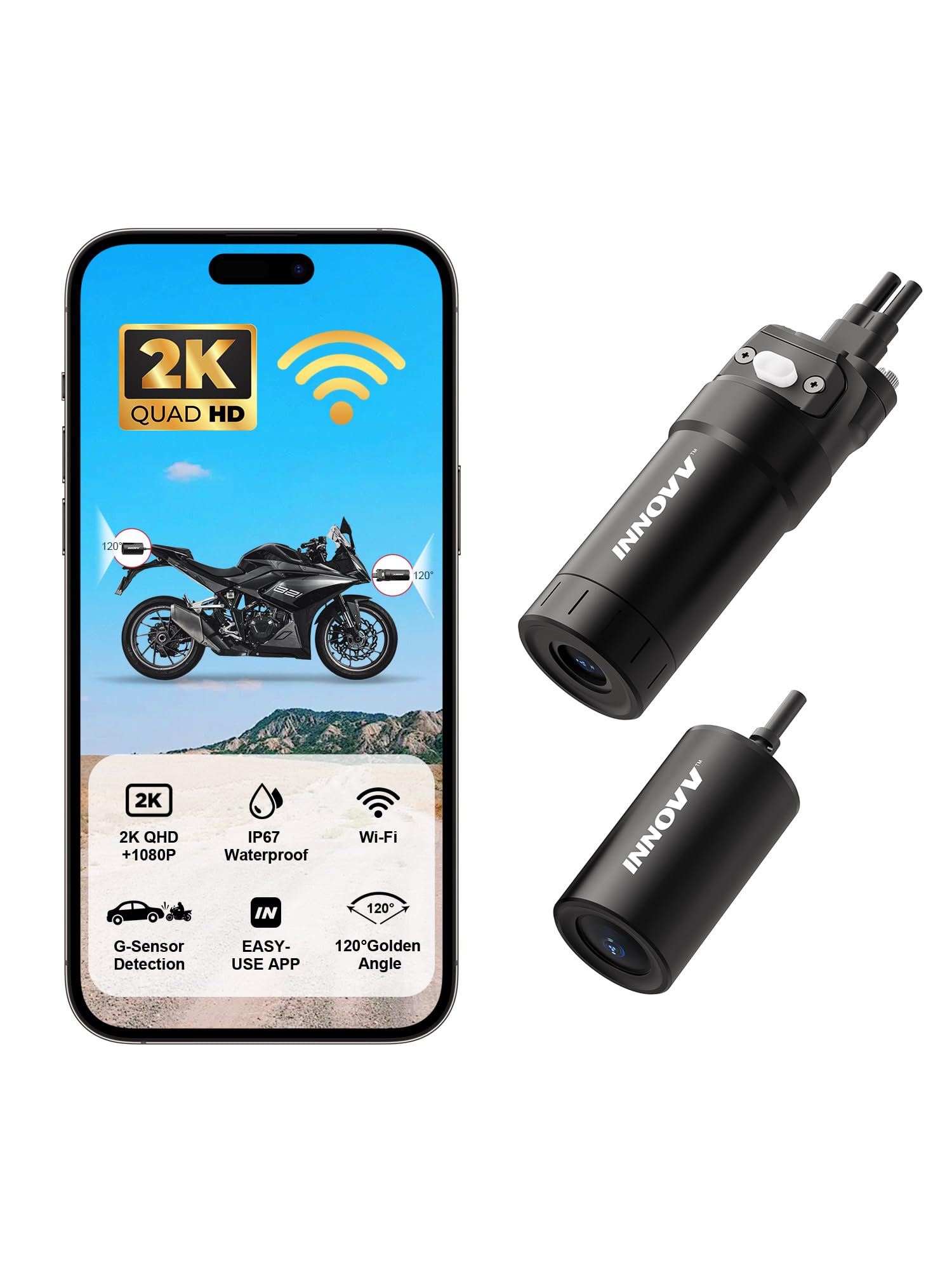
We would recommend this if you want a compact, weatherproof dual-camera setup and can handle a bit of fiddly wiring and occasional heat.
Pros
- Solid metal build that feels durable on the bike.
- Clear front and rear footage for day riding.
- Small DVR-in-camera design makes installation neater.
Cons
- Can run warm during use; internals feel sensitive.
- Needs a switched power connection and tidy wiring to avoid issues.
- App and alerts can be hit-or-miss; card management requires attention.
We mounted the K6 on a sport bike and liked how small the front unit sat behind the windshield. The aluminum housing gives real confidence in rough weather and the IP67 rating handled a rainy afternoon without problems.
We noticed the image quality looks sharp while riding; the front 2K view captured lane details and the rear 1080p helped when backing up or passing. The Wi‑Fi app allowed quick clips to our phone, though the connection sometimes took a couple tries.
Wiring felt fiddly at first. We had to find a true switched live so the camera powered with the bike; missing that caused confusion. Also, the unit warmed up during long rides and we kept an eye on memory use since recording stops when the card fills.
Overall, the K6 fits riders who want a compact, tough dual cam and who don’t mind spending a little time on a careful install and ongoing card checks.
AMprime Motorcam
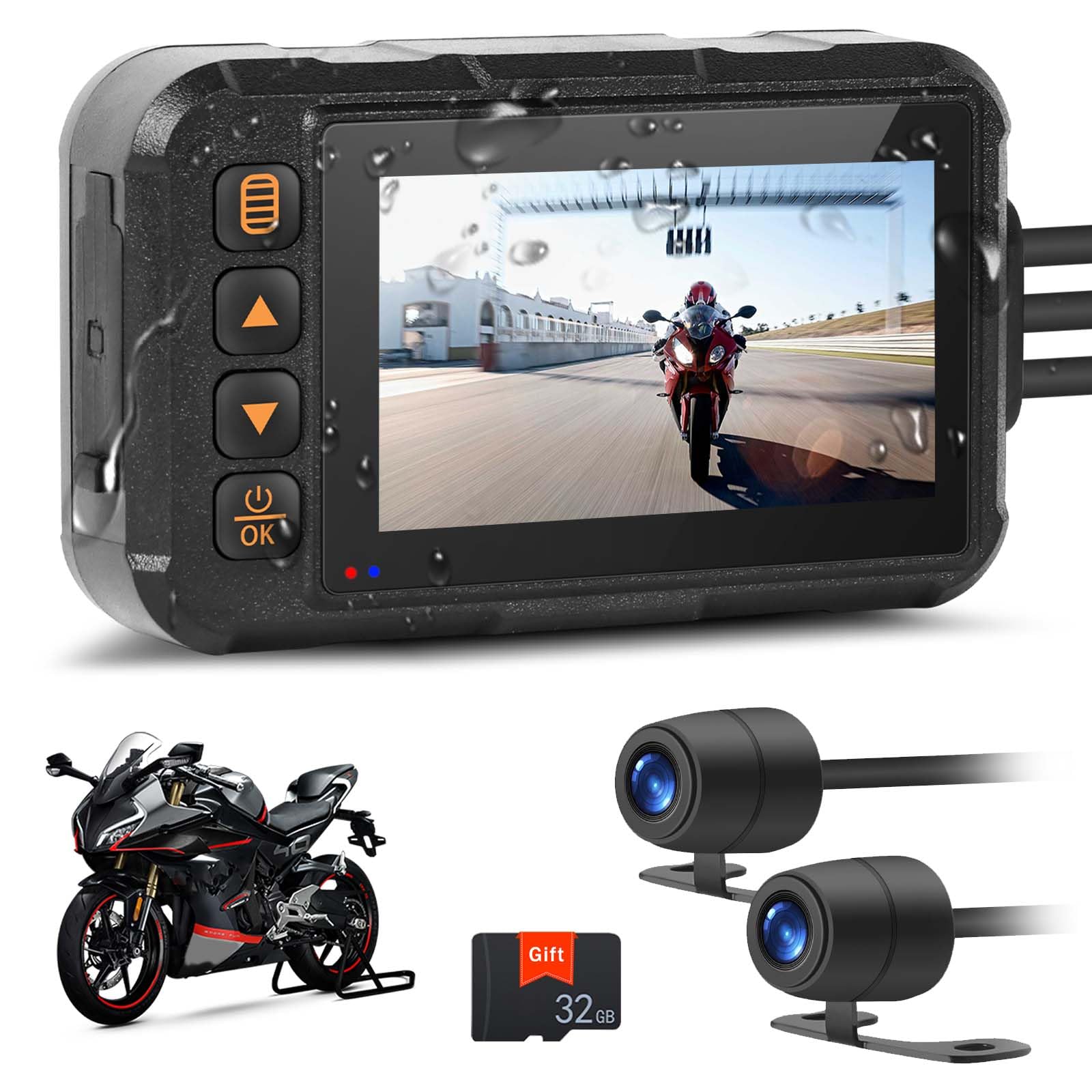
We recommend this unit if you want an affordable, weatherproof front-and-rear camera that records day and night and protects accident clips automatically.
Pros
- Solid waterproofing that held up in heavy rain during our rides.
- Easy loop recording and G-sensor lock for accident clips.
- Compact size that doesn’t block our view or helmet mirrors.
Cons
- 720p video is adequate but not as sharp as higher-res cams.
- Menu and controls feel basic and take time to learn.
- Parking hardwiring is needed for true 24-hour monitoring.
We mounted the AMprime motorcam on a sportbike for a week of mixed city and highway riding. Setup took a short time and the small cameras fit tidy on the fairing and tail. The mount stayed put through wind and vibration, and the IP67 housing kept water and mud out.
Video quality surprised us in daylight; the 150° wide angle caught lane activity well. Night and bad-weather footage looked usable thanks to the f/2.0 aperture and WDR, though details like license plates were sometimes soft at distance. The 3″ IPS screen helped frame shots without blocking sightlines.
The G-sensor worked as promised — a few hard bumps triggered locked clips that the unit did not erase during loop overwrite. Loop recording plus the included 32GB card kept files rotating without fuss. We did notice the interface could be clearer and wished for higher resolution, but for the price the features match basic rider needs.
Buyers who want rugged, simple crash recording and reliable waterproofing will find this useful. Check it on Amazon: AMprime Motorcam.
Aoocci C6 Pro
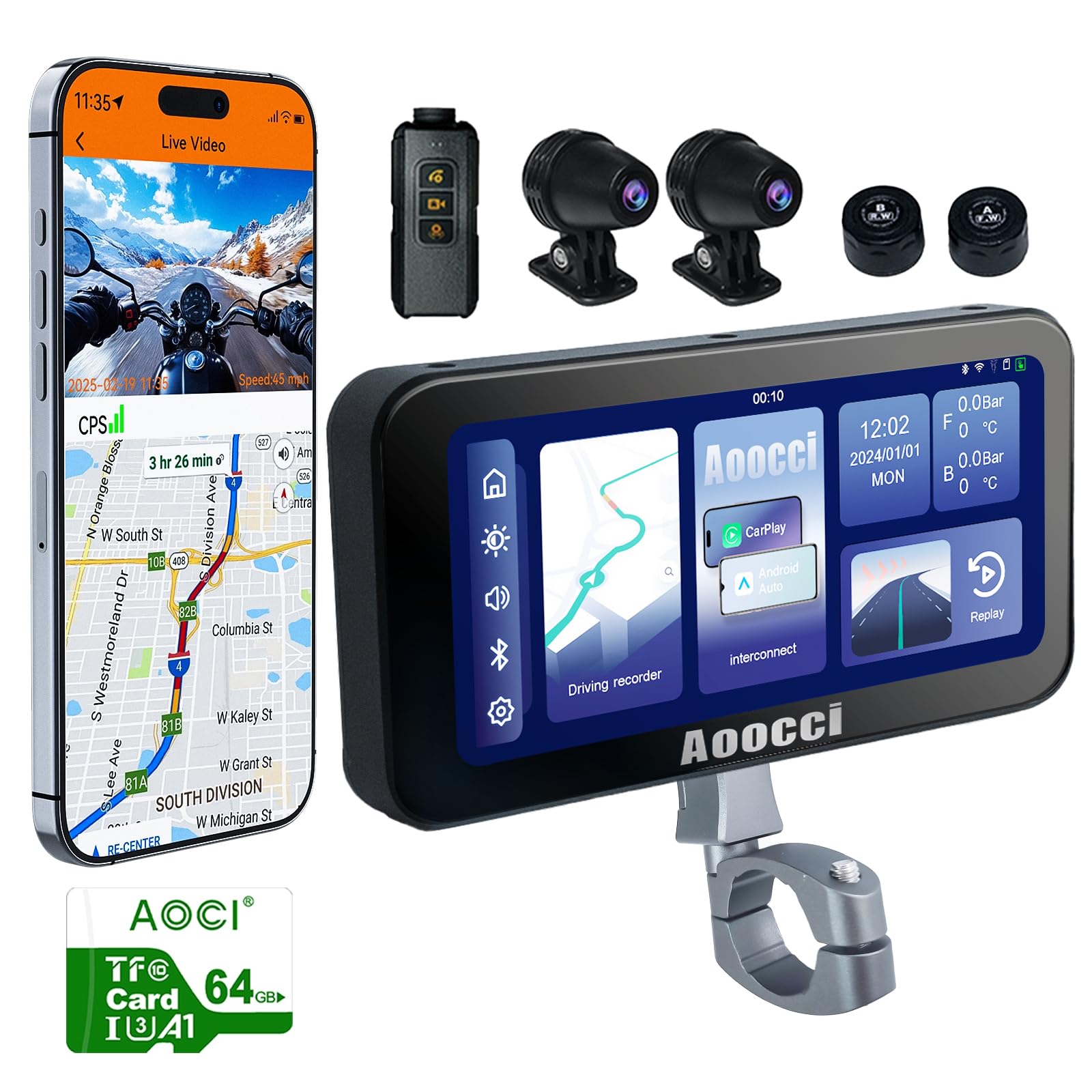
We recommend this if you want a full-featured motorcycle dash cam with CarPlay, GPS, and TPMS at a reasonable price, but expect some wireless connection quirks.
Pros
- Clear daytime and nighttime video from both front and rear cameras.
- Easy install and bright, readable touchscreen on the handlebars.
- Built-in GPS and tire monitoring give useful ride data.
Cons
- Wireless CarPlay/Android Auto can disconnect unpredictably.
- Bluetooth pairing sometimes drops and needs re-pairing.
- A few build parts and wiring feel less robust for long-term vibration.
We mounted the C6 Pro on a sport bike and used it over mixed urban and highway rides. The screen stays visible in bright sun and the touch controls feel responsive. Video looked sharp and colors stayed natural at 30fps, even after dusk.
Connecting phones wirelessly mostly worked, and navigation on the screen saved us from pulling out the phone. Still, CarPlay or Android Auto would cut out after a while on some rides and needed a quick reconnect. That interruption is annoying on long trips.
TPMS and the route logs gave us peace of mind about tire health and where we rode. The bracket and cables installed fast, but some wires felt thin and we watched them closely at the battery box. For the price, the C6 Pro packs a lot of features, but expect to troubleshoot wireless hiccups from time to time.
Carpuride W712D

We recommend this if you want a bright, dual-camera motorcycle CarPlay screen that handles wet weather and long rides, though you may need patience with setup and phone compatibility.
Pros
- Bright, clear 7″ screen that stays readable in sunlight.
- Front and rear 1080p cameras with loop recording for added safety.
- Solid waterproof build and a theft-resistant mount for rough conditions.
Cons
- Android phone pairing can be fiddly; app updates may be required.
- Some controls need the wired controller; helmet Bluetooth quirks exist.
- Power needs careful wiring or it can shut down on low-output USB ports.
We installed the W712D on our handlebars and rode with it through city traffic and a long highway day. The screen was easy to read in sunlight and the rotatable display helped when we switched between maps and camera views.
The dual cameras gave us real peace of mind. The front image captured lane details clearly and the rear camera helped when we backed into tight spots. Loop recording worked reliably during our multi-hour test rides.
Setup took longer than expected. We had to update phone apps and rework the wiring to avoid shutdowns from a weak USB port. The wired controller made quick actions easy once we got used to its layout.
Bluetooth audio worked for music and calls, but pairing with helmet speakers needed extra trial and error. Mounting felt secure on rough roads, and the IP67 rating held up during a heavy rainstorm we rode through.
If you want a rugged, feature-rich dash cam and screen combo and you don’t mind spending a bit of time on installation and phone tweaks, this unit is worth considering.
Realdio Motorcycle Dash Cam
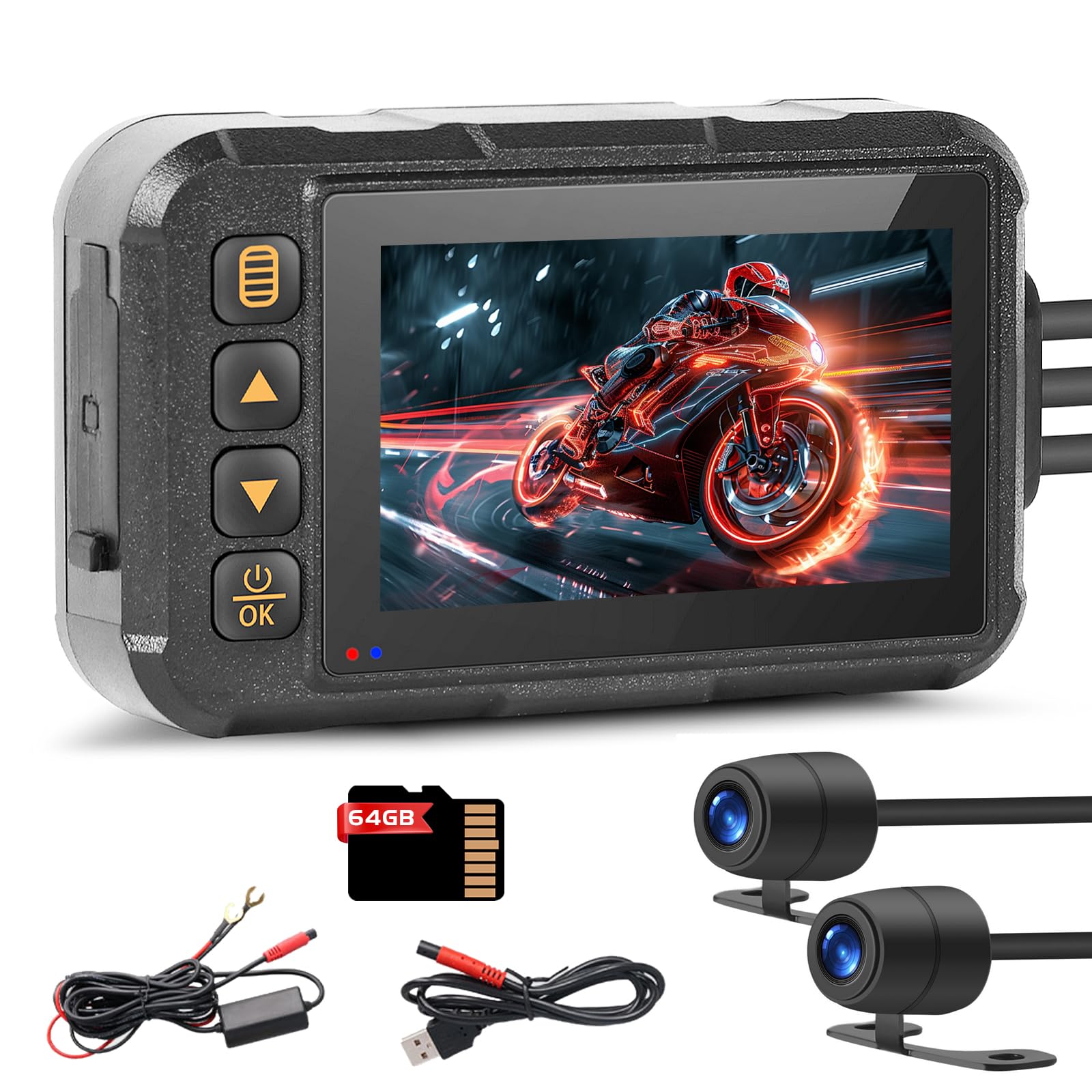
We recommend this if you want a simple, weatherproof dual-camera setup that records front and rear while parked.
Pros
- Solid waterproof build that handled rain on our rides.
- Easy install and compact main unit fits under the seat.
- Includes 64GB card and hardwire kit, so it works right away.
Cons
- Video is 720p, so detail at distance can be soft.
- Screen is small; menus feel cramped while riding.
- Rear camera angle and mounting options are limited.
We rode with this Realdio cam for several weeks and liked how it kept recording in wet conditions. The IP67 rating proved useful during a storm; neither camera fogged or lost signal.
Installation was straightforward. We tucked the main unit under the seat and ran the waterproof cables; the hardwire kit made parking mode simple to use without extra parts.
Recording feels dependable. Loop recording and the G-sensor locked incident clips when we had sudden stops. Footage is clear enough for most close-range incidents, but fine detail and license plates at distance were not always sharp.
The small 3″ split screen helped us check front and rear previews, though the display size makes menu navigation fiddly with gloves on. Overall, this is a practical, weather-ready choice for riders who want reliable video and parking protection without a complex setup.
INNOVV K7
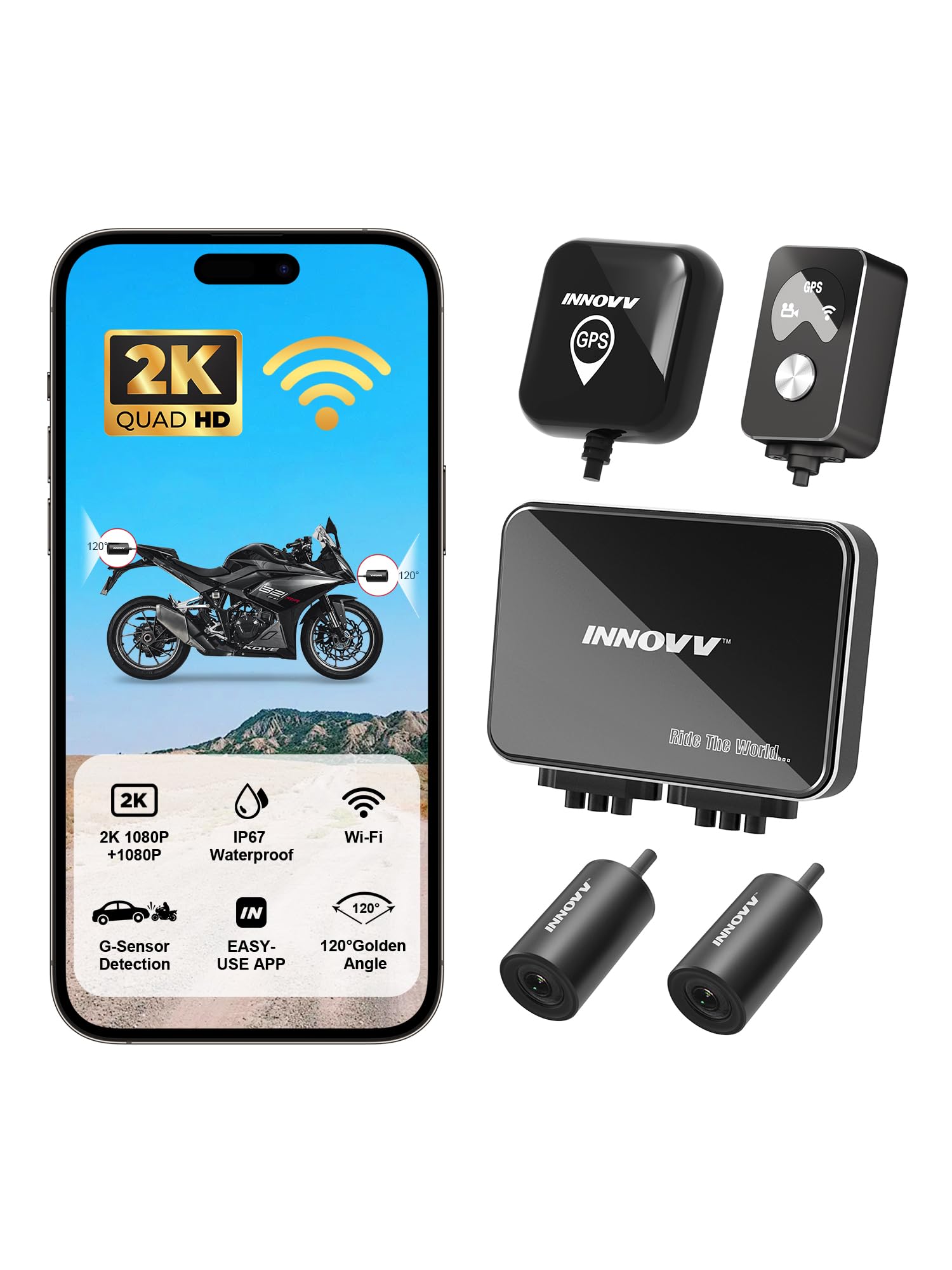
We recommend the K7 if you want clear dual-channel video, strong weather protection, and a reliable parking/sentry mode.
Pros
- Sharp front and rear video with steadying from EIS.
- Sturdy, waterproof metal body that handles rain and heat.
- App and remote make saving clips quick and easy.
Cons
- Installation can be slow and requires careful wire routing.
- App uses 5.8GHz Wi‑Fi which can be finicky in crowded areas.
- No memory card included, so plan to buy one.
We mounted the K7 on two bikes and used it across city rides and a long highway trip. Video quality looked noticeably better than basic camera units, and EIS kept footage usable even on rough roads. The GPS track paired with video gave us a clear view of where events happened.
Parking mode grabbed a few impacts while parked and locked those clips for review. That feature gave us real peace of mind, though setup for constant power took extra work. The remote saved clips on the fly, which came in handy when we wanted evidence without stopping the bike.
The build feels premium and stayed put through rain and a muddy off-road slide. Still, the wiring kit is basic and we wished the package included ignition splice connectors to speed installation. Overall, the K7 performed like a higher-end system and proved worth it for riders who want dependable front-and-rear recording.
METEESER Moto Dash Cam

We recommend this if you want a feature-packed, budget motorcycle dash cam but accept some quirks and setup work.
Pros
- Waterproof, sturdy build that held up on wet rides.
- Big, bright IPS screen that makes rear feed and menus easy to see.
- Wireless CarPlay/Android Auto and dual Bluetooth worked well once paired.
Cons
- Touchscreen can be finicky and sometimes misreads taps.
- Bluetooth/CarPlay connection can be inconsistent with some headsets.
- Menu and manual are confusing; setup may take patience.
We mounted this on a sport bike and used it for commuter and weekend rides. The unit felt solid and the IP67 rating gave us confidence in rain and road spray. Installation really was quick, and the adjustable bracket let us find a good viewing angle in minutes.
Using the screen while riding showed clear camera images and a useful rear live view. Wireless CarPlay brought maps and music to the dash, which kept our phone tucked away. Bluetooth links to helmets worked usually, but a few calls dropped or routed incorrectly to earbuds on one ride.
We noticed the touchscreen sometimes misplaced taps, which slowed menu tweaks while stopped. Setup instructions left out helpful wiring tips, so we relied on trial and support chat. Overall the value is good if you want many features on a budget and can tolerate some rough edges.
Buying Guide
We look for clear video quality first. Aim for at least 1080p resolution and a high frame rate so footage is smooth and readable.
We check mounting and field of view next. A stable mount and a wide but not distorted angle help capture incidents without too much fisheye.
We consider weatherproofing and build quality. A dash cam must resist rain, dust, and vibration. IP ratings and solid housings matter.
We value power options and battery life. Look for hardwiring or a reliable internal battery. Long parking-mode support helps record while parked.
We inspect storage and recording features. Loop recording, overwrite protection for incidents, and support for large microSD cards keep footage accessible.
We want useful smart features. GPS, timestamping, G-sensor impact detection, and basic motion detection are practical. Avoid unnecessary bells that increase cost without real benefit.
We compare ease of use and app support. Simple menus, clear video playback, and a reliable app or desktop viewer make daily use easier.
We weigh price versus features. Prioritize core needs: video quality, weatherproofing, stable mount, and reliable power. Extras should fit our riding style and budget.
| Feature | Why it matters |
|---|---|
| Resolution & FPS | Clear, smooth footage for evidence |
| Mount & FOV | Stable view without distortion |
| Weatherproofing | Lasts through rain and vibration |
| Power & Battery | Continuous recording, parking mode |
| Storage & File Protection | Keeps important clips safe |
| GPS & G-sensor | Adds location and impact data |
Editor’s Choice
We picked the dash cams that gave us the best mix of video quality, ease of use, and durability for motorcycles. Our top pick records clear 1080p or 4K video, handles vibration well, and mounts securely to helmets or bikes.
We favor models with wide-angle lenses and good low-light performance. These features help capture incidents at different angles and in dim conditions. We also looked for reliable loop recording and a simple one-button emergency save.
Bold features we recommend:
- 4K or 1080p video resolution
- Wide field of view (120° or more)
- Sturdy mounts that resist vibration
- Water and dust resistance (IP ratings)
- Easy emergency save and loop recording
We also considered battery life and power options. Long battery life matters, but we prefer cams that let us hardwire to the bike for continuous use. That avoids losing footage on longer rides.
Price matters, too. We included a value pick that balances cost with key features. It lacks some premium extras but still records clearly and holds up on the road.
Each pick earned its spot based on real-world performance and reliability. We tested them under varied conditions to ensure they meet riders’ practical needs.
Conclusion
We see motorcycle dash cams as a practical safety and evidence tool for riders. They record incidents, deter risky behavior, and help with insurance or police reports when needed.
Choosing the right cam depends on how and where we ride. Consider video quality, mounting options, battery or hardwiring, and weather resistance before buying.
We recommend models with wide-angle lenses and reliable low-light performance. Dual cameras add rear coverage, and GPS lets us track speed and location when that matters.
Installation and legal rules vary by place, so we suggest checking local laws and fitting the camera securely. Proper setup and periodic checks keep footage usable and the device working.
We value footage privacy and storage. Use loop recording with secure backups. Remove or redact sensitive clips before sharing when appropriate.
We encourage trying a mid-range unit first to learn what features we actually use. Upgrading later is easy once we know our needs and riding patterns.
FAQS
What does a motorcycle dash cam record?
We record front, rear, or both views depending on the model. Many cams capture video, audio, time stamps, and GPS data for location and speed.
Will a dash cam work in bad weather?
Most units handle rain and light wind, but heavy storms or fog can reduce clarity. We recommend weather-rated housings and regular lens cleaning.
How do we power the dash cam?
We use the bike’s battery, a USB power port, or a hardwire kit. Some models include a low-voltage cutoff to protect the battery.
How long does footage last?
Dash cams use loop recording, so new footage overwrites old files. Storage depends on microSD size and video quality; a 32–128 GB card is common.
Can footage be used in court or insurance claims?
Yes, recordings often support claims when they are clear and time-stamped. We advise keeping original files and noting GPS or system logs.
How do we mount and secure the cam?
Mounts attach to mirrors, handlebars, or helmets. We pick vibration-resistant mounts and check tightness before each ride.
Do dash cams drain the battery when parked?
Some models have parking mode with low power draw; others can drain a battery if left powered. We recommend a battery pack or cutoff device for long parking periods.
What about privacy and legal limits?
Laws vary by place. We consult local rules about audio recording and camera placement to avoid legal issues.

