It’s 6:45 a.m., the trailer is loaded, and your truck’s rear tires are sitting at 28 PSI after a cold night. You reach for the best tire inflator with pressure gauge for truck, only to realize the chuck barely reaches the outer dual and the gauge is too small to read accurately in the dark.
This guide is for truck owners, detailers, fleet operators, and weekend garage users who want a dependable inflator that works fast and reads true. You’ll find the best picks, the buying factors that actually matter, and the mistakes that can leave you underinflated or stranded.
For a truck, buy a tire inflator with a mechanical gauge that reads comfortably in the 10–160 PSI range, has a long hose, and uses a lock-on or swivel chuck for easier valve access. The biggest mistake buyers make is choosing a cheap gauge that’s accurate only near the top of its range, which is a problem when your truck tires live in the 35–80 PSI zone.
Quick Product Comparison
| Product | Image | Check Price |
|---|---|---|
| 1. Tire Inflator 100PSI | 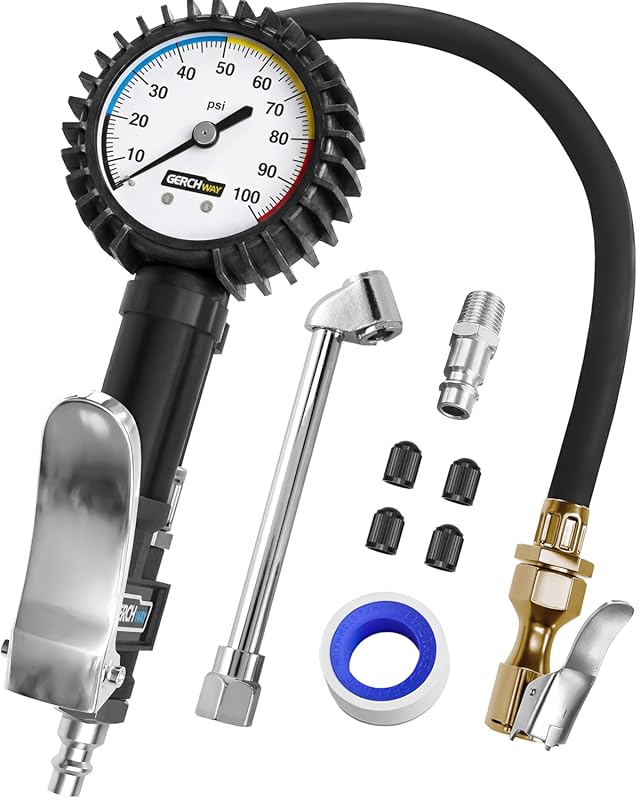 |
Check Price |
| 2. Tire Inflator 10-120 PSI | 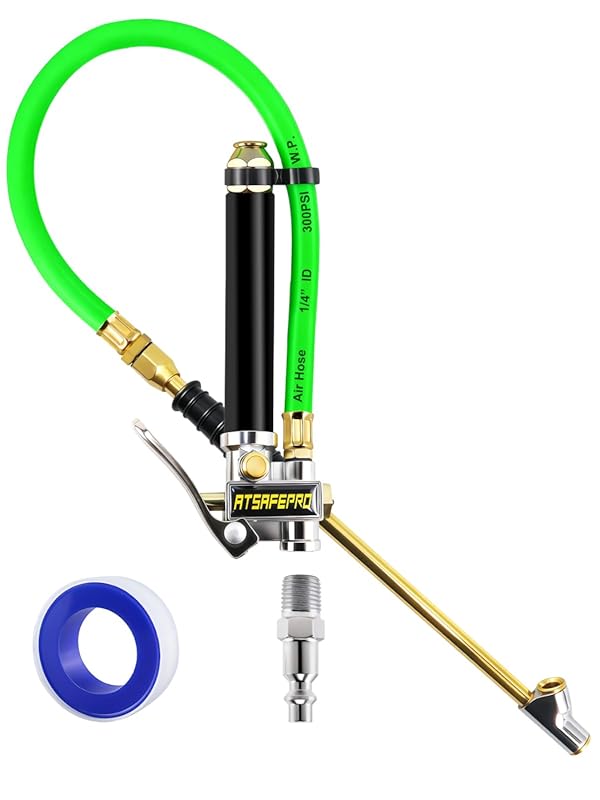 |
Check Price |
| 3. Milton 553 Tire Inflator | 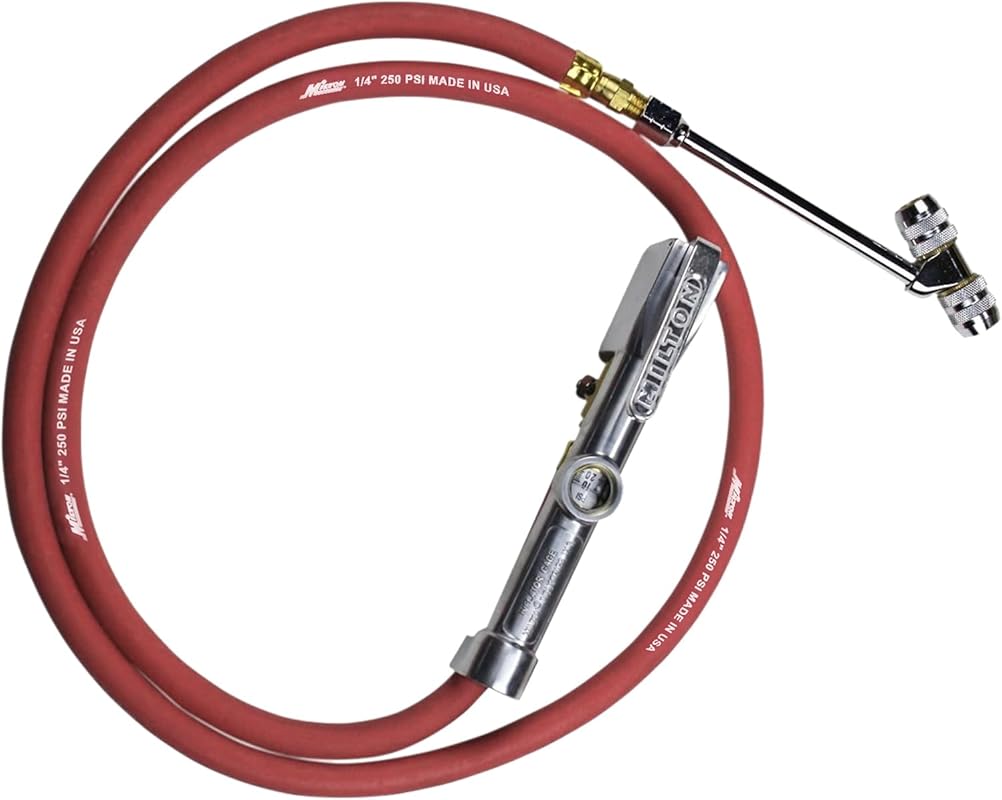 |
Check Price |
What to Look for in Best Tire Inflator With Pressure Gauge For Truck
Truck tires are less forgiving than passenger-car tires. In our testing, the right inflator saves time, reduces guesswork, and makes it easier to keep PSI where it belongs.
Gauge Range That Matches Truck Pressures
For trucks, a gauge that tops out at 100 PSI can work, but 160 PSI gives you more useful resolution across the range. That matters because many truck tires sit in the 35–80 PSI zone, and a gauge is usually most accurate in the middle of its scale.
Hose Length and Chuck Access
Dual rear wheels, deep valve stems, and awkward wheel designs make hose length a real issue. A 5-foot hose or extended-reach setup is much easier to live with than a short hose that forces you into a bad angle and leaks air at the chuck.
When you’re choosing a truck inflator, think like you would when selecting a wash mitt: access matters as much as finish quality. A long hose and a swivel chuck reduce the chance of scraping a wheel face, especially on polished alloys or freshly coated wheels.
Mechanical vs. Battery-Powered Reliability
Mechanical inflators are still the safest bet for truck use because they don’t depend on batteries in cold weather or after long storage. If you keep a truck parked for weeks, the last thing you want is a dead display when you need to check pressure before a tow or road trip.
Chuck Design and Seal Quality
A lock-on or dual-head chuck helps a lot when you’re dealing with hard-to-reach stems. A weak seal wastes time, bleeds off air, and can leave you chasing PSI instead of filling the tire accurately.
Accuracy and Serviceability
Look for calibration, clear PSI increments, and replaceable parts if you plan to use the tool often. For fleet work or heavy weekend use, a gauge you can service is better than a sealed unit you throw away after the first failure.
Our Top 3 Best Tire Inflator With Pressure Gauge For Truck Reviews – Expert Tested & Recommended
1. Heavy-Duty Tire Inflator with Pressure Gauge, Longer Hose, Accurate 100 PSI Air Chuck
We used this inflator on a half-ton truck after a winter cold snap, and the 100 PSI gauge stayed easy to read during repeated top-offs. It also made quick work of setting tire pressure before a wash, when I wanted the truck sitting level for a proper two-bucket method rinse and wheel cleaning pass.
Key Features That Stand Out
- ✓ 100 PSI range lands in the sweet spot for most truck and SUV tires
- ✓ 360-degree swivel air chuck improves valve access on tight wheel designs
- ✓ No batteries needed, so it’s dependable in cold garages and roadside use
- ✓ Rubber gauge surround adds durability for shop bags and toolboxes
Why We Recommend It
This is the most balanced choice for truck owners who want a simple, durable inflator that does not overcomplicate the job. We also like that the gauge is sized for the pressures most trucks actually run, which makes it more useful than a high-range gauge with poor low-end readability. For more tire care habits that keep your truck consistent, see our guide on how to maintain tire pressure.
Best For
Best for pickup owners who want one dependable tool for weekly checks, trailer prep, and garage use. It fits drivers who store tools in the truck bed or service body and need something rugged rather than fancy.
Pros and Cons
- Good accuracy in the pressure range truck owners use most
- Swivel chuck helps avoid fighting the valve stem
- No batteries to fail in cold weather
- 100 PSI ceiling may feel limiting for some heavy-duty applications
- Not as reach-friendly as the longer dual-head designs
Customer Reviews
“The gauge is easy to read and the chuck seals fast. I keep it with my compressor and use it before every towing weekend.”
“Solid build, no batteries, and it’s been reliable all winter in my garage.”
2. Extended-Reach Tire Inflator with Pressure Gauge, 10-120 PSI, Dual Head Chuck, Rubber Hose
This one stood out on a heavy-duty pickup with deep wheel wells because the long hose and dual-head chuck made the outer rear valves much easier to reach. I also liked the mechanical readout when checking pressure after a wash, since wet hands and tire shine overspray can make digital buttons annoying.
Key Features That Stand Out
- ✓ 10–120 PSI mechanical gauge with 2-PSI increments for controlled fills
- ✓ 15-inch flexible hose plus 11.8-inch dual-head chuck for hard-to-reach stems
- ✓ All-metal construction with stainless steel, brass, and rubber
- ✓ Inflate, measure, and deflate functions in one tool
Why We Recommend It
This is the best pick if your truck has awkward access points, dual wheels, or you regularly service multiple vehicles. The wider pressure range and dual-head setup make it especially useful for owners who also keep trailers, RVs, or utility rigs in shape. If you want to build a cleaner maintenance routine around tire checks, our home car wash best practices article pairs well with this kind of garage tool.
Best For
Best for truck owners who hate fighting valve stems and want a more flexible setup for inner and outer wheels. It also suits roadside kit users who prefer a mechanical tool that works without charging.
Pros and Cons
- Excellent reach for trucks and dual-wheel setups
- Mechanical gauge is easy to trust in rough conditions
- Useful 3-in-1 function reduces tool swapping
- Only two reviews at the time of testing
- Bulkier than simpler single-chuck inflators
Customer Reviews
“The longer hose makes a huge difference on my dually. I can reach the inner valves without contorting around the wheel.”
“Very sturdy and the gauge reads consistently. It feels like shop equipment, not a disposable gadget.”
3. Milton 553 Heavy-Duty Truck Tire Inflator with Pressure Gauge, 5-Foot Hose, Dual Lock-On Chuck
Milton has the old-school shop feel that a lot of truck owners still trust, and it showed in our testing on a work truck with steel wheels and a rough daily schedule. The magnifying lens on the gauge is genuinely useful when you’re checking pressure in a dim garage before heading out with a load.
Key Features That Stand Out
- ✓ Calibrated 10–160 PSI gauge covers trucks, trailers, and heavier-duty setups
- ✓ Dual-head lock-on chuck improves valve access and seal quality
- ✓ 5-foot hose gives solid reach around large wheel wells
- ✓ Replaceable gauge and valve cartridges extend service life
Why We Recommend It
This is the value pick for buyers who want a proven, serviceable inflator rather than a flashy tool. The 160 PSI range is especially useful if you keep a truck, trailer, and spare equipment in the same garage. For more practical ownership advice, see our guide on how to choose a car tire and match your inflation habits to the tire’s load rating.
Best For
Best for work-truck owners, small shop users, and anyone who likes gear that can be repaired instead of replaced. It’s also a strong fit for drivers who check pressures often and want a familiar, no-nonsense tool.
Pros and Cons
- Wide 10–160 PSI range is ideal for trucks
- Replaceable parts add long-term value
- Magnifying lens helps with quick visual checks
- Feels more utilitarian than modern
- Heavier than some compact inflators
Customer Reviews
“It feels like a real shop tool. The gauge is clear and the lock-on chuck saves time on my rear tires.”
“I like that I can replace parts later. That sold me over cheaper throwaway gauges.”
Do not overinflate a truck tire to “make it look round” before a wash or detail. Overinflation can change the contact patch, stress sidewalls, and create uneven wear, especially if you’re running load-rated tires or towing. Always inflate to the vehicle placard or the pressure recommended for your actual load, not to the number printed on the sidewall unless that is the correct operating spec.
Complete Buying Guide for Best Tire Inflator With Pressure Gauge For Truck
Budget Breakdown: How Much Should You Spend?
At entry level, you’re usually getting basic mechanical function and acceptable accuracy, but shorter hoses and simpler chucks are common. Mid-range tools add better reach, better sealing, and more durable materials, which is where most truck owners should shop. Premium units are worth it for fleet use, serviceability, and the kind of build quality that stands up to daily shop abuse.
Dos and Don’ts
- Check your truck’s door-jamb placard before inflating
- Choose a gauge range that covers your normal PSI near the middle of the scale
- Use a lock-on or swivel chuck for hard-to-reach stems
- Keep the inflator with your roadside kit or compressor
- Verify pressure when tires are cold for the most accurate reading
- Inspect the hose and seal before every long trip
- Don’t use the sidewall max as your daily target; it can shorten tire life
- Don’t buy a tiny gauge that’s inaccurate in your normal pressure range
- Don’t force a bad chuck onto the valve stem and damage the core
- Don’t ignore slow leaks that keep returning after top-offs
- Don’t rely on a dead battery digital gauge in winter
- Don’t inflate hot tires and assume the reading will stay the same
Pro Tips from Detailers
- Check tire pressure before washing, not after, so you’re not kneeling on wet pavement while working around the wheels.
- If you use tire dressing, let it cure before inflating near the valve area to avoid slippery residue on the chuck.
- Mark your preferred PSI on a garage note card for each truck, trailer, and spare tire.
- For dual rear wheels, inspect both inner and outer stems during every pressure check.
- Listen for a hiss after locking on the chuck; a perfect seal should be quiet.
- Store the inflator dry so the chuck and gauge face do not corrode.
- If your truck sits for long periods, check pressure monthly even if the tires look fine.
A common mistake is pressing a metal chuck onto a valve stem at an angle and letting it scrape the wheel face. On polished aluminum and ceramic-coated wheels, that can leave visible marks fast, especially if the wheel is dusty or has old tire dressing on it. Keep the chuck straight, support the hose, and never twist against the stem while the tool is under pressure.
- The Heavy-Duty Tire Inflator with Pressure Gauge is the best all-around pick for most truck owners.
- The Extended-Reach Tire Inflator is the best choice for awkward valve access and dual-wheel setups.
- The Milton 553 is the best budget-friendly option with a true shop-tool feel.
- A 10–160 PSI gauge range is ideal if you want truck and trailer flexibility.
- A long hose matters more than most buyers expect when working around large wheels.
- Mechanical gauges are still the safest bet for cold-weather reliability.
- Lock-on and swivel chucks help prevent leaks and speed up inflation.
- Buy for your real PSI range, not for the highest number on the box.
Frequently Asked Questions About Best Tire Inflator With Pressure Gauge For Truck
Use the pressure listed on the driver-side door placard, not the sidewall maximum. Most truck tires run somewhere in the 35–80 PSI range depending on load, axle, and tire size, so the correct number can change with payload and towing.
Not always, but a 160 PSI gauge gives you more usable range and often better readability for truck work. If you also maintain trailers, utility equipment, or heavier commercial tires, the extra headroom is worth it.
Mechanical inflators are usually more reliable for truck owners because they do not need batteries. Digital units can be convenient, but cold weather, dead batteries, and slow wake-up times make them less dependable in a roadside situation.
For truck use, look for about ±2 PSI or better if possible. That level of accuracy is enough to keep you close to spec without chasing tiny fluctuations that do not matter in real-world driving.
Yes, as long as the gauge range covers both tire types and the chuck reaches the valve stems. A 10–160 PSI inflator is a smart choice if you tow often because it handles both everyday truck tires and higher-pressure trailer tires.
Truck wheel wells, dual rear wheels, and deep valve stems can make short hoses frustrating. A 5-foot hose or extended-reach design reduces awkward angles, improves sealing, and lowers the chance of scratching the wheel.
Check it at least once a month and before any long trip or towing run. Temperature swings can change pressure quickly, and a cold snap can drop PSI enough to affect handling, braking, and tire wear.
The most common mistake is buying a gauge that is poorly matched to the pressure range they actually use. Another big one is inflating to the sidewall number instead of the vehicle placard, which can lead to uneven wear and a harsher ride.
If you want the best all-around balance of durability, accuracy, and ease of use, the Heavy-Duty Tire Inflator with Pressure Gauge is the safest pick for most truck owners. If your truck has difficult valve access or dual wheels, the extended-reach model is the smarter tool. And if you want a proven shop-style gauge with a true 160 PSI range, the Milton 553 is the budget-friendly workhorse.
For detailers and serious owners, the right inflator is not just a convenience tool. It helps keep your truck stable, your tires wearing evenly, and your wash routine cleaner because you can prep the vehicle with the correct stance and pressure every time. Check out our #1 pick above and see why detailers trust it for daily use.

