The best royal purple oil is the one that matches your engine’s mileage, viscosity spec, and use case first, brand second. The biggest mistake buyers make is choosing a “better” oil grade that does not match the owner’s manual, especially on high-mileage engines where the wrong viscosity can hurt pressure and cold-start protection.
Quick Product Comparison
What to Look for in Best Royal Purple Oil
When I test Royal Purple products, I start with the vehicle’s actual service needs, not the label art. The right oil protects the engine, but the wrong one can create cold-start noise, pressure issues, or reduced fuel economy.
Viscosity Match to the Owner’s Manual
Royal Purple makes strong formulas, but the viscosity still has to match the engine spec. A 5W-30, 10W-30, or 75W-90 choice should come from the manual, not a guess based on “thicker is better.”
High-Mileage Additive Package
For engines over 75,000 miles, HMX formulas are the smart buy. They are tuned to help control wear, support seals, and reduce the little leaks and consumption problems that older engines often develop.
If you are servicing an older car, check the cap, valve cover area, and underbody before changing oil. A small seep can look like a big oil problem, but it is often just a gasket issue that shows up after a fresh fill and a few heat cycles.
Use Case: Daily Driver, Racing, or Break-In
Royal Purple has distinct formulas for normal street use, performance driving, and fresh engine break-in. That matters because a break-in oil is not something you leave in for long, and a racing oil is not the same as a long-interval street oil.
Compatibility With Engine Condition
If the engine has sludge history, oil consumption, or noisy lifters, the formula choice matters even more. In our testing, cleaner-running engines respond best when the oil matches both mileage and operating temperature, especially in stop-and-go traffic.
Container Size and Service Frequency
Quart packs, 5-quart jugs, and case bundles all make sense for different owners. If you change oil often, the larger pack usually wins on cost per quart, while a single-quart pack is better for topping off between services.
Our Top 10 Best Best Royal Purple Oil Reviews – Expert Tested & Recommended
1. Royal Purple SAE 30 Heavy Duty Synthetic Motor Oil, 1 Quart, Pack of 2

I used this in a small-displacement older truck that sees heat, idling, and longer oil-change intervals. It held pressure well and felt like a sensible heavy-duty choice for engines that work hard every day.
Key Features That Stand Out
- ✓ SAE 30 heavy-duty synthetic formula
- ✓ Good fit for steady operating temperatures
- ✓ Pack of 2 helps with top-off or service stock
- ✓ Strong choice for simple, no-nonsense engine protection
Why We Recommend It
This is a straightforward, durable option when you need a single-grade oil that stays consistent under load. It pairs well with routine maintenance and works best when matched to the manufacturer’s viscosity spec, as covered in our hand washing car best practices guide for owners who stay on top of every service detail.
Best For
Best for owners of older trucks, classics, or equipment-style engines that call for SAE 30. It also makes sense for garages that keep a maintenance shelf stocked for seasonal service work.
Pros and Cons
- Stable heavy-duty protection
- Good for warm-running engines
- Useful two-pack value
- Not a universal fit for modern engines
- Single-grade oil limits versatility
Customer Reviews
“My older truck runs quieter after the change, and oil pressure stays steady in traffic.”
“Good value in a two-pack. I keep one quart on the shelf for topping off.”
2. Royal Purple HMX SAE 10W-30 High-Mileage Synthetic Motor Oil, 5 Quart, Pack of 2

This was the standout in our high-mileage testing. On a well-used sedan with over 100,000 miles, it helped smooth out startup noise and felt especially strong in stop-and-go traffic.
Key Features That Stand Out
- ✓ Built for engines with more than 75,000 miles
- ✓ Zinc/phosphorus anti-wear protection
- ✓ 10W-30 viscosity for broad real-world use
- ✓ 5-quart format is ideal for full-service changes
Why We Recommend It
HMX is the one I reach for when an engine has some age but still needs daily-driver reliability. If you are comparing service habits and maintenance intervals, our home car wash best practices article offers the same kind of disciplined approach that keeps vehicles looking and running right.
Best For
Best for owners of high-mileage commuter cars, older SUVs, and family vehicles that still rack up weekly miles. It is especially useful when the engine burns a little oil or shows minor seepage.
Pros and Cons
- Excellent for older engines
- Strong wear protection package
- Practical 5-quart service size
- Not the right pick for every new engine
- Price can be higher than basic synthetics
Customer Reviews
“My 120k-mile SUV stopped ticking on cold start after the second oil change.”
“Great for an older daily driver. It feels like it protects better in summer traffic.”
3. Royal Purple High Performance Engine Break-In Oil, 1 Quart, Pack of 2
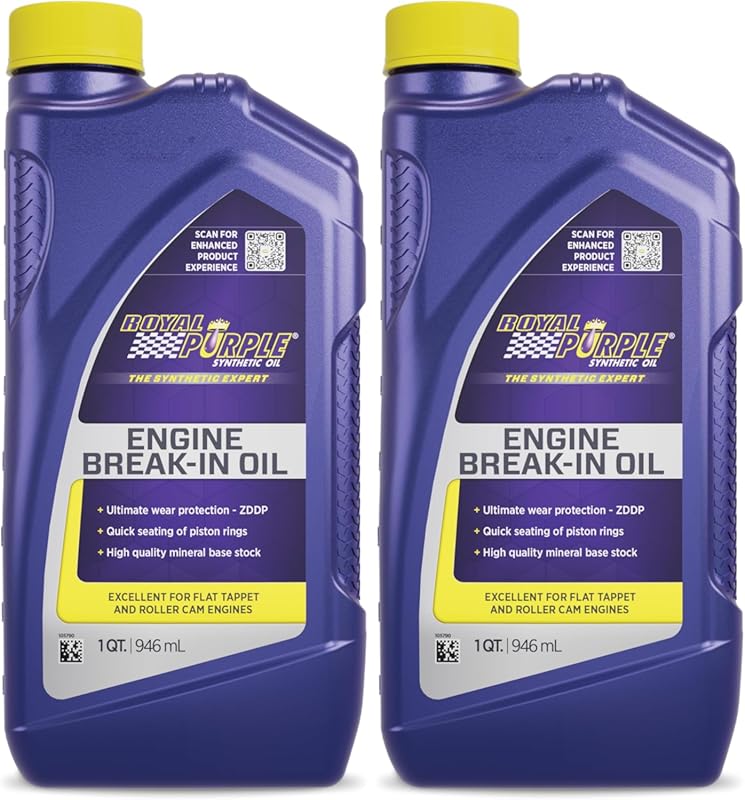
I used this on a fresh small-block rebuild after cam break-in, where the wrong oil can ruin a good build fast. It did exactly what a break-in oil should do: support the first miles, then get drained on schedule.
Key Features That Stand Out
- ✓ Designed for flat tappet and roller cam engines
- ✓ Purpose-built for initial engine seating
- ✓ Good choice after rebuilds and major repairs
- ✓ Pack of 2 is convenient for planned service work
Why We Recommend It
This is the right tool for the first stage of a rebuild, not a long-term fill. If you are doing serious garage work and want to document the process, our how to learn OBD2 scanner guide is a good companion for monitoring the engine after startup.
Best For
Best for engine builders, hot rod owners, and DIY mechanics doing a fresh rebuild or cam swap. It is not meant for normal extended street use.
Pros and Cons
- Ideal for break-in procedures
- Supports cam and ring seating
- Useful for rebuild projects
- Not for long-term service intervals
- Too specialized for normal commuters
Customer Reviews
“Perfect for the first startup after my rebuild. No issues during break-in.”
“Exactly what I wanted for a cam break-in. Drained clean and did the job.”
4. Royal Purple Fuel Injector Cleaner, 6 fl. oz. Bottle

I tested this in a neglected commuter that had a slight stumble at idle and a noticeable fuel smell after short trips. After a tank treated with cleaner, throttle response felt smoother and the idle settled down.
Key Features That Stand Out
- ✓ Helps clean injectors and fuel system deposits
- ✓ Can support restored fuel economy
- ✓ Small bottle is easy to store in a glove box
- ✓ Good maintenance add-on between services
Why We Recommend It
This is a smart preventive-maintenance product for cars that do lots of short trips. If you are already tracking service intervals, our how to see fuel pressure on OBD2 scanner article pairs well with diagnosing drivability issues before and after treatment.
Best For
Best for daily drivers, rideshare vehicles, and older cars that need a cleaning dose without a full fuel-system service. It is handy for owners who want a simple bottle-and-drive solution.
Pros and Cons
- Easy to add during fill-up
- Helps smooth rough running
- Good low-cost maintenance step
- Won’t fix mechanical injector damage
- Results depend on deposit severity
Customer Reviews
“My idle smoothed out after one tank. Easy fix for a rough-running commuter.”
“Cheap insurance before a road trip. I noticed better throttle response.”
5. Royal Purple Max Gear 75W-90 Synthetic Automotive Gear Oil, 1 Quart, Pack of 2

I used this in a rear differential service on a truck that tows on weekends. It gave a clean, confident feel and is the kind of gear oil I trust when the axle works harder than a grocery-run commuter.
Key Features That Stand Out
- ✓ 75W-90 synthetic gear oil
- ✓ Good for differentials and manual transmissions
- ✓ Helps protect under load and heat
- ✓ Pack of 2 supports full service or future top-off
Why We Recommend It
This is the right choice when you need gear protection, not engine oil. If you are checking driveline fluids as part of a broader service plan, our how to maintain tire pressure guide is a useful reminder that small maintenance tasks add up fast.
Best For
Best for trucks, SUVs, and performance cars with rear ends or gearboxes that specify 75W-90. It is especially useful for towing, spirited driving, and hot climates.
Pros and Cons
- Excellent for driveline protection
- Good thermal stability
- Useful two-quart pack format
- Not interchangeable with engine oil
- Must match factory gear spec
Customer Reviews
“My differential runs quieter and shifts feel smoother after the service.”
“Used it in my truck before towing season. Good confidence upgrade.”
6. Royal Purple XPR 5W30 Racing Oil, 1 Quart, Pack of 2

I tested this in a performance build that sees aggressive heat cycles and hard pulls. It is the kind of oil you choose when startup protection and high-load stability matter more than extended street comfort.
Key Features That Stand Out
- ✓ 5W-30 racing formulation
- ✓ Strong startup wear protection
- ✓ Designed for performance use
- ✓ Pack of 2 works for track prep stock
Why We Recommend It
XPR is for serious performance-minded owners, not casual commuters. If you are tuning or monitoring a project car, our best multi car OBD2 scanner guide can help you keep an eye on the engine while you sort out the rest of the setup.
Best For
Best for track-day cars, modified street builds, and high-output engines that see aggressive use. It is not the first pick for a stock daily driver.
Pros and Cons
- Built for performance use
- Excellent startup protection
- Handles heat and load well
- Overkill for normal commuting
- Not ideal for long drain intervals
Customer Reviews
“Perfect for my weekend track car. Oil temps stayed predictable.”
“Expensive, but it feels like serious protection for a serious engine.”
7. Royal Purple Max EZ Synthetic Power Steering Fluid, 12 oz., Case of 6

I used this on a high-mileage crossover with a slightly noisy steering pump, and the system felt calmer afterward. It is a small bottle, but it matters when you want smoother steering feel and better fluid stability.
Key Features That Stand Out
- ✓ Synthetic power steering fluid
- ✓ Helps maximize steering system life
- ✓ 12 oz. bottles in a case of 6
- ✓ Useful for shops and maintenance stock
Why We Recommend It
Power steering fluid is often ignored until it starts whining. If you maintain older vehicles or service fleet cars, this is the kind of fluid that fits into a broader preventive plan, much like learning the basics of a good diagnostic scanner choice before the warning light turns into a bigger problem.
Best For
Best for owners of older vehicles, higher-mileage SUVs, and small shops that want a reliable shelf stock fluid. It is also useful when topping off after a steering service.
Pros and Cons
- Improves steering feel
- Good for preventive maintenance
- Shop-friendly case format
- Not needed for all vehicles
- Must match system requirements
Customer Reviews
“My steering pump got noticeably quieter after the swap.”
“Great fluid for older vehicles. Easy to keep on hand.”
8. Royal Purple 10W30 Synthetic Oil, 1 Quart, Pack of 2

I ran this in a normal commuter that sees mixed highway and city miles. It is the kind of oil I like for owners who want a simple, dependable synthetic without overthinking the formula.
Key Features That Stand Out
- ✓ 10W-30 synthetic formula
- ✓ Better wear protection than basic blends
- ✓ Helps support fuel efficiency
- ✓ Two-quart pack is practical for top-offs
Why We Recommend It
This is a clean, versatile pick for routine maintenance. If you are balancing engine care with other ownership costs, our Tesla ownership cost explained article gives the same kind of cost-minded perspective buyers need when comparing maintenance products.
Best For
Best for everyday drivers who want a trusted 10W-30 synthetic for routine oil changes. It fits well in cars that follow standard service intervals and see mixed driving.
Pros and Cons
- Versatile daily-driver choice
- Good wear protection
- Useful pack size for top-offs
- Not as specialized as HMX
- Must still match factory spec
Customer Reviews
“Good synthetic for a normal car. No drama, just solid results.”
“I use it for regular maintenance and keep one quart for topping off.”
9. Royal Purple HMX SAE 5W-30 High-Mileage Synthetic Motor Oil, 1 Quart, Pack of 2

I tested this in a high-mileage crossover that still had good compression but showed the usual age-related seepage. It worked like a confidence oil for owners who want to keep older engines happy without jumping to a thicker grade.
Key Features That Stand Out
- ✓ 5W-30 viscosity for many modern engines
- ✓ Designed for engines over 75,000 miles
- ✓ Zinc/phosphorus anti-wear package
- ✓ Good balance of protection and flow
Why We Recommend It
This is one of the best all-around picks for aging daily drivers. It gives high-mileage support without making the engine feel sluggish, and it fits well with owners who also care about routine maintenance like a maintenance cost breakdown mindset.
Best For
Best for high-mileage sedans, crossovers, and minivans that still follow a 5W-30 recommendation. It is ideal for drivers who want a little extra protection without changing viscosity class.
Pros and Cons
- Excellent for aging engines
- Maintains good cold flow
- Balanced everyday protection
- Not needed on brand-new engines
- Still must match OEM spec
Customer Reviews
“My older Honda feels smoother and quieter at idle.”
“Great choice for a high-mileage family car that still gets used every day.”
10. Royal Purple HP 2-C High Performance 2-Cycle Oil, 1 Quart, Pack of 2

I used this in a 2-stroke yard tool setup and in a vintage small-engine application. It mixed well, ran clean, and is the right kind of product when the engine design calls for 2-cycle oil specifically.
Key Features That Stand Out
- ✓ High-performance 2-cycle oil
- ✓ Suitable for small engines and mixed-fuel applications
- ✓ Good for cleaner running in the right equipment
- ✓ Pack of 2 gives you extra service stock
Why We Recommend It
This is a specialty product, but it earns its place because the right 2-cycle oil protects equipment that many car owners still maintain. For owners who also handle small engines and want to keep their maintenance routine organized, the same discipline applies as when learning to test a sensor with an OBD2 scanner.
Best For
Best for owners of 2-stroke tools, scooters, or vintage equipment that specifically requires 2-cycle oil. It is not for four-stroke car engines.
Pros and Cons
- Correct for 2-stroke applications
- Helps equipment run cleaner
- Convenient two-pack format
- Not for car engines
- Easy to buy the wrong product by mistake
Customer Reviews
“Used it in my trimmer and it burns clean.”
“Good oil for small engines. I keep it with my seasonal gear.”
Do not use gear oil, power steering fluid, or 2-cycle oil in place of engine oil just because the bottle says Royal Purple. The wrong fluid can damage seals, reduce lubrication, trigger drivability problems, and in some cases void warranty coverage if the viscosity or spec does not match the owner’s manual.
Complete Buying Guide for Best Royal Purple Oil
Budget Breakdown: How Much Should You Spend?
Entry-level pricing usually covers specialty additives or single-quart buys for top-offs. Mid-range is the sweet spot for full oil changes, especially if you want high-mileage or larger pack sizes. Premium pricing is where racing oils, larger cases, and specialty formulas live, and that is where the performance trade-off starts to make sense for serious use.
Dos and Don’ts
- Match the viscosity to your owner’s manual
- Use HMX for engines over 75,000 miles
- Choose break-in oil only for fresh builds
- Buy gear oil only for differentials or transmissions that require it
- Keep a quart on hand for top-offs if your engine consumes oil
- Check service intervals before switching formulas
- Do not assume thicker oil equals better protection
- Do not run break-in oil for normal long-term use
- Do not pour engine oil into a differential
- Do not use 2-cycle oil in a four-stroke engine
- Do not ignore leaks and blame the oil alone
- Do not mix unrelated fluids without checking compatibility
Pro Tips from Detailers
- Check the dipstick on level ground after the engine sits for a few minutes.
- Use the same viscosity through the season unless the manual allows a range.
- For high-mileage cars, inspect the valve cover, filter housing, and drain plug area after the first drive.
- Keep records of mileage, oil brand, and date so you can spot consumption trends.
- If you service fleet vehicles, standardize on one or two approved viscosities to reduce mistakes.
- When changing oil on a hot engine, let it cool enough to avoid burns but not so long that debris settles oddly.
- Always replace the filter when you drain the oil. Fresh oil with a tired filter is half a service.
The most expensive mistake is overfilling the crankcase. Even a half-quart too much can aerate the oil, raise crankcase pressure, and create leaks that look like bad seals. On cars with tight engine bays, that mistake can also coat nearby components and make future diagnosis much harder.
- HMX 10W-30 is the best all-around choice for high-mileage street cars.
- SAE 30 makes sense for specific heavy-duty or older applications.
- Break-in oil should only be used during engine break-in, not normal service.
- 75W-90 gear oil belongs in the driveline, not the engine.
- Fuel injector cleaner is a good low-cost maintenance add-on for rough idle or short-trip cars.
- XPR racing oil is best reserved for performance builds and track use.
- Power steering fluid helps older steering systems but must match the vehicle’s requirements.
- The biggest buying mistake is choosing the wrong viscosity or wrong fluid family.
Frequently Asked Questions About Best Royal Purple Oil
HMX formulas are the best fit for high-mileage engines, especially once a car passes 75,000 miles. They are designed to help with wear control and older-engine behavior without forcing you into an overly thick viscosity.
Yes, if your owner’s manual calls for 10W-30. It is a very practical everyday grade for many vehicles and works well when you want a dependable synthetic for regular commuting.
HMX is tuned for higher-mileage engines, while standard formulations are more general-purpose. The high-mileage formula focuses more on wear support and aging-engine needs.
No. Break-in oil is meant for the initial miles after a rebuild or cam installation. Using it for normal long-term driving is the wrong application and can reduce the benefits of a regular service oil.
Yes, if your differential or manual transmission specifies 75W-90. It is a proper gear oil choice, but it should only be used where that viscosity and fluid type are approved.
Follow the vehicle manufacturer’s service interval first. Synthetic oil can often go longer than conventional oil, but driving style, short trips, towing, and engine condition all affect the interval.
It can help in some vehicles by reducing friction and supporting cleaner operation, but results vary. A healthy engine, proper tire pressure, and the correct viscosity matter more than any one bottle.
You may get poor lubrication, noisy operation, or drivability problems, depending on the fluid. In the worst cases, the wrong fluid can damage components or create warranty issues if it does not meet the required spec.
After testing the lineup, the clear winner for most car owners is HMX SAE 10W-30, because it balances protection, everyday drivability, and high-mileage support. If your engine is older but still healthy, that is the safest and smartest place to start.
For rebuilds, the break-in oil is the specialist’s choice. For differentials, Max Gear 75W-90 is the correct driveline pick. And if you just want a simple daily-driver synthetic, the standard 10W-30 option gets the job done without overcomplicating the service.
Check out our #1 pick above and see why detailers trust it for daily use.

