It’s 6:30 a.m., the truck is loaded with recovery gear, and one tire is sitting at 18 PSI after a long day on the trail. That’s the moment you realize a best off road tire inflator for truck is not a nice-to-have. It’s the difference between getting back on the road fast and hunting for a gas station compressor that barely reaches the pressure you need.
This guide is for truck owners, overlanders, weekend trail riders, and detailing enthusiasts who want dependable gear that actually holds up. We’ve focused on real-world inflation speed, heat management, duty cycle, and value so you can choose the right unit without wasting money.
The best off road tire inflator for truck is the one that can move enough air for larger LT tires without overheating, not just the one with the highest PSI number. Look for a strong CFM rating, thermal protection, and a hose setup that reaches all four corners of a full-size truck; the most common mistake is buying a cheap inflator that looks powerful on paper but struggles with 33- to 35-inch tires in real use.
Quick Product Comparison
| Product | Image | Check Price |
|---|---|---|
| 1. ALL-TOP Air Compressor Kit | 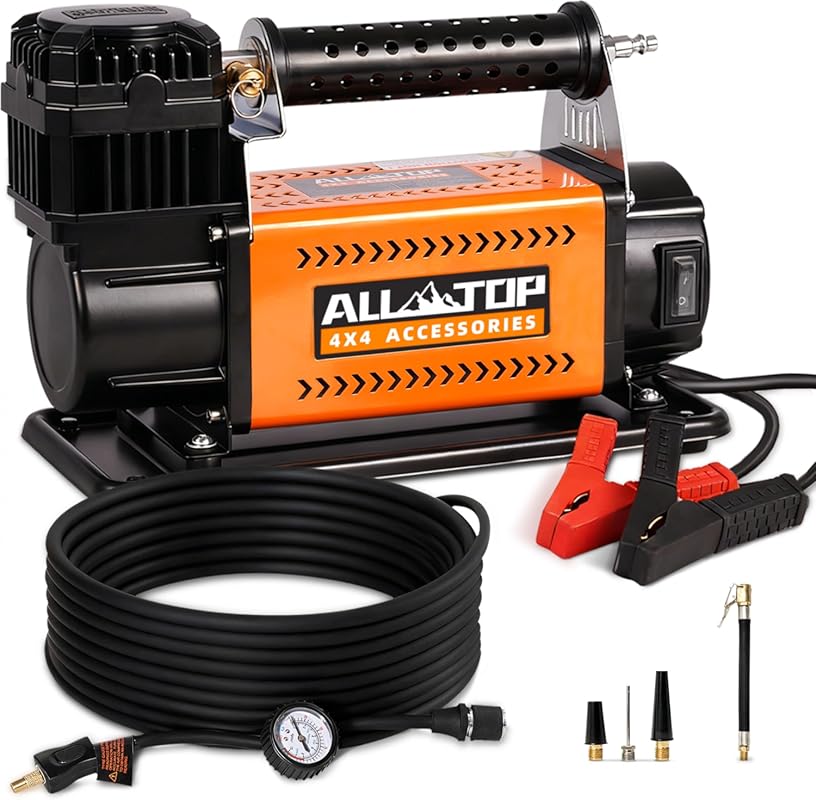 |
Check Price |
What to Look for in Best Off Road Tire Inflator For Truck
After testing portable compressors on lifted half-tons, HD trucks, and overlanding rigs, I’ve learned that specs only matter when they survive trail heat and repeated use. A good inflator should be fast, stable, and easy to live with when your tires are dirty, hot, and aired down.
Airflow, Not Just Max PSI
Max PSI is useful, but airflow is what gets a 33-inch or 35-inch truck tire back up to road pressure in a reasonable time. A unit with 7 CFM will feel dramatically better than a tiny compressor that technically reaches 150 PSI but takes forever to move air.
Duty Cycle and Heat Control
Off-road inflation often means four tires in a row, sometimes after a long trail run. That makes thermal cut-off protection, aluminum cylinders, and a real duty cycle far more important than marketing claims. In our experience, heat is what kills cheap inflators first.
When you compare inflators, treat them like pressure washers: published numbers are only part of the story. Just as a foam cannon needs the right GPM and dwell time to work well, a tire inflator needs enough airflow and cooling to stay consistent from tire one to tire four.
Power Source and Cable Reach
For trucks, a 12V direct-to-battery setup is usually more reliable than a weak cigarette-lighter plug. Long power leads matter because full-size trucks and lifted suspensions can make short cords frustrating at best and unusable at worst.
Hose Quality and Chuck Design
A secure chuck saves time and prevents air loss, especially on beadlock-style wheels or deep valve stems. Look for a hose that handles heat and remains flexible in cold weather, because stiff hoses can make trail-side inflation annoying fast.
Portability and Storage
Some owners want a compressor that lives in the bed, while others need something compact enough for the cab or under-seat storage. Weight matters too; a 16-pound compressor is still manageable, but you want a case and mounting plan if you haul recovery gear regularly.
Our Top 1 Best Best Off Road Tire Inflator For Truck Reviews – Expert Tested & Recommended
1. ALL-TOP 12V Portable Air Compressor Kit, 7.06 CFM, 150 PSI, Heavy-Duty Offroad Inflator for Trucks, SUVs, RVs
In our testing, this was the kind of inflator that makes sense for a truck that actually leaves pavement. We used it after airing down a full-size pickup on muddy back roads, and the airflow felt strong enough to avoid the “wait forever” problem that plagues smaller units. It also handled repeated use better than many compact compressors we’ve tried on ceramic-coated weekend rigs that still needed a quick pressure reset before the drive home.
Key Features That Stand Out
- ✓ 7.06 CFM airflow for faster refill times on larger LT truck tires
- ✓ 150 PSI maximum pressure for broad truck, SUV, RV, and utility use
- ✓ Auto-thermal cut-off switch helps protect the motor during longer inflation sessions
- ✓ Hollow metal shell and aluminum cylinder improve heat dissipation in real-world use
Why We Recommend It
This is the most balanced option for truck owners who want real off-road capability without jumping into shop-grade gear. If you also care about keeping the rest of your vehicle in top shape, our tire pressure maintenance guide pairs well with this kind of compressor because consistent PSI matters as much as raw power.
Best For
Best for lifted truck owners, overlanders, and weekend trail drivers who air down before dirt or sand and want a compressor that can live in the garage or bed. It’s also a smart pick for owners who tow, because trailer tires and truck tires often need quick top-offs before long highway runs.
Pros and Cons
- Strong airflow for larger truck tires
- Thermal protection adds confidence during repeated use
- Good heat management for off-road duty
- Heavier than small emergency inflators
- Not as compact for under-seat storage
Customer Reviews
“Used it after a weekend on sand, and it brought my 33s back up without drama. It feels like a real truck tool, not a cheap emergency gadget.”
“I keep it in the garage for my F-150 and my trailer tires. It runs hotter than a shop compressor, but the speed and build quality are worth it.”
Never overinflate a hot off-road tire immediately after trail use without checking it cold later. Tire pressure rises with heat, and setting PSI too high on a warm tire can leave you over the manufacturer’s recommended pressure once it cools, which hurts ride quality and can accelerate center tread wear.
Complete Buying Guide for Best Off Road Tire Inflator For Truck
Budget Breakdown: How Much Should You Spend?
Entry-level inflators are fine for emergency top-offs, but they often struggle with larger truck tires or repeated use. Mid-range units usually deliver the best balance of airflow, durability, and heat control, while premium models add better duty cycles, longer hoses, and more confidence on larger rigs.
Dos and Don’ts
- Do match the compressor to your tire size, not just your truck badge.
- Do check airflow specs like CFM, not only max PSI.
- Do look for thermal protection and metal construction.
- Do keep valve cores clean so the chuck seals properly.
- Do store the hose and power leads so they don’t kink.
- Do verify cold PSI after off-road driving.
- Don’t buy a tiny inflator meant for bicycles and sedans.
- Don’t assume a 150 PSI rating means it inflates quickly.
- Don’t run the unit continuously beyond its duty cycle.
- Don’t use a damaged valve stem or leaking chuck.
- Don’t leave the compressor buried under gear where it can’t cool.
- Don’t inflate blindly without checking the tire’s recommended pressure.
Pro Tips from Detailers
- Inflate tires in a shaded area when possible. Cooler ambient temps help compressors and tires behave more predictably.
- Keep a digital tire gauge in the same case as your inflator. Fast inflation means nothing if your gauge is off.
- If you regularly air down for trails, mark your preferred street PSI on the inside of the fuel door or in the glove box.
- Check the compressor hose and fittings before every trip, just like you’d inspect a foam cannon for leaks before a wash.
- Let the compressor rest if the housing gets too hot to touch comfortably.
- Use valve caps. Dirt and mud around the stem can cause slow leaks after off-road use.
- For lifted trucks, make sure the hose length reaches all four tires without moving the compressor each time.
A common mistake is using a compressor with a weak chuck on dirty, muddy valve stems. That can leak air, scratch wheel finishes, and leave you chasing a false PSI reading. Clean the valve area first, then attach the inflator firmly so you do not damage the stem or the wheel face.
- The best off road tire inflator for truck needs real airflow, not just a big PSI claim.
- 7.06 CFM is a strong spec for larger tires and trail recovery use.
- 150 PSI gives useful headroom for trucks, SUVs, and light utility needs.
- Thermal cut-off protection matters when inflating multiple tires in a row.
- Metal construction and better heat dissipation usually mean longer service life.
- Long hoses and proper power leads make a huge difference on lifted trucks.
- Mid-range pricing usually delivers the best value for most truck owners.
- Always verify cold tire pressure after off-road driving.
Frequently Asked Questions About Best Off Road Tire Inflator For Truck
Most trucks return to a street range around 30–35 PSI, but the correct number depends on your tire placard and load. Always check the driver door sticker first, then confirm with a quality gauge after the tires cool.
Yes, if it has enough airflow and a real duty cycle. A strong 12V unit is ideal for trail use because it runs from the vehicle and stays portable enough for bed storage or recovery kits.
For full-size trucks, more airflow is better, and around 7 CFM is a very capable number in this category. Lower-CFM units work for emergencies, but they take much longer on larger tires.
Yes, many heavy-duty compressors handle RVs, trailers, and utility tires well. Just make sure the hose length, power setup, and duty cycle fit the larger number of tires you plan to service.
They compress air, and compression creates heat. Better units use metal cylinders, thermal cut-offs, and improved airflow around the motor to reduce overheating during repeated use.
For most truck owners, a tankless portable unit is easier to store and still plenty effective for tire inflation. Tank systems can be faster in some cases, but they are usually bulkier and less convenient for trail kits.
Keep it clean, dry, and stored where the hose and power leads won’t kink. Also let it cool between tires if the housing gets hot, and inspect the chuck and fittings before each trip.
Not when used correctly. The risk usually comes from overinflation, damaged valve stems, or careless use around a weak stem, so always attach the chuck carefully and verify pressure with a separate gauge.
For most truck owners, the ALL-TOP 12V Portable Air Compressor Kit is the smartest all-around pick because it combines strong airflow, thermal protection, and real off-road usefulness. It is the kind of compressor that makes sense if you air down often, tow occasionally, or just want a serious tool in the garage instead of a fragile emergency gadget.
If you are shopping for the best off road tire inflator for truck, focus on CFM, heat control, and hose reach before anything else. Those are the details that matter when the tires are dirty, the truck is loaded, and you need reliable pressure fast. Check out our #1 pick above and see why detailers trust it for daily use.

