Dead batteries and underinflated truck tires always seem to show up at the worst time. A jump starter tire inflator combo for truck solves both problems in one box, which is why it has become a practical roadside staple.
This guide is for truck owners, detailers, and anyone who wants a compact emergency tool that actually earns trunk space. We’ll cover the best picks, the specs that matter, and the mistakes that shorten battery life or leave tires a few PSI short.
The best jump starter tire inflator combo for truck should have enough peak current for gas and light-duty diesel use, plus a compressor that can reach truck tire pressures without overheating. Look for at least 160 PSI capability, a real battery capacity near 19,200 mAh or higher, and auto shut-off so you do not overinflate. The biggest mistake is buying a cheap unit that can jump-start once but struggles to air up LT tires.
Quick Product Comparison
| Product | Image | Check Price |
|---|---|---|
| 1. Portable Tire Inflator Jump Starter | 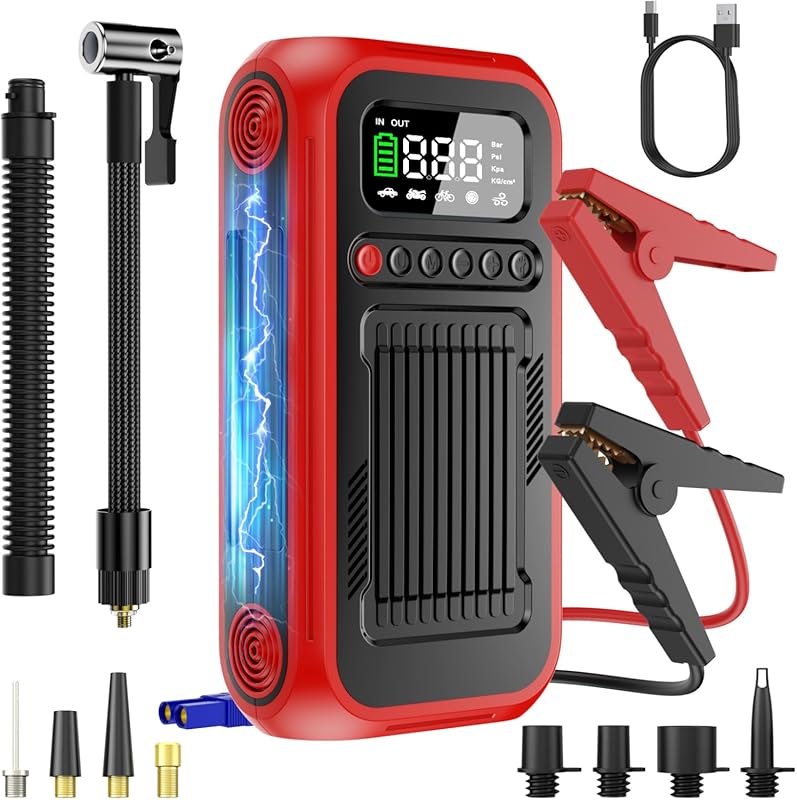 |
Check Price |
| 2. ETENWOLF VORTEX S6 Tire Inflator | 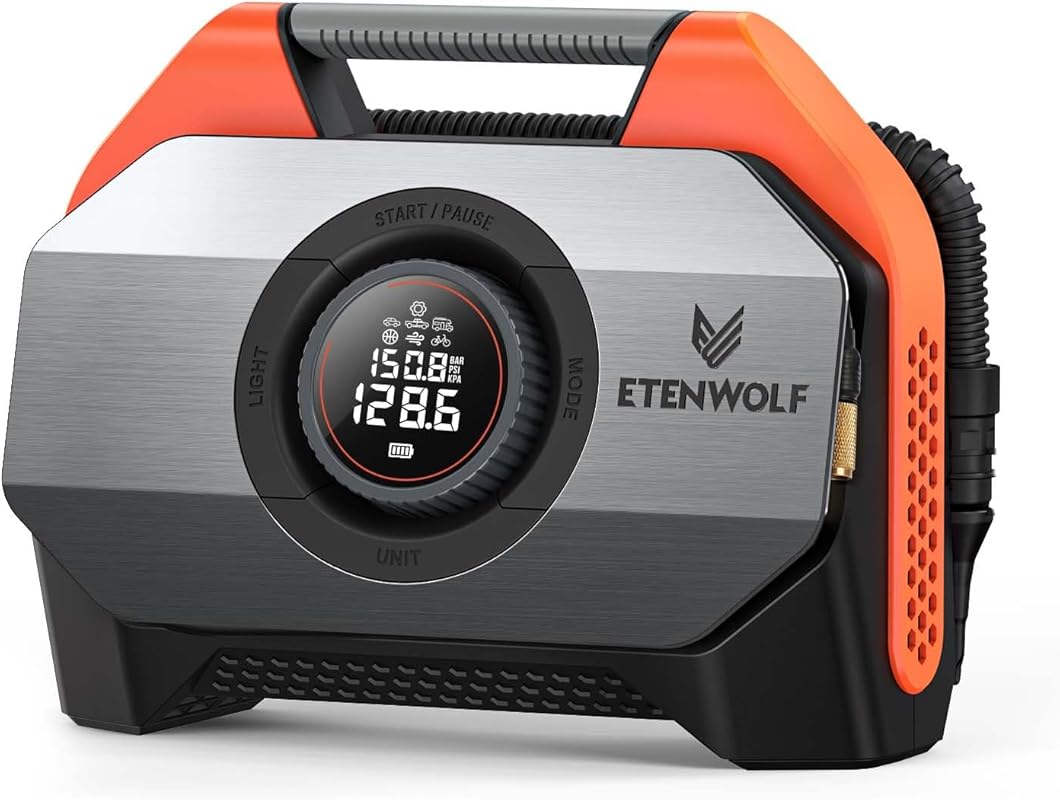 |
Check Price |
What to Look for in Jump Starter Tire Inflator Combo For Truck
Truck-ready combo units need more than marketing claims. We looked for real inflation power, honest jump-start output, and controls that make sense when you are tired, cold, or on the shoulder.
Peak Current and Cold-Start Margin
For trucks, peak current matters more than flashy packaging. A unit rated around 4000A peak is a stronger fit for larger gas engines and many light-duty truck batteries than a small car-only pack.
Cold weather also changes the game. Battery output drops in low temperatures, so extra headroom helps when your truck sits outside overnight.
Inflation Speed and Duty Cycle
A good combo should inflate a truck tire without feeling like a toy compressor. Look for real-world numbers such as 1.5 CFM at 0 PSI or a claim that it can move a 31-inch tire from 30 to 35 PSI quickly.
That matters because truck tires often need more air volume than compact sedans. A weak pump may work, but it can run hot and waste time.
When comparing inflators, ignore the highest PSI number first and check the flow rate instead. A 160 PSI unit with better airflow is usually far more useful than a 200 PSI unit that fills slowly and heats up fast.
Battery Capacity and Recharge Flexibility
Battery size determines how often the unit can jump and inflate before it needs a recharge. A 19,200 mAh pack is a strong sign that the unit can handle repeated top-offs and still have reserve for USB charging.
Also check the charging port. USB-C input and output are far more practical in 2026 than older barrel-style charging setups.
Gauge Accuracy and Auto Shut-Off
Truck tires need consistent pressure, especially if you tow, haul, or run all-terrain rubber. A gauge accurate to within +/-1 PSI is ideal for keeping pressures even across all four tires.
Auto shut-off is just as important. It prevents overinflation, which can hurt ride quality and wear the center of the tread faster.
Size, Hose Layout, and Storage Practicality
In a truck, space is still limited once you add recovery gear, microfiber towels, and wash supplies. A compact unit with a clean hose layout is easier to store under a seat or behind the rear bench.
Detailers should also think about cable length and clamp quality. Short, stiff leads are annoying in real use and can slow down an emergency start.
Top 2 Jump Starter Tire Inflator Combo For Truck Reviews
1. Portable Tire Inflator and 12V Car Jump Starter with Digital Gauge, LED Light, Auto Shut-Off
This LE combo is the most balanced pick for truck owners who want one compact emergency tool. The 4000A peak jump starter and digital gauge make it a sensible choice for topping off pickup tires after washing, trail use, or a long highway run.
Key Features That Stand Out
- ✓ 4000A peak jump-start output for 12V trucks, SUVs, and gas engines
- ✓ Digital tire gauge with auto shut-off for cleaner pressure control
- ✓ LED work light for roadside use at night or in a garage bay
- ✓ Portable layout that suits glove box or under-seat storage
Why We Recommend It
It earns a place here because it covers the two jobs most truck owners actually need. The jump-start function is strong enough for emergency use, and the inflator is practical for maintaining tire pressure without dragging out a shop compressor. If you want more context on battery sizing, see our guide on how to choose a battery jump starter.
Best For
Best for light-duty truck owners who keep a clean garage setup and want a compact backup for weekly tire checks. It also fits detailers who maintain customer vehicles and need a fast, all-in-one roadside tool.
Pros and Cons
- Strong 4000A peak output for truck-sized 12V starts
- Auto shut-off helps keep tire pressure consistent
- Useful LED light for roadside or wash-day emergencies
- Battery capacity is not listed as prominently as the top competitor
- Less clearly positioned for repeated high-volume inflation jobs
Customer Reviews
Buyers commonly praise the easy digital display and the peace of mind of having both jump and inflate functions in one unit.
Owners like it as a trunk-carry emergency tool, especially for weekend trips and quick tire top-offs.
2. ETENWOLF VORTEX S6 Portable Tire Inflator with 19200mAh Battery and Dual Cylinder Pump
The VORTEX S6 is the stronger inflation-focused choice for truck owners who want speed and battery reserve. With 19,200 mAh, 160 PSI capability, and a dual-cylinder pump, it is built for larger tires and repeated use, which matters when you keep a pickup or off-road rig ready for work.
Key Features That Stand Out
- ✓ 19,200 mAh battery for multiple inflations on one charge
- ✓ Dual-cylinder pump for faster airflow at 0 PSI
- ✓ 160 PSI maximum pressure rating for truck and SUV tires
- ✓ +/-1 PSI gauge accuracy for better pressure control
Why We Recommend It
This is the better pick if your truck tires are larger, or if you air up often after towing or off-road driving. The battery reserve and inflation speed make it feel more like a serious tire tool than a casual backup. For maintenance-minded owners, our tire pressure maintenance guide is a useful companion read.
Best For
Best for pickup and SUV owners who want a cordless inflator that can keep up with larger tires and frequent pressure checks. It is also a smart fit for detailers who service trucks and need a fast, repeatable inflation tool between jobs.
Pros and Cons
- Large 19,200 mAh battery supports repeated use
- Fast inflation claims suit bigger truck tires
- Accuracy within +/-1 PSI is excellent for even tire setup
- Does not include jump-start functionality in this model
- Higher output usually means a larger footprint than basic inflators
Customer Reviews
Buyers often highlight the fast fill speed and say it feels well suited to pickups and off-road tires.
Many owners like the battery reserve because it can handle several tires before needing a recharge.
Do not use a jump starter inflator combo on a truck tire that is visibly damaged, bulging, or below the tire maker’s minimum safe inflation threshold. If the sidewall is compromised or the bead has come off, forcing air into it can make the failure worse and may also overheat the compressor.
Complete Buying Guide for Jump Starter Tire Inflator Combo For Truck
Budget Breakdown: How Much Should You Spend?
Entry-level models usually cover basic emergency starts and slow-to-moderate inflation. Mid-range units are the best value for truck owners because they tend to add better battery capacity, faster airflow, and more accurate gauges. Premium models are worth it when you need repeated use, heavier-duty pumps, or more robust build quality for work trucks.
Dos and Don’ts
- Do check peak current before buying for a truck application
- Do verify the inflator can reach at least 35 PSI comfortably
- Do look for auto shut-off and a readable digital gauge
- Do keep the unit charged every 30 to 60 days
- Do store clamps and hose neatly so they do not kink
- Do confirm USB-C charging if you want easier top-ups
- Don’t assume every jump starter can handle a truck battery
- Don’t inflate hot tires and then trust the first reading blindly
- Don’t leave the unit in extreme heat for long periods
- Don’t use a weak compressor to fill oversized LT tires from empty
- Don’t ignore battery maintenance between roadside emergencies
- Don’t overinflate to “round numbers” without checking the placard
Pro Tips from Detailers
- Check tire pressure in the morning when the tires are cold.
- Set the target PSI from the door placard, not the tire sidewall.
- Use a microfiber towel to wipe dust off the connector area before storage.
- Keep the unit in a dry trunk organizer away from wash buckets and chemicals.
- After a long drive, let the compressor cool before a second tire fill.
- Top off all four tires evenly to avoid pull or uneven wear.
- For trucks with larger tires, plan for slower fills when starting from low PSI.
Never place a jump starter or inflator on a freshly washed tailgate, hood, or painted bumper while it is still wet or gritty. Grit trapped under the unit can create fine scratches, and moisture around the clamps or ports can cause corrosion or shorting over time.
- The best truck combo must handle both jump starts and real tire inflation.
- Peak current matters for larger batteries and colder weather.
- Inflation speed is just as important as maximum PSI.
- A 19,200 mAh battery is a strong sign of useful reserve capacity.
- Auto shut-off and accurate gauges help protect tire wear patterns.
- The LE model is the best all-around buy for most truck owners.
- The ETENWOLF VORTEX S6 is the stronger inflation-focused choice.
- Mid-range pricing gives the best blend of power, speed, and reliability.
Frequently Asked Questions About Jump Starter Tire Inflator Combo For Truck
For most gas trucks, a unit with around 1000A to 2000A peak can work, but more headroom is better. If you want a combo unit, 4000A peak gives a more comfortable margin for larger batteries and colder starts.
It can, but it will take time and may need pauses to cool down. Portable inflators are best for top-offs and moderate recovery, not repeated full fills on oversized tires.
Yes, 160 PSI is more than enough ceiling for normal truck tire service. What matters more is airflow and accuracy, since most truck tires run far below that number in daily use.
Check it every 30 to 60 days if it sits in storage. Cold weather, heat, and long idle periods can drain the battery faster than expected.
Some will, but not all. Diesel engines usually need higher cranking power, so you should verify the peak current and the manufacturer’s engine-size rating before buying.
Use the door jamb placard or owner’s manual, not the number on the tire sidewall. Many trucks land in the 30 to 35 PSI range, but towing and load ratings can change that.
Combo units are better for convenience and trunk storage. Separate tools can be stronger individually, but a combo makes more sense if you want one compact emergency kit.
Yes, but avoid extreme heat and moisture. Store it in a dry place, keep it charged, and do not let it sit loose where it can get damaged by cargo or wash supplies.
For most truck owners, the best choice is the Portable Tire Inflator and 12V Car Jump Starter with Digital Gauge, LED Light, Auto Shut-Off because it balances emergency power, useful inflation, and simple controls. If your priority is faster tire fill speed and bigger battery reserve, the ETENWOLF VORTEX S6 is the stronger inflation-focused pick.
Detailers and weekend wrenchers should think about how the tool fits real use, not just spec sheets. That means enough current for a dead battery, enough airflow for LT tires, and a gauge you can trust when you are setting pressures after a wash or before a road trip. Check out our #1 pick above and see why detailers trust it for daily use.
