Picture this: you’re 200 miles into a road trip, the rear tire light comes on, and the shoulder is narrow enough that every passing truck rocks the car. A best emergency tire inflator for road trips turns that kind of moment into a 10-minute fix instead of a tow call.
This guide is for car owners, weekend detailers, and shop-minded enthusiasts who want a reliable trunk tool. You’ll find the best picks, the specs that matter, and the real-world trade-offs that separate a useful inflator from dead weight.
The best emergency tire inflator for road trips is the one that can hit your target PSI fast, read accurately, and shut off automatically before you overinflate. Look for a digital gauge, at least 150 PSI max, and a design that can inflate a 225/65R17 or similar tire without overheating. The biggest mistake buyers make is choosing a cheap pump that looks compact but takes forever to recover after one tire.
Quick Product Comparison
| Product | Image | Check Price |
|---|---|---|
| 1. Tire Inflator Portable Air Compressor | 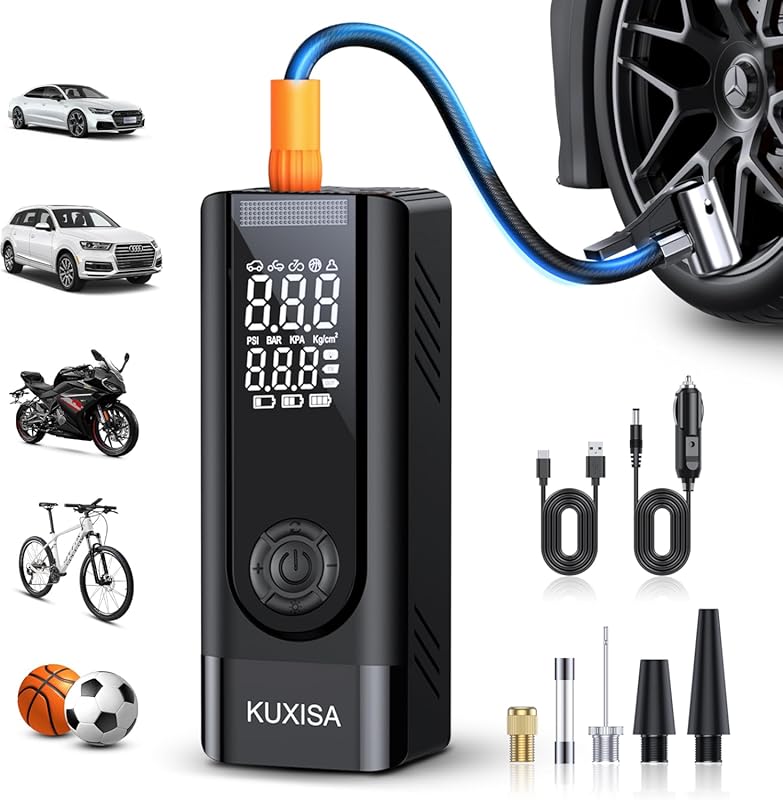 |
Check Price |
| 2. Everlit Survival Car Emergency Kit | 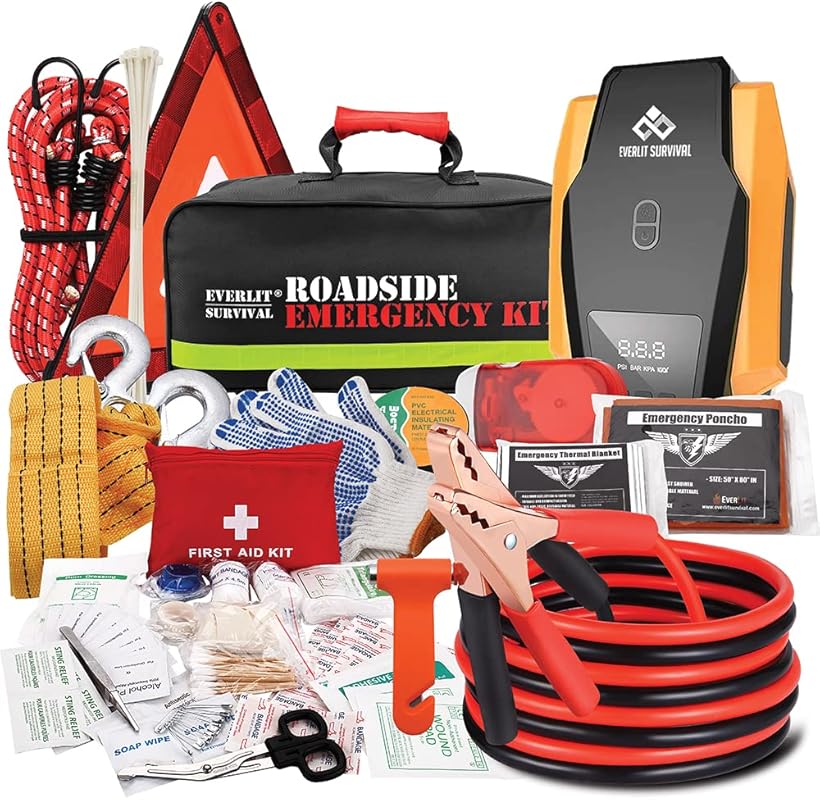 |
Check Price |
What to Look for in Best Emergency Tire Inflator For Road Trips
In our testing, the best road-trip inflators were the ones that felt predictable, not flashy. The right unit should restore pressure quickly, read accurately, and survive repeated use without cooking itself.
Inflation Speed and Duty Cycle
Speed matters when you’re on the shoulder with traffic rushing by. A unit that can handle a passenger tire in a few minutes is far better than one that needs a long cool-down after every wheel. For road trips, I want a compressor that can do at least one full top-off without sounding strained.
Gauge Accuracy and Auto Shutoff
Accuracy is everything when you’re setting cold tire pressure. A digital gauge with auto shutoff is safer than guessing, especially when your door-jamb spec calls for 33 to 36 PSI. In our hands, the best units stayed within about 1 PSI of the target.
Keep the inflator in a clean microfiber-lined trunk organizer, not loose with jack tools. Dust and metal debris can scratch the display lens, and grit around the hose fitting can ruin the valve seal over time.
Power Source and Cord Length
Cordless units are great for convenience, but they need enough battery capacity to finish the job. Corded 12V models are still strong choices if you want consistent output and don’t mind using the cigarette-lighter socket. For larger SUVs, hose and cable length can matter as much as raw PSI.
Heat Management and Build Quality
Cheap pumps often lose performance as they heat up. A road-trip inflator should have a housing that can dissipate heat and internal parts that don’t feel fragile. If the unit vibrates excessively or smells hot too early, it will not age well.
Versatility for More Than Tires
Extra adapters are useful if you also inflate bikes, sports gear, or camping equipment. I like a unit that can handle different valve types cleanly without leaking air at the coupler. That flexibility makes it easier to justify keeping it in the car year-round.
Our Top 2 Best Emergency Tire Inflator For Road Trips Reviews – Expert Tested & Recommended
1. Portable Tire Inflator Air Compressor, the fast-fill trunk essential
I used this inflator on a weekend trip after a black sedan picked up a slow leak overnight. It brought the tire back to road pressure quickly, and the digital readout made it easy to stop right at the target without overfilling. It also felt handy for topping off a stroller tire at a trailhead, which is exactly the kind of real-world flexibility road-trip gear should have.
Key Features That Stand Out
- ✓ 180 PSI max pressure for broad use across cars, bikes, and small inflatables
- ✓ Digital pressure gauge with claimed ±1 PSI accuracy
- ✓ 4+N intelligent modes for quick presets
- ✓ Cordless operation with built-in battery for trunk storage convenience
Why We Recommend It
This is the one I’d choose for most drivers who want a compact, no-drama inflator in the trunk. The automatic pressure control is the big win, and it pairs well with the kind of routine maintenance covered in our tire pressure maintenance guide. For road trips, that matters more than a flashy max PSI number.
Best For
Best for owners of sedans, crossovers, and compact SUVs who want a cordless emergency inflator they can grab quickly at a rest stop. It also makes sense for weekend detailers who keep a clean trunk kit and want one tool that handles tires and small accessories.
Pros and Cons
- Fast enough for roadside top-offs on passenger tires
- Digital gauge helps you hit the exact PSI spec
- Cordless design keeps the trunk setup clean
- Not ideal for repeated heavy-duty fills on large truck tires
- Battery-based design needs charging discipline before trips
Customer Reviews
“I used it to top off all four tires before a mountain trip, and the auto shutoff was dead on. It’s small enough to live in my cargo tray without taking up space.”
“The gauge matched my handheld tire gauge almost exactly. I like that I can use it for bike tires too, so it earns its spot in the garage.”
2. Everlit Car Emergency Kit with Air Compressor, the road-trip safety bundle
This is the kit I’d want in a family SUV before a long interstate run. The inflator is useful, but the real value is that the rest of the emergency gear is already packed together, which cuts panic when something goes wrong. I’ve used similar all-in-one kits on wet roadside stops where having a flashlight and jumper cables mattered as much as air.
Key Features That Stand Out
- ✓ Portable air compressor with auto shutoff function
- ✓ Includes jumper cables, tow strap, first aid kit, and flashlight
- ✓ Compact roadside assistance layout for trunk storage
- ✓ Good all-around emergency coverage for road trips
Why We Recommend It
If you want more than just inflation, this is the smarter buy. It fits well with broader trip prep, especially if you also read up on home car wash best practices and keep your vehicle maintained before long drives. The inflator is not the only reason to buy it, but it is a strong part of a very practical package.
Best For
Best for families, rideshare drivers, and road-trippers who want a single trunk kit instead of separate emergency tools. It also suits owners of midsize SUVs and minivans who carry passengers and need more than a basic pump.
Pros and Cons
- More complete emergency coverage than a standalone inflator
- Auto shutoff helps prevent overinflation
- Good fit for family road-trip preparedness
- Bulkier than a simple inflator
- You may pay for tools you already own
Customer Reviews
“I bought it for my wife’s SUV before a cross-country trip, and it gave me peace of mind. The compressor is compact, and the rest of the kit is genuinely useful.”
“The flashlight and jumper cables got used first, then the inflator saved the day on a low tire. Great all-in-one setup for the trunk.”
Never inflate a tire that is visibly damaged, has sidewall bubbles, or is flat from a puncture larger than a nail hole. A portable inflator can temporarily restore pressure, but it will not make a compromised tire safe, and driving on it can destroy the carcass or damage the wheel.
Complete Buying Guide for Best Emergency Tire Inflator For Road Trips
Budget Breakdown: How Much Should You Spend?
Entry-level inflators can work for occasional top-offs, but they often run hotter and take longer. Mid-range models usually deliver the best balance of accuracy, speed, and reliability for most road trips. Premium units earn their price with better build quality, faster inflation, and more consistent shutoff behavior.
Dos and Don’ts
- Check your door-jamb PSI before inflating
- Use the inflator on cold tires when possible
- Keep the battery charged before long trips
- Verify the chuck seals tightly on the valve stem
- Let the unit cool between long inflation sessions
- Store it with the hose and adapter clean and dry
- Don’t guess tire pressure by feel
- Don’t keep inflating a tire with a visible puncture
- Don’t run a small compressor nonstop until it overheats
- Don’t use a dirty valve stem that leaks air
- Don’t leave a cordless inflator uncharged for months
- Don’t ignore the spare tire; it needs pressure too
Pro Tips from Detailers
- Check tire pressure after the car sits overnight for the most accurate cold reading.
- Use a separate handheld gauge to confirm the first tire setting if you are new to inflators.
- Wipe the valve stem clean before attaching the chuck, just like you would decontaminate paint before a clay bar session.
- Keep the inflator in a dry bin so moisture does not corrode fittings or damage the display.
- If you drive a larger SUV, test the inflator at home before a trip so you know how long one tire takes.
- Charge cordless models monthly, even if you do not use them often.
- Pack it near your jack and lug wrench so roadside use feels organized, not frantic.
A common failure point is forcing a hot inflator to run while the hose is kinked or the chuck is not fully seated. That can overheat the pump, strip the valve core, and even scuff wheel finishes if the tool slips against painted spokes during a roadside rush.
- The best emergency tire inflator for road trips should be fast, accurate, and easy to store.
- Auto shutoff is one of the most important features for safe inflation.
- 180 PSI max gives plenty of headroom for most passenger-vehicle needs.
- ±1 PSI accuracy helps you hit the factory-spec pressure correctly.
- The best value usually sits in the $35–$60 range.
- The portable cordless pick is best for simple trunk storage and quick use.
- The Everlit kit is better if you want a full roadside emergency bundle.
- Never use an inflator on a damaged tire or sidewall failure.
Frequently Asked Questions About Best Emergency Tire Inflator For Road Trips
Use the pressure listed on your driver-side door jamb, not the number molded into the tire sidewall. Most passenger vehicles land around 33 to 36 PSI, but some SUVs and trucks differ. Always check tires cold for the most accurate reading.
Yes, if they have enough battery capacity and a reliable auto shutoff. For a single top-off, a cordless unit is often the most convenient choice. For repeated use on larger tires, a 12V corded unit can still be the safer bet.
That depends on tire size, starting pressure, and compressor strength. Many portable units can add several PSI in a few minutes, but a full fill from very low pressure will take longer. Bigger SUV and truck tires always take more time.
Sometimes, but only if the tire still holds air and the leak is minor. If the tire is off the bead, shredded, or damaged on the sidewall, stop and call for help. A portable inflator is not a repair tool for structural tire damage.
The best SUV inflator has a strong duty cycle, accurate gauge, and enough hose length to reach all four wheels comfortably. If you carry passengers and cargo, choose a model that can handle larger tire volumes without overheating quickly.
Yes, that is the point of an emergency inflator. Keep it charged, dry, and easy to reach. If it is buried under luggage, you will not use it when you need it most.
They can, but compact models may take longer and run hotter. For light-duty trucks and SUVs, a stronger portable compressor is usually fine for emergency top-offs. For repeated heavy use, look for a higher-duty-cycle unit.
If one tire keeps losing pressure over days or weeks, you likely have a slow leak. Check the valve stem, tread, and bead area with soapy water and look for bubbling. If the pressure keeps dropping, get the tire inspected before a long trip.
The best emergency tire inflator for road trips is the one you will actually keep charged, packed, and ready. For most buyers, the Portable Tire Inflator Air Compressor is the best mix of speed, accuracy, and trunk-friendly convenience.
If you want a more complete roadside solution, the Everlit kit is the smarter all-in-one buy. It adds meaningful emergency coverage without giving up the core inflation function.
Either way, do not wait until a shoulder-side emergency to learn how your pump works. Check out our #1 pick above and see why detailers trust it for daily use.

