Bicycle dash cams record video from your bike to help document rides, catch crashes, and share interesting routes. They come in compact, weatherproof designs that mount to handlebars, helmets, or frames and often include features like loop recording, impact detection, and wide-angle lenses. We focus on models that balance clear daytime and nighttime footage with easy mounting and long battery life.
When choosing a bicycle dash cam, the most important things to check are video quality, mounting stability, and durability against rain and vibration. Good video resolution and a reliable mount matter most because blurry footage or a loose camera can make recordings useless after a crash. We tested a range of units to find cameras that deliver steady, clear footage and simple controls so riders can trust their recordings when they need them most.
Best Bicycle Dash Cams
Below is our full list of the best bicycle dash cams. We tested and compared models for video quality, ease of use, mounting options, and durability. Use this list to find a reliable camera that fits your riding style and budget.
Fitense Bike Rear Camera
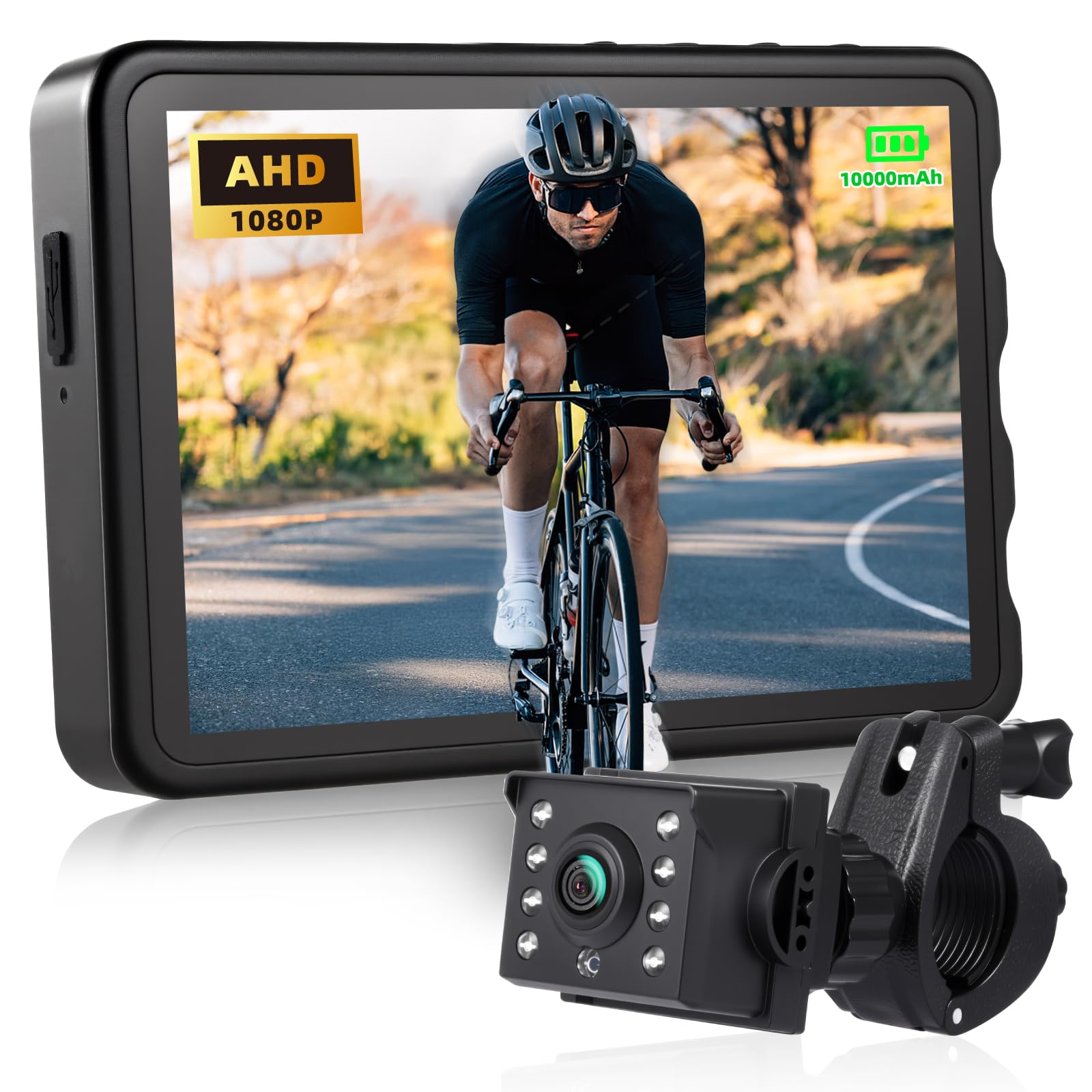
We think this is worth buying if you want a simple, bright rear view screen that lasts a long time and holds up in bad weather.
Pros
- Bright, clear 5″ screen that makes traffic behind easy to see.
- Long 10000mAh battery gives many hours of use between charges.
- Sturdy IP67 camera and flexible mounts fit many bike types.
Cons
- No recording function or memory card slot.
- Some mounts can break if stressed or hit hard bumps.
- Night glare from headlights can wash out details at times.
We mounted this on a road bike and used it for mixed city and trail rides. The screen is large and the picture looks clean in daylight, so we could spot cars and cyclists behind us without turning around.
The battery life impressed us. After one full charge we rode several long outings and still had juice left. Charging takes a few hours, and the unit is ready quickly.
Installation took minutes. The straps and 360° ball made positioning easy. On rough paths the display stayed put, though the plastic clamp felt a bit fragile compared to the rest of the kit.
Night performance is mixed. Color mode shows more detail where there’s light, but in very dark areas the infrared switches to black-and-white and bright headlights can bloom on the screen, which makes judging distance harder.
We like the simple, tool-free setup and weatherproof camera for daily riding. Keep in mind it won’t record incidents, so it’s best for awareness rather than evidence gathering.
Tirol Velocam V1
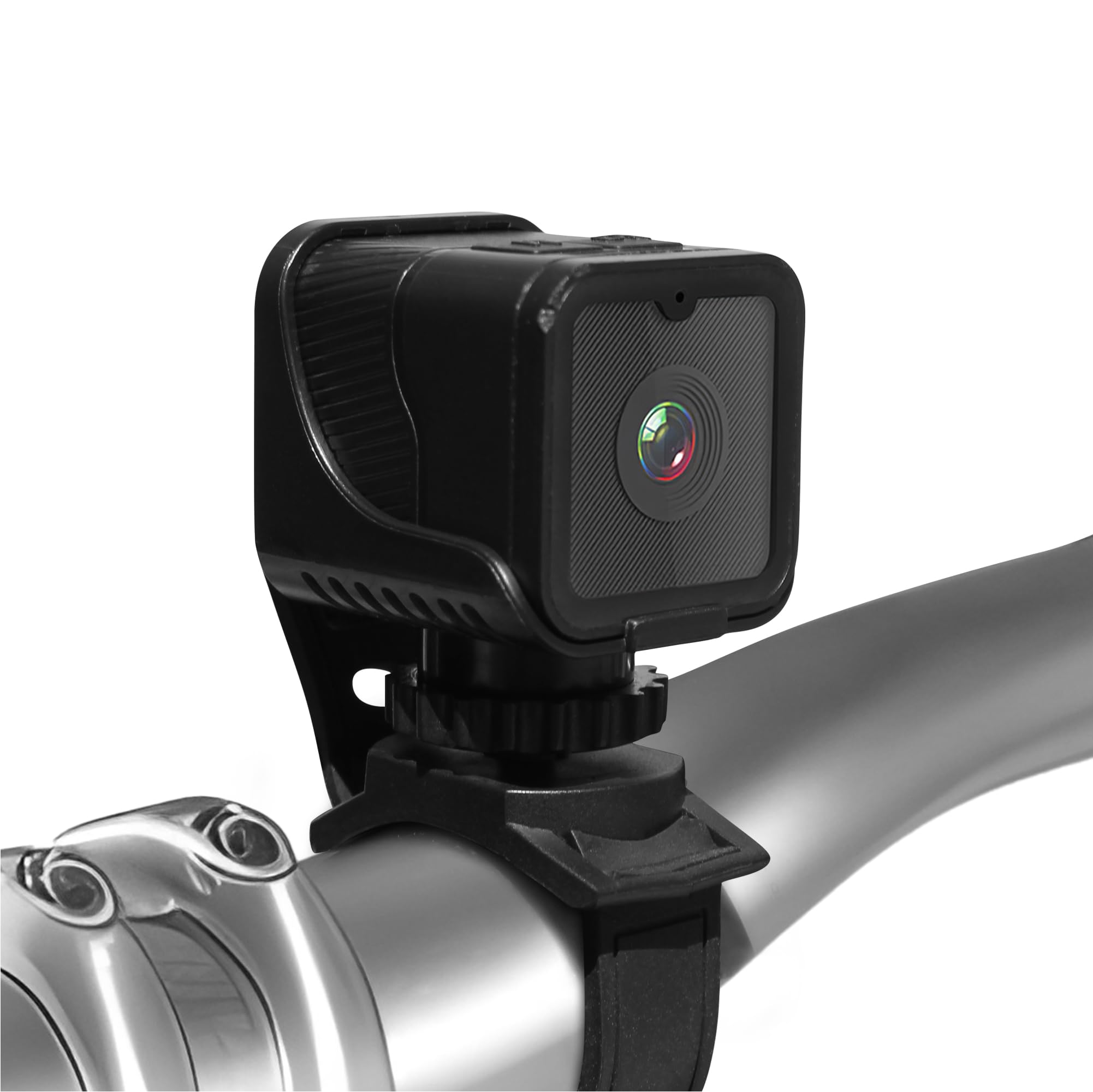
We recommend this camera if you want a tiny, cheap bike cam that records decent FHD video but know it has app and file-transfer limits.
Pros
- Very light and low profile; mounts cleanly on bars or helmet.
- Good 1080p day footage with a wide view.
- Long battery life for its size.
Cons
- The app-driven workflow can stop recordings if the phone disconnects.
- File transfer to a computer is awkward without using the app.
- Video quality drops in low light and cold weather.
We mounted the Velocam on our commuter helmet and rode several short and long routes. Setup took minutes and the clip-on mount stayed firm through potholes and curbs. The unit felt solid and barely changed aerodynamics.
Footage looked sharp during daylight and captured plate details at moderate speeds. Stabilization helped on rough roads, but night rides showed grain and softer edges. Battery life lasted through a full day of stop-and-go riding without a recharge.
The Wi‑Fi app makes viewing clips easy on the phone, but we noticed it sometimes stops recording when the app isn’t active. Pulling files off the SD card to a laptop required extra steps. For the price, it works well for everyday safety recording, though tech hassles mean it’s best for riders who accept some trade-offs.
Spedal S1
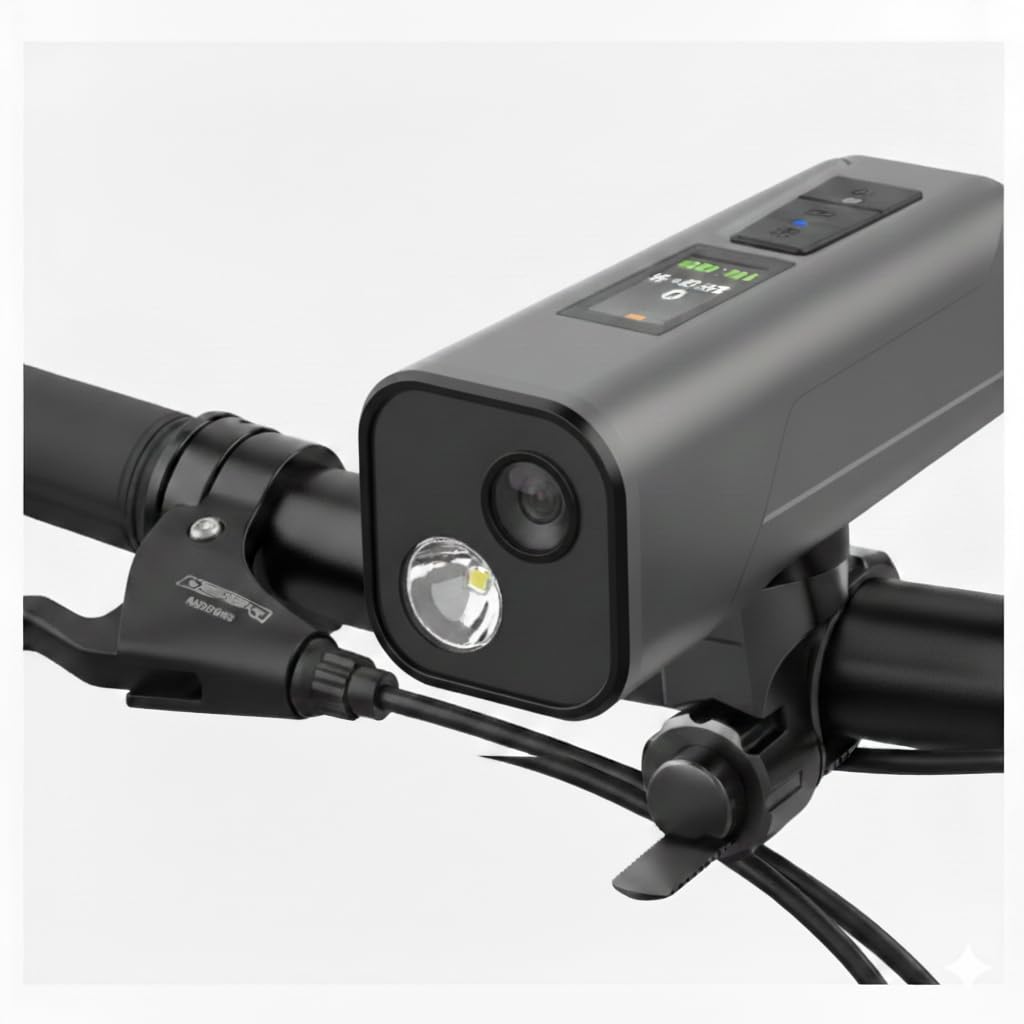
We recommend this if you want a compact bike dash cam that also acts as a GPS speedometer and bright headlight.
Pros
- Smooth, shake-free 4K video on rough roads.
- Long battery life for multi-hour rides.
- Bright headlight and easy, tool-free mount.
Cons
- Mount can slip on some bars under heavy vibration.
- Small screen is hard to use while riding.
- App pairing works but can be slow at times.
We took the Spedal S1 on mixed commutes and a few longer weekend rides. The footage looks noticeably steady even on gravel. Night clips were clearer than we expected thanks to the IMX335 sensor and the headlight really helps visibility at dusk.
Setting up GPS and the app felt familiar and usable. GPS locked quickly and the route playback in the app gave useful speed and distance data. We did notice the Wi‑Fi pairing could lag when trying to download clips on the road.
Mounting was quick without tools, but the strap sometimes loosened on a worn handlebar tape and needed a retighten. The small 0.96-inch screen matters little once you use the app for live view, yet we missed a bigger display for quick checks while riding.
Overall, the S1 blends camera, GPS, and light into one neat device. It fits riders who want a low-clutter setup and reliable battery life without paying top-tier prices.
AKEEEO 710S Bike Cam

We recommend this camera if you want good video quality and rugged mounting at a budget price, but expect some app and setup quirks.
Pros
- Clear daytime footage and wide field of view.
- Sturdy mounts and useful accessories included.
- Good battery life for rides when properly updated.
Cons
- App and Wi‑Fi setup can be frustrating.
- Occasional file saving or firmware issues.
- Not as polished as higher-end action cams.
We used this on mixed road and trail rides. The 2K footage looks sharp and the wide 142° lens catches cars and path details. Low-light shots were usable but not perfect.
Mounting felt solid and the kit includes multiple brackets we actually swapped between handlebar and mirror mounts. The camera stayed put through bumps and light rain.
Connecting the app took patience. We had to follow odd setup steps and accept the privacy prompt to get Wi‑Fi working. After a firmware update battery life improved and recording ran longer.
File handling sometimes lagged after long rides, so we made a habit of checking clips before longer trips. Customer support replaced a bad unit quickly in our tests, which mattered.
Overall, this is a practical choice for cyclists who want clear footage and robust mounts without paying top dollar, as long as they can tolerate app quirks and occasional fiddling.
PARKVISION Bike Cam
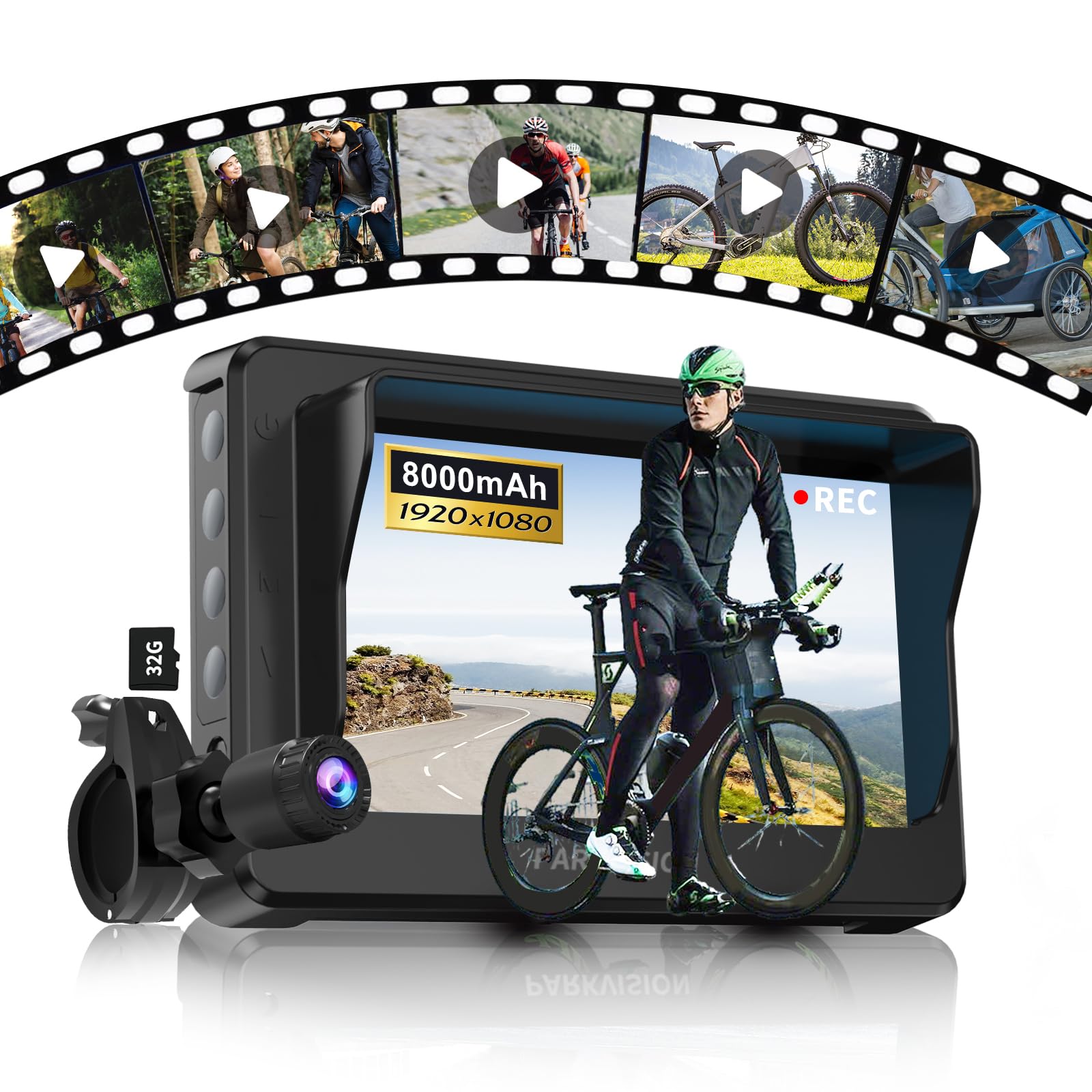
We recommend this camera if you want long battery life and simple front/rear viewing, but skip it if you need built-in audio or perfect sunlight readability.
Pros
- Long runtime that lasts most all-day rides.
- Easy to switch between front and rear views.
- Solid loop recording and weatherproof build.
Cons
- No audio capture at all.
- Screen can be hard to see in bright sun.
- Some users report battery or housing wear over time.
We mounted the unit on our commuter and used it for mixed roads and light trail rides. The 8000mAh battery lived up to long days out; we rarely worried about charging. The quick clip-on display made it simple to remove the screen when leaving the bike.
The image was sharp enough to record incidents and scenery at 1080p, and the wide angle cut down on blind spots. Switching between front and rear modes felt intuitive and gave us useful views for both commuting and back-road rides.
Daylight glare sometimes made the monitor hard to read while riding into the sun. Also, the camera records video only, so it won’t capture sounds that might help with certain incidents. We noticed mixed long-term durability reports, so expect solid daily use but check the housing and battery over months.
If you want to buy it, find it here: PARKVISION Bicycle Rear View Camera Recorder, 4.3” 1080P Monitor, 8000mAh Battery,Loop Recording, 32GB TF Card, Bike Front/Backup Cam for Mountain Ebike Road Bike
YZW MT100
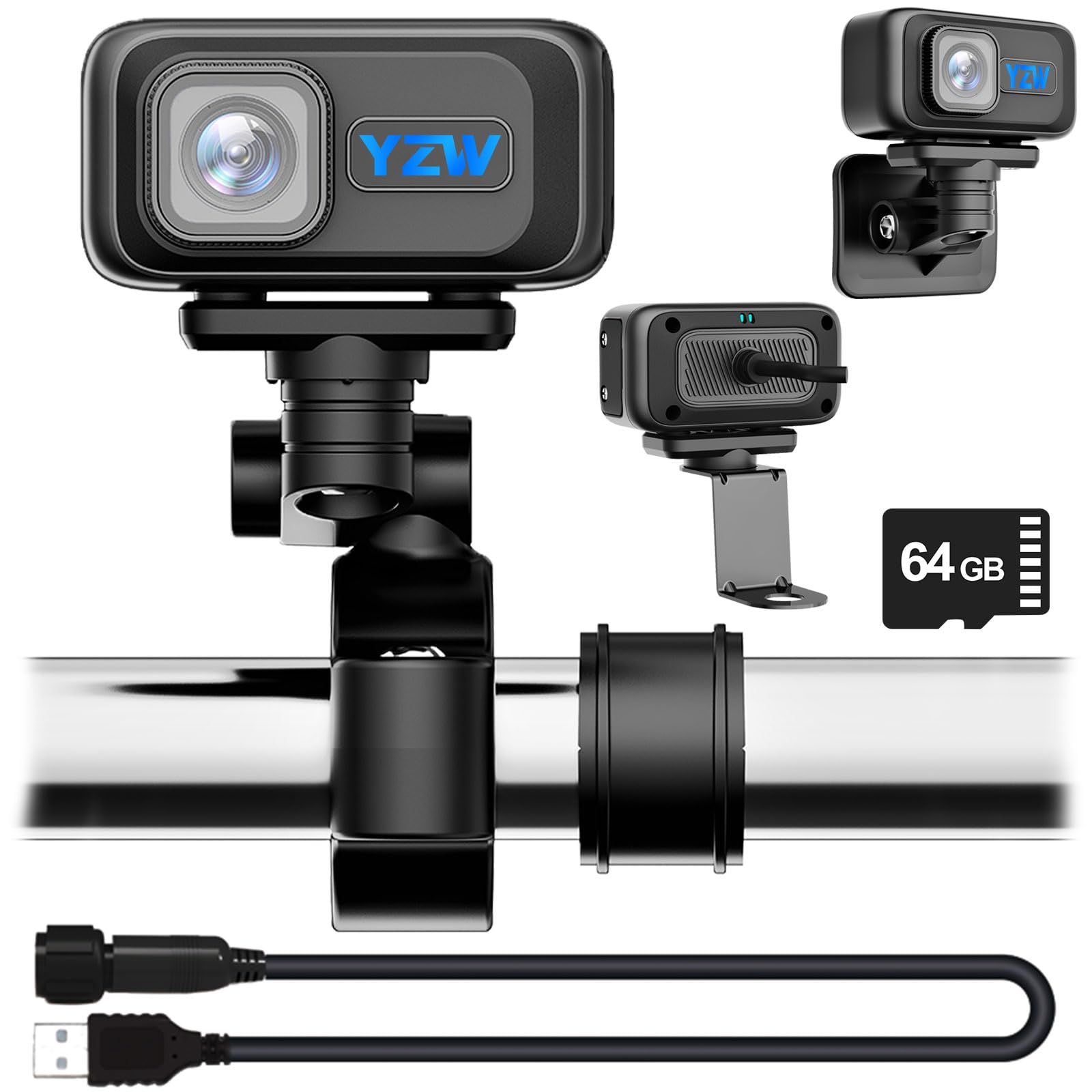
We would recommend this camera if you want an affordable bike dash cam with decent daytime video and easy app access, but expect some quirks with the SD card and occasional power or Wi‑Fi trouble.
Pros
- Good daytime video clarity and wide view.
- Easy app connection with built‑in Wi‑Fi.
- Comes with several mounts for different bikes.
Cons
- Included SD card may be defective.
- Some units have power or Wi‑Fi reliability issues.
- Limited frame rate at highest resolution.
We mounted this on a commuter bike for several rides and liked how much the 140° lens captured the road and nearby traffic. The 2K daytime footage showed useful detail for identifying signs and plates at a distance.
Setting up the app was quick. We connected over the camera’s Wi‑Fi and downloaded clips without removing the card. That saved time compared with cameras that need an OTG reader.
Rain and dust didn’t stop it during short wet rides. The body felt sturdy and the different brackets let us try bar and stem placements without shaking.
We did hit problems with the supplied 64GB card. It showed small capacity on one unit and failed to work, so we swapped in a known good card and it ran fine. Also, one camera failed to power on reliably and its Wi‑Fi didn’t appear on first boot.
If you plan regular long rides, buy a tested SD card and check power connections before heading out. For casual riders who want a budget dash cam with easy downloads, this performs well when the extras work as expected.
Fitense Bike Cam 4.3″
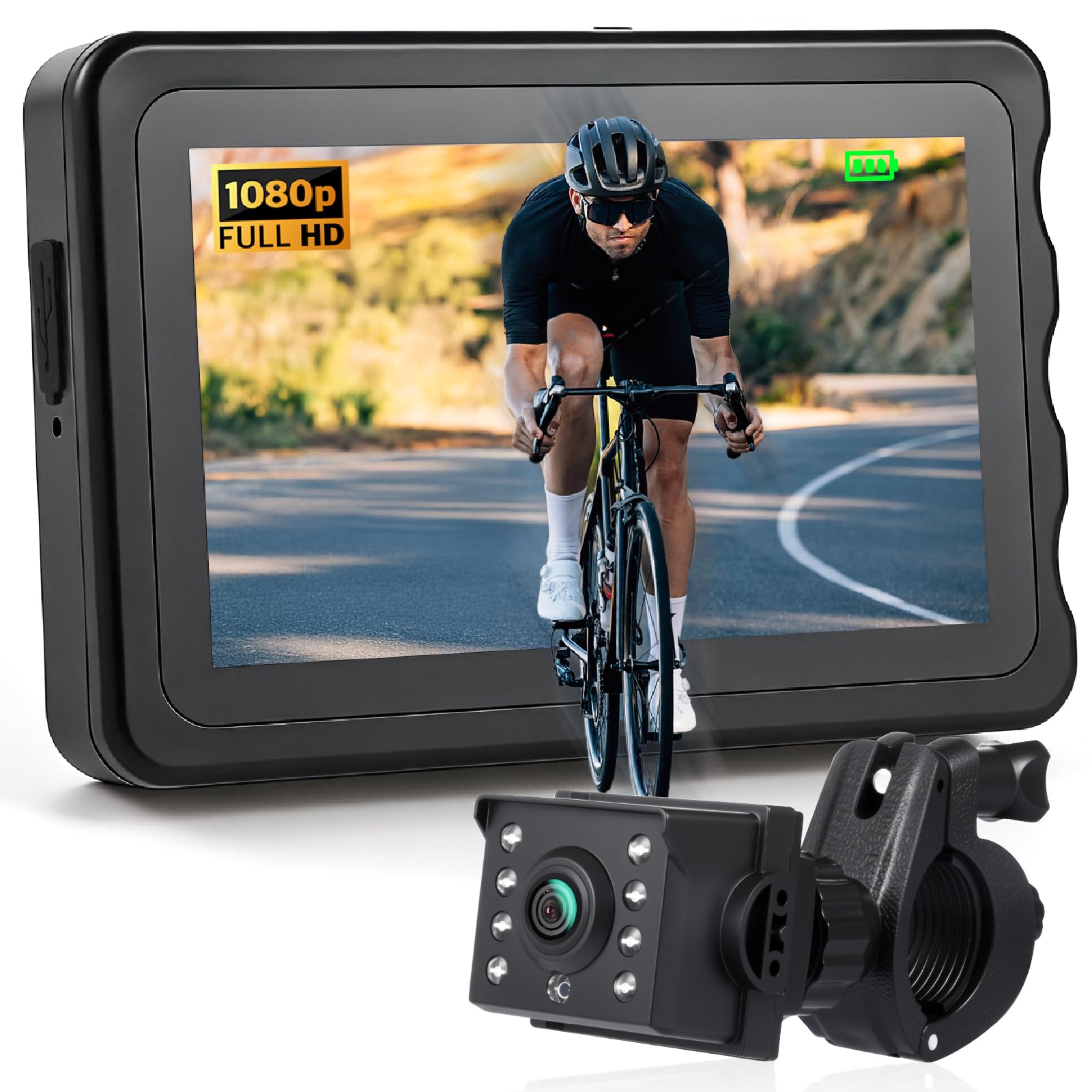
We recommend this if you want a simple, bright handlebar display to see traffic behind you without bulky mirrors.
Pros
- Clear 1080p image that makes cars easy to spot.
- Long battery life so it lasts most rides.
- Tool-free install and flexible mounting options.
Cons
- No recording feature or memory card slot.
- Camera mount can feel fragile on rough roads.
- Bright headlights can wash out distance at night.
We mounted this on our commuter and used it on mixed city streets. The screen is sharp and the adjustable wide angle helped us catch bikes and cars approaching from the sides. Display auto-brightness handled tunnels and shade well.
Battery life impressed us; a full charge lasted through several rides without dying. The straps and 360° rotation made placement quick, but we treated the small ball mount gently because it felt like a weak point on bumpy paths.
Night vision worked in low light, switching to clearer black-and-white views, but car headlights sometimes bloomed on-screen and reduced depth cues. Remember, this unit shows live view only — it won’t record incidents for later review.
Feisike Bike Rearview Camera
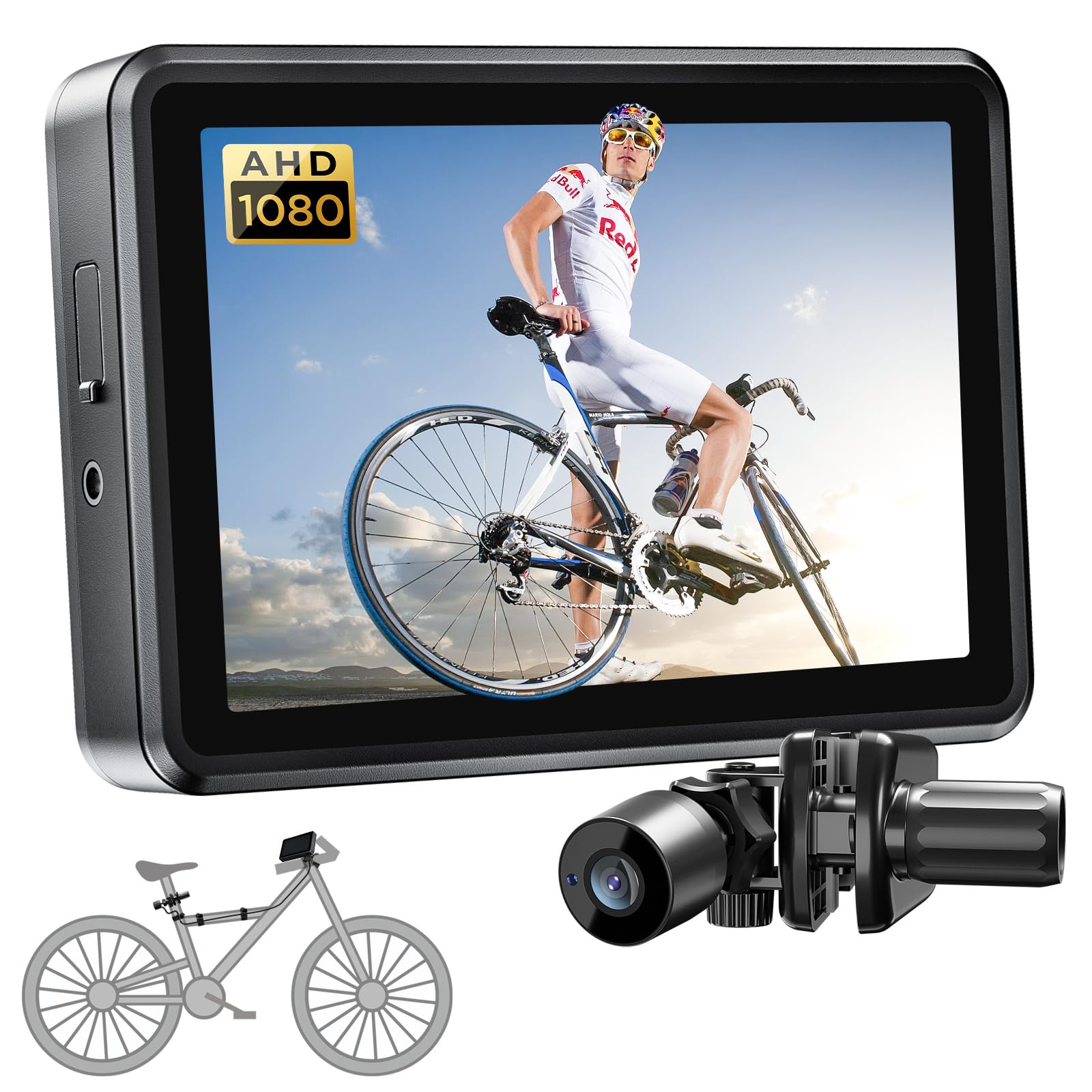
We recommend this if you want a simple handlebar camera that clearly shows traffic behind you for everyday rides, but expect some small build and battery trade-offs.
Pros
- Gives a clear rear view day and night.
- Wide-angle screen shows more of the road behind.
- Easy, tool-free install and steady on bumpy streets.
Cons
- Plastic clamp can wear after months of heavy use.
- Battery life is shorter than we hoped.
- Occasional connection glitches need a quick reseat.
We put this on our commuter and rode several routes with it. The 4.3″ screen makes checking traffic quick without twisting around, and night vision actually helps on low-light rides. The image feels real and wide so we caught cars and cyclists approaching from both lanes.
Installation took only a few minutes and no tools. The mount stayed steady over rough pavement, and the long cable fit our larger handlebars. We did find the clamp is bulky and feels like it could crack after long use.
On longer trips the battery drained faster than expected, so we kept a power bank nearby. Once, the screen showed a blue screen until we unplugged and replugged the connections. Customer service was responsive when we had a connector issue.
Overall, we felt safer in traffic with this unit mounted. It is a good mid-price option if you want a clear rear view and easy setup, but plan for limited battery life and watch the plastic clamp over time.
Wankskey Bike Rear Camera

We recommend this camera if you want easy installation, clear day and night video, and a reliable rear view for safer riding.
Pros
- Easy to mount and set up without tools.
- Bright, clear image day and night.
- Long battery life and waterproof for regular rides.
Cons
- Monitor can fail after months for some users.
- Plastic build feels a bit cheap.
- No optical zoom; distant details can be small.
We took this unit on city commutes and weekend trail rides. The setup really is plug-and-play — we strapped the camera to the rear, clipped the screen to the bars, and ran the cable with the included straps. The view is wide and steady, and we stopped having to twist around to check traffic behind us.
Night shots surprised us. The color night vision kept the image usable on dim streets, so we felt safer at dusk. The screen’s touch controls are simple, though the monitor casing feels light. That didn’t bother us at first, but we did hear reports from others about the screen failing after months.
Battery life lasted through several rides before needing a USB charge, which worked well for daily commuters. The mount allows 360° adjustment, so we dialed the angle quickly. Still, the camera won’t zoom, so small, far-away details stayed tiny on the 4.3″ screen.
We liked the sturdiness of the cable routing and how the system stayed put on rough roads. If you want a straightforward rear-facing camera that improves awareness and is simple to install, this one is worth trying.
ATOVANKA Bike Rear Camera
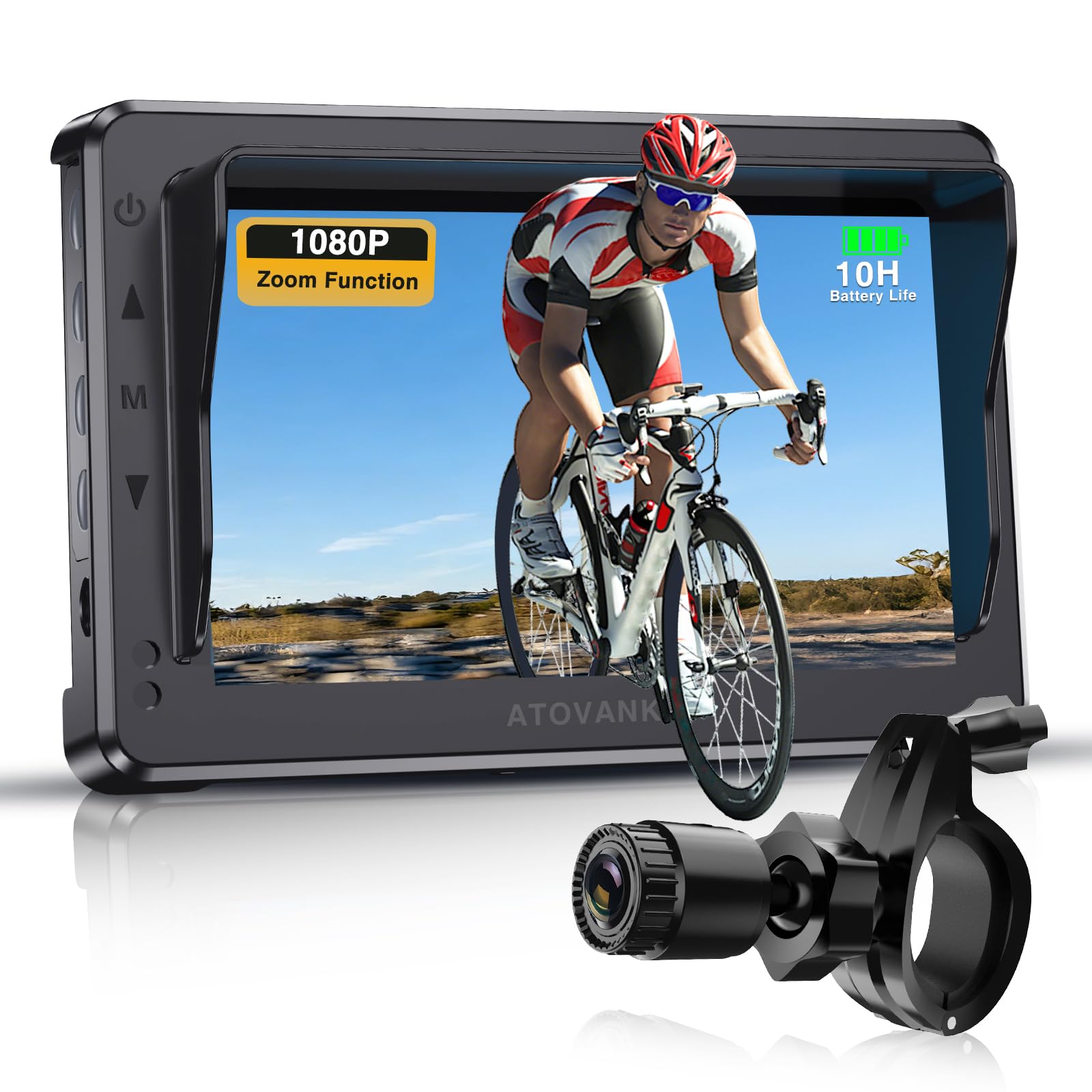
We recommend this camera if you want a reliable rear view that lasts a full ride and shows clear live video.
Pros
- Long battery life that really lasted through long rides.
- Easy, tool-free setup — we had it mounted in minutes.
- Clear, zero-latency 1080p feed that makes lane changes simpler.
Cons
- Display can be small in bright glare despite auto-brightness.
- Wired connection to the handlebar display limits mounting options.
- Camera housing is a bit bulky on slim seatposts.
We used this on a mix of city commutes and a weekend tour. The view options helped us pick a close-in look for slow traffic and a wider angle for faster roads. Switching angles with one button felt natural while riding.
Battery life impressed us; we rode multiple days without charging. Fast USB-C charging cut downtime when we did recharge. The screen adjusted to tunnels and sun, though direct midday glare sometimes made details harder to read.
Installation was straightforward. The shock-dampening mount held steady over rough pavement. We noticed the cable length worked well for most setups, but tighter frame layouts required a little creativity to hide the wire.
Buying Guide
We look for clear video first. High resolution and good low-light performance help capture details in traffic and at night. Aim for at least 1080p and a wide dynamic range.
We value mounting options that stay steady. A secure mount prevents blur and keeps the camera aimed where we need it. Check for vibration resistance and adjustable angles.
We expect reliable power and storage. Long battery life or an external power option keeps recording on longer rides. Support for large memory cards and loop recording avoids gaps.
We consider video stabilization and frame rate. Stabilization reduces shake from bumps. A higher frame rate helps capture fast events clearly.
We check weather resistance. A waterproof or weather-sealed unit will survive rain and road spray. Look for IP ratings to compare protection.
We look for extra safety features. Built-in GPS logs location and speed. Incident-triggered locking preserves footage after impact.
We compare size, weight, and visibility. Small, lightweight cameras stay out of the way. But they must still be easy to operate while mounted.
We review user interface and app support. Simple controls and a clear app make reviewing clips faster. Wireless transfer saves time after a ride.
We weigh cost against needed features. Prioritize the items above based on our riding style and the routes we use. Make trade-offs that fit our budget and safety needs.
Editor’s Choice
We picked a top bicycle dash cam that balances video quality, ease of use, and durability. It records clear 1080p or 1440p footage at 30–60 fps, which helps capture license plates and road details. The unit has good low-light performance for dawn and dusk rides.
The mount stays secure on rough roads and uses a quick-release system. We like cameras with wide-angle lenses (120°–140°) to cover bike lanes and nearby traffic. A compact body reduces wind drag and snag risk.
Battery life runs 2–8 hours depending on settings and whether you use loop recording. Expandable storage via microSD cards up to 128–256 GB gives long recording times. We favor models with automatic incident detection and time-stamp overlays.
We value easy setup and a simple app for reviewing clips. Bluetooth or Wi‑Fi connectivity lets us download videos without removing the card. Some cameras include built-in GPS so we can see speed and route data during playback.
Key features we look for:
- Resolution: 1080p or higher
- Frame rate: 30–60 fps
- Lens: 120°–140° wide angle
- Power: internal battery plus optional external power
- Storage: microSD support, loop recording
- Extras: GPS, app support, impact detection
We recommend choosing a model that fits your typical ride length and mounting preference.
Conclusion
We find bicycle dash cams to be a practical tool for many riders. They record incidents, help with insurance claims, and offer peace of mind on busy roads.
Choosing the right model depends on our needs. Battery life, mounting stability, video quality, and storage matter most.
We should balance price with features. A mid-range camera often gives reliable footage without high cost.
Installation and maintenance are simple tasks. Regular checks of mounts and memory cards keep the camera ready.
We recommend testing the camera in daylight and low light. That shows how well it captures license plates and surroundings.
Key features to consider:
- Video resolution: 1080p or higher for clear footage.
- Field of view: Wider FOV covers more of the road.
- Mounting: Secure mounts reduce shake.
- Storage: Use high-end microSD cards for durability.
We encourage riders to use dash cams responsibly and respect privacy. Always follow local laws about recording in public spaces.
If we prioritize safety and documentation, a bicycle dash cam becomes a useful part of our gear. It supports better decision-making after incidents and helps protect both riders and bystanders.
FAQS
What does a bicycle dash cam do?
We record video of rides to capture incidents, near-misses, and scenery. This helps with safety, insurance claims, and documenting routes.
How do we mount and power one?
We mount cams to handlebars, helmets, or frames using mounts or straps. Many use rechargeable batteries, and some support external power for longer rides.
Will weather affect performance?
Some models are water-resistant or waterproof. We check IP ratings and use covers in heavy rain.
How much storage do we need?
We choose SD cards based on resolution and recording time. 32–128 GB suits most users; higher capacity works for long rides.
Can dash cams help in legal cases?
Video can support our accounts and insurance claims. We keep timestamps and GPS data when possible.
Do they record audio and GPS?
Some models include audio and GPS. We prefer models with GPS for speed/location tracking and audio when privacy laws allow.
How do we manage privacy and laws?
We follow local laws about recording in public and private spaces. We avoid recording private conversations and share footage responsibly.
What features matter most?
We look for good daytime and low-light video, reliable mounts, loop recording, and easy file transfer. Battery life and durability matter too.

