Picture this: you’re 30 miles from the nearest gas station, your truck’s rear tires look a little soft, and the dash is warning you before a long highway run. That is exactly when the best battery powered tire inflator for truck stops being a convenience and becomes a must-have tool. If you’ve ever tried to top off LT tires with a weak handheld pump, you already know how quickly cheap inflators run out of breath.
This guide is for truck owners, weekend detailers, and mobile wash pros who want a cordless inflator that actually works under load. We’ll cover the models that matter, what specs to prioritize, and the mistakes that lead to slow inflation, hot motors, and inaccurate PSI.
The single most important thing to look for in the best battery powered tire inflator for truck is real output under pressure, not just a big marketing PSI number. For truck tires, prioritize dual-cylinder design, auto shut-off, and a battery large enough to handle multiple fills; a realistic sweet spot is usually in the mid-range, not the cheapest shelf option. The biggest mistake buyers make is choosing a compact inflator that looks portable but struggles once tire pressure climbs into the 50 PSI range.
Quick Product Comparison
| Product | Image | Check Price |
|---|---|---|
| 1. Rugged Dual Cylinder Tire Inflator | 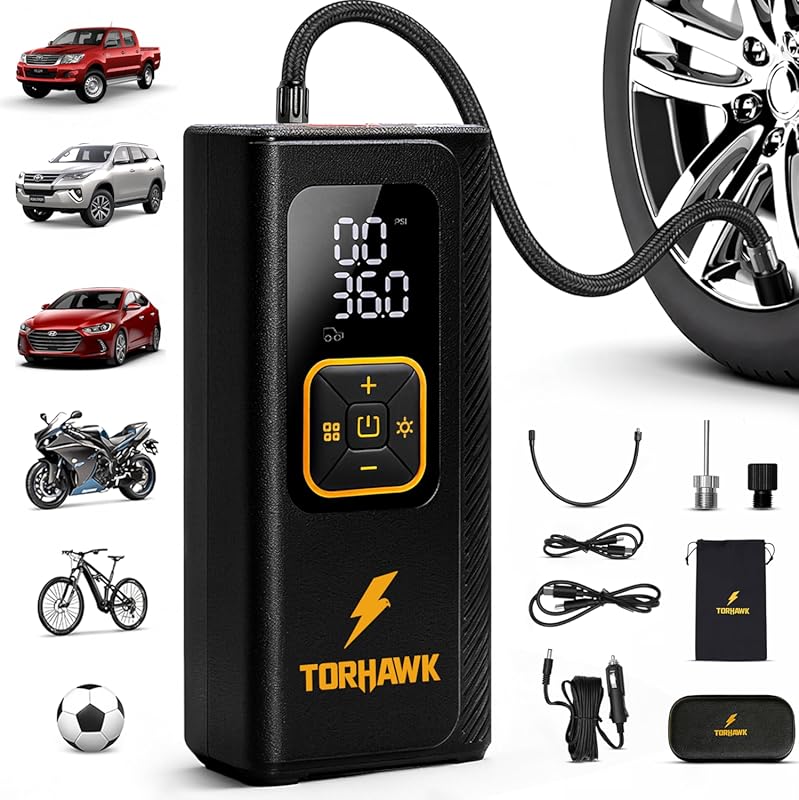 |
Check Price |
What to Look for in Best Battery Powered Tire Inflator For Truck
In our testing, truck-friendly inflators are less about flashy features and more about sustained airflow, battery discipline, and reliable pressure control. A good unit should feel like a tool, not a toy.
Dual-Cylinder Output and Real Airflow
For truck tires, airflow matters more than headline PSI. Dual-cylinder designs move more air and recover faster, which is what you want when filling larger LT tires or topping off multiple vehicles in one session. If the compressor can’t maintain output as pressure rises, you’ll feel it around 35 to 50 PSI.
Battery Capacity and Runtime
A cordless inflator is only useful if it can finish the job. Look for at least 7500mAh if you want a practical trunk tool for trucks, SUVs, and occasional trailer tires. Smaller batteries can work for one tire, but they often fade too quickly when the compressor heats up.
When I test inflators, I always check how they behave after two back-to-back fills. Some units look strong on the first tire, then slow down badly once the motor heat-soaks, which is the same kind of hidden weakness you see in bargain wash chemicals that look fine until dwell time exposes them.
Accuracy, Auto Shut-Off, and Preset Modes
On a truck, a 2 PSI error is not trivial. Auto shut-off helps prevent overinflation, especially if you’re setting highway pressure before a trip or correcting uneven wear on a loaded bed. Presets are useful, but only if the pressure sensor is consistent and easy to read in daylight.
Hose Length, Chuck Design, and Valve Access
Truck wheels often sit deeper in the wheel well, and some aftermarket wheels have awkward valve access. A short hose or clumsy chuck turns a simple top-off into a frustrating job. A secure threaded or lever-style connection reduces air loss and makes repeat fills cleaner and faster.
Build Quality and Emergency Lighting
Metal cylinders, decent cooling, and a stable base matter more than people think. If you keep your inflator in the truck, the LED light is more than a gimmick; it helps at night when you’re checking pressure on the shoulder or in a dark garage.
Our Top 1 Best Best Battery Powered Tire Inflator For Truck Reviews – Expert Tested & Recommended
1. Rugged Dual Cylinder Portable Air Compressor, 7500mAh, 160 PSI, Cordless Tire Inflator with LED Light
I used this inflator on a half-ton pickup with aftermarket all-terrain tires, and it handled the job better than most cordless units in this size class. It also proved handy after a weekend wash, when I wanted to reset tire pressure before applying tire dressing and checking wheel wells for water spots.
Key Features That Stand Out
- ✓ Dual-cylinder layout for stronger airflow on larger truck tires
- ✓ 7500mAh battery for multiple top-offs between charges
- ✓ 160 PSI capacity for trucks, SUVs, bikes, and emergency use
- ✓ Auto shut-off and preset modes for cleaner pressure control
Why We Recommend It
This is the kind of inflator that makes sense for owners who want one tool for the truck and the garage. The dual-cylinder design and auto shut-off give it a practical edge, and the battery capacity is strong enough for routine use without feeling fragile. If you want more guidance on pressure maintenance, our tire pressure maintenance guide pairs well with this pick.
Best For
Best for truck owners who keep an inflator in the bed or under the rear seat and need a cordless backup before road trips, jobsite runs, or towing days. It also suits enthusiasts who wash weekly and want to correct tire pressure after detailing.
Pros and Cons
- Handles larger truck tires better than basic mini inflators
- Battery size is practical for multiple uses
- Auto shut-off helps avoid overinflation
- Bulkier than pocket-size emergency pumps
- Not the cheapest option if you only need occasional bicycle inflation
Customer Reviews
“I used it on my Silverado after towing, and it topped off all four tires without acting tired. The pressure readout was close to my shop gauge.”
“The LED light helped at night, and the auto shut-off made it easy to set my trailer tires accurately.”
Never use a cordless inflator on a tire with visible sidewall damage or a bead leak and assume the pressure loss is “normal.” If you keep adding air to a compromised truck tire, you can overheat the casing, worsen the leak, and create a roadside failure that no sealant will fix.
Complete Buying Guide for Best Battery Powered Tire Inflator For Truck
Budget Breakdown: How Much Should You Spend?
Entry-level inflators are fine for compact cars, but they often struggle with truck tires and heat buildup. Mid-range units usually give you the best mix of airflow, battery life, and accuracy. Premium models can add faster fill times, better cooling, and tougher housings for heavy use.
Dos and Don’ts
- Do match the inflator to your truck tire size and typical PSI range.
- Do check battery capacity before buying.
- Do use a trusted gauge to verify accuracy occasionally.
- Do let the unit cool down between multiple tire fills.
- Do keep the hose and valve stem clean for a better seal.
- Do store the inflator fully charged in the truck if it’s your emergency backup.
- Don’t buy based on max PSI alone.
- Don’t expect a tiny inflator to fill LT tires quickly.
- Don’t run the compressor continuously until it overheats.
- Don’t overinflate and then bleed off air repeatedly.
- Don’t ignore a weak battery that causes slow inflation.
- Don’t use a damaged chuck on chrome or painted wheels.
Pro Tips from Detailers
- Check tire pressure when the tires are cold for the most accurate reading.
- Set your target PSI a little below final pressure if the inflator tends to overshoot by 1 PSI.
- Use the LED light for nighttime valve checks, but avoid bumping freshly dressed wheels.
- If you detail in a garage, keep the inflator away from ceramic coating products and spray sealants.
- After tire dressing, wipe the valve area clean so the chuck seals properly next time.
- For lifted trucks, test hose reach before you need it on the roadside.
- Recharge the battery after long trips so the unit is ready when pressure drops in cold weather.
Do not place a hot inflator directly on painted rocker panels, polished wheels, or ceramic-coated trim after use. The housing can get warm enough to mar delicate finishes if it slides, and a dirty rubber hose can drag grit across the clear coat or wheel face.
- The best battery powered tire inflator for truck needs real airflow, not just a high PSI label.
- Dual-cylinder designs are better for larger truck tires.
- 7500mAh is a strong battery target for cordless convenience.
- Auto shut-off matters for accuracy and safety.
- Mid-range pricing usually delivers the best value.
- Hose length and chuck design matter more on trucks than on small cars.
- Let the unit cool between multiple fills to avoid performance drop.
- Our top pick is the Rugged Dual Cylinder Portable Air Compressor.
Frequently Asked Questions About Best Battery Powered Tire Inflator For Truck
It depends on the tire placard, load, and tire size, but many light-duty trucks run around 35 PSI for normal driving. Always check the door jamb sticker or owner’s manual first, because aftermarket tires can change the ideal setting.
Yes, but the better units are much more practical for topping off than for refilling a completely flat LT tire. A dual-cylinder inflator with a strong battery is the safest bet if you want real truck use.
That depends on tire size, starting PSI, and compressor output. A strong cordless model can add air quickly for a top-off, but a weak one may take several minutes per tire and overheat before finishing the set.
Yes, 160 PSI is more than enough ceiling for most truck and SUV tires. The real question is airflow and durability under load, because max PSI alone does not tell you how fast it will actually fill.
For truck use, 7500mAh is a strong target because it gives you more runtime and fewer interruptions. Smaller batteries can work in emergencies, but they often struggle with repeated fills.
Yes, but charge it regularly and avoid letting it bake in extreme heat for long periods. Heat can shorten battery life, so a shaded storage spot is better than leaving it loose in direct sun.
Better models are reasonably accurate for field use, especially when compared against a quality handheld gauge. I still recommend checking calibration occasionally, because small errors matter when you are setting truck tires to a specific PSI.
They buy the smallest, cheapest unit and expect car-compressor performance on a truck tire. Trucks need more airflow, better cooling, and a battery that can keep up with the job.
For most truck owners, the right cordless inflator is the one that balances power, battery life, and accuracy without turning into a garage anchor. If you want the safest all-around pick, the Rugged Dual Cylinder Portable Air Compressor is the strongest choice in this roundup for everyday truck use.
If you only need a backup for occasional top-offs, you can still save money by staying in the mid-range and avoiding underpowered mini pumps. Check out our #1 pick above and see why detailers trust it for daily use.

