The best battery booster with tire inflator for truck should deliver enough jump-start power for larger engines, plus a compressor that can reach at least 150 PSI with an accurate digital gauge. The biggest mistake buyers make is choosing a unit with decent inflation specs but weak cranking amps, which can leave a truck stranded when the battery is truly flat.
Quick Product Comparison
| Product | Image | Check Price |
|---|---|---|
| 1. Fanttik X10 APEX Tire Inflator | 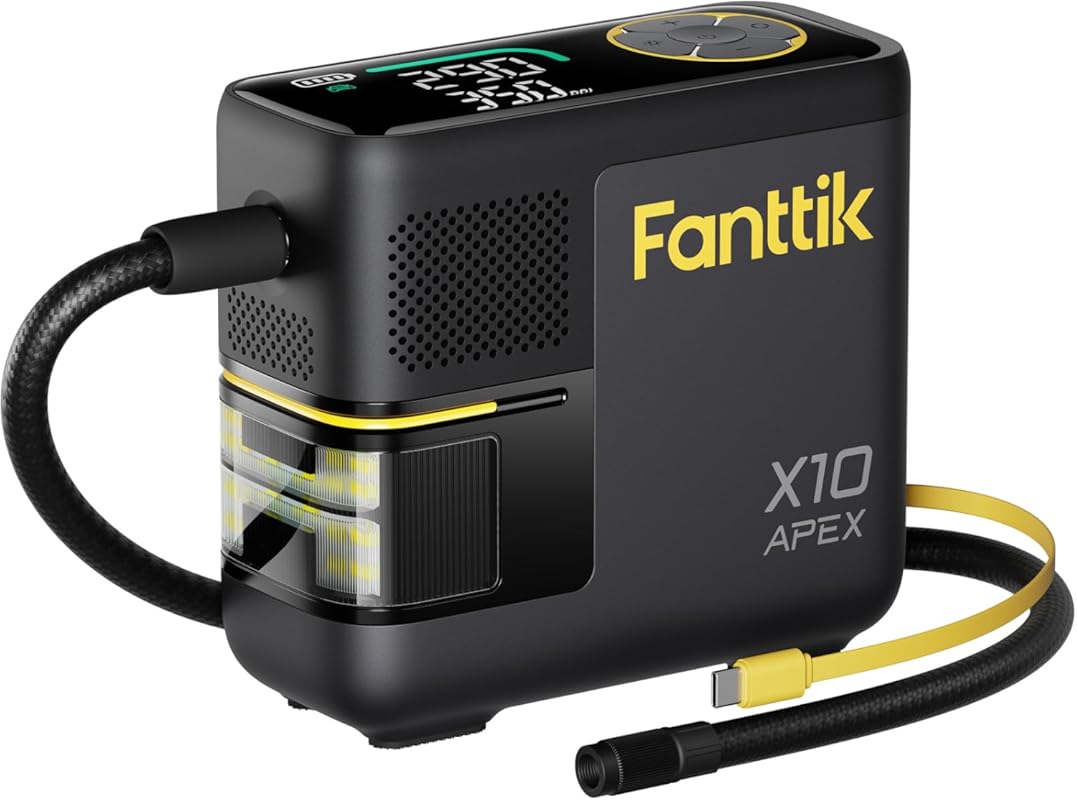 |
Check Price |
What to Look for in Battery Booster With Tire Inflator For Truck
Truck owners need more than a small emergency gadget. The right unit has to jump a larger battery and still inflate big tires without overheating.
Jump-Starting Power for Larger Engines
For trucks, jump capability matters more than flashy extras. Look for a unit designed for larger gas engines and light-duty diesel support, because many compact boosters are fine for sedans but weak on V8 trucks. Battery capacity and peak current both matter, and a unit with a strong compressor but weak booster is the wrong trade.
Inflator Output and PSI Accuracy
A truck-friendly inflator should reach at least 150 PSI, even if you only use a fraction of that. More important is gauge accuracy, since underinflation hurts fuel economy, tire wear, and steering response. A digital display is better than a vague analog dial when you are topping off to 35 PSI or correcting pressure after a cold morning.
If you keep a truck in a garage with ceramic-coated wheels, choose a booster with a hose and chuck that seal cleanly. Air leaks at the valve stem can spray dust and road grit onto clean wheels, which means more brake dust cleanup later.
Battery Capacity and Recharge Speed
Capacity affects how many starts and inflation cycles you get before recharging. For a truck owner, that means the difference between one roadside rescue and repeated use during a workweek or road trip. Fast USB-C charging is a real advantage if the unit lives in the cab or tool box.
Build Quality, Hoses, and Storage
Truck use is hard use. The compressor hose, clamps, and case should feel sturdy enough for glove-box, under-seat, or bed storage. A compact unit is easier to keep dry and clean, which matters if you detail your own truck and want to avoid grit on trim and carpet.
Safety Features and Temperature Control
Auto shutoff, reverse polarity protection, and overheat protection are not optional on a truck tool. Bigger tires take longer to fill, and cheap inflators can run hot fast. Good thermal management helps the compressor last longer and reduces the chance of a failure when you need it most.
Top 1 Battery Booster With Tire Inflator For Truck Reviews
1. Fanttik X10 APEX Portable Tire Inflator, 150 PSI Cordless Air Compressor with Digital Gauge
The Fanttik X10 APEX stands out for truck owners who want a compact inflator with serious emergency utility. Its 150 PSI rating and digital gauge make it a practical choice for topping off SUV and light-truck tires after a wash, a long drive, or a cold-weather pressure drop.
Key Features That Stand Out
- ✓ 150 PSI maximum output for truck, SUV, and trailer tire top-offs
- ✓ Digital gauge for more accurate pressure setting than basic analog units
- ✓ Cordless design for roadside use, garage use, and trunk storage
- ✓ Fast inflation performance, including 28 to 33 PSI in 35 seconds on a 195/55 R15 tire
Why We Recommend It
We like this pick because it fits the real-world needs of drivers who keep their vehicles clean and maintained. It pairs well with routine tire care, and it is especially useful for owners who already follow proper tire pressure maintenance and want a portable backup that is easy to store.
Best For
Best for light-truck and SUV owners who want a compact cordless inflator for weekly pressure checks and emergency top-offs. It is also a smart fit for detailers who keep a clean cargo area and do not want a bulky compressor taking up space.
Pros and Cons
- 150 PSI ceiling suits larger vehicle tires
- Digital gauge improves inflation confidence
- Cordless form factor is easy to store in a truck cab
- Not a full-size shop compressor for repeated heavy-duty use
- Single-product listing here means no bundled jump-starter specs to compare
Customer Reviews
Buyers commonly praise the compact size and easy digital readout. Many say it is the kind of tool they actually keep in the truck instead of leaving in the garage.
Common feedback highlights fast top-offs for daily driving pressure checks. Users also like that it feels more precise than basic emergency inflators.
Never use a booster-inflator on a hot tire immediately after highway driving and then lock in pressure to the sidewall number. Always inflate to the vehicle placard spec, not the tire’s maximum PSI, or you can create poor handling and uneven tread wear.
Complete Buying Guide for Battery Booster With Tire Inflator For Truck
Budget Breakdown: How Much Should You Spend?
Entry-level units usually cover basic inflation and limited jump support, but they may feel underpowered for bigger trucks. Mid-range models are the best value because they tend to balance compressor speed, battery life, and safety features. Premium models make sense for work trucks, frequent roadside use, or owners who want faster charging and tougher housings.
Dos and Don’ts
- Do check the vehicle placard for the correct tire PSI before inflating.
- Do keep the unit charged if it lives in a truck console or under-seat bin.
- Do choose a model with digital PSI readout and auto shutoff.
- Do confirm the booster rating matches your engine size.
- Do store the hose and clamps clean so they do not scratch painted trim.
- Do inspect valve stems before attaching the chuck.
- Don’t inflate to the number on the tire sidewall unless the placard calls for it.
- Don’t let the compressor run continuously until it overheats.
- Don’t buy based only on PSI without checking jump-start capability.
- Don’t leave the unit in extreme heat for long periods.
- Don’t drag a dirty hose across black paint or polished wheels.
- Don’t use a weak unit on a large truck battery and expect reliable results.
Pro Tips from Detailers
- Keep the inflator in a clean microfiber pouch if it rides in the cab.
- Check tire pressure when tires are cold for the most accurate reading.
- Use the unit after washing only if the valve stem is dry and free of soap residue.
- Match the chuck angle carefully so you do not bend the valve core.
- If you detail your truck often, wipe the hose and clamps before storage to avoid grit transfer.
- Recharge the booster after every roadside use, not days later.
- For towing, verify trailer tire pressure before long trips and again after the first stop.
A common mistake is clipping booster clamps onto corroded or dirty battery terminals without cleaning them first. That can create poor contact, arcing, and heat, and it can also fling corrosion dust onto nearby painted surfaces and plastic trim.
- Truck owners should prioritize jump power and compressor performance together.
- 150 PSI is a strong target for portable inflation versatility.
- Digital gauges are easier to trust than vague analog dials.
- The Fanttik X10 APEX is the standout pick in this roundup.
- Mid-range pricing offers the best mix of value and reliability.
- Always inflate to the door-jamb placard, not the tire sidewall maximum.
- Keep the unit charged and stored clean to avoid roadside failure.
- Choose a model that fits your truck size and how often you travel.
Frequently Asked Questions About Battery Booster With Tire Inflator For Truck
The best choice is usually a unit that balances jump-start power with a 150 PSI-class inflator and a digital gauge. Truck owners should avoid models that look strong on paper but are too small for larger batteries or big tires.
Yes, if the unit includes a built-in compressor rated for the tire size you run. For light trucks and SUVs, a cordless inflator can handle top-offs well, but it is not a replacement for a full shop compressor on heavy-duty fleets.
Most light trucks run in the 30–35 PSI range, though towing and load ratings can change that. Always use the vehicle placard on the door jamb as your reference, not the tire sidewall maximum.
A quality booster should not damage the battery when used correctly. Problems usually come from reverse polarity, poor clamp contact, or repeated attempts on a battery that is already failing.
That depends on tire size, starting pressure, and compressor output. A strong cordless unit can top off a passenger or light-truck tire quickly, but larger tires will naturally take longer than compact car tires.
Look for enough peak current for your engine size, plus safety features like reverse polarity protection and overheat control. Battery reserve and clamp quality matter just as much as raw power.
Yes, especially for truck owners who want repeatable pressure checks. Digital gauges are easier to read in low light and are usually more convenient when you are setting tires to an exact PSI.
Keep it in a dry, cool place with the hose and clamps secured so they do not rub against trim. If you keep it in the cab, a pouch or case helps prevent dust buildup and accidental scratches.
For most truck owners, the smartest move is to buy a unit that can do two jobs well: emergency starting and accurate tire inflation. The Fanttik X10 APEX is the strongest fit in this roundup for drivers who want compact storage, fast top-offs, and simple digital control.
If you need a tool for work use, towing, or frequent roadside travel, move up to a higher-capacity model with stronger jump specs and better thermal control. For weekend drivers and detail-minded owners, a cordless unit with a clean case, quick recharge, and reliable PSI accuracy is usually the best balance. Check out our #1 pick above and see why detailers trust it for daily use.

