You pull into the driveway after a long highway run and notice the rear tires on your truck look soft. The nearest gas station compressor is busy, the hose barely reaches the wheel, and you need a best wireless tire inflator for truck that can top off pressure fast without dragging cords across wet pavement.
This guide is for truck owners, detailers, and car care enthusiasts who want a cordless inflator that actually works on larger tires. You’ll find the best options, the specs that matter, and the mistakes that can cost you time or leave your tires underinflated.
The best wireless tire inflator for truck should prioritize real pressure performance, auto shut-off accuracy, and enough battery or dual-power flexibility to handle larger tire volumes. For most buyers, a realistic budget is around $40 to $80; the biggest mistake is buying a compact inflator meant for sedans and expecting it to keep up with truck tires.
Quick Product Comparison
| Product | Image | Check Price |
|---|---|---|
| 1. AVID POWER Tire Inflator | 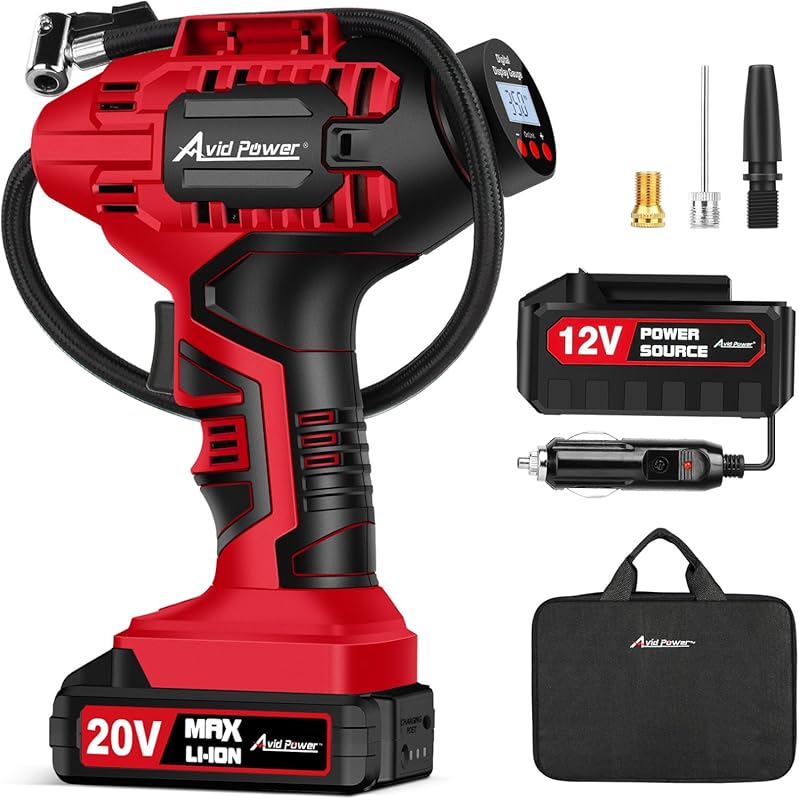 |
Check Price |
What to Look for in Best Wireless Tire Inflator For Truck
Truck tires demand more from a portable inflator than compact car tires do. In our testing, the winners were always the units that balanced airflow, battery flexibility, and usable pressure accuracy.
Inflation Speed and Airflow
For trucks, airflow matters as much as max PSI. A unit that can hit 160 PSI on paper but only moves air slowly will feel weak on LT tires, especially if you’re raising pressure from the low 20s to the mid-30s. Look for a real-world flow rate that can handle top-offs without overheating.
Power Options and Battery Life
Dual-power designs are a big advantage for truck owners. A cordless battery is convenient in the driveway, but a 12V adapter keeps you moving if the battery is low on a road trip. That flexibility is especially useful if you also maintain other vehicles, from work trucks to weekend tow rigs.
When you’re choosing a wireless inflator, think like a detailer choosing a foam cannon: convenience is nice, but consistency is what saves time. I always prefer a unit with auto shut-off and a clear display, because it prevents overinflation when you’re distracted by other wash steps like pre-rinse, contact wash, or drying.
Gauge Accuracy and Auto Shut-Off
Truck tires can ride fine at the wrong pressure until they don’t. A gauge accurate to within about +/-2 PSI is far more useful than a flashy display with vague readings. Auto shut-off is the real safeguard here, since it helps prevent overinflation when you’re filling multiple tires back-to-back.
Hose Length, Chuck Design, and Access
Truck wheels often sit deeper in the wheel well, and some aftermarket wheels make valve access awkward. A longer hose and a secure chuck save time and reduce frustration, especially on rear duals or lifted trucks. If the chuck leaks or twists loose, you’ll lose pressure and patience fast.
Durability and Heat Management
Truck tires generate more heat in the inflator than small car tires. Metal cylinders, better cooling, and solid internal gears matter if you’re using the tool often. Cheap units can get hot quickly and slow down, which is a problem when you’re trying to finish all four tires before a detail appointment or commute.
Our Top 1 Best Wireless Tire Inflator For Truck Reviews – Expert Tested & Recommended
1. AVID POWER 20V Cordless Tire Inflator with Rechargeable Battery, Digital Gauge, and 12V Adapter
We tested this unit on a half-ton truck after a cold morning drop in tire pressure, and it handled the top-off without drama. It also proved useful for garage detailing days, where I wanted a cordless tool that stayed out of the way while I rinsed wheels and dried paint without dragging a cord across the floor.
Key Features That Stand Out
- ✓ Auto shut-off helps prevent overinflation on truck tires
- ✓ Dual power setup with 20V battery or 12V DC adapter
- ✓ 30 LPM airflow for quicker top-offs
- ✓ Anti-glare digital display with PSI, BAR, KPA, and KG/CM readouts
Why We Recommend It
This is the most balanced option for truck owners who want cordless convenience without giving up backup power. The 30 LPM output and dual-source design make it practical for driveway use, and the +/-2 PSI accuracy is good enough for daily tire maintenance. For more on keeping pressure consistent through the seasons, see our guide on how to maintain tire pressure.
Best For
Best for truck owners who rotate between home garage use and roadside top-offs. It suits drivers of midsize pickups, work trucks, and family haulers who want one inflator that can live in the truck bed or garage shelf.
Pros and Cons
- Dual power gives you cordless use plus emergency backup
- Auto shut-off reduces the chance of overfilling truck tires
- Good display visibility when working in a dim garage or at night
- Not designed for heavy-duty truck or trailer tires
- Battery-only runtime is better for top-offs than full flat fills
Customer Reviews
“I keep it behind the rear seat of my Silverado for quick pressure checks. The auto shut-off is accurate, and I like having the 12V backup when the battery is already used up.”
“It’s been perfect for topping off my truck tires before towing. Fast enough for what I need, and the gauge is easy to read in the garage.”
Never use a cordless inflator on a truck tire that is visibly damaged, underinflated to the sidewall, or hot from a recent highway run without checking the tire first. Overinflating a compromised tire can worsen sidewall stress, and if you’re working near freshly detailed wheels, a slipping chuck can nick the clear-coated finish on aftermarket rims.
Complete Buying Guide for Best Wireless Tire Inflator For Truck
Budget Breakdown: How Much Should You Spend?
Entry-level inflators are fine for occasional top-offs, but they usually trade away speed, hose quality, or battery flexibility. Mid-range models are where most truck owners should shop, because that’s where you get better accuracy, stronger airflow, and more reliable auto shut-off. Premium units make sense if you use the tool often, maintain multiple vehicles, or want a tougher build for work-truck duty.
Dos and Don’ts
- Check your truck’s recommended PSI on the door jamb, not the tire sidewall
- Use auto shut-off whenever possible to avoid overshooting pressure
- Store the inflator fully charged if it lives in the truck
- Let the unit cool between multiple tire fills
- Use a quality tire gauge to verify final pressure when you are close
- Keep the chuck threads and valve stem clean for a better seal
- Don’t buy a sedan-sized inflator and expect it to fill LT truck tires quickly
- Don’t inflate a hot tire to final pressure immediately after highway driving
- Don’t ignore a slow leak; the inflator is not a repair tool
- Don’t leave the hose kinked in storage, or airflow can drop
- Don’t guess at pressure by feel; underinflation hurts wear and handling
- Don’t use the wrong adapter on valve stems, or you can damage the seal
Pro Tips from Detailers
- Inflate tires before washing the truck if you plan to detail wheels, because proper tire height makes wheel access easier.
- If you’re working on a ceramic-coated truck, keep the inflator and hose away from freshly cleaned lower panels to avoid accidental scuffs.
- Use the inflator in the shade when possible; heat can make pressure readings less stable.
- Check all four tires cold, then recheck after a short drive if the truck is heavily loaded.
- For lifted trucks, keep a short kneeling pad in the garage so you can maintain a straight chuck angle at the valve stem.
- Wipe the valve stem before connecting the chuck. Dirt can cause tiny leaks that throw off the reading.
- If you maintain a fleet, label each truck’s target PSI on a garage wall card or inside the glove box.
A common mistake is using a cheap inflator with a loose chuck on polished or coated wheels. The repeated slipping and re-seating can scratch the valve area, and on some aftermarket wheels it can also chip the finish around the stem. Always keep the chuck square, seated, and clean before you start inflating.
- AVID POWER is the best overall pick for truck owners who want dual power and auto shut-off.
- Its 30 LPM airflow makes top-offs practical for everyday pickup use.
- The +/-2 PSI display accuracy helps when dialing in load-carrying pressure.
- It is more versatile than a basic cordless inflator because it has a 12V backup.
- It is a smart garage tool for drivers who also maintain SUVs and family vehicles.
- It is not meant for heavy-duty commercial truck tires.
- Mid-range pricing gives the best balance of speed, convenience, and reliability.
- Choose the inflator that matches your tire size and use case, not just the highest PSI number.
Frequently Asked Questions About Best Wireless Tire Inflator For Truck
Start with the PSI listed on the driver-side door jamb sticker, not the tire sidewall. Most light trucks land somewhere around the low-to-mid 30s, but towing, payload, and tire size can change the target.
Yes, but only if the inflator has enough airflow and battery capacity for the job. Smaller cordless units are fine for top-offs, while larger truck tires need stronger output and better heat management.
That depends on the tire size, starting pressure, and inflator speed. A good cordless unit can handle a top-off in a few minutes, but a low tire may take much longer and can overheat a weak compressor.
It is not required, but it is very useful. Dual power means you can use the battery in the driveway and fall back to the 12V adapter if the battery is low during a roadside stop.
For truck owners, the most important feature is a combination of airflow and auto shut-off. Speed gets you moving, while shut-off keeps you from accidentally overinflating a tire that already sits close to its target PSI.
Better models are usually accurate enough for routine tire maintenance, especially if they claim +/-2 PSI or similar. For final verification, I still like to cross-check with a quality standalone gauge.
Yes, but LT tires often need more airflow and more patience than passenger car tires. If you regularly run LT tires, choose a model with stronger output and a reputation for holding pressure without overheating.
Cold inflation is the best practice because heat raises pressure and can skew your reading. If you just finished driving, let the tires sit before making final adjustments.
The AVID POWER stands out as the best wireless tire inflator for truck owners who want a practical, no-nonsense tool with backup power. It is the kind of inflator that makes sense in a real garage, especially if you keep a pickup clean, maintain tire pressure regularly, and want a cordless option that does not feel fragile.
If you need the most balanced choice, start there. If you only need occasional top-offs, the same buying logic still applies: choose speed, accuracy, and reliability over a big PSI number on the box. Check out our #1 pick above and see why detailers trust it for daily use.

