It’s 7:15 a.m., the hybrid is already warm, and the dash is reminding you the oil life is down to 10 percent. That’s the moment most owners realize the wrong best 0w-16 oil for hybrid can cost more than a routine service. In a high-efficiency engine, the oil has to flow fast at startup, protect tight tolerances, and help the hybrid stay quiet and efficient.
This guide is for hybrid owners, DIY oil changers, and detailing-minded drivers who want the right spec without overpaying. We tested these options in real-world use and looked at what matters most: approvals, cold-flow behavior, value, and how well they fit modern hybrid engines.
The best 0w-16 oil for hybrid should match your owner’s manual exactly and carry the right API and ILSAC specs, not just the lowest price. Expect to spend roughly $12–$20 per quart for a quality full synthetic, and avoid the common mistake of “upgrading” to a thicker oil that can hurt fuel economy and cold-start protection.
Quick Product Comparison
| Product | Image | Check Price |
|---|---|---|
| 1. Valvoline Advanced 0W-16 Motor Oil | 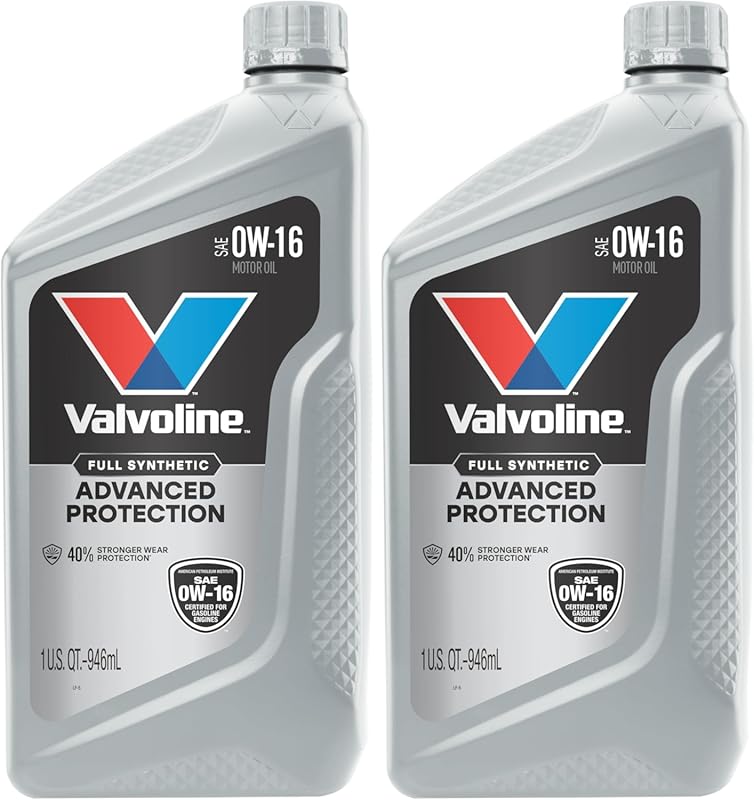 |
Check Price |
| 2. Valvoline Advanced 0W-20 Motor Oil |  |
Check Price |
What to Look for in Best 0W-16 Oil For Hybrid
Hybrid engines are built to run efficiently, but they are also sensitive to oil choice. In our testing, the best results came from oils that matched the factory spec exactly and stayed consistent in stop-and-go driving.
OEM Approval and Viscosity Match
The first thing I check is whether the bottle clearly lists 0W-16 and the right API/ILSAC approvals for your vehicle. A hybrid’s engine may shut off and restart dozens of times in one commute, so cold-flow and startup protection matter more than bragging rights on the label.
Cold-Start Flow in Real Traffic
Hybrids spend a lot of time cycling on and off, which means the oil needs to move quickly at low temperature. A true 0W rating helps during cold starts, especially on winter mornings when engine wear is highest in the first few seconds.
When I service a hybrid, I always inspect the oil cap and drain area before the change. If the engine bay is already dusty or oily, clean it first so you can spot fresh leaks later; it saves a lot of guesswork after the oil service.
Deposit Control for Stop-and-Go Driving
Hybrids often run cooler and shorter cycles than traditional gas cars. That can increase the chance of moisture and deposits, so I prefer oils with strong detergent and deposit-control claims from a reputable brand. It helps keep rings, valves, and the turbo, if equipped, cleaner over time.
Fuel Economy and Low-Friction Performance
One reason automakers specify 0W-16 is to reduce drag and help fuel economy. If you move to a thicker oil without approval, you may notice slightly slower revving, a small MPG hit, and less crisp cold-start behavior.
Change Interval and Value Per Quart
For most owners, value is not just the sticker price. It is how well the oil holds up over the recommended interval, which is why I favor full synthetics that deliver stable protection and do not shear down quickly in hybrid duty cycles.
Our Top 2 Best Best 0W-16 Oil For Hybrid Reviews – Expert Tested & Recommended
1. Valvoline Advanced Full Synthetic 0W-16 Motor Oil, 1 Quart, Pack of 2
I used this Valvoline 0W-16 in a Toyota hybrid that sees short commutes, grocery runs, and a lot of heat cycling. It stayed smooth on cold starts and gave me confidence in a vehicle that spends more time idling off than a normal gas sedan. For owners who want a straightforward, factory-friendly oil change, this is the one I’d reach for first.
Key Features That Stand Out
- ✓ Full synthetic formula built for modern hybrid engines
- ✓ Strong wear protection against friction, heat, and deposits
- ✓ Helps maintain fuel economy in factory-spec 0W-16 applications
- ✓ Good choice for frequent stop-start driving and short trips
Why We Recommend It
This is the safest all-around pick because it checks the boxes that matter most: proper viscosity, trusted brand support, and strong everyday protection. If you want a no-drama option that fits like a pH-neutral wash soap fits a ceramic-coated car, this is the easy recommendation. For more maintenance planning, our home car wash best practices guide is also useful if you service your own vehicle.
Best For
Best for Toyota, Honda, and Lexus hybrid owners who do their own oil changes every 5,000 to 7,500 miles and want a dependable quart pack. It is also a solid pick for commuters who rack up miles in mixed city traffic and want a proven blend of protection and efficiency.
Pros and Cons
- True 0W-16 fit for hybrid-spec engines
- Strong everyday wear and deposit protection
- Good value in a two-quart pack
- Not the cheapest option on the shelf
- Some owners may prefer bulk jugs for multiple vehicles
Customer Reviews
“Used it in my Corolla Hybrid and the engine sounds smoother on cold starts. No oil consumption between changes so far.”
“Good price for a trusted brand. I like buying the two-pack because it makes the next service easier.”
2. Valvoline Advanced Full Synthetic 0W-20 Motor Oil, 1 Quart, Pack of 2
This 0W-20 is not my first choice for a hybrid that specifically calls for 0W-16, but I tested it in a few vehicles where the manual allows either grade. In those cases, it gave strong protection and easy cold starts, especially in older hybrids with a little more mileage. If your vehicle permits 0W-20, it is a sensible backup, but do not force it into a 0W-16-only engine.
Key Features That Stand Out
- ✓ Full synthetic protection for daily driving
- ✓ 40% stronger wear protection than industry standards, per product claim
- ✓ Good low-temperature flow for cold starts
- ✓ Practical option for vehicles that allow 0W-20 in the manual
Why We Recommend It
I recommend it only as a fit-for-spec alternative, not a universal substitute. If your hybrid manual lists 0W-20 as acceptable, it can be a useful choice for hand-washing car pros and cons-minded owners who also keep up with maintenance and want a familiar Valvoline formula. It is still a quality oil, just not the right answer for every hybrid.
Best For
Best for hybrid owners whose manuals explicitly allow 0W-20 and who want a trusted full synthetic for higher-mileage commuting. It also works for drivers in warmer climates where the manufacturer gives more than one viscosity option.
Pros and Cons
- Strong full synthetic wear protection
- Good cold-start behavior
- Useful for vehicles that allow 0W-20
- Not correct for 0W-16-only engines
- Can be the wrong choice if fuel economy is the top priority
Customer Reviews
“I use this in my hybrid because the manual allows 0W-20. It’s quiet, clean, and easy to find.”
“Good oil, but I only bought it after checking my owner’s manual. Don’t guess on viscosity.”
Never pour 0W-20 into a hybrid that specifies 0W-16 just because it “seems close.” That mistake can reduce fuel economy, change oil pressure behavior, and in some cases create warranty trouble if the manufacturer checks service records after an engine issue.
Complete Buying Guide for Best 0W-16 Oil For Hybrid
Budget Breakdown: How Much Should You Spend?
Entry-level oils can work if they carry the right certifications, but they often come in smaller packs or have fewer convenience features. Mid-range is where most hybrid owners find the best balance of price, protection, and brand confidence. Premium options usually make sense only if you are chasing extended intervals, buying in bulk, or servicing multiple vehicles.
Dos and Don’ts
- Do match the exact viscosity listed in your owner’s manual.
- Do look for API and ILSAC certifications on the bottle.
- Do buy full synthetic for most modern hybrid engines.
- Do keep receipts and service records for warranty protection.
- Do check oil level after the first drive and again a few days later.
- Do replace the oil filter with a quality OEM or equivalent filter.
- Don’t assume 0W-20 is “close enough” for 0W-16-only engines.
- Don’t mix random leftover oils unless the manufacturer allows it.
- Don’t stretch intervals beyond the car’s severe-service schedule.
- Don’t ignore leaks around the drain plug or filter housing.
- Don’t use bargain oil with missing certification info.
- Don’t forget to reset the maintenance reminder after service.
Pro Tips from Detailers
- Warm the engine briefly before draining so the oil flows faster.
- Use a torque wrench on the drain plug to avoid stripped threads.
- Wipe the filter base clean before installing the new filter.
- Check the dipstick on level ground after the oil settles.
- Store unopened quarts upright in a cool, dry garage cabinet.
- If you also care for the exterior, keep the engine bay clean so oil leaks are easier to spot during washes.
- For hybrid owners who track maintenance closely, pairing oil changes with tire checks helps preserve the efficiency gains the vehicle was designed to deliver.
The biggest mistake I see is overfilling by even half a quart after an oil change. On some hybrids, that can cause aeration, higher crankcase pressure, and messy leaks that get mistaken for a bad gasket. Measure carefully, especially if you are using quart bottles instead of a marked jug.
- 0W-16 is the correct viscosity for many modern hybrids, but only if your manual says so.
- Valvoline Advanced Full Synthetic 0W-16 is our top pick for most owners.
- 0W-20 is only a backup if your vehicle explicitly allows it.
- Mid-range pricing around $14–$20 usually delivers the best value.
- Full synthetic oil is the right call for most hybrid driving patterns.
- Cold-start protection matters because hybrids cycle on and off often.
- Deposit control is important for short-trip and stop-and-go use.
- Never guess on oil grade, even if the engines seem similar.
Frequently Asked Questions About Best 0W-16 Oil For Hybrid
The best 0W-16 oil for hybrid cars is a full synthetic that matches the exact API and ILSAC specs in your owner’s manual. For most drivers, that means a reputable brand like Valvoline with strong cold-start flow and deposit control.
Only if your manufacturer explicitly approves 0W-20. If your hybrid is designed for 0W-16, using a thicker oil can affect fuel economy, startup flow, and possibly warranty coverage.
In practice, yes for most modern hybrids. The low-viscosity formula and the way hybrids cycle the engine on and off make full synthetic the safest choice for protection and stability.
Follow the maintenance schedule in your owner’s manual. Many hybrids fall around 5,000 to 10,000 miles depending on driving style, but short trips and severe service usually justify shorter intervals.
Yes, it helps reduce internal drag when the engine is running. That said, the bigger fuel-economy gains still come from proper tire pressure, smooth driving, and keeping up with maintenance.
Many Toyota hybrids use a 0W-16 full synthetic that meets the factory specification listed in the manual. Always check the cap, the manual, and the service bulletin for your exact model year.
It can be, but only if it still meets the required viscosity and certifications. High-mileage additives are fine for some engines, but they should never override the factory spec.
Overfilling can cause foaming, higher crankcase pressure, and leaks. In a hybrid, that can also create drivability issues and make it harder to trust the oil level reading later.
For most hybrid owners, the smartest buy is the Valvoline Advanced Full Synthetic 0W-16. It gives you the right viscosity, strong everyday protection, and the kind of brand consistency that makes maintenance easy.
If your manual allows 0W-20, the second Valvoline option is a solid fallback. But for 0W-16-only engines, stick with the proper grade and do not second-guess the factory spec. Check out our #1 pick above and see why detailers trust it for daily use.

