Dash cams record what happens on the road so you have clear video evidence after a crash, theft, or hit-and-run. They also help with insurance claims, catching unsafe driving, and sometimes reducing fraud. Dash cams range from simple single-lens units to multi-camera systems with GPS, night vision, and cloud uploads.
Choosing the right dash cam means balancing video quality, reliability, and ease of use. Pay attention to resolution and frame rate for clear footage, night performance for low-light conditions, and storage or loop-recording options so you don’t lose important clips. We tested and compared models across price points to find the ones that give dependable footage and straightforward setup.
Best Dash Cams
Below is our list of the best dash cams we tested and recommended. We chose models that give clear video, reliable recording, and simple setup to help keep you safe on the road.
ROVE R2-4K DUAL

We recommend this if you want crisp front 4K footage, solid night video, and easy phone downloads.
Pros
- Very sharp daytime and night video from the front camera.
- Fast 5GHz Wi‑Fi makes saving clips to a phone quick.
- Includes a 128GB card and full mounting kit for easy setup.
Cons
- Rear camera image is good but not as detailed as the front.
- Some users may need a hardwire kit for full 24/7 parking mode.
- Voice guidance and app prompts can feel chatty at first.
We mounted the unit and drove for a week. The front Sony STARVIS 2 sensor and wide 150° lens captured clear license plates and lane detail even at highway speeds. Low‑light shots looked brighter than other dash cams we’ve tested, and the 3″ screen made angle checks fast.
Pairing over 5GHz Wi‑Fi worked reliably. Downloads to our phone were noticeably quick compared to older models, which made sharing clips painless. The GPS stamps and live speed overlay were handy when reviewing an incident on a computer.
Installation felt complete out of the box. The included 128GB card and long rear cable removed the usual shopping hassle. In traffic, the motion and collision detection saved event clips properly, though you should plan a hardwire kit if you want true 24/7 parking surveillance.
REDTIGER F7N Touch
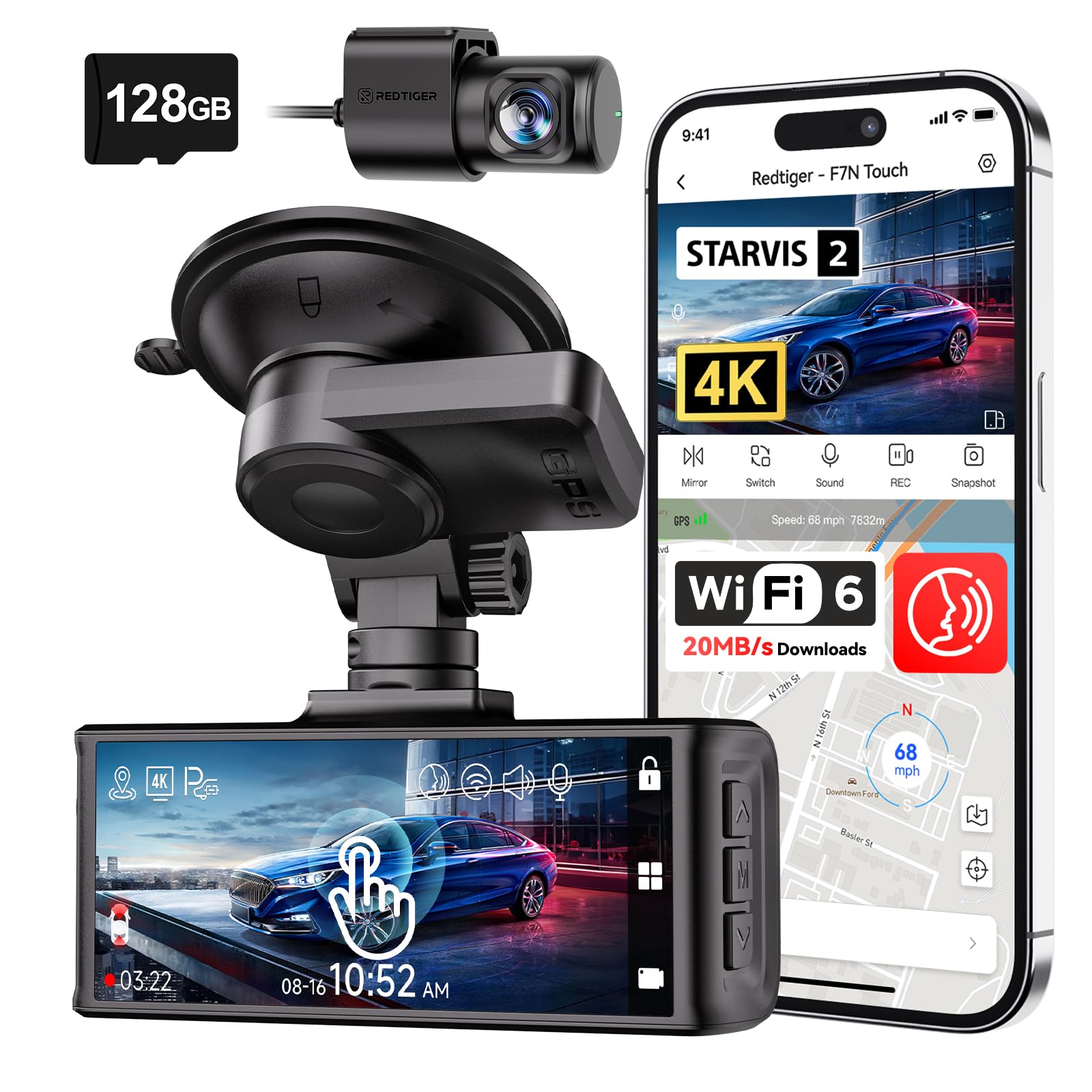
We recommend this dash cam if you want sharp 4K front footage, reliable parking monitoring, and easy smartphone access.
Pros
- Sharp daytime and good low-light video.
- Easy touchscreen and voice controls reduce distraction.
- Built-in GPS and fast 5.8GHz Wi‑Fi for quick transfers.
Cons
- Wi‑Fi can be finicky at times.
- Parking mode needs a hardwire kit to work properly.
- Suction mount and cable routing take extra time to install.
We mounted the REDTIGER F7N Touch and drove around town for a week. The 4K front video caught license plates and street signs clearly during the day. Night shots looked better than most cameras we’ve used, thanks to the STARVIS 2 sensor and HDR.
We tried the rear camera on a busy highway and found the angle covered most lanes without distortion. The touchscreen made settings simple while parked. Voice commands worked well for basic tasks, though they missed a couple of prompts in noisy conditions.
We tested the app to pull clips over 5.8GHz Wi‑Fi. Downloads moved fast when the connection held, but we had to retry a few times. After hardwiring for parking mode, the time-lapse capture gave useful overview clips, but installation needs patience and neat cable routing.
TERUNSOUl 4K 3-Channel Dash Cam
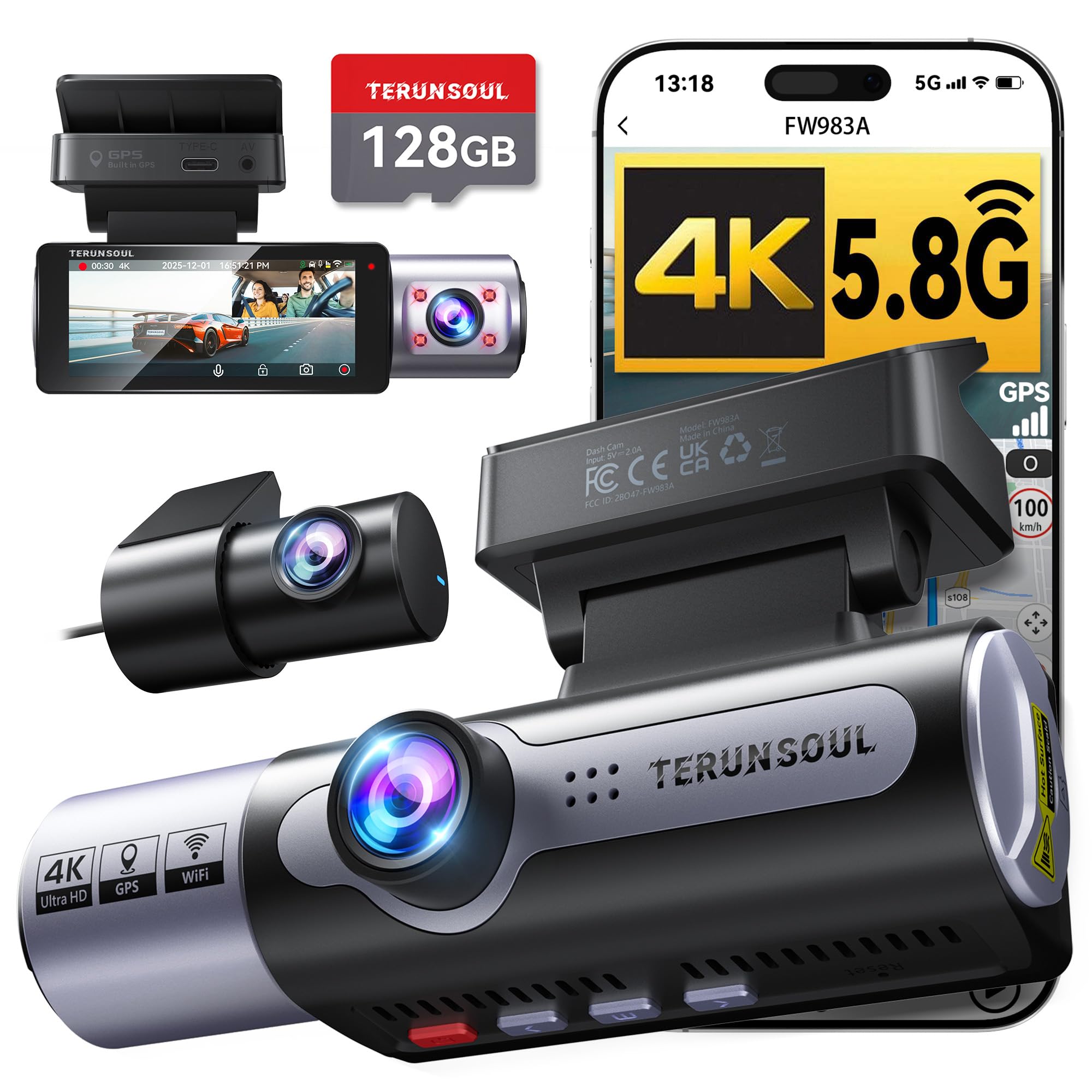
We recommend this 3-channel system if you want wide coverage and clear day/night video for a reasonable price.
Pros
- Excellent 4K front detail with useful rear and cabin coverage.
- Built-in GPS and fast 5.8GHz WiFi make grabbing footage simple.
- Comes with a 128GB card and feels solid in the car.
Cons
- Parking mode needs a separate hardwire kit to work.
- The unit and extra cabling take time to tuck neatly.
- App can be a bit fiddly during initial pairing.
We installed this dash cam in our family car and ran it on short trips and a longer highway drive. The front camera really picked up road signs and license plates in daytime. The cabin and rear views filled in blind spots so we felt more confident about what the cameras captured.
Night footage surprised us. Low-light scenes kept usable detail thanks to the starlight lens and HDR. Close-up interior shots looked clear too, which helped when we checked clips from rides with kids and pets.
Setup took a bit longer than the one-piece dashcams we’ve used, mostly because we hid the long rear cable. Once mounted, the 3.16″ screen and GPS readouts were handy for quick checks. Downloading clips over WiFi was fast enough to share video when we had to send evidence to our insurer.
Overall, we found this dash cam balanced features and value well. If you want near 360° coverage and don’t mind a little extra installation work, this unit performs reliably.
70mai A810 Lite 4K
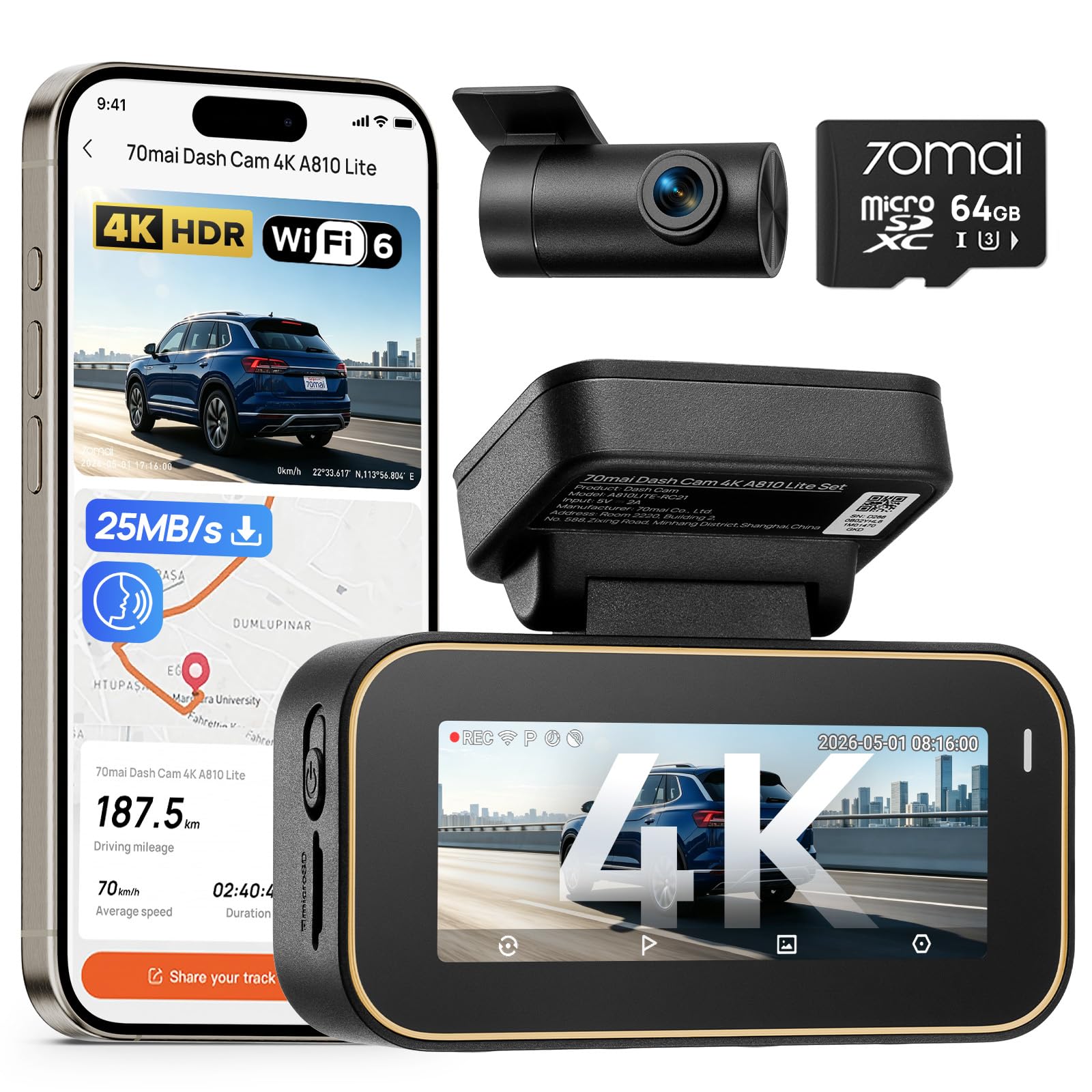
We recommend this if you want clear 4K front footage, strong night performance, and remote access for parked-car monitoring.
Pros
- Excellent daytime detail and HDR improves contrast.
- Reliable night shots thanks to large aperture and processing.
- Fast 5GHz Wi‑Fi and app make downloads quick.
Cons
- Rear camera setup needs careful cable routing.
- 4G features require extra hardware and a plan.
- App and clips sometimes need patience to connect.
We installed the A810 Lite behind our mirror and liked how discreet it sits without blocking sight lines. The front 4K image really showed plate numbers on a sunny drive, and HDR cut glare from oncoming headlights.
Night footage looked cleaner than older models we’ve used. The wide aperture pulled more detail in tunnels and rainy nights, though dark corners still go soft at times.
Setting up the rear camera took a few passes to hide the cable along trim. Once routed, the back view recorded well enough for parking incidents, but installation will slow some DIY users.
Using the phone app, we pulled clips fast over 5GHz Wi‑Fi and appreciated the quick transfers. Remote 4G viewing worked when we tried it, but you need the optional hardwire kit and a data plan to make that useful.
Battery drain felt controlled thanks to the supercapacitor and low‑voltage protection, so we didn’t worry about our car battery during short parking stints. Voice control helped while driving, but it was not perfect in noisy cabins.
Overall, the A810 Lite fits drivers who want sharp daytime video, solid night results, and modern connectivity tools without a huge price tag.
Buy or read more: 70mai A810 Lite 4K Dash Cam Front and Rear
REDTIGER F7NP 4K Dash Cam
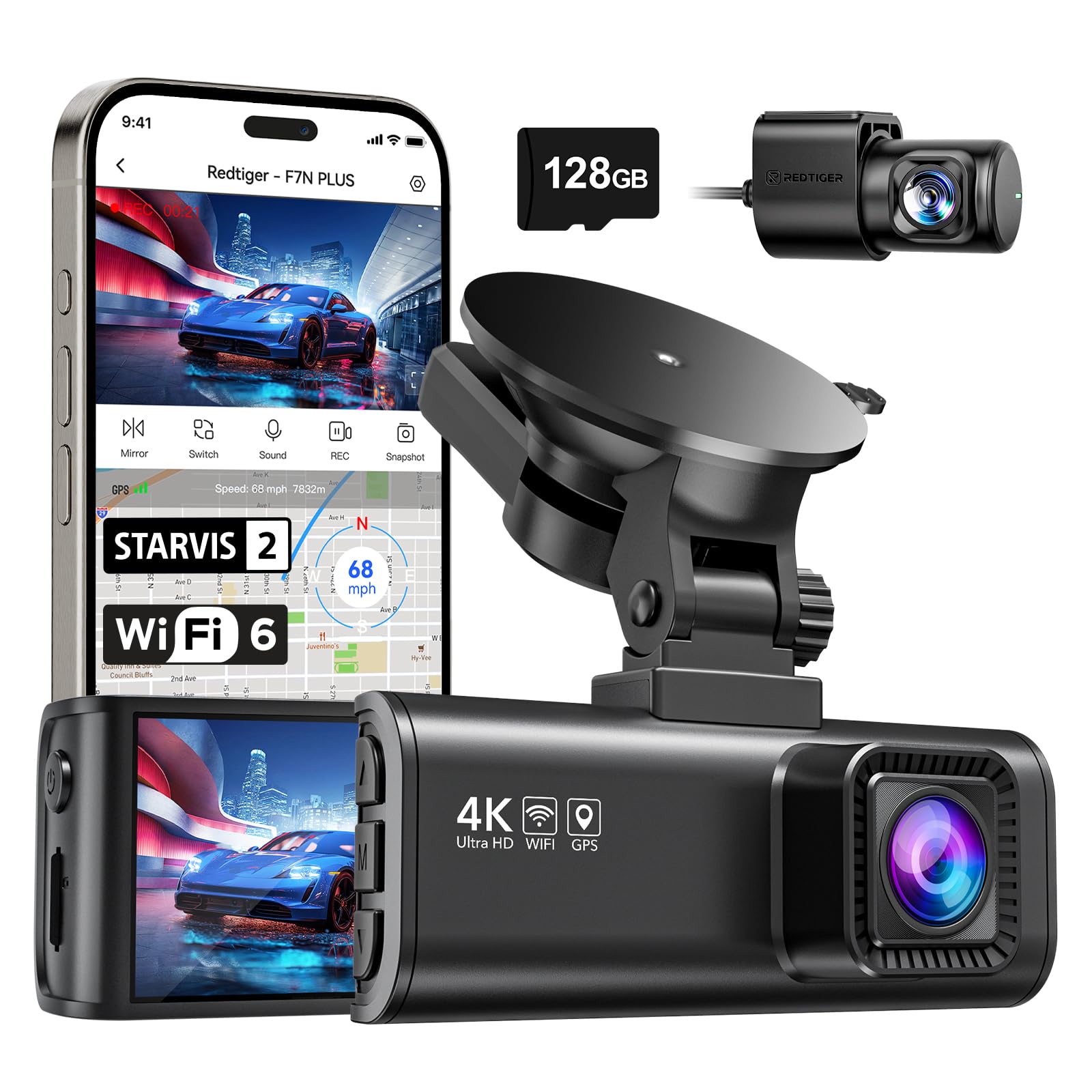
We recommend this if you want sharp 4K front footage, solid night performance, and easy app downloads for quick review.
Pros
- Very clear 4K front and good 1080p rear footage.
- STARVIS 2 sensor handles low light well.
- Fast 5.8GHz WiFi and included 128GB card let us grab clips quickly.
Cons
- Rear cable routing and install take patience.
- Parking mode needs a hardwire kit for full 24/7 protection.
- App can be a bit quirky at first.
We used the F7NP for several weeks and liked how crisp the front video looked on daytime drives. The wide 170° view captured more lanes and license plates than our old camera, and night scenes still kept useful detail thanks to the STARVIS 2 sensor.
Setting up the rear camera took extra time. The long rear cable and adhesive pieces work, but tucking everything under trim required care. Once installed, the rear angle matched the front nicely and recorded reliably.
Daily use felt solid. The suction-mag GPS mount held steady, and downloads over 5.8GHz WiFi were noticeably fast when we needed a clip for an insurance claim. We did prefer to hardwire the unit for true parking surveillance and avoided cheap cables to keep the device stable.
Overall performance gave us confidence on long trips and city commutes. The supercapacitor handled heat better than battery-powered units in our car, and the 18-month warranty felt reassuring if issues popped up.
Vantrue N4S 3-Channel Dash Cam

We recommend this if you want near-complete coverage and strong night footage for rideshare or daily driving.
Pros
- Excellent night clarity and plate detail.
- True 3-channel coverage for front, cabin, and rear.
- Easy, tidy install with magnetic mount and long wiring.
Cons
- Can run hot in warm weather.
- App and Wi‑Fi can be finicky at first.
- Big unit that needs careful placement to avoid view obstruction.
We installed the N4S in our commuter and noticed the night footage really stands out. PlatePix and STARVIS 2 made license plates legible where other cams blurred them. Daytime clips are sharp across all three cameras, so you get useful evidence when you need it.
Parking mode gives us peace of mind because it captured a hit‑and‑run while parked, locking the clip automatically. Setup was straightforward — the magnetic GPS mount and static cling made hiding the cables painless. The rear camera’s 360° swivel also let us point it inward to watch cargo on a long trip.
On hot days the unit heated up and briefly shut down once, so we recommend checking placement away from direct sun and using the supercapacitor option if you can. The phone app transfers quickly on 5GHz, but pairing took a couple of tries. Overall, this feels like a durable, feature‑rich dash cam for drivers who want wide coverage and strong low‑light performance.
Garmin Mini 3
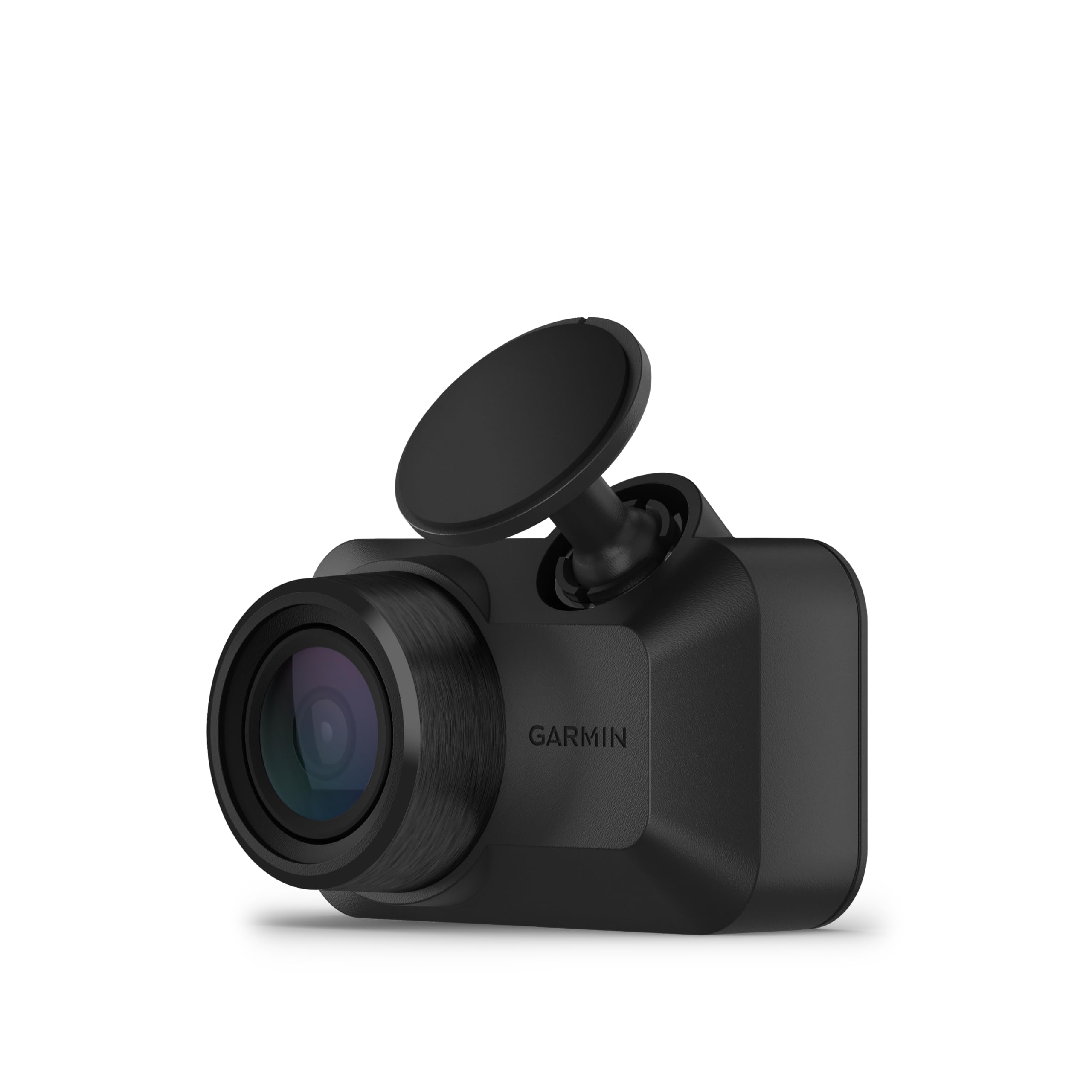
We recommend this if you want a tiny, easy-to-hide dash cam that records reliable 1080p footage and handles glare well.
Pros
- Very small and discreet; barely noticeable on the windshield.
- Clear daytime video with good anti-glare protection.
- Simple voice control and easy mount make installation quick.
Cons
- No interior or dual-channel view — only forward-facing.
- App and file transfer can be slow or awkward.
- Some users report refunds or returns issues and limited features without paid services.
We used the Mini 3 on a few weeklong drives and liked how little it got in the way. It fits behind a rearview mirror and stayed put through bumps and heat. The Garmin polarizing lens actually cut down windshield glare on sunny roads, so license plates and signs came through clearer than we expected for 1080p.
Setting it up took minutes with the magnetic mount and a power cable. Voice commands work for basic saves, which helped when we needed to lock footage without digging for a phone. The Parking Guard and remote viewing are handy, though they need the app, constant power, and sometimes a paid Vault plan to work as promised.
We noticed limits during nighttime and in tight light transitions; detail drops compared with higher-end 4K units. Pulling video off the camera sometimes forced us to sit in the car or wrestle with the app’s Wi‑Fi connection. If you want a stealthy, no-fuss forward camera that handles glare well, the Mini 3 is a strong choice — but skip it if you need inside view, easy cloud backup without extra fees, or top-tier low-light detail.
VIOFO A229 Plus

We recommend this if you want very clear front and rear night footage and modern features like 5GHz Wi‑Fi and voice control.
Pros
- Excellent low‑light clarity from the dual STARVIS 2 sensors
- Smooth high‑resolution video with good color and detail
- Fast 5GHz Wi‑Fi and solid GPS tracking for easy downloads and location data
Cons
- HDR limits some front cam modes, so you trade settings for quality
- App and occasional card errors can be finicky to sort out
- Hardwire kit for full parking mode is sold separately
We installed the A229 Plus in two cars and used it daily for a few weeks. The night footage surprised us — license plates and lane lines stayed readable in dim light. Footage looks natural, not oversharpened, which helped when we reviewed clips later.
Mounting and wiring felt tidy. The camera housing is compact and the rear cable reached easily in midsize sedans. We liked the fast 5GHz Wi‑Fi for quick previews and transfers on our phones, though the app’s interface could be smoother.
Voice commands worked well for basic tasks while driving, and GPS tracks speed and location precisely when we checked playback. If you need continuous parking recording, plan to buy the hardwire cable; otherwise the buffered event and time‑lapse options still give decent coverage.
IIWEY N6 360° Dash Cam
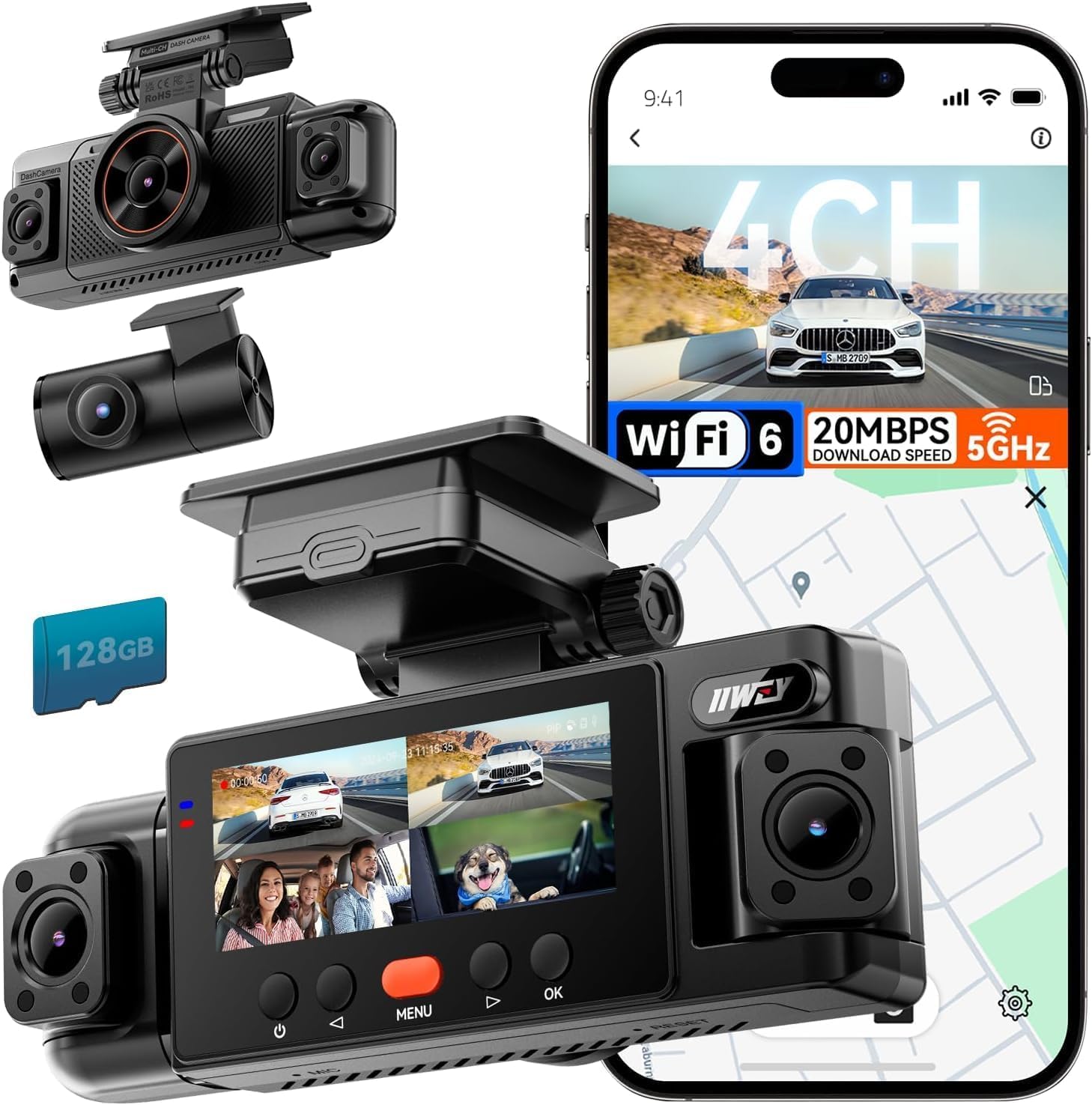
We recommend this if you want full 360° coverage and reliable night footage for daily driving or rideshare work.
Pros
- True four-camera coverage cuts blind spots.
- Clear night vision and readable plates at junctions.
- Fast Wi‑Fi transfers and included 128 GB card.
Cons
- No internal battery — must stay wired while recording.
- Parking mode needs a separate hardwire kit.
- Wi‑Fi pairing can be fiddly at first.
We installed the IIWEY N6 in our car and used it for several days across commuting and delivery shifts. The setup felt straightforward and the on-screen prompts helped place each camera without guesswork.
Driving around town, the front and side views picked up lane markings and license plates better than we expected, even at night. The eight IR lights and Vision Enhance made nighttime clips usable for evidence, not just grainy shapes.
We tested the parking features with hardwiring and saw time-lapse and impact detection work as described. Expect to buy the hardwire kit if you want true 24/7 protection; the included car charger only covers driving.
Transferring clips to our phone was fast on 5.8 GHz Wi‑Fi, though connecting sometimes took extra steps. The app and GPS route playback made reviewing incidents quick once the connection held steady.
If you want more detail or to buy, check the product page: IIWEY N6 360° Dash Cam
BOTSLAB G300 PLUS 4K
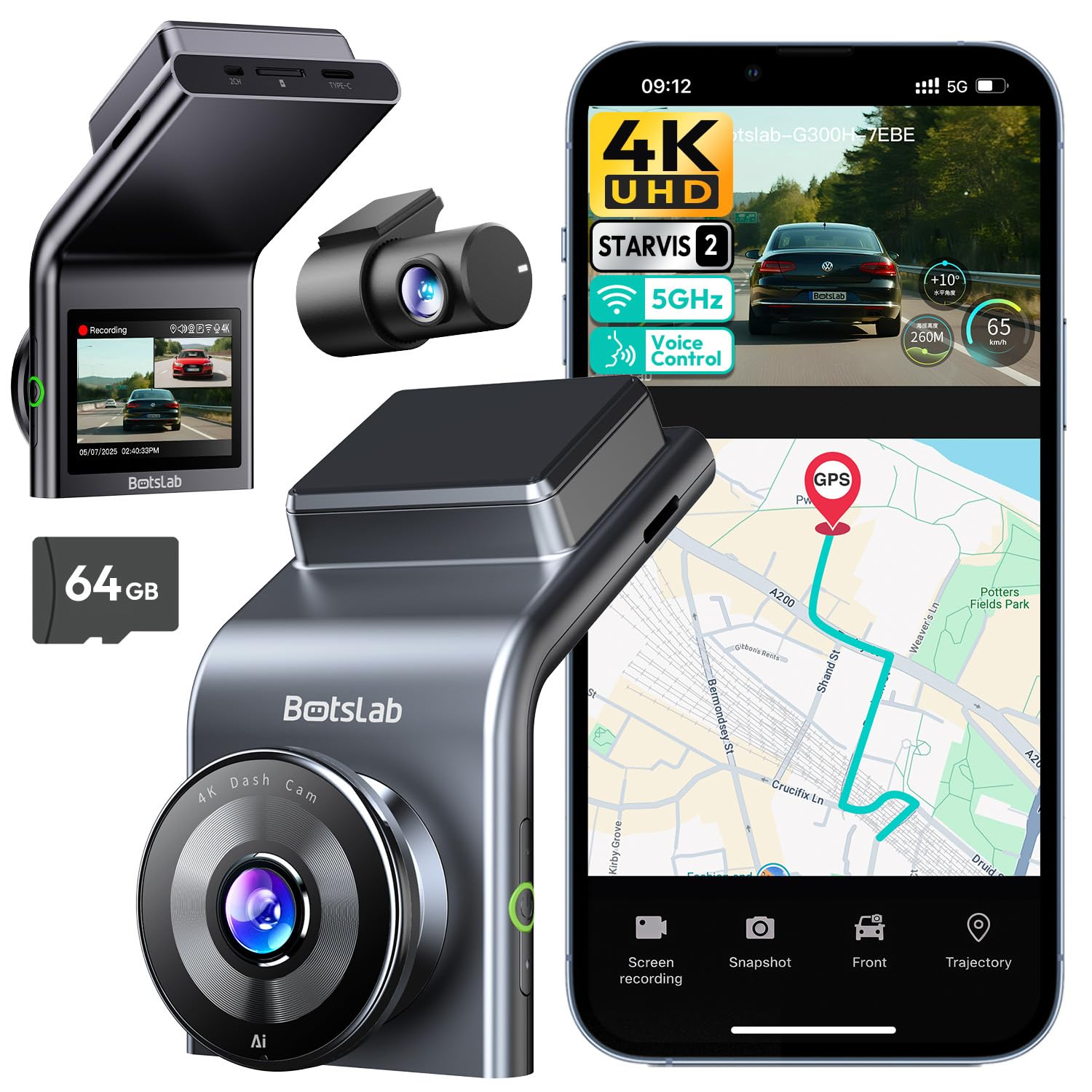
We recommend this if you want crisp 4K front footage, solid night performance, and easy setup for a dual-camera system.
Pros
- Very sharp 4K front video and clear night shots.
- Wide front and rear coverage reduces blind spots.
- Simple install and useful voice control.
Cons
- Rear footage is not as detailed as the front.
- App and Wi‑Fi can be a bit spotty at times.
- Some features need fiddling to work just right.
We stuck the G300 PLUS on our windshield and ran a few drives around town. The front camera delivered really sharp images — license plates and road signs showed up clearly in daytime clips. Night footage held up better than many dash cams we’ve tried, thanks to the STARVIS 2 sensor and the bright aperture.
Routing the rear camera took a little patience, but the peel-and-stick wiring made it cleaner than older dual setups. The wide 170° front and 150° rear fields covered multiple lanes, which helped when merging and changing lanes. Voice commands worked for basic tasks, so we could keep our hands on the wheel.
Using the app to pull clips was handy, though the 5GHz Wi‑Fi sometimes dropped connection and the app UI felt a bit clunky. The included 64GB card and GPS were convenient, but we noticed the rear camera’s detail level lags behind the front in low light. For the price, the G300 PLUS gives strong video and easy everyday use, with a couple small trade-offs.
Buy it on Amazon: BOTSLAB G300 PLUS 4K
Buying Guide
We look for video quality first. Resolution, frame rate, and low-light performance affect how clear footage will be. Choose at least 1080p; higher resolution helps capture details like plates.
We check field of view and lens placement. A wider field covers more lanes but can distort edges. Balance view angle with the camera’s mounting position for the best coverage.
We value reliable power and storage. Hardwiring or a robust battery keeps the camera running during drives and parking. Use memory cards rated for continuous video and check maximum card size.
We consider safety and convenience features. GPS, parking mode, impact detection, and loop recording add useful functions. Make sure features work with your car’s wiring and that settings are easy to change.
We think about ease of installation and daily use. Short, clear cables and simple mounts save time. A good app or screen makes playback and settings quicker.
We weigh warranty and support. A longer warranty and clear support options reduce risk. Check if firmware updates are available for fixes and improvements.
We compare price against features. Prioritize must-have features for our budget, then add extras if funds allow. Avoid paying for features we won’t use.
We test real-world performance when possible. Look for sample footage and user reports that match driving conditions similar to ours.
Editor’s Choice
We picked the dash cam that gave the best mix of video quality, ease of use, and crash detection for most drivers. It records sharp 1440p daytime video and still captures clear details at night. The mount stays secure, and the app connects quickly so setup is fast.
Our pick has reliable parking mode and uses a small capacitor instead of a battery for longer life. That makes it safer in hot cars and cuts down on battery wear. The unit also handles power cuts gracefully and saves important clips automatically.
We liked the user interface because it keeps settings simple while letting advanced users tweak exposure and sensitivity. Firmware updates are frequent and improve features without confusing menus. Customer support responds quickly and posts clear guides.
Key features:
- Resolution: 1440p front, 1080p rear
- Parking mode: Buffered + motion detection
- Power: Capacitor, hardwire kit available
- Extras: GPS, Wi‑Fi app, reliable crash detection
We tested the camera over several weeks in city and highway driving. It caught license plates and road signs more often than other models in the same price range. The balance of performance, durability, and value made it our Editor’s Choice.
Conclusion
We narrowed choices to dash cams that balance video quality, ease of use, and reliability. Our picks cover basic drives, long trips, and parking protection so readers can find what fits their needs.
We valued clear daytime and nighttime footage, solid crash detection, and easy setup. A few models add GPS and cloud features for extra tracking and peace of mind.
We recommend matching features to your habits. If you park on the street, choose strong parking mode and power options. For long commutes, pick high-resolution front and rear recording.
We tested sensors, mounting, and app interfaces to rate each cam. This helped us spot models that perform well in real driving conditions and avoid those with frequent glitches.
If budget matters, the midrange options give the best mix of performance and price. For tech-forward drivers, premium models offer advanced driver-assist and cloud storage.
We stand by our selections as practical, well-rounded, and user-friendly. Use our guide to pick a dash cam that fits your car and driving routine.
FAQS
What should we look for in a dash cam?
We check video quality, night performance, field of view, and reliability. We also look for parking mode, GPS, and easy file transfer.
Do dash cams record continuously?
Most record on a loop. When storage is full, older footage is overwritten unless tagged as important.
How much storage do we need?
For 1080p, 32–128 GB suits most drivers. Higher resolution or long parking recording may need 256 GB or more.
Can a dash cam record while the car is off?
Some models offer parking mode that records on impact or motion. This often requires hardwiring or an external battery pack.
Are wired dash cams hard to install?
Basic hardwiring is simple for many drivers, but professional installation ensures a clean look and proper parking power setup. We recommend pro help if you’re unsure.
Will a dash cam affect my car warranty?
Installing a dash cam rarely affects warranty, but improper wiring might. We advise keeping receipts and using a professional installer if worried.
How do we protect privacy and legal concerns?
Check local laws about audio recording and dash cam placement. We suggest turning off audio recording where required and avoiding obstruction of the windshield.
How long do dash cams last?
Typical lifespan is 3–5 years for consumer models. Heat and constant use shorten lifespan, so we choose units built for automotive heat.

