What Makes a Car Vacuum Cleaner Powerful?

Quick summary
If you are wondering what makes a car vacuum cleaner powerful and efficient, the short answer is this: real performance comes from a mix of suction power, airflow, nozzle design, battery or corded power delivery, filter quality, and runtime. A vacuum can look strong on paper and still clean poorly if the airflow is weak, the seal leaks, or the attachments are not made for tight car interiors.
What matters most
- Strong suction plus steady airflow
- Tools that reach under seats and into seams
- A filter that does not clog too fast
- Enough runtime for a full interior clean
- A dust bin that is easy to empty
What buyers often miss
- High voltage does not always mean better cleaning
- Watts alone do not tell the full story
- Pet hair needs brush action, not just suction
- Sand and gravel need airflow and a good nozzle seal
- A dirty filter can make any vacuum feel weak
Hi, I’m Ryan Carter. I test car accessories and cleaning tools all the time, and one question keeps coming up: what makes a car vacuum cleaner powerful and efficient? Most people think the answer is just “more power,” but in real use it is more than that. A car vacuum needs to pull dirt from carpet, grab crumbs from tight corners, lift pet hair from upholstery, and do it without dying halfway through the job.
In this guide, I’ll break down the features that actually matter, explain how they work together, and show you how to judge a vacuum beyond marketing claims. If you want a car vacuum that feels strong, cleans fast, and makes detailing easier, this is what to focus on.
Powerful vs. efficient: they are not the same thing
A powerful car vacuum has the ability to lift debris. An efficient one does that job well without wasting time, battery, or effort.
Here is how I separate the two:
- Powerful means it can pull up dirt, sand, hair, and small debris.
- Efficient means it cleans quickly, reaches tight spots, runs long enough, and keeps its performance steady as the bin fills.
So yes, suction matters. But if the vacuum is heavy, clumsy, loud, or dies in ten minutes, it is not very efficient for real car cleaning.
The main features that determine real cleaning performance
1. Suction power
Suction is the first thing most people look for, and for good reason. It is the vacuum’s pulling force. Brands may list it in Pa, kPa, air watts, amps, or watts. The problem is that these numbers are not always shown the same way, so it is easy to compare the wrong things.
What I look for is not just a big number, but whether the vacuum can maintain suction while cleaning carpet, mats, and seat seams. A vacuum with decent sealed suction but poor airflow may struggle with larger debris. One with good airflow but weak pull may leave grit behind in carpet fibers.
Tip: If a brand only advertises battery voltage or motor wattage, that is not enough. Those specs tell you about input power, not always actual cleaning strength at the nozzle.
2. Airflow is just as important as suction
This is the part many buyers miss. Airflow is what moves dirt through the nozzle, hose, filter, and dust bin. In simple terms, suction lifts debris, while airflow carries it away.
For car interiors, good airflow matters because you are cleaning mixed messes:
- Fine dust in vents and trim gaps
- Crumbs and small debris on seats
- Grit and sand pressed into floor mats
- Pet hair stuck in carpet or fabric
If airflow drops too quickly, the vacuum may pick up the first pass but struggle on the second. That often happens when the filter clogs or the airflow path is narrow.
3. The motor and power delivery
The motor is the heart of the vacuum, but raw motor size is not the whole story. A better-designed motor with stable power delivery often feels stronger than a poorly tuned one with bigger advertised numbers.
In the U.S., most car vacuums fall into three groups:
- 12V corded handhelds that plug into the car outlet
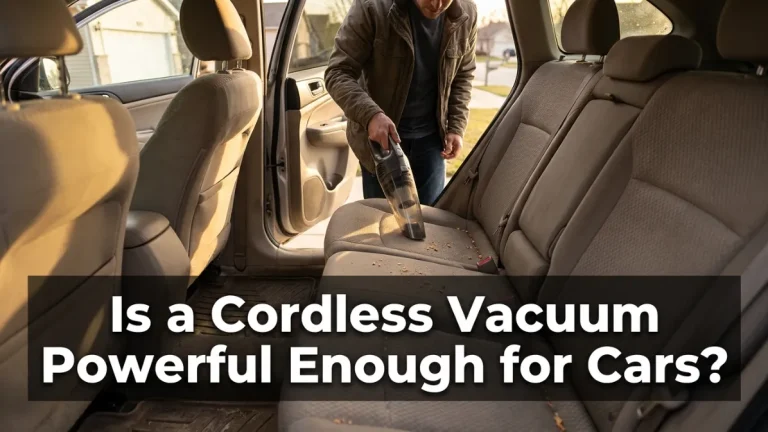
- Cordless handhelds that run on built-in batteries
- Compact wet/dry or shop-vac style units that usually offer the strongest deep-cleaning performance
Each can be useful, but the power source affects how steady the vacuum feels during use.
4. Battery size and runtime
For cordless models, efficiency depends a lot on runtime. A vacuum that feels strong for three minutes and then fades is frustrating. That is why I pay close attention to how long it can run at normal power, not just on an eco setting.
Battery voltage can matter, but it is not a magic indicator of performance. Battery quality, motor tuning, and airflow design all matter more than the label alone. If you want to understand battery basics, the U.S. Department of Energy battery guide is a helpful reference.
For basic maintenance cleaning, a shorter runtime may be fine. For full interior cleaning, longer runtime is a huge part of efficiency because you can finish the job in one session.
5. Attachments and nozzle design
This is where a lot of performance is won or lost. Cars have narrow spaces, seat rails, cup holders, door pockets, and tight corners. Even a strong vacuum can feel weak if the nozzle is too wide or poorly shaped.
The most useful tools for a car vacuum are usually:
- Crevice tool for seat edges, rails, and console gaps
- Brush nozzle for dashboards, vents, and delicate trim
- Motorized or rubberized pet tool for hair on seats and carpet
- Flexible hose for under-seat cleaning
A good nozzle also helps create a tighter seal against carpet or mats. That seal improves pickup and makes the vacuum feel more powerful.
6. Filtration and dust-bin design
An efficient vacuum needs to move air freely. A cheap filter that clogs fast will make performance drop quickly. That is why washable filters or better multi-stage filtration systems can be a big plus.
Good filtration also matters if you are cleaning fine dust, pollen, or pet dander. The EPA guidance on particles and dust is a good resource if you want to learn more about how small particles behave.
I also like dust bins that are:
- Easy to empty without making a mess
- Large enough for one full clean
- Simple to remove and wash
7. Weight, balance, and ergonomics
This may sound secondary, but it is part of efficiency. A bulky vacuum is tiring to use in a small cabin. If it is hard to hold above the floor, angle into corners, or move around seats, cleaning takes longer.
For me, a car vacuum feels efficient when I can clean quickly without fighting the tool.
How a car vacuum cleaner works in real use
When I test a car vacuum, I think about the whole airflow path. The motor spins, creates pressure difference, pulls air through the nozzle, and carries debris into the bin while the filter keeps dirt from blowing back out.
That means strong cleaning depends on the whole system working together:
- The nozzle must make good contact with the surface
- The motor must generate enough pull
- The airflow path must stay open
- The filter must not clog too quickly
- The battery or corded power source must stay consistent
If one part of that chain is weak, the vacuum may seem powerful in an ad but disappointing in an actual car.
Which specs matter most when cleaning different kinds of messes?
| Cleaning job | What matters most | Why it matters | Helpful attachment |
|---|---|---|---|
| Crumbs and light dust | Moderate suction, good airflow | Loose debris is easy to lift but needs steady air movement | Standard nozzle or brush tool |
| Sand and fine grit | Strong suction, good seal, stable power | Heavy particles sit deep in carpet and mats | Narrow nozzle or crevice tool |
| Pet hair | Brush action plus suction | Hair clings to fabric and often needs agitation | Brush nozzle or pet tool |
| Seat seams and rails | Narrow airflow focus, maneuverability | Space is tight, so reach matters more than raw size | Crevice tool |
| Dash, vents, and trim | Controlled airflow, soft bristles | You want dust pickup without scratching surfaces | Soft brush attachment |
| Wet spills or damp debris | Wet/dry capability | Standard dry vacuums are not built for liquid pickup | Wet nozzle if supported |
Corded, cordless, and wet/dry styles compared
If you are trying to decide which type usually feels the most powerful and efficient, this comparison should help.
| Type | Strengths | Trade-offs | Best for |
|---|---|---|---|
| 12V corded handheld | Unlimited runtime while plugged in, simple for quick cleanups, no charging wait | Power can be limited, cord can get in the way, outlet power is not always strong enough for deep cleaning | Routine upkeep, crumbs, light dirt |
| Cordless handheld | Easy to move around seats and trunk, very convenient, often better ergonomics | Runtime limits, battery fade over time, power may drop on high mode | Fast interior touch-ups, apartment or garage use |
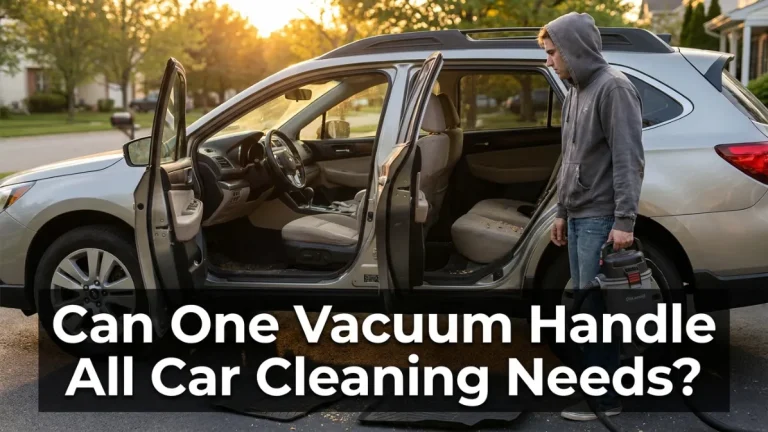
| Compact wet/dry or shop-vac style | Usually the strongest suction and airflow, handles heavy debris better, good for detailing | Bulkier, less portable, may need wall power or larger battery platform | Deep cleaning, sand, pet hair, full interior jobs |
My simple decision guide
- If you only want quick weekly cleanup, a lighter handheld can be efficient enough.
- If you have kids, pets, or a lot of carpeted mess, stronger airflow and better attachments matter more than compact size.
- If your car gets very dirty often, a compact wet/dry or shop-vac style setup usually gives the best deep-clean result.
Step by step: how I judge whether a car vacuum is truly powerful and efficient
- I start with the mess type. Fine dust, sand, pet hair, and food debris all test different strengths.
- I check the first pass. A good vacuum should grab a visible amount quickly.
- I test tight spaces. Seat seams, cup holders, rails, and corners reveal whether the nozzle design is actually useful.
- I watch for power drop. If suction fades after a few minutes, the battery, airflow path, or filter may be the weak point.
- I check the filter and bin. If the filter clogs too fast or the bin is awkward, efficiency suffers.
- I consider comfort. If it is too heavy or hard to control, cleaning becomes slower than it should be.
This method tells me far more than a single motor spec ever could.
Common mistakes people make when buying a car vacuum
Choosing by voltage alone
Higher voltage can support stronger performance, but it does not guarantee better cleaning. Airflow, nozzle design, and filter efficiency matter too.
Ignoring runtime
A vacuum is not efficient if it cannot finish one car interior on a normal charge.
Overlooking attachments
Cars are not open floors. Without a good crevice tool and brush, even strong suction gets wasted.
Not thinking about maintenance
Filters need cleaning. Bins need emptying. If upkeep is annoying, performance usually drops because people put it off.
Expecting one vacuum to do every job perfectly
A small handheld is great for quick crumbs. It may not be the ideal tool for deep pet-hair removal or heavy sand after a beach trip.
Warning: Marketing terms like “turbo,” “max power,” or “high performance” do not mean much without real cleaning design behind them. Always look at the whole system.
Simple ways to make any car vacuum work better
Even a good vacuum can feel weak if you use it the wrong way. These small habits make a big difference:
- Empty the dust bin before it gets packed full
- Clean or replace the filter on schedule
- Use the right attachment for the surface
- Loosen pet hair with a brush before vacuuming
- Take out floor mats and clean them separately
- Work from top to bottom so dust does not fall onto cleaned areas
- Move seats forward and backward to reach hidden debris
For general vehicle care, the AAA car care resources can also be useful.
My practical checklist before buying
Ask these questions
- Will I use it for quick cleanup or deep interior cleaning?
- Do I need long runtime or constant corded power?
- Do I deal with pet hair, sand, or just crumbs?
- Does it come with a crevice tool and brush?
- Is the filter washable and easy to access?
Good signs to look for
- Stable suction over a full cleaning session
- Comfortable one-hand use
- Simple bin emptying
- Strong pickup in corners and seams
- Reasonable noise and solid build quality
Frequently asked questions
Does higher wattage always mean a more powerful car vacuum?
No. Higher wattage can mean the motor uses more power, but it does not always mean better real-world suction or airflow. Design matters just as much.
Is a cordless car vacuum strong enough for deep cleaning?
Some are, but not all. Cordless models are great for convenience. For heavy sand, deep carpet cleaning, or large vehicles, stronger units with better airflow often do a better job.
What is more important: suction or airflow?
Both matter. Suction helps lift debris. Airflow moves it through the machine. A vacuum needs a good balance of both to feel truly powerful and efficient.
Why does my vacuum feel weaker after a few minutes?
The filter may be clogging, the bin may be filling up, the battery may be fading, or there may be a blockage in the nozzle or hose.
Are attachments really that important for car interiors?
Yes. In a car, tight access is a huge part of cleaning performance. A crevice tool and brush attachment can make a bigger difference than a small jump in motor specs.
Final thoughts
When people ask me what makes a car vacuum cleaner powerful and efficient, I always come back to the same answer: it is not one spec. It is the combination of suction, airflow, runtime, attachments, filter quality, and ease of use.
If you remember one thing, let it be this: the best car vacuum is the one that matches the mess you actually deal with. For light cleanup, convenience may matter most. For pet hair, sand, or full detailing, stronger airflow and better tools matter more than a flashy number on the box.
That is how I evaluate them, and it is the easiest way to make a smarter choice without getting distracted by marketing language.