Corded vs Cordless Car Vacuum: Which One Is Better for Your Car?

Corded car vacuums are usually better for long cleaning sessions and steady suction. Cordless car vacuums are better for fast, easy cleanup. The best choice depends on your mess type, parking setup, and how often you clean your car.
I have cleaned cars in driveways, apartment lots, and busy gas stations. The same problem shows up every time. One vacuum feels strong but hard to use. The other feels easy but runs out of power. I’m Ryan Carter, and I test practical car gear and explain what works in real life. If you feel stuck on the corded vs cordless car vacuum choice, you are not alone.
Dyson made many people expect cordless models to do everything. BLACK+DECKER made handheld car cleaners feel cheap and easy to grab. Both shaped what buyers think a small car vacuum should do. But the right answer is not the same for every driver. Here is what actually matters before you spend your money.
Key Takeaways
- Corded models usually win for long cleaning sessions and deep dirt.
- Cordless models usually win for speed, storage, and quick daily messes.
- Attachments and nozzle design often matter more than raw power claims.
- 12V plug-in vacuums are not the same as stronger wall-powered corded units.
- For heavy detailing, a small wet/dry shop vac can beat both.
What Is the Real Difference Between Corded and Cordless Car Vacuums?
The real difference is simple: corded vacuums trade freedom for steady power, while cordless vacuums trade some run time for speed and convenience. If you clean often and hate setup, cordless feels better. If you deep clean less often and want longer use, corded usually feels stronger.
That sounds basic, but it explains most buying mistakes. People compare only suction claims. They forget run time, reach, charging, and where they park.
A driver with a garage and outlet may love a corded unit. A driver in an apartment lot may hate dragging a cord. A parent who cleans cracker crumbs every few days may use a cordless model far more often. A detail-minded owner who fights pet hair and sand may care more about strong airflow and brush tools.
| Feature | Corded | Cordless |
|---|---|---|
| Run time | Unlimited while plugged in | Limited by battery |
| Ease of use | Less convenient | Very convenient |
| Deep cleaning | Usually better | Good for light to medium messes |
| Storage | Harder to store | Easy to store |
| Best use | Monthly deep clean | Quick weekly cleanup |
The rule is easy. Choose for how you will really clean, not how you hope you will clean.
That leads to the next question. When does corded clearly win?
Is a Corded Car Vacuum Better for Deep Cleaning and Big Messes?
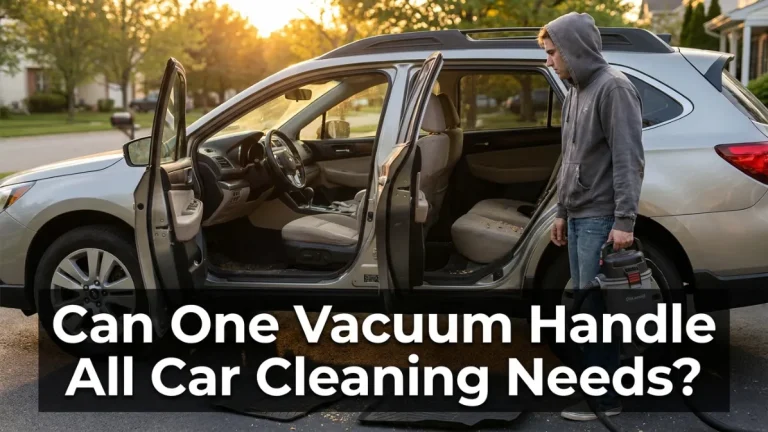
Yes, a corded car vacuum is usually better for deep cleaning because it can run as long as you need and often keeps suction more steady. This matters when you clean floor mats, seat rails, trunk corners, and packed-in dirt that takes time to lift.
Corded models come in two main types. First, you have 12V car outlet vacuums. These plug into the car itself. Second, you have wall-powered corded units and small wet/dry shop vacs. Those usually deliver more real cleaning force.
That difference matters a lot. Many buyers hear “corded” and assume all corded models are powerful. They are not. A 12V plug-in cleaner often has less punch than a good cordless unit. A wall-powered vacuum or shop vac often has far more.
Is a corded car vacuum more powerful than a cordless one?
Often yes, but only if you compare it to the right kind of corded model. A wall-powered corded vacuum or wet/dry shop vac usually beats a small cordless handheld on long, hard jobs. A weak 12V plug-in model may not.
If you fight heavy pet hair, thick sand, or deep carpet grit, corded helps because you can move slowly and make more passes. That extra time matters. Strong results come from steady suction plus patience.
Warning:
Do not assume a 12V corded vacuum equals a garage shop vac. They use very different power sources, and the cleaning result can feel very different too.
A cord also brings trade-offs. You must manage the wire. You may need an extension cord. If you clean far from home, setup gets old fast.
Tip:
If you want the best deep-clean value, look at a small wet/dry shop vac before you look at tiny “car-only” models. Many detailers do this because the hose, tank, and airflow work better for stubborn messes.
The short rule is this: corded wins when cleaning time is long and dirt is heavy.
But not every mess needs that much effort. Next, let’s see why cordless models feel better in daily life.
Is a Cordless Car Vacuum Better for Fast Cleanups and Daily Use?
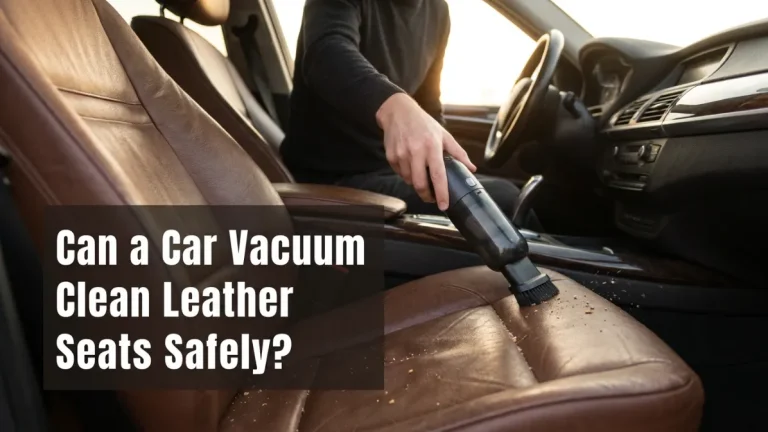
Yes, a cordless car vacuum is usually better for fast cleanups because it is easier to grab, carry, and store. That ease matters more than people think. A vacuum you use twice a week often beats a stronger one you avoid for a month.
This is why cordless models sell so well. They remove friction. You see dirt, you pick up the vacuum, and you clean it. No cord. No outlet. No setup.
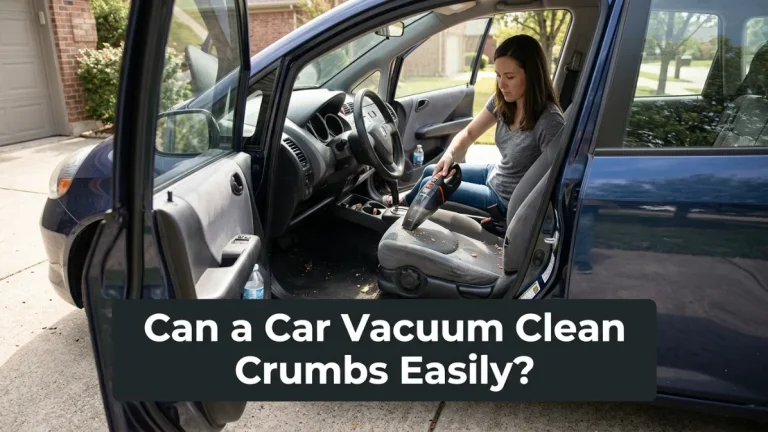
That simple habit matters in a car. Most real messes are small. Fries in the seat gap. Dry leaves in the footwell. Dust on the dash edge. For these jobs, a light handheld cleaner feels right.
Are cordless car vacuums strong enough for car cleaning?
Yes, many are strong enough for light and medium messes. A good cordless handheld can handle crumbs, dust, loose dirt, and some pet hair. It may struggle with deep sand, matted carpet, or thick hair woven into seat fabric.
Dyson helped define the premium cordless market. Their machines showed what a strong digital motor and smart cyclone design could do. Shark also pushed portable cleaning tools with useful attachments. BLACK+DECKER stayed popular because it kept prices lower. DeWalt entered from the tool world, which matters if you already own that battery system.
That battery system point is easy to miss. A DeWalt cordless vac may not be tiny, but if you already own DeWalt batteries, the vacuum becomes cheaper and more useful. The same idea can apply to other tool brands. That is a smart ownership play.
Quick Summary
Cordless vacuums win when speed and ease matter most. They are best for quick upkeep, light dirt, and busy drivers who want a simple tool they will actually use.
Convenience is a real performance feature. Still, convenience alone will not pull sand out of carpet. Power and tool design matter next.
How Much Suction Do You Really Need to Clean a Car Well?
You need enough suction to lift dirt from tight spaces, but suction alone does not clean a car well. Airflow, nozzle shape, brush design, and time on the surface matter just as much. That is why two vacuums with similar claims can feel very different in real use.
Many brands throw out numbers without context. Some use air watts. Some use pascals. Some say “powerful” and stop there. Those numbers can help, but they do not tell the full story.
Cars have narrow gaps, textured mats, cloth seats, plastic trim, and awkward corners. A vacuum needs the right head to reach them. A crevice tool often beats raw suction in seat rails. A motorized brush can beat both on pet hair.
What is better for pet hair and sand?
For pet hair, a brush attachment or rubberized tool often matters most. For sand, steady airflow and enough run time matter more. Sand is heavy, and hair sticks deep into fabric, so each mess needs a different strength.
If you have dogs, do not buy on power numbers alone. Look for a pet tool, a powered mini brush, or at least a stiff upholstery brush. If you live near a beach, focus on longer cleaning time and a larger bin. Sand fills small dust cups fast.
The best car vacuum is not always the strongest on paper. It is the one with the right reach, the right tool, and enough time to finish the job.
The rule here is simple. Match the vacuum to the mess, not to the marketing.
Power also changes over time, especially with batteries. That is the next piece buyers often miss.
What Should You Expect From Battery Life, Charging Time, and Power Fade?
You should expect most cordless handheld car vacuums to run long enough for quick cleanups, not long detail sessions. Battery life often feels fine when the vacuum is new, but heat, age, and high-power mode can shorten that run time faster than many buyers expect.
Most cordless units use a lithium-ion battery. That battery type is popular because it stores a lot of energy for its size. It also charges fairly fast. But it does not love heat.
Battery University’s guide to lithium-based batteries explains that heat speeds battery wear. That matters for car owners because a parked vehicle can get very hot in summer.
How long should a cordless car vacuum battery last?
For many handheld models, a useful run time is often around 10 to 30 minutes, depending on power mode and attachment. Premium models may give more flexibility, but high mode drains batteries fast. One aging battery can change the whole ownership experience.
If you clean one compact car each week, that may be enough. If you clean a large SUV with kids, pets, and a third row, it may not. The same machine can feel perfect for one driver and frustrating for another.
Warning:
Try not to store or charge a lithium-ion vacuum battery in a very hot car for long periods. Heat can shorten battery life and lower run time over the months.
A 2024 S&P Global Mobility report said the average age of vehicles in the U.S. reached 12.6 years. People keep cars longer now. That makes long-term battery aging and replacement cost more important than it used to be.
Tip:
If you choose cordless, try to buy a model with a removable battery or an easy replacement path. That can protect the value of your vacuum after the first year or two.
Battery limits do not make cordless bad. They just change who it fits best. Now let’s compare the power sources people overlook.
Which Power Source Makes the Most Sense for Your Car and Home?
The best power source depends on where you park, where you store the vacuum, and whether you already own compatible batteries. A 12V plug works anywhere inside the car, a wall outlet works best at home, and tool batteries work best if you already use that brand.
This is where many buying guides stay too general. Your home setup matters as much as the vacuum itself.
If you live in a house with a garage, a wall-powered corded vacuum or wet/dry shop vac makes sense. If you park on the street or in a shared lot, a cordless handheld is much easier. If you already own DeWalt batteries for drills or other tools, a battery-powered vac can be a smart two-in-one solution.
Can a 12V car vacuum clean pet hair and sand?
Sometimes, but usually only light amounts. A 12V car vacuum cleaner can work for crumbs, dry dust, and quick touch-ups. For heavy sand or deep pet hair, many 12V models feel underpowered.
That does not make them useless. It just means they fit a narrow job. They are best for drivers who want a simple tool that stays in the trunk for small messes. They are not the best pick for full interior detailing.
A 2023 U.S. Census Bureau report said the average one-way commute rose to 26.8 minutes in 2022. Many Americans spend a lot of time in their vehicles. More time in the car means more dirt, crumbs, and dust build up over the week.
Quick Summary
Choose 12V for light emergency cleanup, wall power for the strongest home use, and tool batteries if you already live in that battery ecosystem.
Once you know the power source, the next choice is what touches the dirt. Filters and tools can make or break the result.
How Do Filters, Dust Bins, and Attachments Change Cleaning Results?
Filters, bins, and attachments change cleaning results more than most buyers expect because they affect airflow, dust control, and reach. A good crevice tool can find dirt a strong motor cannot reach. A clogged filter can make even a strong vacuum feel weak.
A HEPA filter matters if you care about fine dust or allergies. It can help trap smaller particles instead of sending them back into the air. That matters in a small cabin where dust can linger close to your face.
The EPA’s guide to indoor air quality explains why reducing dust and particles indoors matters. A car is a small enclosed space, so cleaner surfaces and better filtration can make the cabin feel fresher.
Dust bin size matters too. Small bins fill fast with sand, pet fur, and dry leaves. Emptying a tiny cup three times during one clean gets annoying. That is not just a comfort issue. It slows the job enough that people clean less often.
Attachments are the hidden winners here:
- Crevice tool: best for seat rails, tight gaps, and console edges
- Brush tool: best for vents, trim, and light fabric work
- Motorized mini brush: best for pet hair on seats and mats
- Flexible hose: best for trunks, under seats, and odd angles
Tip:
If two vacuums have close power, buy the one with the better crevice tool and brush set. In a car, reach and control usually beat small power differences.
You can also check ENERGY STAR’s vacuum guidance for general vacuum features and efficiency basics. While it is not car-vacuum specific, it helps explain why filtration and maintenance matter.
The rule is simple. A clean filter and the right attachment can rescue an average vacuum.
Now let’s avoid the buying mistakes that waste the most money.
What Mistakes Make Buyers Pick the Wrong Car Vacuum?
Buyers pick the wrong car vacuum when they shop for claims instead of use cases. The biggest mistakes are trusting power buzzwords, ignoring where the vacuum will be used, and buying a tiny handheld for heavy detailing jobs it was never meant to handle.
I see the same errors again and again. Someone buys a very cheap 12V plug-in vacuum and expects garage-level suction. Someone buys a premium cordless model but needs 40 minutes of cleaning on one charge. Someone buys a strong vacuum with no useful attachments.
Here are the mistakes that matter most:
- Buying on “powerful” marketing with no useful specs or tool detail
- Ignoring battery replacement and long-term cost
- Forgetting how hot car storage affects lithium-ion battery life
- Choosing the smallest bin for a large SUV or pet-heavy car
- Skipping pet tools when pet hair is the main problem
- Buying a car-only model when a small shop vac would do more
What is the best vacuum type for car detailing?
For serious detailing, a small wet/dry shop vac is often the best choice. It usually gives better hose reach, longer cleaning time, and stronger performance on mats, trunks, and wet debris than small handheld car vacuums.
That does not mean every driver needs one. If your goal is weekly upkeep, a handheld may still be the smarter buy. But if your idea of “clean” means lifting buried grit from carpet, a shop vac is hard to beat.
If you care more about true detailing than quick cleanup, stop comparing only handheld models. Add a small wet/dry shop vac to your list before you buy.
Quick Summary
The wrong car vacuum usually comes from the wrong expectation. Match the tool to the mess, the parking setup, and how long you really clean each time.
So how do you make the right choice fast? Here is the simple process I use.
How Do You Choose the Right Car Vacuum in 5 Simple Steps?
You choose the right car vacuum by matching five things: your mess, your cleaning time, your parking setup, your storage space, and your budget. If you decide those first, the corded versus cordless choice becomes much easier.
Step-by-Step
- Name your main mess. Choose from crumbs, dust, pet hair, sand, or wet debris.
- Time your real cleaning session. If you clean for under 10 minutes, cordless may be enough.
- Check your power access. Garage outlet, trunk 12V plug, or no outlet at all changes everything.
- Look at tools before power claims. Prioritize crevice tools, brush heads, and hose reach.
- Think about year-two value. Ask if the battery, filter, and parts will still make sense later.
The rule is easy. Start with your real routine, not brand hype.
Now let’s turn that into a fast buying answer by driver type.
Which Type Should You Buy for Your Exact Situation?
You should buy corded if you deep clean, fight heavy dirt, or have easy outlet access. You should buy cordless if you clean often, park away from outlets, or want the fastest tool for light messes. If you detail cars, consider a wet/dry shop vac before either one.
- Buy corded if you have a garage, clean monthly, and want stronger long-session performance.
- Buy cordless if you live in an apartment, want quick cleanup, and hate setup.
- Buy a 12V model only if you want emergency trunk cleanup for crumbs and dust.
- Buy a tool-battery vacuum if you already own a brand like DeWalt and want battery sharing.
- Buy a wet/dry shop vac if pet hair, sand, or full interior detailing is your main goal.
Here is my honest rule of thumb. Most drivers are happier with cordless for upkeep. Most perfectionists are happier with corded or shop-vac power for deep cleaning.
If you have kids, pets, or rideshare passengers, quick cleanup matters a lot. The vacuum that is easiest to grab will usually get used more. If you care about a full reset every few weeks, stronger corded options make more sense.
I did not include an Amazon product box here because I could not verify a live listing honestly in this environment. I would rather skip it than risk giving you a fake product title or link.
Conclusion
Corded and cordless car vacuums both make sense. The better choice depends on how you clean, where you park, and what kind of mess you fight most. Corded wins for long, deep cleaning. Cordless wins for fast, easy upkeep.
If you still feel torn, choose based on your routine. If you want something you will use often, go cordless. If you want stronger, longer cleaning sessions, go corded or step up to a small shop vac. I’m Ryan Carter, and that is the simple answer I would give a friend before they buy.
Frequently Asked Questions
Is a corded car vacuum more powerful than a cordless one?
Usually yes, especially if it is wall-powered or a small shop vac. A weak 12V plug-in model may not be stronger than a good cordless handheld.
Are cordless car vacuums worth it for small messes?
Yes. They are often the best choice for crumbs, dust, and quick weekly cleanup because they are easy to grab and use right away.
Can a 12V car vacuum clean pet hair and sand?
It can handle light dirt, but heavy pet hair and deep sand often need more power and better tools. For those jobs, a stronger cordless model or a corded shop vac usually works better.
How long does a cordless car vacuum battery last?
Many handheld models run for about 10 to 30 minutes, depending on the power mode. Battery age, heat, and strong suction settings can shorten that time.
Do I need a HEPA filter in a car vacuum?
You do not always need one, but it can help with fine dust and pet dander. It is a smart feature if you care about cleaner air inside the cabin.
Should I buy a car vacuum or a small shop vac?
Buy a car vacuum if you want light, quick cleanup. Buy a small shop vac if you want deeper cleaning, longer run time, and better performance on heavy messes.