Want better sound from your car stereo? This guide walks you through simple upgrades, smart tuning, and expert techniques to dramatically improve audio clarity, bass response, and overall listening experience—no professional installer needed.
Key Takeaways
- Upgrade your speakers: Factory speakers often lack depth and clarity; replacing them with high-quality aftermarket models delivers richer sound.
- Tune your equalizer settings: Adjust bass, midrange, and treble to match your music taste and car acoustics for balanced audio.
- Add a digital signal processor (DSP): A DSP fine-tunes audio signals, reduces distortion, and enhances sound staging for a concert-like experience.
- Use high-quality audio files: Streaming low-bitrate music or using MP3s under 320kbps limits sound quality—opt for lossless formats when possible.
- Soundproof your car: Reducing road and engine noise lets you hear more detail in your music without cranking the volume.
- Check wiring and grounding: Poor connections cause static and weak signals—ensure clean, secure wiring for optimal performance.
- Position speakers correctly: Proper speaker placement improves imaging and sound balance, especially for door and rear deck speakers.
How to Improve Car Stereo Sound Quality for Better Audio
Whether you’re cruising down the highway or stuck in traffic, great music makes every drive better. But if your car stereo sounds flat, tinny, or distorted, you’re missing out. The good news? You don’t need a full audio overhaul to enjoy richer, clearer sound. With a few smart upgrades and tuning techniques, you can dramatically improve your car stereo sound quality—right from your driveway.
In this guide, we’ll walk you through practical, step-by-step methods to enhance your car’s audio system. From upgrading hardware to fine-tuning settings, you’ll learn how to get the most out of your stereo without breaking the bank. Whether you’re a casual listener or an audiophile, these tips will help you achieve a more immersive, enjoyable listening experience.
1. Start with High-Quality Audio Sources
Even the best speakers can’t fix poor-quality audio files. If you’re streaming music or playing MP3s, the source material plays a huge role in sound quality.
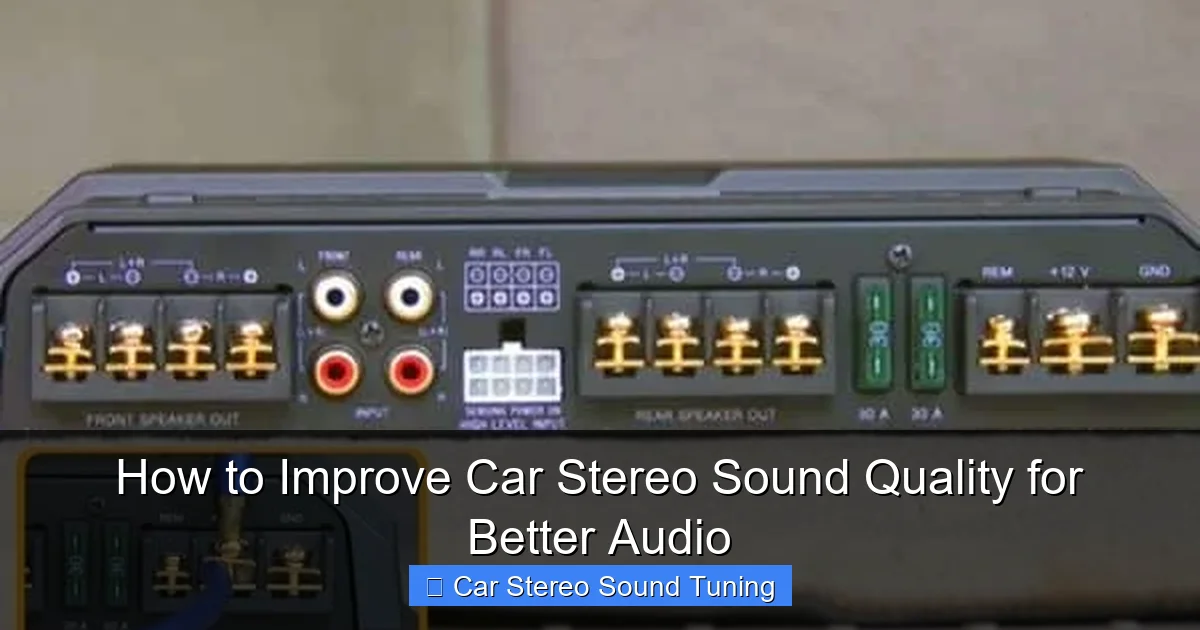
Visual guide about How to Improve Car Stereo Sound Quality for Better Audio
Image source: caraudiohunt.com
Use High-Bitrate or Lossless Audio
Most streaming services offer different quality levels. For example, Spotify’s “Very High” setting streams at 320kbps, which is good—but not great. Apple Music and Tidal offer lossless or Hi-Res audio, which preserves more detail. If you download music, choose FLAC or ALAC files over standard MP3s.
Avoid Bluetooth Compression When Possible
Bluetooth is convenient, but it compresses audio signals, especially on older codecs like SBC. Use aptX, LDAC, or AAC if your phone and stereo support them. For the best quality, plug in via USB or AUX when you can.
2. Upgrade Your Speakers
Factory-installed speakers are often made from cheap materials and designed for cost, not performance. Upgrading them is one of the most effective ways to improve car stereo sound quality.
Choose the Right Speaker Type
Look for coaxial speakers for easy replacement or component speakers for superior sound. Component systems separate the woofer and tweeter, allowing better placement and imaging. Brands like JBL, Alpine, and Kicker offer reliable options for most vehicles.
Match Speakers to Your Car’s Acoustics
Smaller cars benefit from full-range speakers, while larger vehicles may need dedicated subwoofers for deep bass. Check your car’s speaker size (usually 6.5” for doors) before buying.
Install Properly
Use speaker adapters and seal gaps with foam or rubber to prevent sound leakage. Poor installation can cause vibrations and reduce clarity.
3. Tune Your Equalizer Settings
Most car stereos have built-in equalizers (EQ). Learning to adjust them can transform your sound.
Understand the Frequency Bands
- Bass (60–250 Hz): Adds depth to kick drums and basslines. Too much can muddy the sound.
- Midrange (250 Hz–4 kHz): Affects vocals and instruments. Boost slightly for clarity.
- Treble (4–20 kHz): Adds sparkle to cymbals and vocals. Too high can cause ear fatigue.
Start with a Flat EQ and Adjust Gradually
Reset your EQ to neutral, then play a familiar song. Adjust one band at a time. For example, if vocals sound distant, boost the midrange slightly. If the bass overpowers, reduce it by 2–3 dB.
Use Presets Wisely
Many stereos have presets like “Rock,” “Pop,” or “Jazz.” These can be a starting point, but fine-tune them to your car’s acoustics and personal taste.
4. Add a Digital Signal Processor (DSP)
A DSP is a small device that processes audio signals before they reach your speakers. It’s like a sound engineer for your car.
Why Use a DSP?
DSPs correct timing, phase, and frequency issues. They can time-align speakers so sound reaches your ears simultaneously, creating a more natural “sweet spot.” They also reduce distortion and allow precise EQ control.
Popular DSP Options
Brands like Audison, Helix, and JL Audio offer plug-and-play DSPs for most vehicles. Some integrate with your factory stereo, while others require an aftermarket head unit.
Professional Tuning Recommended
While some DSPs have auto-tuning features, a professional installer can optimize settings for your specific car and seating position.
5. Improve Power Delivery with an Amplifier
Your factory head unit may not provide enough clean power to drive high-quality speakers. Adding an amplifier boosts signal strength and clarity.
Match Amplifier Power to Speakers
Check your speakers’ RMS power rating and choose an amp that delivers 75–100% of that value. Overpowering can damage speakers; underpowering causes distortion.
Consider a 4-Channel Amp
A 4-channel amplifier can power front and rear speakers, while a mono amp is ideal for a subwoofer. Compact Class D amps are efficient and generate less heat.
Run Proper Power and Signal Cables
Use thick power cables (8–4 gauge) and shielded RCA cables to reduce interference. Keep power wires away from signal wires to avoid noise.
6. Soundproof Your Car
Road noise, wind, and engine rumble drown out subtle audio details. Soundproofing reduces external noise and improves perceived sound quality.
Use Dynamat or Similar Materials
Apply sound-deadening mats to doors, floor, and trunk. Focus on areas near speakers—vibrating panels distort sound. One 20-sheet pack can cover most doors.
Seal Gaps and Vents
Use foam tape or weather stripping to seal door gaps. This reduces wind noise and improves bass response by creating a tighter acoustic environment.
Upgrade Window and Floor Insulation
Thicker carpet pads and acoustic window films can further reduce noise, especially in older vehicles.
7. Check and Upgrade Wiring
Old or corroded wiring can cause signal loss, static, and weak output.
Inspect Speaker Wires
Look for frayed or loose connections. Replace thin factory wires with 16–14 gauge OFC (oxygen-free copper) wire for better conductivity.
Ensure Proper Grounding
A poor ground connection causes hum and distortion. Clean the grounding point on your amp and head unit, and use a dedicated ground wire if needed.
Use Quality RCA Cables
Cheap RCA cables pick up interference. Invest in shielded cables with gold-plated connectors for cleaner signal transfer.
8. Optimize Speaker Placement and Angling
Where and how your speakers are mounted affects sound imaging and balance.
Aim Tweeters at Ear Level
If your tweeters are in the doors, angle them toward your ears when seated. This improves clarity and soundstage.
Avoid Rear Deck Speaker Overload
Many cars have rear speakers that overpower the front. Reduce their volume or disable them if they muddy the sound.
Consider Kick Panel Mounts
Mounting front speakers in custom kick panels (lower door panels) improves imaging and reduces distortion from door vibrations.
9. Use a Subwoofer for Deep Bass
If you love bass-heavy music, a subwoofer adds punch and depth that factory systems can’t match.
Choose the Right Size and Type
8” or 10” subs fit most trunks and deliver tight, accurate bass. 12” subs are louder but need more space. Sealed enclosures offer precision; ported boxes boost volume.
Match Sub to Amp
Ensure your subwoofer’s impedance (ohms) matches your amplifier’s output. Most subs are 2 or 4 ohms. Use a mono amp designed for subwoofers.
Set Crossover Correctly
Use a low-pass filter (around 80 Hz) to send only bass frequencies to the sub. This prevents mid-bass from distorting and frees up your main speakers.
10. Troubleshooting Common Sound Issues
Even with upgrades, you might run into problems. Here’s how to fix them.
Static or Hissing Sound
Check RCA cables for damage or interference. Ensure the head unit and amp share a common ground. Turn off unnecessary electronics (like phone chargers) that may cause noise.
Weak or Distorted Bass
Verify subwoofer polarity—wired backward, it cancels out bass. Check amp gain settings; too high causes clipping. Ensure the enclosure is properly sealed.
Uneven Volume Between Speakers
Use your stereo’s balance and fader controls to adjust. If one speaker is quieter, inspect wiring and connections.
No Sound from One Speaker
Test the speaker with another channel. If it works, the issue is wiring or the head unit. If not, the speaker may be blown.
Conclusion
Improving your car stereo sound quality doesn’t require a professional installer or a huge budget. By starting with high-quality audio sources, upgrading key components like speakers and amplifiers, and fine-tuning your system with EQ and DSP, you can enjoy a rich, immersive audio experience every time you drive.
Remember: small changes add up. Even adjusting your equalizer or adding soundproofing can make a noticeable difference. Take it step by step, listen critically, and tailor your setup to your music and vehicle. With these tips, your car will become a rolling concert hall—no matter where the road takes you.
🎥 Related Video: Cheap Car Stereo Sound Improvement
📺 hoohoohoblin
If your car stereo doesn’t sound good, here is how to make your car stereo sound better cheap, for around $40. Most cars come …

