Quick Summary: Battery capacity is how much energy your car’s battery can store and deliver. Learn how battery capacity works, what Ah, RC, and CCA mean, how to test it at home, and how to fix weak-battery problems fast. Use my simple steps, charts, and tips to keep your car starting strong in any weather.
If your car struggles to start, stalls at lights, or the lights dim, you might be fighting a weak battery. Don’t panic. You can check it at home with simple tools, and you can fix most issues fast. This guide explains how battery capacity works in plain English. I’ll show you how to diagnose it, test it, and keep it strong. You’ll learn the numbers to watch, what they mean, and the easy steps that save money and stress.

How Battery Capacity Works: The Simple Truth
Battery capacity is the “fuel tank” for electricity. It is the amount of energy the battery can hold and deliver. In cars, most batteries are 12-volt lead-acid types. Capacity is shown in amp-hours (Ah) and reserve capacity (RC). Cold cranking amps (CCA) shows starting power in the cold. If capacity is low, your car starts slow, lights dim, and electronics glitch.

Fast Definitions: Ah, Wh, RC, and CCA
Ah (amp-hours) tells you how much current the battery can give over time. A 60 Ah battery can deliver 3 amps for 20 hours (3 A x 20 h = 60 Ah). Wh (watt-hours) is total energy (volts x amp-hours). On a 12 V battery, 60 Ah is about 720 Wh. RC (reserve capacity) is minutes the battery can hold 25 amps at 80°F before dropping to 10.5 V. CCA (cold cranking amps) is how many amps the battery can deliver for 30 seconds at 0°F while staying above 7.2 V.

How The Battery Stores Energy (In Plain English)
Inside the case, plates sit in acid. A chemical reaction stores energy when you charge. It releases energy when you start the car or run lights. Over time, the plates change. They shed material. They sulfate if left low. Heat and vibration speed this up. That is why capacity fades with age and abuse.

What The Numbers On Your Battery Label Mean
You’ll see a group size (fit), CCA (starting), RC (run-time at a 25 A draw), and sometimes Ah (total capacity). AGM or Flooded tells you the type. More CCA helps in cold starts. More Ah or RC helps if you take many short trips or run accessories parked.

Ah vs CCA vs RC: Which Number Matters For You?
If your car cranks slow, look at CCA. If you camp, tailgate, or run a dash cam, look at Ah or RC. For daily commuters with short trips, higher Ah or RC helps keep lights and systems happy. For trucks in winter, high CCA is king. For stop-start cars, you need EFB or AGM with strong cycle life.

AGM vs Flooded vs EFB vs Lithium: Capacity Differences
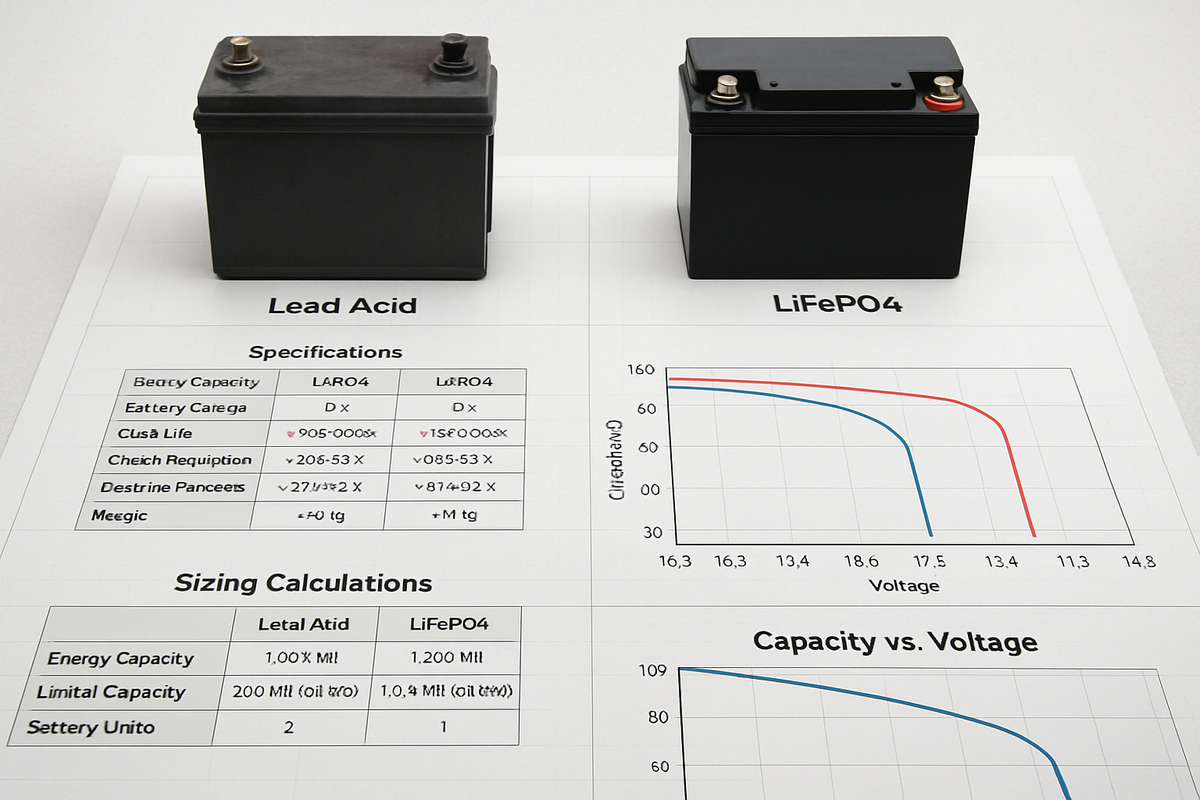
Flooded batteries are standard and affordable. AGM holds charge better, resists vibration, and handles deep cycles better. EFB is stronger than flooded for stop-start but cheaper than AGM. Lithium (LiFePO4) is light, charges fast, and keeps voltage flat, but needs a proper battery management system and matching charging setup.
How Battery Capacity Works In Your Car Day To Day
When you start the car, the battery dumps a huge burst of current. After the engine runs, the alternator charges the battery. On short trips, the alternator may not refill what you used. This leaves the battery undercharged. Do this many days in a row and capacity fades.
Start, Drive, Park: Where Capacity Goes
Starting takes a lot of amps. The radio, lights, HVAC blower, and heated seats pull power too. Parked, there is still a small draw for memory and security. That is normal. But if that draw is high, your battery drains overnight. Low charge equals sulfation. Sulfation cuts future capacity. It’s a slow leak on your battery’s health.
Parasitic Drain And Short Trips
A normal parasitic draw is 20–50 milliamps. That is safe. If it is higher, the battery drops fast. Add short trips and heavy accessories, and the battery rarely gets full. Use a smart charger once a week. It keeps capacity high and extends life.
How To Test Your Battery Capacity At Home (Step-By-Step)
You can test at home with a cheap multimeter and a few simple steps. You will check resting voltage, cranking voltage, alternator output, and basic capacity. These tests answer: Is my battery good? Is my alternator good? Is there a drain?
Tools You Need
Have these ready:
- Digital multimeter (DC volts and amps)
- Battery charger (smart, 4–10 A)
- Jumper cables or a jump pack
- Work gloves and eye protection
- Wire brush for terminals
- Optional: 12 V test light, OBD2 scanner
Step 1: Safety First
Park in a ventilated area. Turn the car off. Set the parking brake. Wear eye protection. Keep sparks away from the battery. Do not short the terminals. If you smell rotten eggs (sulfur), stop and let it air out.
Step 2: Resting Voltage Test
Charge the battery fully. Let it rest for 3–4 hours with the car off. Measure voltage at the posts. A healthy 12 V lead-acid battery at 77°F should read about 12.6–12.8 V. If it reads 12.2 V or less, it is roughly half charged. Under 12.0 V, it is deeply discharged.
Step 3: Cranking Voltage Test
Keep the meter on the battery. Have a helper crank the engine. Watch the lowest voltage during crank. Above 9.6 V is okay for most cars. If it drops under 9.6 V, the battery may be weak or the engine is hard to crank. Cold weather drops this number. Thick oil and weak starters do too.
Step 4: Alternator Charging Test
Start the engine. Turn on headlights and the blower on high. Measure voltage at the battery. You should see about 13.8–14.7 V. If it is under 13.5 V, the alternator may be weak. If it is over 15.0 V, the regulator may be bad and could overcharge the battery.
Step 5: Simple Capacity Check With A 10 A Load
This is a rough capacity check. It is not lab-grade, but it helps. Fully charge the battery and disconnect it from the car. Connect a 10 A load (like a pair of halogen headlamps in parallel) and a voltmeter. Time how long it takes to drop from 12.6 V to 12.0 V. A healthy 60 Ah battery should handle roughly 2–3 hours at that load before hitting 12.0 V (this is a rough guide because Peukert’s law and temperature matter). If it sags fast, the battery may have lost capacity.
Optional: Parasitic Draw Test
Make sure everything is off and doors are closed. Wait 20–45 minutes for modules to sleep. Set the meter to DC amps. Put it in series with the negative cable. Normal draw is 0.02–0.05 A. Over 0.1 A is a problem. Pull fuses one by one to find the circuit that drops the draw.
Battery Voltage And State-Of-Charge Chart
Use this chart to judge “good vs bad” by voltage. Measure after the battery rests for at least 3 hours. Temperature matters. Cold lowers voltage slightly. AGM tends to sit a bit higher than flooded.
| Battery Type | State of Charge | Resting Voltage (12 V) | Good vs Bad | Notes |
|---|---|---|---|---|
| Flooded Lead-Acid | 100% | ≈ 12.6–12.7 V | Good | Full charge at 77°F |
| Flooded Lead-Acid | 75% | ≈ 12.4–12.5 V | Acceptable | Plan a top-up charge |
| Flooded Lead-Acid | 50% | ≈ 12.2 V | Weak | Frequent 50% hurts capacity |
| Flooded Lead-Acid | 25% | ≈ 12.0 V | Poor | Deeply discharged |
| Flooded Lead-Acid | 0% | < 11.9 V | Very Bad | May be sulfated |
| AGM Lead-Acid | 100% | ≈ 12.8–12.9 V | Good | AGM rests higher |
| AGM Lead-Acid | 75% | ≈ 12.6–12.7 V | Acceptable | Top-up helps longevity |
| AGM Lead-Acid | 50% | ≈ 12.4–12.5 V | Weak | Frequent low SOC reduces life |
| AGM Lead-Acid | 25% | ≈ 12.1–12.2 V | Poor | Recharge ASAP |
| AGM Lead-Acid | 0% | < 12.0 V | Very Bad | May not recover fully |
| LiFePO4 (12.8 V nominal) | 100% | ≈ 13.3–13.4 V | Good | Flat curve; needs Li charger |
| LiFePO4 (12.8 V nominal) | 20–80% | ≈ 13.1–13.3 V | Normal | Voltage stays flat vs lead-acid |
| LiFePO4 (12.8 V nominal) | < 20% | < 13.0 V | Low | Stop deep discharges |
| This table shows how battery capacity works at rest: higher voltage usually means higher state-of-charge, but chemistry and temperature affect readings. | ||||
Quick Diagnosis: Symptoms, Likely Causes, And Fast Fixes
Match your problem to this list. It will save time and money. Fix the cause, not just the symptom. Many “dead” batteries are just undercharged or have dirty terminals.
| Symptom | Likely Cause | Fast DIY Fix | When To Replace | Notes |
|---|---|---|---|---|
| Slow crank | Low charge or weak CCA | Charge overnight; clean terminals | Still slow after full charge | Cold weather amplifies it |
| Click, no start | Very low battery or bad connection | Jump-start; tighten/clean clamps | Fails again next morning | Check alternator after jump |
| Dim lights at idle | Weak alternator or low SOC | Measure 13.8–14.7 V running | Under 13.5 V charging | Bad belt tension can cause this |
| Battery dies overnight | Parasitic drain | Do draw test; pull fuses to find | Drain over 0.1 A persists | Dash cams and add-ons common |
| White/green corrosion | Acid vapor on posts | Clean with brush; use protectant | Rebuild repeats often | Poor clamp seal or overcharge |
| Swollen case | Overcharge or heat | Check alternator voltage | Any swelling is unsafe | Replace immediately |
| Random warning lights | Low voltage drops modules | Charge battery; test load | Codes return with full voltage | This shows how battery capacity works on electronics |
Charger Selection And Charge Time: Easy Math
Pick a smart charger with a profile for your battery type. AGM needs AGM mode. Lithium needs a lithium charger. Charge time depends on battery size and how empty it is. Use this simple rule: Hours ≈ (Ah to replace) ÷ charger amps × 1.2 (for losses).
How Long To Charge From 50% To Full?
Example: 70 Ah battery at 50% needs about 35 Ah. With a 5 A charger: 35 ÷ 5 × 1.2 ≈ 8.4 hours. With a 10 A charger: 35 ÷ 10 × 1.2 ≈ 4.2 hours. A smart charger will slow down near the end. That is normal. It protects the battery.
| Battery Size (Ah) | Start SOC | Charger Amps | Estimated Hours | How battery capacity works in time |
|---|---|---|---|---|
| 60 Ah | 50% | 4 A | ≈ 9 hours | 30 Ah ÷ 4 A × 1.2 |
| 60 Ah | 50% | 10 A | ≈ 3.6 hours | Faster, but watch heat |
| 70 Ah | 30% | 10 A | ≈ 5.9 hours | Needs ~49 Ah back |
| 80 Ah | 80% | 4 A | ≈ 4.8 hours | Top-up charges are quick |
| AGM 70 Ah | 40% | 8 A (AGM mode) | ≈ 5.0 hours | AGM prefers smart charging |
Cold Weather And Hot Weather: What They Do To Capacity
Cold slows the chemical reaction, so available capacity and CCA drop. A healthy battery can lose 30–50% of its cranking power on a very cold morning. Heat speeds reactions but increases water loss and plate decay. Heat kills batteries faster over the long run.
Winter Starting Tips That Work
Keep the battery fully charged before a cold snap. Use the correct oil grade for winter. Turn off blower, lights, and heated seats before cranking. If it cranks slow, stop. Wait 30 seconds. Try again. Keep a jump pack in the trunk. It saves the day, fast.
Summer Heat Care
Park in the shade. Avoid long idling with heavy electrical loads. Check fluid levels in serviceable flooded batteries. Keep terminals clean. If your alternator charges above 14.8 V on a hot day, get it checked. Overcharge cooks batteries.
Battery Capacity Myths vs Facts
Myth: You must drive 30 minutes to recharge after a start. Fact: It depends on how much charge was used and alternator output. Short trips often are not enough. A smart charger is better. Myth: A battery that reads 12.6 V is always good. Fact: It might have surface charge or low capacity under load. Always load test.
When To Replace Your Battery (And How To Choose)
Replace when it fails a load test after a full charge, or it cannot hold charge for even a day. Replace at the first sign of a swollen case, cracked case, or leaking acid. If it is 4–6 years old and weak in winter, plan a swap soon.
Pick The Right Size And Capacity
Match the group size so it fits your tray and cables. Choose equal or higher CCA than stock. If you run accessories or make short trips, choose higher RC or Ah. For stop-start cars, use EFB or AGM as required. Do not downgrade type. Your charging system is tuned for it.
Budget vs Premium: Does It Matter?
Premium AGM resists heat, vibration, and deep cycles. If you live in hot or rough areas, it pays off. If your car sits often, a premium battery with a smart charger will last longer. For simple daily use, a mid-tier flooded battery works fine if you keep it charged.
Maintenance That Protects Capacity
Clean clamps twice a year. Check that the battery is secure. A loose battery vibrates and sheds plate material. That kills capacity. Keep it charged above 80% when possible. Low state of charge breeds sulfation. That is capacity loss you cannot fully undo.
Weekly And Monthly Checks
Weekly: Look for corrosion. Make sure clamps are tight. Listen for slow cranks. Monthly: Measure resting voltage. Run a smart charger if it is under 12.5 V. Seasonally: Test the alternator. Check belts. Replace batteries before winter if they are marginal.
If You Store Your Car
Use a battery maintainer, not a trickle charger. A maintainer floats and will not overcharge. Disconnect the negative cable if you do not have a maintainer. Store in a cool, dry place. Top up charge every 30–45 days. Label the last charge date.
EVs And Hybrids: A Quick Note On Battery Capacity
EVs have a high-voltage pack that runs the motor. They still have a 12 V battery for computers, locks, and lights. That small battery can die and keep the car from “starting” even if the big pack is full. Hybrids also have a 12 V battery that boots systems. Care for it like any other car battery.
The 12 V In Modern Cars Matters More Than You Think
Modern cars depend on clean, steady 12 V power. Low capacity causes false warning lights, sensor errors, and radio resets. If electrical gremlins appear, test the 12 V battery first before chasing parts. It is often the cheapest fix.
FAQs
How do I know if my battery is bad or just needs a charge?
Charge it fully. Let it rest 3 hours. Do a cranking test. If voltage drops below 9.6 V or it will not hold 12.4–12.6 V after a day, it is likely bad. If it holds, your issue was low charge.
What is the fastest way to tell if my alternator works?
Measure at the battery with the engine running and lights on. You should see 13.8–14.7 V. Under 13.5 V is weak. Over 15.0 V is overcharging.
Can I use a bigger battery than stock?
Yes, if it fits your tray and cables. Match the group size. Higher CCA and RC are fine. Do not switch chemistry without confirming the car supports it.
How often should I charge a car that sits?
Use a maintainer full-time. If not, top up every 30–45 days. Let it rest and check for 12.6–12.8 V. If lower, charge again.
Will short trips ruin my battery?
Short trips keep the battery undercharged. Over time, this causes sulfation and capacity loss. Use a smart charger weekly to offset this.
Does cleaning terminals really help?
Yes. Corrosion raises resistance. That steals cranking power and charging current. Clean clamps, coat with protectant, and keep them tight.
Is 12.2 V enough to start a car?
Sometimes, but it is about 50% charged. It may start when warm but fail when cold. Charge it to be safe and protect capacity.
Conclusion
You now know how battery capacity works, what the key numbers mean, and how to test and fix issues at home. Check resting voltage. Do a cranking test. Verify alternator output. Keep the battery charged, clean, and secure. Small steps prevent big headaches. If your battery fails after a full charge and load test, replace it with the right size, CCA, and RC. A smart charger and good habits will keep your car starting strong in any season.
For extra confidence, you can compare your results to trusted sources, such as guidance from AAA, buying and testing advice from Consumer Reports, and general battery basics from the U.S. Department of Energy. With the right checks and care, your battery will last longer and perform better—mile after mile.