Group Size Explained: Best Practices For Teams 2026

Quick Summary: Battery group size explains the physical size, terminal layout, and fitment of your car battery. Pick the right group size so the battery fits, clamps down, and connects safely. Use your manual, the label on your old battery, or a simple measuring tape to match it. I’ll show you how to check, test, and replace it at home.
If your car won’t start, the battery may be the problem—or it may be the wrong size. Many drivers do not know what “battery group size” means. Don’t worry. I’ll make it simple. In this guide, I’ll explain group size in plain English. You’ll learn how to find yours, test your battery, and replace it safely. I’ll share steps, charts, tools, and real tips you can use today.

What Is Battery Group Size?
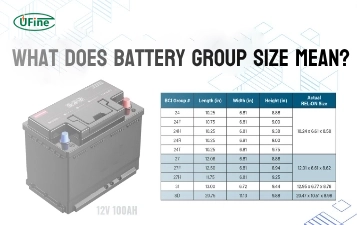
Battery group size is the standard for the battery’s outer size, terminal location, and fit in your car. In the United States, most brands follow the BCI (Battery Council International) sizing system. Group size tells you the length, width, height, and where the posts sit. It makes sure the battery fits the tray, the cables reach, and the hold-down clamp can lock it in place. It does not tell you the power by itself. But it prevents costly fit mistakes.

- Fit: The right group size drops into the tray with room for a clamp. No gaps. No strain.
- Safety: Correct post location keeps cables from stretching or crossing. That prevents shorts.
- Service: A snug fit stops vibration. That helps the battery last longer.
- Speed: When you match the group size, your install is easy and fast.
Key Things Group Size Controls
Group size sets the case size, the post layout, and the hold-down lip. It also hints at what will fit under your hood. But it does not set cold cranking amps (CCA) or reserve capacity (RC). Those are separate specs. You can often choose a higher CCA battery within the same group size if it fits and the posts match.

- Case dimensions (L × W × H)
- Terminal type and position (top post or side post, normal or reversed)
- Hold-down style (ledge or base clamp)
- Clearance for hood and cables
How to Find Your Car’s Battery Group Size (Step-by-Step)
You can find the group size in three easy ways. I suggest you confirm with two of them to be sure. It takes a few minutes and saves you a return trip to the store. Follow these steps and you’ll pick the right battery the first time.
- Check your owner’s manual. Look under “Battery” or “Specifications.” It may list a BCI group like 24F, 35, 48 (H6), 49 (H8), or 94R (H7).
- Read the label on your old battery. Look for a code such as Group 35, 24F, 51R, 47 (H5), 65, 59, 78, 49 (H8), or 94R. The “R” means reversed terminals.
- Measure the tray. Use a tape measure. Note the inside length, width, and height. Also note the hold-down style (top clamp or base ledge).
- Match terminal type. Are your cables for top posts or side posts? Check if the positive cable needs to be on the left or right. Wrong post layout can make cables too tight.
- Use a parts lookup. Confirm your group size with an online fit tool. Or ask a parts counter. Cross-check what you found in steps 1–4.
- Check for space. If your car allows, you can pick a higher-capacity battery in the same or approved alternate group size. Make sure the hood closes and cables are not strained.
- Confirm chemistry. If your car has start-stop, it likely needs an AGM or EFB battery in the correct group size. Do not downgrade chemistry.
Tools You Need to Check Group Size
You do not need much. A few simple tools help you avoid a bad fit and a second trip. Keep these handy before you buy.

- Owner’s manual or phone with the digital manual
- Tape measure
- Flashlight
- Phone camera (to snap the old battery label)
- Gloves and eye protection
Group Size vs CCA, Reserve Capacity, and Chemistry
Group size is about fit and terminals. CCA, RC, and chemistry are about performance. You must match all of them to your car’s needs. Get the right size first. Then choose the best specs you can afford. Here is the difference in plain terms.

- Group size: Physical size, post layout, and hold-down style.
- CCA (Cold Cranking Amps): Starting power in cold weather. Higher is better for cold climates.
- Reserve Capacity (RC): How long the battery can run essential loads if the alternator fails.
- Chemistry: Flooded (standard), AGM (absorbed glass mat), or EFB (enhanced flooded). Many start-stop cars need AGM or EFB.
Pick the group size that fits. Then match or exceed OEM CCA and RC if possible. Follow chemistry requirements your car lists. Never install a non-AGM battery in a car designed for AGM start-stop. It will fail early.
Battery Voltage Chart (Good vs Bad)
Voltage helps you know if the battery is charged or weak. Group size does not change normal 12-volt readings. Use a multimeter with the engine off for a quick check. Measure at the posts, not the clamps, for a true reading. Temperature affects voltage, but these are good general targets at about 77°F (25°C).

| Battery State | Open-Circuit Voltage (12V battery) | What It Means | Action |
|---|---|---|---|
| 100% charged | 12.6–12.8V | Healthy and ready | No action needed |
| 75% charged | 12.4–12.5V | Usable but not full | Drive or charge soon |
| 50% charged | 12.2V | Weak; may struggle | Charge now |
| 25% charged | 12.0V | Very weak | Charge; test health |
| Discharged | 11.8V or less | Likely won’t start | Charge and test; may replace |
| Overcharged | Above 12.9V (engine off) | Surface charge or charging issue | Turn on headlights for 2 min to remove surface charge; re-test |
With the engine running, you should see about 13.7–14.7V at the battery. If voltage is lower or higher, check the alternator and belt.
Common Starting Problems: Symptoms, Causes, and Fixes
Here are real signs drivers face and what to do next. Use this to save time and avoid guesswork. It helps you decide if you need a new battery, the right group size, or a different fix.

| Symptom | Likely Cause | How to Check | Fast Fix |
|---|---|---|---|
| Clicking, no start | Weak battery, corroded clamps, or bad starter | Measure voltage; inspect clamps | Clean clamps; jump-start; test battery |
| Slow crank, then starts | Battery near end of life or low charge | Voltage at rest; load test | Charge and re-test; replace if fails |
| Dead after short trips | Undercharge from many short drives | Voltage drops over days | Use a smart charger overnight |
| Random dash lights, resets | Loose/dirty terminals; weak battery | Wiggle test; voltage check | Tighten/clean; charge or replace |
| New battery doesn’t fit | Wrong battery group size | Compare case size and posts | Return and match correct group size |
| Starts fine, then stalls | Alternator or belt issue | Engine-on voltage test | Inspect belt; test alternator |
| Battery moves while driving | Wrong size or missing hold-down | Check clamp and tray fit | Install proper group size and clamp |
Popular BCI Group Sizes and Dimensions
Use this table to understand how common batteries compare. Always confirm the exact fit for your car. Some cars accept more than one group size. The dimensions below are typical for each BCI Group Size.
| BCI Group Size | Approx. Dimensions (L × W × H, inches) | Typical Vehicles | Terminal Type | Notes |
|---|---|---|---|---|
| 24F | 10.3 × 6.8 × 8.9 | Many Toyota, Honda (older models) | Top post | “F” and “R” indicate terminal orientation |
| 35 | 9.1 × 6.9 × 8.9 | Honda Civic, Toyota Corolla | Top post | Common compact/mid-size fit |
| 51R | 9.4 × 5.1 × 8.8 | Honda Fit, some Nissan | Top post | “R” = reversed terminals |
| 47 (H5) | 9.5 × 6.9 × 7.5 | VW, Audi, some GM | Top post | DIN/EN equivalent H5 |
| 48 (H6) | 11.0 × 6.9 × 7.5 | GM, BMW, many SUVs | Top post | DIN/EN H6; popular AGM size |
| 49 (H8) | 13.9 × 6.9 × 7.5 | Mercedes, BMW, trucks | Top post | Large capacity; DIN/EN H8 |
| 94R (H7) | 12.4 × 6.9 × 7.5 | German brands, some Ford | Top post | “R” reversed; DIN/EN H7 |
| 65 | 12.0 × 7.5 × 7.6 | Full-size trucks, SUVs | Top post | High CCA options common |
| 78 | 10.2 × 7.1 × 7.3 | GM vehicles | Side post | Side terminals; watch cable reach |
Tip: If your car lists two options, choose the larger group size only if your tray and clamp support it and the hood clears. Bigger is not always better if it does not lock down tight.
Step-by-Step: Test, Choose, and Replace Your Battery
Here is a full plan you can follow at home. You will check the battery, pick the right group size and specs, and install the new one safely. Take your time. Work in a well-lit space. Wear gloves and eye protection.
Part 1: Diagnose Your Battery with a Multimeter (5 Minutes)
This quick test tells you if your battery is charged and if the car is charging it right. It also guides your next step.
- Turn off the engine and all lights. Wait 3–5 minutes for surface charge to settle.
- Set the multimeter to DC volts. Touch red to positive (+), black to negative (−).
- Read the voltage. Use the battery chart above to judge the state of charge.
- Start the engine. Read again. You should see 13.7–14.7V.
- If engine-on voltage is low or high, the alternator or belt may be bad.
If the battery is weak and old (3–5 years), replacement is smart. If it is new but low, charge and retest. A parasitic drain may be at play.
Part 2: Choose the Right Group Size and Specs
Now match the physical size first. Then select the power and chemistry. This prevents fit headaches and ensures strong starts.
- Match your BCI group size. Use your manual, old label, or tray measurements.
- Confirm terminal type and orientation. Top post vs side post. Normal vs reversed.
- Pick chemistry. If your car has start-stop, use AGM or EFB as required.
- Choose CCA. Match or exceed OEM CCA, especially in cold climates.
- Check RC or Ah. Higher reserve is helpful if you run lights and accessories.
- Confirm hold-down style. Make sure the case has the ledge or slots your clamp needs.
- Plan your budget. Pay a bit more for quality. Cheap batteries fail sooner.
Pro tip: Consider brands with clear warranties and easy service. Keep your receipt and install date.
Part 3: Replace the Battery Safely
Replacing a battery is simple with care. Wrong moves can short power and damage modules. Follow these steps for a clean swap.
- Save memory. If your car needs it, use a memory saver. Or note radio codes.
- Park safe. Set the parking brake. Turn off the engine. Wear gloves and eye protection.
- Open the hood. Find the battery and the hold-down clamp.
- Disconnect negative (−) first. Then disconnect positive (+). This prevents shorts.
- Remove the hold-down. Lift out the old battery. Keep it upright.
- Clean the tray and clamps. Use a brush and a mix of baking soda and water on any acid. Dry fully.
- Drop in the new battery. Make sure the group size fits and posts face the right way.
- Install the hold-down. Tighten it snug. The battery should not move.
- Connect positive (+) first. Then negative (−). Tighten both clamps.
- Coat clamps with protectant. This helps prevent future corrosion.
- Start the car. Check for warning lights. Reset clock and radio.
- Recycle the old battery. Turn it in for a core refund.
Some cars need a battery registration or reset after install (common in European brands). If your dash shows charging errors, have a shop register the new battery.
Real-World Examples: Picking the Right Group Size
Here are simple, real examples I see in the shop. They show how group size choice plays out. Use them to guide your own pick.
- Honda Civic (2012–2015): Most use Group 51R or Group 35. If the tray allows both, Group 35 may offer higher CCA. Check cable reach. If cables stretch on 35, stick with 51R.
- Ford F-150 (2009–2014): Many use Group 65. Good space and high CCA choices. Make sure the hold-down fits the base ledge. Watch hood clearance with taller cases.
- Toyota Camry (2012–2017): Often Group 24F or 35 depending on engine. Camry trays are tight. Confirm terminal orientation. 24F has the positive on the left when posts face you.
- BMW 3 Series (F30): Commonly Group 48 (H6) AGM. Car needs battery registration after replacement. Do not downgrade to flooded. Use AGM and register it.
- Chevy Malibu: Some trims use 94R (H7). Tight fit in the tray. Terminals reversed. Confirm clamp slots and the battery ledge—it must match to secure it.
If you want more basics before you start, see our car battery guide and get fast battery replacement tips and car maintenance basics.
Cross-Size Alternatives and Global Equivalents
Some cars list two acceptable group sizes. Others use global sizes like DIN/EN or JIS. Here is how to avoid a mismatch when you cross-shop brands or charts.
- BCI to DIN/EN: Group 48 ≈ H6, 94R ≈ H7, 49 ≈ H8, 47 ≈ H5. Always verify terminals and clamp ledge.
- BCI to JIS: Group 51R relates to JIS 46B24R size. Dimensions vary slightly. Measure your tray.
- “R” suffix: Reversed terminals. Positive and negative swap sides. Do not mix with non-R versions unless your cables allow it.
- Side post vs top post: GM 78 is side post. Do not buy a top-post unit for side-post cables unless you add adapters (not ideal).
- Height traps: European H6/H7/H8 are lower profile than some BCI sizes. Check hood clearance before upsizing.
Safety Tips You Should Not Skip
A battery can shock, leak acid, or spark if handled wrong. These simple habits keep you and your car safe. Do not rush. Safety first, always.
- Wear gloves and eye protection. Batteries can splatter acid if dropped.
- Remove metal jewelry. Rings can short a battery and cause burns.
- Disconnect negative first. Reconnect negative last. It reduces short risk.
- Keep sparks and flames away. Hydrogen gas can ignite.
- Lift straight up. Keep the battery upright to prevent spills.
- Secure the battery. A loose battery can arc or leak on bumps.
- Recycle the old unit. Stores take cores and handle them safely.
For more safety guidance on car systems and battery care, see trusted resources like expert advice on vehicle batteries and AAA battery research and tips.
Budget Tips: Save Money on the Right Battery
You do not need the most expensive battery to get great results. Focus on the right group size and solid specs. Then shop smart. Here is how to stretch your budget and avoid waste.
- Match the correct group size first. Wrong size means returns and wasted time.
- Buy during seasonal sales. Fall and early winter deals are common.
- Compare warranties. A 3-year free replacement is a good balance.
- Check your alternator. A bad alternator will kill a new battery fast.
- Use a smart charger often if you make short trips. It can add years to battery life.
- Keep clamps clean. Corrosion reduces charge and shortens life.
- Don’t overspend on CCA you do not need. Match or slightly exceed OEM.
When to See a Pro
Some cases call for a trained tech and shop tools. If you see any of these signs, get help. It protects your car and wallet in the long run.
- Warning lights stay on after install (battery, charging, or stop-start faults)
- You need battery registration or coding (common on BMW, Audi, VW, Mercedes)
- Severe corrosion on cables or tray
- Stripped, cracked, or warped clamps and posts
- Repeated discharge within days (likely parasitic drain)
- Engine-on voltage out of range (alternator or belt issue)
FAQ
What does battery group size mean in simple words?
It is the standard size and post layout that makes your battery fit your car. It tells you the length, width, height, terminal type, and where the hold-down grips. It does not tell you power by itself.
Can I use a different group size if it fits?
Sometimes, yes. But only if the tray, hold-down, and cables match and the hood closes. Check that the terminals are on the correct sides. If in doubt, stick to the exact group size in your manual.
Is group size the same as CCA?
No. Group size is about fit. CCA is about starting power in cold weather. Pick the right group size, then match or exceed your car’s CCA needs.
What does the “R” mean in sizes like 51R or 94R?
It means reversed terminals. The positive and negative posts swap sides. If you buy the wrong one, your cables may not reach.
How long should a car battery last?
Most last 3–5 years. Hot climates, short trips, and heavy accessory use can shorten life. Smart charging and secure clamps help it last longer.
Do I need an AGM battery?
If your car has start-stop or calls for AGM, then yes. Do not downgrade to a flooded battery. It will fail early and may cause system errors.
How do I tell if my battery is bad or the alternator is bad?
Test voltage. If it is low with the engine off and still low with the engine on, the alternator may be bad. If it is fine with the engine on but low off, the battery may be weak.
Conclusion
Battery group size is your fit key. Get it right, and your new battery will drop in, clamp down, and start strong. Use your manual and the old label to confirm the group. Measure the tray. Match terminals and chemistry. Then pick the best CCA and warranty for your budget. Test with a multimeter, install with care, and recycle the old unit. Follow these steps and you’ll solve starting problems fast and drive with peace of mind.