Why Heat Damages Battery: 2026 Tips To Prevent Degradation

Quick Summary: Heat speeds up chemical wear inside your car battery, evaporates electrolyte, increases self-discharge, and weakens plates—killing battery life fast. Protect it with shade, clean terminals, correct charging voltage, regular tests, and a heat-ready battery. Follow the steps below to diagnose, fix, and prevent heat damage today.
On a hot day, your car starts fine in the morning, then struggles by afternoon. That’s not random—it’s heat robbing your battery’s strength. If you’ve asked “why heat damages battery,” you’re in the right place. I’ll explain what heat does inside a battery, how to test yours at home, and smart steps to prevent surprise breakdowns. You’ll learn simple checks, safety tips, and pro tricks that extend battery life, even in brutal summers.
Why Heat Damages Battery: The Short Answer
Heat makes every battery reaction run faster—good and bad. In summer, the bad reactions win. Electrolyte evaporates. Lead plates corrode. Self-discharge rises. Charging systems push harder. The result? A battery that works today but dies months sooner than it should. That’s why your car can start strong in July and fail by September.

How a Car Battery Works (Simple Chemistry)
A 12-volt car battery stores energy using lead plates and an acid-water mix. When you turn the key, a chemical reaction releases power to the starter. The alternator then recharges the battery as you drive. If that chemistry is stable, the battery lasts. When heat hits, things get unstable.

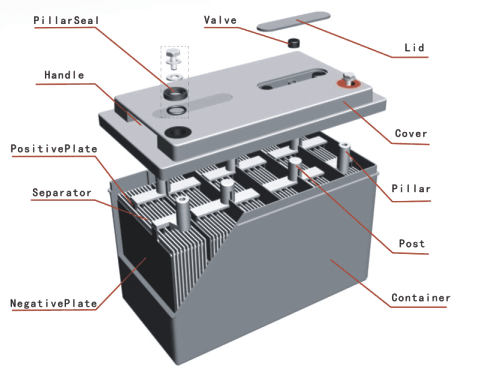
- Plates: Lead and lead dioxide surfaces that react to store power
- Electrolyte: Sulfuric acid and water that carries charge
- Case and vents: Let gas escape and protect the guts
- Terminals: Connect battery to the car’s electrical system
- Cold-cranking amps (CCA): How much power it can give in a short burst
The Science of Heat and Battery Damage
Every 18°F–20°F rise in temperature roughly doubles battery reaction rates. That speeds corrosion, gas release, and water loss. While a warm battery can crank easier, that short-term boost trades years for months. Heat slowly strips a battery of its capacity and strength.
Electrolyte Evaporation and Stratification
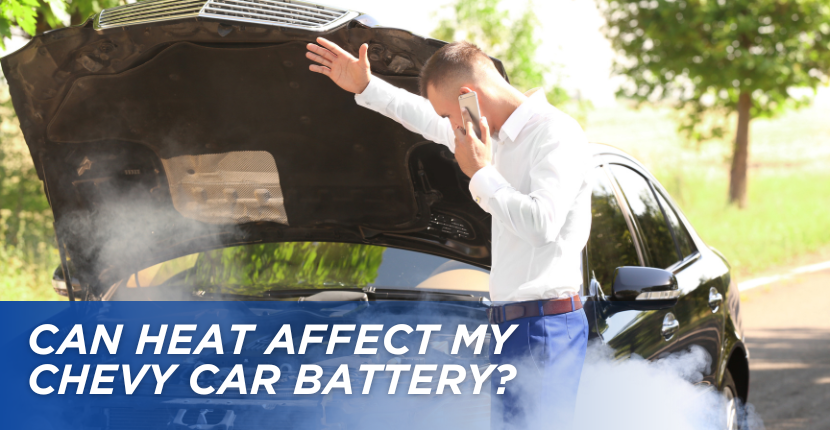
At high temps, water in the electrolyte evaporates. Low fluid exposes the tops of the plates. Exposure causes oxidation and weak spots. Over time, the acid gets heavier at the bottom and lighter at the top. That’s stratification. It cuts the battery’s active area and reduces performance.

- Low fluid reveals brown or discolored plates
- Cells run hotter and lose capacity
- Vented batteries need top-offs in hot climates
Plate Corrosion and Shedding
Heat accelerates corrosion on the positive plates. Material breaks off and piles up as “mud” at the bottom of the case. If it builds high enough, it can short a cell. That kills the battery fast and without warning.
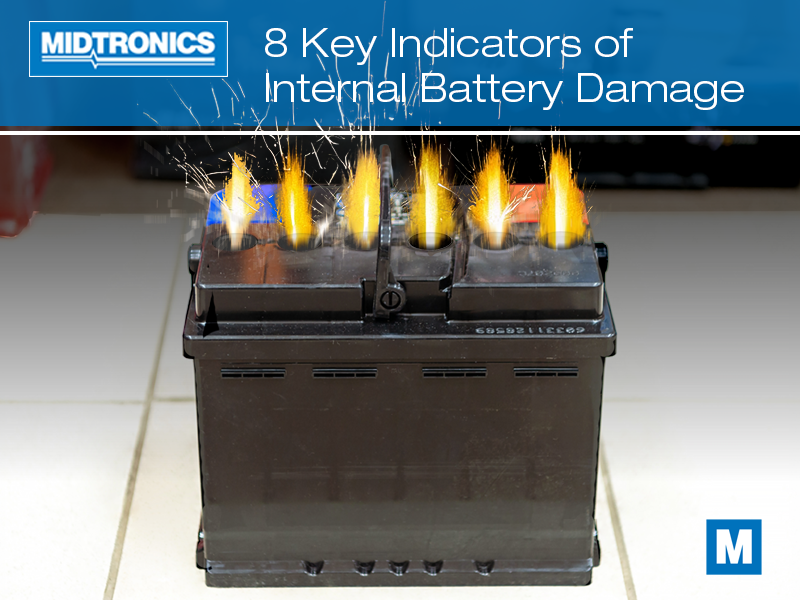
- Signs: Slow cranking, uneven cell voltages, sudden failure
- Cause: High temps, repeated hot charging, long idling
Increased Self-Discharge
Even parked, a hot battery loses charge faster. Heat increases internal leakage. Add modern parasitic draws—alarms, keyless entry, trackers—and the battery can drop below a safe level in days.
- Normal self-discharge is about 3% per month at 77°F
- In high heat, it can double or triple
- Sitting in airport lots or at a job site makes it worse
Overcharging in Hot Weather
Alternators raise output when the battery looks weak. Heat makes the battery accept charge faster. If voltage regulation is off, hot charging dries the electrolyte and warps plates. A hot alternator plus a hot battery is a bad match.

- High charge voltage in heat = gas release and water loss
- Smart chargers with temp sensors prevent this
Case Swelling and Venting
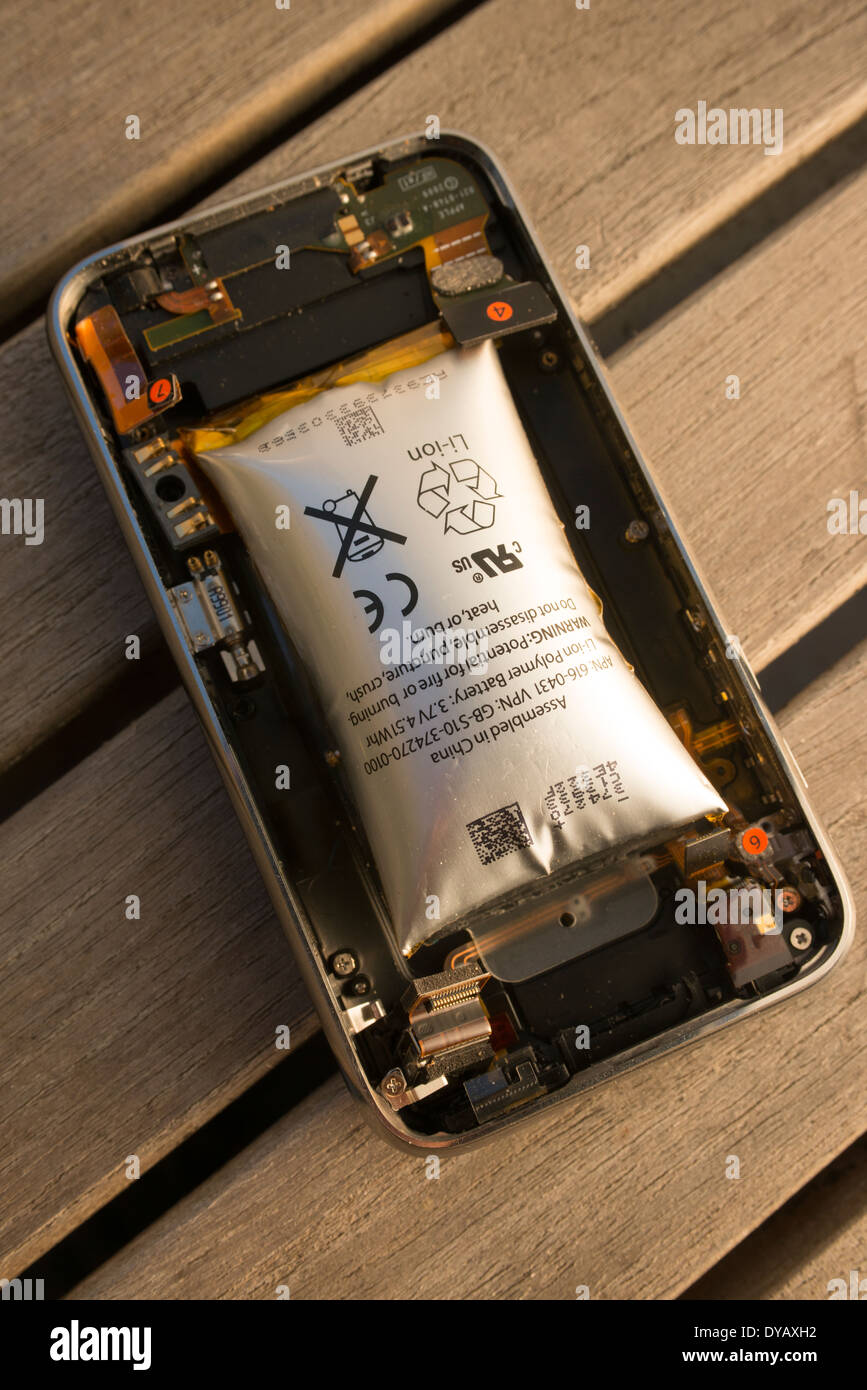
Gas builds in a battery during hot charging. Good batteries vent it. But if vents clog or pressure rises, the case can swell. Severe swelling means internal damage. When that happens, replace the battery at once.

- Bulging sides or a domed top mean internal stress
- Loose caps or strong sulfur smells = danger
Terminals and Corrosion Growth
Heat and moisture speed corrosion at the terminals. That white or blue crust blocks current. Your starter then has to pull harder from a weak link. The result is slow, rough starts or no start at all.
- Dirty terminals raise resistance
- High resistance equals heat, and heat equals more damage
Real-World Signs Your Battery Is Cooked by Heat
Heat damage feels sneaky. The car may seem fine, then start weak. Watch for these clues. If you spot two or more, test the battery now.
- Slow cranking after a short stop at the store
- Dim lights or flickering dash gauges
- Click sound when turning the key
- Strong rotten egg (sulfur) smell near the battery
- Swollen battery case or dampness near caps
- Frequent need for jump starts
- Battery light on, or warning on the dash
Quick Diagnostic: Is Heat the Culprit?
You can check your battery at home in ten minutes. Use simple tools and basic safety. This test finds heat damage early and prevents tow-truck calls later.
What You Need
Gather these items before you begin. They are affordable and easy to use.
- Digital multimeter
- Jumper cables or a jump pack
- Safety glasses and gloves
- Wrench for terminal clamps
- Battery terminal brush
- Baking soda and water mix for cleanup
- Optional: Smart charger with temperature sensor
Step-by-Step Test
Follow these steps in order. Keep the car off and parked in the shade if possible.
- Look first. Check the case for swelling, leaks, cracks, or acid smell. If you see any, replace the battery now.
- Check terminals. If you see white or blue crust, clean it with a brush. Neutralize with baking soda and water. Dry well.
- Measure resting voltage. With the engine off for 30 minutes, probe the posts:
- 12.6–12.8V = full
- 12.4–12.5V = okay
- 12.2–12.3V = weak
- Below 12.2V = discharged or damaged
- Perform a cranking test. Have a helper start the engine while you watch voltage:
- Do not let it drop below 9.6V for more than a second
- If it dips and stays below 9.6V, battery is weak
- Check charge voltage. With the engine idling, turn off accessories. Voltage at the posts should be 13.7–14.7V:
- Over 14.8V in hot weather may overcharge and dry the battery
- Under 13.5V may not be charging enough
- Add a load. Turn on headlights, AC, and rear defogger. Voltage should hold above 13.5V. If it falls, your alternator or battery may be weak.
- Note heat exposure. If your car sits in sun all day, and voltage hovers low, heat is likely a factor.
Battery Voltage Chart (Engine Off)
Use this chart to judge battery health. It also notes how heat changes the result over time.
| Resting Voltage | State of Charge | Start Reliability | Heat Note (why heat damages battery) |
|---|---|---|---|
| 12.7–12.8V | 100% | Excellent | Heat still ages plates; check water level if serviceable |
| 12.5–12.6V | 85–90% | Good | High temps raise self-discharge; top up charge monthly |
| 12.3–12.4V | 70–75% | Fair | Heat speeds sulfation; recharge soon to prevent damage |
| 12.1–12.2V | 50–60% | Poor | Hot days can push this battery into no-start territory |
| 11.8–12.0V | 25–40% | Unreliable | Likely heat-stressed; test with load, consider replacement |
| Below 11.8V | Deeply Discharged | High Risk | Heat plus deep discharge often kills a cell; replace soon |
Common Heat-Related Battery Problems and Fixes
Heat rarely acts alone. It teams up with charging issues, short trips, and neglect. Use this list to link your symptom to a cause and fix.
| Symptom | Likely Cause | DIY Fix |
|---|---|---|
| Slow cranking after short stops | Electrolyte loss; high under-hood temps | Clean terminals; test voltage; add charge; park in shade |
| Rotten egg smell under hood | Overcharge in high heat; gassing | Check alternator voltage; aim for 13.7–14.7V; replace if swollen |
| Battery light flickers on hot days | Weak alternator, slipping belt, corroded cables | Inspect belt tension; clean grounds; test alternator output |
| Bulging battery case | Internal pressure from heat and overcharge | Do not drive far; replace battery; test regulator |
| Needs frequent jump starts | High self-discharge; parasitic draw | Charge overnight; run parasitic draw test; fix drains |
| Uneven cell levels (serviceable batteries) | Stratification and evaporation | Top with distilled water; do an extended smart charge |
| Corrosion on terminals grows fast | Heat, acid mist, poor seal | Neutralize with baking soda, install felt washers, apply protectant |
Step-by-Step: How to Protect Your Battery from Heat
A few simple habits can double your battery’s life in hot climates. These steps are fast and affordable. Do them now, and you’ll avoid roadside drama later.
- Park smarter:
- Choose shade, garages, or covered parking
- Use a reflective windshield shade to cut cabin and under-hood heat
- Keep terminals clean:
- Remove the negative cable first, then positive
- Scrub with a terminal brush; neutralize with baking soda water
- Rinse and dry; apply dielectric grease or battery protectant
- Check water level (serviceable batteries only):
- Look monthly in summer
- Fill to the split ring with distilled water—never tap water
- Use a smart charger:
- Top up charge once a month during heat waves
- Pick a charger with temperature compensation
- Test your system:
- Measure resting voltage and charging voltage every 60 days
- Load test if starts feel slow
- Reduce parasitic drains:
- Unplug dash cams and chargers when parked
- Check for courtesy lights that stay on
- Choose the right battery:
- In hot areas, a heat-resistant AGM or EFB can be worth it
- Match OEM size and specs; never downsize CCA
Charging and Alternator Tips in Hot Weather
Your charging system can hurt your battery if it pushes too hard in the heat. Keep things in range and you’ll avoid boiling and swelling.
- Target charging voltage: 13.7–14.7V when hot
- If you see 15V+ once the engine is warm, test the regulator
- Inspect the serpentine belt for glazing or cracks
- Measure voltage drop from alternator to battery; fix corroded grounds
- Use a smart, temperature-compensated charger for garage top-ups
- Avoid long idling with heavy loads (AC on max, lights, audio) in extreme heat
For more on alternator and battery behavior, see battery guidance as explained by AAA, which covers real-world failure patterns and seasonal effects.
Summer vs. Winter: Which Is Worse for Batteries?
Winter gets the blame because cold stops a weak battery from cranking. But summer does the real damage. Heat shortens life. Cold only reveals it.
- Summer:
- Accelerates corrosion and water loss
- Raises self-discharge
- Overstresses charging system in traffic
- Winter:
- Thickens oil and slows chemical reactions
- Needs higher cranking amps
- Exposes a battery already weakened by summer
Consumer Reports has noted that hot-climate cars often need batteries sooner than those in cooler regions. That pattern lines up with what techs see daily in the shop.
Tools You Should Keep in the Car
Heat gives no warning. A small kit saves time and money. Keep these items in your trunk or under the seat.
- Compact lithium jump starter
- 12-foot heavy-gauge jumper cables
- Digital multimeter
- Gloves and safety glasses
- Rags and a small water bottle (for cleanup, not for the battery cells)
- Battery terminal brush
- Fuses for your vehicle
Pro Tips for Different Battery Types
Not all batteries handle heat the same. Use the right care for the type under your hood. This helps you get the longest life for your money.
Flooded Lead-Acid (Most Common)
These use liquid electrolyte. They are tough and cheap but lose water fastest in heat. Check fluid if the caps are serviceable. Keep them clean and fully charged.
- Pros: Affordable, easy to find
- Cons: Evaporates in heat, needs maintenance
- Tip: Top up with distilled water and avoid overcharging
AGM (Absorbent Glass Mat)
AGM batteries hold electrolyte in fiberglass mats. They are sealed, resist vibration, and handle heat better than standard flooded types. They also recharge faster.
- Pros: Low self-discharge, fewer leaks, better heat tolerance
- Cons: Higher cost; sensitive to chronic overvoltage
- Tip: Use a charger with an AGM mode and temp sensor
EFB (Enhanced Flooded Battery)
EFB is a step up from basic flooded. It supports start-stop systems and does well in traffic. It still holds liquid electrolyte, so watch heat and fluid levels.
- Pros: Better cycle life than standard flooded
- Cons: Still loses water in high heat
- Tip: Great mid-budget choice for hot cities with heavy traffic
Lithium (LiFePO4 in Some Specialty Cars)
Lithium batteries are light and powerful, but not common in everyday cars. They dislike extreme heat and need strict charging control. Only use lithium where the car was designed for it.
- Pros: High energy, low weight
- Cons: Narrow safe charging window in heat
- Tip: Follow the automaker’s specs exactly; avoid under-hood retrofits
Safety Warnings You Should Not Skip
Batteries can release hydrogen gas. Acid can burn skin and eyes. Take these steps to protect yourself, especially in hot weather.
- Always wear eye protection and gloves
- Work in a well-ventilated area
- Remove negative cable first; install it last
- Never smoke near a battery
- Neutralize spills with baking soda and water
- Do not open sealed AGM batteries
- Dispose of old batteries at a recycling center
For more safe handling tips, you can review guidance from the U.S. Department of Energy, which explains battery basics and risks in simple terms.
When to Replace: Mileage, Age, and Heat Exposure
Batteries don’t last forever, and heat cuts that time down. Plan ahead using these rules. Change early if you see warning signs.
- Age:
- Hot climates: 2–3 years is typical
- Mild climates: 3–5 years is common
- Use:
- Short trips, heavy idling, and ride-share use all shorten life
- Frequent accessory use while parked speeds discharge
- Replace sooner if:
- Resting voltage stays under 12.3V after full charge
- Cranking voltage drops under 9.6V
- The case is swollen or smells of sulfur
- You get two jump starts within a month
FAQ
Is heat worse than cold for car batteries?
Yes. Heat does the long-term damage by drying electrolyte and corroding plates. Cold only shows the weakness that heat created.
How often should I test my battery in summer?
Every 60 days is smart. Check resting voltage and charging voltage. If starts feel slow, run a load test or visit a shop.
Can I add water to any battery?
Only to serviceable flooded batteries with removable caps, and only distilled water. Do not open sealed or AGM batteries.
What voltage is too high in hot weather?
Above about 14.8V at idle when warm is risky. It can cause gassing and water loss. Check the alternator regulator and grounds.
Why does my new battery fail after one hot summer?
Heat plus under-hood temps, short trips, and overcharging can kill a young battery. Keep it clean, charged, and cool when parked.
Do AGM batteries handle heat better?
Generally yes. AGMs resist vibration, leak less, and tolerate heat better than standard flooded batteries. They still need proper charging voltage.
Should I disconnect the battery if I travel?
If gone over two weeks in hot weather, use a battery maintainer. Disconnecting can reset settings and isn’t ideal for modern cars.
Conclusion
Heat is the silent battery killer. It dries electrolyte, corrodes plates, and speeds self-discharge. The fix is simple: keep the battery clean, cool, and properly charged. Test voltage often. Watch for swelling, smells, or slow cranks. Use a smart charger and park in shade. If your battery shows heat damage, replace it before you get stranded. Do these steps now, and your car will start strong all summer long.