
Quick Summary: Battery sulfation happens when hard sulfate crystals build up on the battery plates from staying undercharged. It causes slow cranking, dim lights, and no-starts. You can test it at home and often recover it with a smart charger. Prevent it with regular driving or a maintainer. This guide shows you how—step by step.
If your car won’t start or cranks slow after sitting, battery sulfation could be the reason. It’s common, especially with short trips, cold weather, or cars that sit. The good news? You can diagnose it at home, fix mild cases, and prevent it from coming back. In this guide, you’ll learn what battery sulfation is, how to test it, how to recover your battery, and how to keep it healthy longer.
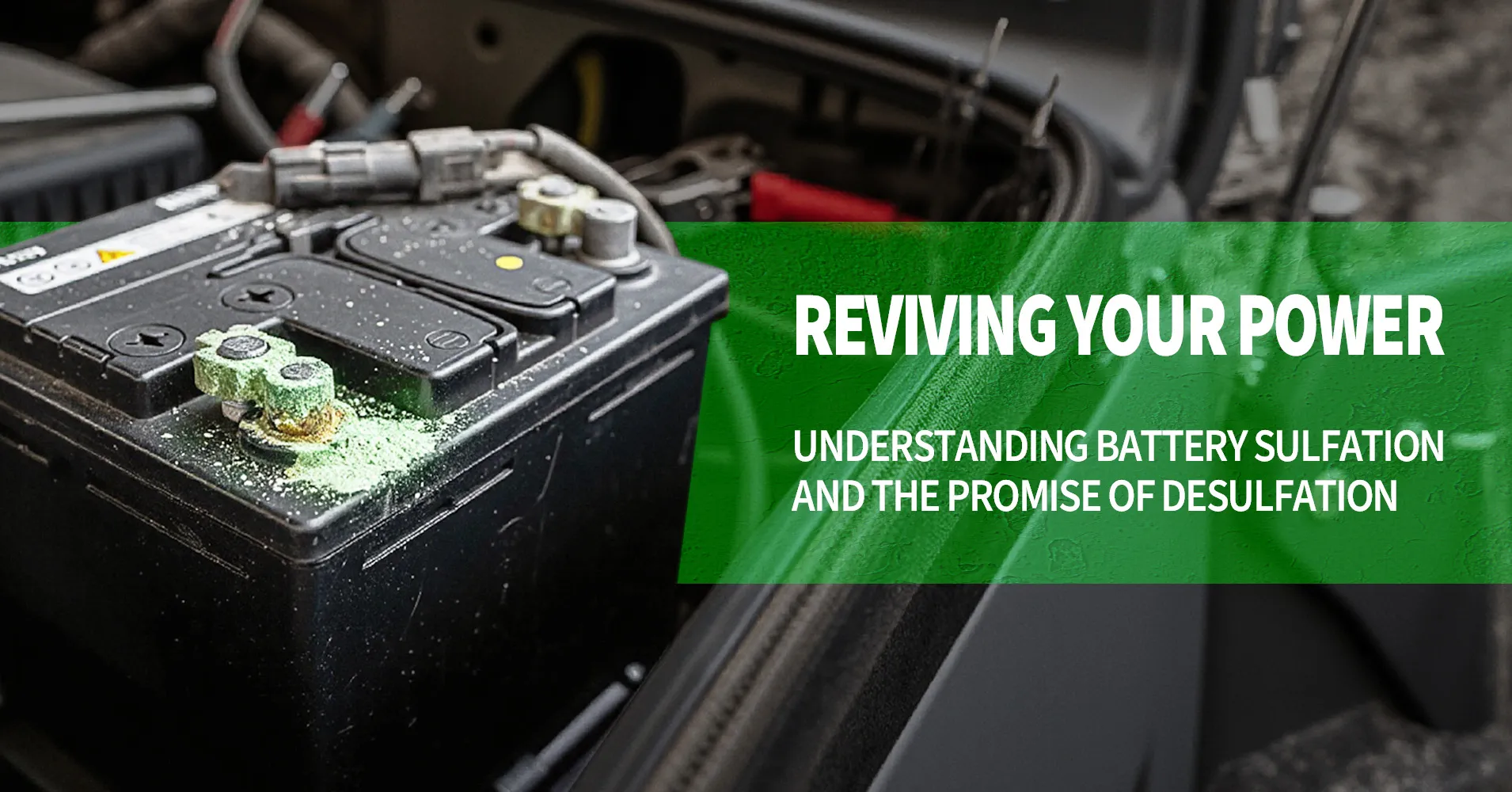
Battery Sulfation Explained: The Simple Version
Battery sulfation is when lead sulfate crystals harden on the plates inside a lead-acid battery. It happens when the battery stays below full charge for too long. Light sulfation is reversible; heavy sulfation usually isn’t. Catch it early to save your battery, money, and time.

What Is Sulfation?
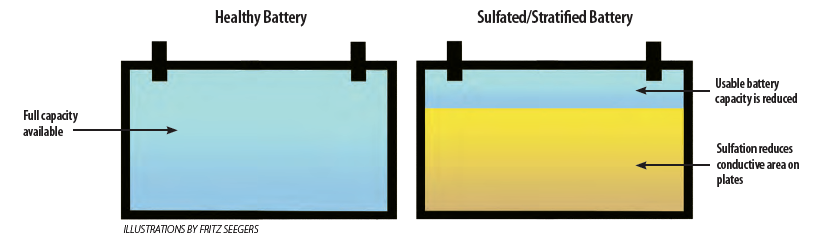
Every time your battery discharges, lead sulfate forms on the plates. When you recharge right away, most of it turns back into active material. If the battery sits low for days or weeks, those crystals harden. Hard crystals block the chemical reaction and reduce capacity. You end up with weak starts, dim lights, or a dead car.
Why Does Sulfation Happen?
Two main reasons: low charge and time. Short trips don’t recharge the battery fully. Parasitic drains from alarms and modules pull power all day and night. Heat speeds up chemical breakdown. Cold increases internal resistance and charging struggles. Mix in infrequent driving, and sulfation builds fast.

Which Batteries Are Most at Risk?
All 12V lead-acid batteries can sulfate: flooded (serviceable), AGM, EFB, and deep-cycle. Flooded batteries vent gas and can be topped off with distilled water. AGM and EFB are sealed and charge more efficiently, but they still sulfate if kept undercharged. Deep-cycle batteries used in RVs or boats also sulfate if not maintained.

- Flooded (wet cell): Most common, serviceable, can do equalization (carefully)
- AGM: Sealed, lower self-discharge, sensitive to overvoltage
- EFB: Enhanced flooded for start-stop cars, resists cycling better than standard flooded
- Deep-cycle: Built for deep discharges, still need full recharge after use
Symptoms of a Sulfated Car Battery
Sulfation reduces power and capacity. The signs look like a weak or aging battery. If you notice these, test soon to avoid getting stranded.

- Slow or labored cranking, especially in the morning
- Headlights dim at idle but brighter when revved
- Multiple jump-starts needed in a month
- Battery charges fast but discharges quickly
- 12.2V to 12.4V resting voltage after “full” charge
- Electronics reset after starting (radio presets lost)
- Battery case warm while charging but voltage stays low
How Sulfation Mimics Other Issues
Sulfation symptoms overlap with bad alternators, corroded terminals, and parasitic drains. Before blaming the battery, check the basics: clean terminals, tight grounds, and alternator output (13.8–14.7V at idle with accessories on). If those are good, test the battery for sulfation.
Quick Diagnosis: Is Your Battery Sulfated?
You can do a quick driveway test with simple tools. It takes 10–20 minutes. This checks state of charge and voltage drop under load. If the numbers are off, sulfation is likely.

Tools You Need
Gather a few basics. You likely have most of them.
- Digital multimeter (DC volts)
- Smart charger or maintainer (AGM-safe if you have AGM)
- Jumper cables or jump pack (for emergencies)
- Battery brush and baking soda/water mix (for corrosion)
- Safety glasses and gloves
- Hydrometer (only for serviceable flooded batteries)
Step-by-Step At-Home Tests
These steps give a clear picture. Follow them in order.
- Check for corrosion. Look for white/green buildup on posts. Clean with baking soda/water. Rinse and dry. Tighten clamps.
- Rest the battery. Turn everything off. Let the car sit 30–60 minutes with no charging. This stabilizes surface charge.
- Measure resting voltage. Set the multimeter to DC volts. Place red on positive, black on negative. Record the reading. Compare to the chart below.
- Start the engine. Watch the multimeter while someone starts the car. If voltage dips under 9.6V during cranking, the battery is weak or sulfated.
- Check alternator output. With the engine running, measure across the terminals. You should see about 13.8–14.7V. Below 13.5V or above 15.0V is a charging system issue, not sulfation alone.
- Charge and retest. Put the battery on a smart charger overnight. Next morning, repeat steps 2 and 3. If it still shows low voltage or drops fast, sulfation is likely.
| Battery Voltage (12V) | State of Charge | What It Means | Action |
|---|---|---|---|
| 12.7–12.8V | 100% | Healthy, fully charged | No action needed |
| 12.6V | 90% | Good | Optional top-up charge |
| 12.4V | 75% | Partially discharged | Charge soon to prevent sulfation |
| 12.2V | 50% | Undercharged | Charge now; sulfation forming |
| 12.0V | 25% | Severely undercharged | Full charge + desulfation cycle |
| 11.8V or less | Dead/near dead | Likely sulfated or damaged | Recovery attempt or replace |
Hydrometer Test (Flooded Batteries Only)
If your battery has removable caps, a hydrometer gives a strong answer. It measures specific gravity (SG) of the electrolyte. Low or uneven SG suggests sulfation or a bad cell.
- Wear eye protection and gloves. Acid can splash.
- Open the caps. Draw electrolyte into the hydrometer.
- Read SG for each cell. Normal is about 1.265 at 80°F (adjust for temperature).
- If SG is 1.200 or lower across all cells, the battery is very low and likely sulfated.
- If one cell is much lower than the rest, that cell is failing. Replacement is often best.
Common Causes and Fast Fixes
Sulfation builds for predictable reasons. Fix the root cause to keep your battery strong. Use the table to match your symptom with a likely cause and a simple fix.
| Symptom | Likely Cause | Quick Fix | Next Step |
|---|---|---|---|
| Slow crank after short trips | Undercharge, short drives | Overnight smart charge | Weekly 30–40 min highway drive or use maintainer |
| Needs a jump after sitting 1–2 weeks | Parasitic drain | Charge battery to full | Test draw; pull fuses to locate drain; repair |
| 12.2–12.4V after “full” charge | Mild sulfation | Desulfation mode on smart charger | 24–48 hour recovery cycle; retest voltage |
| One cell low on hydrometer | Cell imbalance or failure | None | Replace battery |
| Dim lights at idle, brighter when revved | Low charge or weak alternator | Charge battery | Check 13.8–14.7V running; repair alternator if low |
| Corrosion on terminals | Acid fumes, venting | Clean and protect terminals | Check clamp torque; apply dielectric grease |
| Battery warm, slow to accept charge | Advanced sulfation | Low-and-slow charge | Replace if no improvement |
Can You Reverse Sulfation? What Actually Works
Light to moderate sulfation can often be reversed. The trick is time and the right charge profile. Heavy, long-term sulfation is rarely fixable. Here’s what helps—and what doesn’t.
Use a Smart Charger With Desulfation Mode
Modern smart chargers can pulse or hold a controlled low current to break down soft crystals. They also prevent overcharge. Pick one labeled safe for AGM if needed. Many units run automatic recovery cycles.
- Disconnect the battery or leave it connected with the car off. Follow the charger’s manual.
- Connect red to positive, black to negative. Ensure solid contact.
- Select the correct battery type (AGM, flooded, EFB) and capacity.
- Run a desulfation or recondition cycle (often 12–24 hours).
- Let it finish completely. Do not rush it.
- Rest the battery 1 hour. Check resting voltage. Aim for 12.6–12.8V.
- If still low, repeat once. If no gain after two cycles, plan to replace.
The Low-and-Slow Charge Method
Slow charging helps the chemistry catch up. Large, fast chargers can overheat plates and won’t fix sulfation. Go gentle.
- Set your charger to a low current: 2–4 amps.
- Charge for 24–48 hours in a well-ventilated area.
- Check temperature by touch; warm is okay, hot is not. If hot, stop and cool.
- Let the battery rest 1–2 hours. Measure voltage.
- Repeat once if needed. If voltage won’t rise, the battery is likely done.
Equalization Charge (Flooded Batteries Only)
Equalization is a controlled overcharge to balance cells and reduce stratification. Do not use on AGM or most sealed batteries. It can vent gas and spill acid. Only do this if you know your battery type and your charger supports equalize mode.
- Wear protection. Work in fresh air away from sparks or flames.
- Check electrolyte level; top with distilled water to the proper mark.
- Use a charger with an equalize setting. Follow the manual.
- Run 1–3 hours, monitoring temperature. Stop if the case gets hot.
- After equalization, let the battery cool and rest, then test voltage and SG.
Note: Overdoing equalization can damage plates. If you’re new, a smart charger’s automatic program is safer.
Pulse Desulfators: Myth vs. Reality
Pulse devices claim to knock crystals loose with high-frequency pulses. Results vary. Some users see gains on mildly sulfated batteries. Heavy sulfation rarely responds. If you try one, combine it with proper charging and maintenance. Do not expect miracles on an 8-year-old battery that sat dead all winter.
When to Replace Instead of Repair
Sometimes replacing saves time and hassle. If the battery fails to hold 12.5V after repeated smart charges, drops under 9.6V during cranking, or a hydrometer shows one bad cell, it’s time. Most car batteries last 3–5 years. Harsh heat, cold, or deep discharges shorten that window.
Prevent Sulfation: Simple Habits That Save Your Battery
Prevention is cheap and easy. A few small changes keep your battery clear of crystals and ready to start—every time.
- Drive longer. Add one 30–40 minute highway drive weekly to reach full charge.
- Use a maintainer if the car sits more than a week.
- Keep terminals clean and tight to reduce voltage drop.
- Avoid deep discharges. Turn off accessories before shutting down.
- Use an AGM-safe charger for AGM/EFB batteries.
- Check parasitic drains if the car dies after sitting a few days.
- In heat, park in shade. In cold, keep the battery topped up.
For Short-Trip Drivers
Short trips are battery killers. The alternator rarely has time to refill the charge used to start the engine. Plan one longer drive each week. Or keep a smart maintainer connected overnight once a week. Your battery will thank you.
For Stored or Seasonal Cars
If your car, motorcycle, or boat sits for weeks, use a maintainer. Set it and forget it. Unplug if the area floods or gets too hot. Label the plug so you don’t drive off with it connected.
For Cold Climates
Cold slows chemistry and increases cranking demand. Keep the battery fully charged before a cold snap. Check CCA rating when buying. Clean oil and a strong battery make winter starts easy.
Charging Best Practices (AGM, EFB, Flooded)
Each battery type likes a specific charge profile. Using the right charger and settings prevents damage and limits sulfation. Always match the charger to the battery type and size.
- Flooded (wet cell): Accepts standard automotive charging. Float around 13.2–13.5V.
- AGM: Lower internal resistance; keep absorb around 14.4–14.7V max. Avoid high equalization.
- EFB: Similar to flooded but designed for cycling in start-stop cars. Use chargers labeled for EFB/AGM.
- Deep-cycle: Prefer low-and-slow charging; avoid fast, high-amp bulk charges.
| Battery Type | Recommended Charging | What to Avoid | Notes |
|---|---|---|---|
| Flooded (12V) | Bulk 14.2–14.7V, Float 13.2–13.5V | Prolonged high voltage | Can equalize carefully to fix stratification |
| AGM (12V) | Bulk 14.4–14.7V, Float 13.4–13.8V | Equalization, >14.8V long term | Use AGM-safe charger to prevent drying |
| EFB (12V) | Bulk 14.2–14.7V, Float 13.2–13.6V | Overcharge | Good for start-stop; still sulfates if undercharged |
Real-World Scenarios and Fixes
These are the most common situations I see as a mechanic and enthusiast. Follow the quick plan for each. You’ll save a tow and a headache.
You Left the Lights On Overnight
The battery is very low, maybe dead. Sulfation starts fast when a battery sits flat. Act now to avoid permanent damage.
- Don’t try to drive it to “recharge.” Jump-starting and driving often won’t bring it back to full.
- Use a smart charger on 2–10 amps until full. Expect 8–24 hours.
- Rest 1 hour and test resting voltage. Aim for 12.6–12.8V.
- If it reads 12.2–12.4V, run a desulfation cycle. Retest.
The Car Sits for Weeks and Won’t Start
This screams parasitic drain and sulfation. Alarms, trackers, and modules sip power nonstop. Over time, crystals build.
- Charge the battery to full first.
- Test for parasitic draw: Set multimeter to amps in series with the battery. Normal is about 30–50 mA after modules sleep. Anything above 100 mA needs diagnosis.
- Pull fuses one at a time to find the circuit with the draw. Fix the root cause.
- Use a maintainer if it will sit again.
Start-Stop Vehicle Battery Trouble (EFB/AGM)
Start-stop systems work batteries hard. They cycle often and live at partial charge. That means faster sulfation without the right charging routine.
- Use only EFB or AGM replacements designed for start-stop.
- Register the new battery with the car if required by the manufacturer.
- Use a compatible charger monthly to top off to 100%.
- If you do short trips, weekly maintenance charging helps a lot.
After a Jump-Start: What Next?
A jump gets you moving, but it doesn’t heal sulfation. In fact, your alternator is not a battery charger. It maintains, not recovers. Running it hot with a dead battery can even shorten alternator life.
- As soon as you get home, put the battery on a smart charger.
- Let it reach full and finish absorption/float stages.
- Test resting voltage after 1 hour. If low, run a recovery cycle.
- Check alternator output at idle with lights and blower on: 13.8–14.7V. If off, service the charging system.
Safety Tips You Should Not Skip
Batteries store energy and contain acid. Treat them with respect. These simple steps prevent burns, shocks, and explosions. Your safety comes first, always.
- Wear eye protection and gloves when charging or testing.
- Work in a ventilated area away from flames or sparks. Hydrogen gas can ignite.
- Connect chargers: positive first, negative last. Disconnect in reverse order.
- Never short the terminals with tools or jewelry.
- Secure the battery; vibration shortens life.
- Follow trusted guidance, like tips from AAA, for jump-starting and charging safety.
- If stranded roadside, follow safe stopping steps similar to advice from the National Highway Traffic Safety Administration.
Independent test info from groups like Consumer Reports can also help you pick the right battery and charger.
Battery Sulfation Explained: At-a-Glance Reference Table
Use this quick table when you need a fast answer in the driveway. It summarizes “battery sulfation explained” into clear actions you can take today.
| Battery sulfation explained (at a glance) | What You’ll See | What It Means | What To Do |
|---|---|---|---|
| Resting 12.2–12.4V after charge | Starts but weak; dims at idle | Mild sulfation | Run desulfation mode overnight; retest |
| Cranking under 9.6V | Slow crank or click | Low capacity from sulfation or age | Charge low-and-slow; replace if no improvement |
| Holds 12.6V+ after rest | Normal starting | Healthy battery | Drive longer or use maintainer weekly |
| One hydrometer cell low | Uneven SG | Bad cell, internal damage | Replace battery |
| Dead after sitting a week | Won’t crank | Parasitic drain + sulfation | Charge, find drain, maintain when parked |
FAQs
Get quick answers to the most common beginner questions about sulfation, testing, and fixes.
What is the fastest way to fix a sulfated battery?
Use a smart charger with a desulfation or recondition mode. Run it overnight. If voltage doesn’t improve after one or two cycles, replacement is likely the better move.
Can I drive to recharge a sulfated battery?
Not well. The alternator maintains charge but doesn’t recover sulfation. Charge at home with a smart charger instead. Then take a longer drive to finish the job.
How long can a car sit before sulfation starts?
Sulfation begins within days at low states of charge. Many cars show trouble after sitting 1–2 weeks. A maintainer prevents this.
Is sulfation the same as a dead cell?
No. Sulfation is crystal buildup that can be mild or severe. A dead cell is internal failure. If one cell reads much lower SG than the others, the battery needs replacement.
Will a new battery sulfate too?
Yes, if kept undercharged. Even new batteries sulfate if you do only short trips. Keep it topped off and drive longer now and then.
What charger should I buy for AGM or EFB?
Pick a reputable smart charger labeled AGM/EFB compatible with automatic multi-stage charging. It should have float/maintenance mode and ideally a gentle recovery program.
Does cold weather cause sulfation?
Cold slows charging and makes starting harder. If the battery never gets full in winter, sulfation grows. Keep it topped off, especially before a cold snap.
Conclusion
Battery sulfation is common but manageable. It starts when your battery lives undercharged. The fix is simple: test voltage, charge smart, and drive a bit longer—or use a maintainer. Light sulfation often recovers with time and a good charger. Heavy cases need replacement. Start today: clean your terminals, check resting volts, and give the battery a full, gentle charge. Your car will start stronger, and your battery will last longer.