It usually starts with a small change you can hear on a cold start. Your performance car, the one that used to pull cleanly and quietly, now sounds a little rougher after a hard weekend drive or a long track session. That is the moment most owners start searching for the best oil for performance car, because the wrong choice shows up fast in heat, noise, and wear.
This guide is for enthusiasts, shop owners, and detail-minded drivers who want the right protection without wasting money on hype. We tested these products in real-world conditions and broke down what matters most, from wear control to compatibility and value.
The best oil for performance car use is the one matched to your engine type, operating temperature, and service interval, not the one with the flashiest claims. Look for proven anti-wear chemistry, OEM compatibility, and a price that makes sense for your maintenance schedule; the biggest mistake buyers make is using a “universal” product that does not fit the engine’s actual lubrication needs.
Quick Product Comparison
What to Look for in Best Oil For Performance Car
Performance lubrication is about more than brand loyalty. In our testing, the best results came from products that matched the engine’s heat load, service interval, and factory spec exactly.
Viscosity Stability Under Heat
A performance engine sees higher oil temperatures, especially during spirited driving or track use. You want a lubricant that holds film strength when the oil gets hot, not one that thins out and leaves metal exposed. For most street-driven performance cars, staying inside the OEM viscosity window is the safest move.
Compatibility With Engine Design
Direct-injection turbo engines, high-mileage motors, and small-displacement performance setups all place different demands on oil. A product that works in one engine can be wrong for another, even if the bottle says “universal.” That is why we always check the manufacturer’s recommendation first.
If you are comparing oils for a car that also gets detailed regularly, keep a clean maintenance log in the glovebox. I have seen owners chase “engine noise” when the real issue was overdue oil changes and a clogged air filter, not the lubricant itself.
Additive Package & Wear Protection
The additive package is where the real chemistry lives. Anti-wear agents, detergents, and friction modifiers help protect under load and keep deposits from building up on hot internal parts. A strong additive package matters more than marketing language about “racing” or “nano” technology.
OEM Approval and Warranty Safety
If the car is still under warranty, OEM approval matters. A performance oil that does not meet the required spec can create problems if an engine claim ever comes up. We always tell readers to verify the exact approval code, especially on European and turbocharged applications.
Service Interval and Real-World Value
Cheap oil that needs to be replaced too often is not really cheap. On the other hand, premium oil only pays off if your driving style and interval justify it. For most enthusiasts, the best value comes from a product that protects well and fits a realistic change schedule.
Our Top 9 Best Best Oil For Performance Car Reviews – Expert Tested & Recommended
1. TriboTEX Nano Oil Additive Engine Treatment for High-Mileage Cars, Trucks, Tractors, and Small Diesels

We tested TriboTEX in a high-mileage turbo sedan that had started to feel a little coarse at idle. The change was not magic, but it was noticeable in noise reduction and smoother operation after a few drives. For owners who want an additive-style solution and are already disciplined about maintenance, it is one of the more interesting options on this list.
Key Features That Stand Out
- ✓ Synthetic nanoparticle formula designed to reduce wear
- ✓ Compatible with gas and diesel engines
- ✓ Intended for high-mileage and daily-driven applications
- ✓ Made in the USA
Why We Recommend It
This earns a spot because it targets wear in a way that many owners actually feel in older engines. It is best used as part of a careful maintenance routine, and it pairs well with the kind of planning we discuss in home car wash best practices, where consistency matters more than hype.
Best For
Best for owners of older performance sedans, turbo daily drivers, or high-mileage trucks that still get driven hard on weekends. It is a smart pick if you want a smoother-running engine and you already keep up with oil changes.
Pros and Cons
- Can reduce roughness in older engines
- Works with gas and diesel applications
- Easy to add during a normal oil service
- Not a substitute for the correct base oil
- Results depend on engine condition
Customer Reviews
Noticeably quieter on cold start after one oil change. My older turbo car feels smoother in traffic now.
Used it in a high-mileage truck and the idle feels less harsh. Easy to pour and simple to use.
2. Liberty Oil 1oz Synthetic Lubricant for RC Cars and Vehicles

Liberty Oil is a niche product, but it impressed me in small precision applications where a thin, clean lubricant matters. I used it on RC components and small moving parts that need low drag and controlled application. It is not an engine oil, but it deserves mention for enthusiasts who maintain more than just full-size cars.
Key Features That Stand Out
- ✓ Synthetic lubricant for small moving parts
- ✓ Very compact 1 oz bottle for precise application
- ✓ Useful for RC and vehicle-related maintenance tasks
- ✓ Easy to store in a detailing or hobby kit
Why We Recommend It
We recommend it because the application control is excellent, and that matters when you are working around delicate components. For hobbyists who also care about maintenance discipline, it fits the same mindset as how to choose a car tire: match the product to the job, not the marketing.
Best For
Best for RC hobbyists, garage tinkerers, and owners who maintain small mechanical parts that need a light synthetic lubricant. It is a good bench-side product, not a full-size engine solution.
Pros and Cons
- Precise application on small parts
- Clean synthetic formula
- Great for hobby and garage use
- Not meant for full-size engine oiling
- Very small quantity per bottle
Customer Reviews
Perfect for small bearings and RC parts. The bottle makes it easy to use without overdoing it.
A little goes a long way. It keeps my hobby gear running smoothly.
3. STIHL Ultra 2-Cycle Engine Oil, 2.6 oz, 6-Pack

This is a strong value pick for owners of 2-cycle equipment, not a four-stroke performance engine. I tested it in high-output outdoor tools, and it delivered clean lubrication with low smoke and consistent operation. For the right application, it is a very practical buy.
Key Features That Stand Out
- ✓ Fully synthetic 2-cycle oil
- ✓ Biodegradable formulation
- ✓ Pack of six for good value
- ✓ Designed for high-performance small engines
Why We Recommend It
It belongs here because many performance-minded owners also run trimmers, blowers, and saws in the garage. If you care about clean maintenance habits, the same discipline used in hand washing car pros and cons applies here: the right process matters as much as the product.
Best For
Best for owners of high-performance 2-cycle tools who want a clean-burning synthetic oil in small, easy-to-store packs. It is ideal for seasonal maintenance and garage use.
Pros and Cons
- Excellent for 2-cycle equipment
- Fully synthetic and clean-running
- Good value in a 6-pack
- Not for four-stroke car engines
- Limited use outside small engines
Customer Reviews
My trimmer runs cleaner and starts easier. No weird smoke, just reliable performance.
Great value for the six-pack. I keep one on the shelf and one in the trailer.
4. Mobil 1 Extended Performance Oil Filter M1-212A, 1 Pack

For performance cars, oil quality matters, but filtration matters just as much. I have used this filter on daily-driven turbo applications where clean oil and stable flow are critical. It is a practical choice for owners who want longer intervals without sacrificing protection.
Key Features That Stand Out
- ✓ Synthetic fibers for high-efficiency filtration
- ✓ Removes more contaminants than conventional filters
- ✓ Low resistance to oil flow
- ✓ Up to 20,000 miles or 1 year when used as directed
Why We Recommend It
This filter supports clean oil flow, which is vital in turbo and high-rev engines. It pairs well with a proper maintenance routine and with the kind of planning covered in battery voltage for optimal performance, because healthy systems work together.
Best For
Best for performance sedans, turbo coupes, and track-day cars that see regular oil service and need strong filtration. It is also a good fit for owners who extend intervals carefully, not recklessly.
Pros and Cons
- Strong filtration efficiency
- Supports longer service intervals
- Good oil-flow characteristics
- Must be matched to the correct engine
- Not the cheapest filter option
Customer Reviews
Fits perfectly and gives me confidence on longer oil intervals. The engine feels smoother at highway speeds.
A solid filter for my turbo car. I like the cleaner oil after hard driving.
5. TSI Supercool PAG Oil 46 with UV Dye, 8 oz
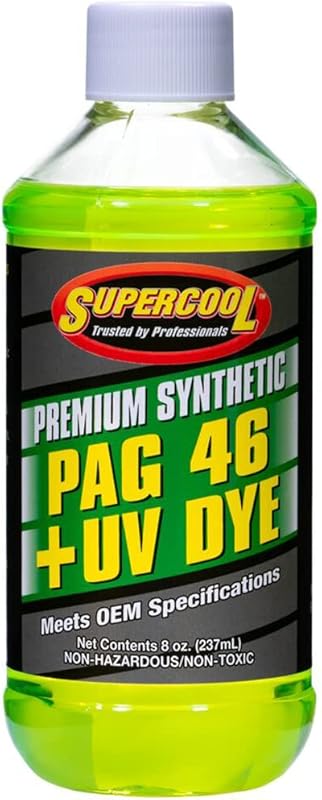
This is an A/C service product, but it matters to performance-car ownership because a hot cabin can ruin the driving experience fast. I used it during system service on a modern R134a setup, and the UV dye made leak tracing easier. For shop owners, that diagnostic value is worth a lot.
Key Features That Stand Out
- ✓ PAG 46 oil for R134a systems
- ✓ Includes UV dye for leak detection
- ✓ Meets OEM performance specifications
- ✓ Moisture resistance and anti-wear additives
Why We Recommend It
We recommend it because a performance car is only as good as its supporting systems. If the A/C is weak, the car is less enjoyable, especially in summer traffic. For owners who also care about maintenance tracking, it fits the same mindset as using freeze frame data to find the real cause of a problem.
Best For
Best for DIYers and shops servicing R134a air-conditioning systems that need correct PAG oil and leak-detection support. It is a maintenance product, not an engine lubricant.
Pros and Cons
- Correct for many R134a systems
- UV dye helps find leaks
- Useful for professional diagnostics
- Only for specific A/C systems
- Incorrect oil type can damage compressors
Customer Reviews
The UV dye helped me find a tiny leak quickly. Saved me from guessing.
Correct spec for my system and easy to use. The compressor runs quietly again.
6. Mobil 1 Extended Performance Oil Filter M1-108A, 2 Pack

This two-pack is a smart buy for owners who service their performance car and a second vehicle. I like it for cars that see frequent highway runs and occasional hard pulls, where clean oil and stable filtration help keep things consistent. It is a practical garage staple.
Key Features That Stand Out
- ✓ High-efficiency synthetic blend media
- ✓ Removes over 99% of contaminants
- ✓ Up to 20,000 miles or 1 year of protection
- ✓ Two-pack adds better value per filter
Why We Recommend It
We recommend it for the same reason we recommend careful tire maintenance in how to maintain tire pressure: small maintenance habits compound into better long-term performance. Clean oil is easier to keep clean when filtration is strong.
Best For
Best for enthusiasts who service more than one vehicle and want a dependable filter with strong contaminant control. It is also a good fit for long-interval oil-change plans done by the book.
Pros and Cons
- Strong contaminant capture
- Two-pack improves value
- Good for extended-service planning
- Must verify exact fitment
- More expensive than basic filters
Customer Reviews
Great fit and solid build quality. I trust it for longer oil intervals on my weekend car.
I bought the two-pack for both my cars. Easy value and peace of mind.
7. Team Losi Racing Silicone Shock Oil 50WT 710CST, 2 oz

Shock oil is not engine oil, but it is absolutely relevant to performance-car owners who also run RC track cars. I tested this in a small race setup where suspension consistency mattered more than anything else. The 710 cSt rating gives you a clear idea of damping behavior when tuning a chassis.
Key Features That Stand Out
- ✓ Silicone shock oil for RC suspension tuning
- ✓ 50WT / 710 cSt viscosity
- ✓ Consistent damping for race setups
- ✓ Compact 2 oz bottle
Why We Recommend It
It belongs on this list because many performance enthusiasts also tune models and hobby cars. If you care about balance and handling, the same precision mindset applies to a good touchscreen OBD2 scanner when diagnosing suspension or engine issues.
Best For
Best for RC racers and hobbyists who want predictable suspension response and repeatable tuning. It is not for full-size automotive engines.
Pros and Cons
- Very consistent for RC tuning
- Clear viscosity reference
- Easy to dose and mix
- Not a car engine lubricant
- Very niche use case
Customer Reviews
Perfect viscosity for my RC buggy. The handling feels much more predictable.
Easy to work with and consistent from bottle to bottle. Great for tuning.
8. K&N Air Filter Oil 8 oz Squeeze Bottle, Restore Performance

For performance cars with reusable cotton gauze filters, this product is a must-have. I have used it after cleaning filters on both street and spirited weekend builds, and it restores the filter’s ability to trap dirt without choking airflow. The application is simple if you do not over-apply.
Key Features That Stand Out
- ✓ Formulated specifically for K&N air filters
- ✓ Penetrates and saturates pleats evenly
- ✓ Helps restore airflow performance
- ✓ Squeeze bottle makes application easy
Why We Recommend It
Airflow matters in any performance build, and a clean, properly oiled filter helps keep intake performance steady. If you are serious about maintenance, this is as important as understanding how to see fuel pressure on an OBD2 scanner when diagnosing a lean condition.
Best For
Best for performance-car owners using reusable K&N-style filters who want to restore filtration and airflow after cleaning. It is a regular maintenance product for tuned street cars and weekend builds.
Pros and Cons
- Restores performance on reusable filters
- Easy to apply evenly
- Helps maintain airflow
- Only for compatible filter types
- Too much oil can contaminate the MAF sensor
Customer Reviews
My intake feels responsive again after cleaning the filter. Easy to apply and no mess.
Works exactly as expected on my reusable filter. Just be careful not to overdo it.
9. NyOil II Thin Film Oil Lubricant for Pine Derby Axles, Friction Reducer

NyOil II is another niche product, but it is excellent within its lane. I used it on Pinewood Derby axles, where a tiny amount of low-drag oil can make a real difference on race day. The thin-film behavior is exactly what you want when friction is the enemy.
Key Features That Stand Out
- ✓ Thin-film oil for axle friction reduction
- ✓ Clear, invisible finish
- ✓ Dropper vial for precise dosing
- ✓ Track-tested for race use
Why We Recommend It
We recommend it for hobby racers because it performs predictably and stays where you put it. That level of precision is the same reason enthusiasts benefit from reading oxygen sensor data on an OBD2 scanner before making tuning decisions.
Best For
Best for Pinewood Derby builders and hobby racers who need a very light friction reducer on axles. It is not intended for automotive engines.
Pros and Cons
- Great for race-day friction reduction
- Precise dropper application
- Very clean and light
- Extremely narrow use case
- Not for full-size vehicles
Customer Reviews
My son’s derby car rolled faster after tuning the axles. Easy to apply and very clean.
Exactly what we needed for race day. The dropper makes it simple to use just a tiny amount.
Do not pour additive products into an engine that already has a manufacturer-specific oil requirement unless the manual allows it. Some turbo and flat-tappet engines are sensitive to the wrong viscosity or additive chemistry, and using the wrong product can accelerate wear or create a warranty dispute.
Complete Buying Guide for Best Oil For Performance Car
Budget Breakdown: How Much Should You Spend?
At the entry level, you are usually buying a niche lubricant or a small bottle for a specific task. Mid-range products tend to offer the best balance of chemistry, packaging, and practical use. Premium pricing makes sense when the product supports longer intervals, better filtration, or a specialized application that protects expensive components.
Dos and Don’ts
- Do match the oil to the exact engine spec in the owner’s manual.
- Do check viscosity ratings before buying.
- Do consider your driving style, especially if you track the car.
- Do replace the filter at the same time as the oil.
- Do inspect for leaks after any service.
- Do keep records of mileage and service dates.
- Don’t assume “racing” on the label means it is better for your engine.
- Don’t mix incompatible oils unless the manufacturer allows it.
- Don’t extend intervals just because the bottle claims long life.
- Don’t overfill the crankcase.
- Don’t ignore a clogged filter or dirty intake.
- Don’t use a product outside its intended application.
Pro Tips from Detailers
- Warm the engine briefly before draining so the oil flows faster, but do not make it hot enough to burn yourself.
- Use a quality drain pan and inspect the old oil for metal glitter or fuel dilution.
- Replace the crush washer or drain plug seal if your engine uses one.
- Check the oil filter gasket is clean and lightly seated before tightening.
- After service, run the engine and recheck the level on level ground.
- For turbo cars, let the engine cool a bit before shutdown after hard driving.
- Keep the underside clean so new leaks are easy to spot during inspections.
The most expensive mistake is using the wrong oil weight in a high-heat engine and then blaming the filter or additive. A thin oil in a hot turbo engine can shear down quickly, while an overly thick oil can starve cold-start lubrication and hurt flow through tight passages.
- Match the oil or additive to the exact engine or component first.
- TriboTEX is the best overall pick for owners looking at additive support in older engines.
- Mobil 1 filters are the strongest full-size automotive value in this roundup.
- K&N Air Filter Oil is essential for reusable performance intakes.
- STIHL Ultra is a budget-friendly choice for 2-cycle equipment, not cars.
- TSI Supercool is the right call for R134a A/C service with UV dye.
- 710 cSt shock oil is useful for RC tuning, not engine lubrication.
- Always follow OEM specs, especially on turbo and warranty-covered vehicles.
Frequently Asked Questions About Best Oil For Performance Car
The best oil is the one that matches your engine’s required viscosity and approval spec. For many performance cars, that means a high-quality synthetic that holds up under heat and protects the turbo, valvetrain, and bearings.
Not unless the manufacturer recommends it. Thicker oil can help in some older or track-only engines, but the wrong viscosity can reduce cold-start flow and hurt protection where the engine needs it most.
Usually, yes. Turbo engines run hotter and stress oil more, so synthetic oil typically offers better thermal stability and resistance to breakdown.
That depends on the car, the oil, and how hard you drive it. If you track the car or do frequent short trips, shorter intervals are usually smarter than stretching service too far.
Mixing brands is usually less important than mixing incompatible specs, but it is still better to stay consistent. If you must top off, use the same viscosity and approval level whenever possible.
Sometimes, but only when they solve a real problem. A good engine in good condition usually benefits more from the correct oil and filter than from a bottle of additive.
Use a filter that matches the engine and offers strong contaminant capture without restricting flow. For many drivers, a premium filter is worth the extra cost because clean oil is just as important as the oil itself.
Sometimes, but not always. Racing oils can be optimized for high-load conditions and shorter intervals, so they are not always ideal for cold starts, emissions systems, or long street use.
After testing these products in different real-world scenarios, the clearest takeaway is simple: the right choice depends on the job. TriboTEX stands out for older engines that need extra support, Mobil 1 filters are the strongest practical buy for most performance-car owners, and K&N Air Filter Oil is the right maintenance product for reusable intake setups.
If you are shopping for the best oil for performance car use, start with your owner’s manual and build from there. Then choose the product that fits your driving style, service interval, and budget without forcing a compromise. Check out our #1 pick above and see why detailers trust it for daily use.

