
Want better sound from your car stereo? This guide shows you how to improve car stereo sound quality with easy upgrades, proper tuning, and smart accessories. Get richer bass, clearer vocals, and a more immersive listening experience—no professional installation required.
Key Takeaways
- Upgrade your speakers: Factory speakers often lack clarity and power. Replacing them with high-quality aftermarket models dramatically improves sound.
- Use a digital signal processor (DSP): A DSP fine-tunes audio signals, corrects timing, and balances frequencies for a more natural sound.
- Soundproof your car: Reducing road and engine noise lets you hear music details without turning the volume up too high.
- Tune your equalizer settings: Adjust bass, midrange, and treble to match your music taste and car acoustics.
- Add a subwoofer for deep bass: A dedicated subwoofer enhances low-end frequencies that most car speakers can’t handle well.
- Check wiring and power supply: Poor connections or weak power can limit performance. Ensure clean, secure wiring and consider a capacitor or upgraded alternator.
- Use high-quality audio files: Streaming low-bitrate music or using compressed files reduces sound quality. Opt for lossless formats when possible.
How to Improve Car Stereo Sound Quality for Better Audio
Your car stereo should do more than just play music—it should deliver a rich, clear, and immersive audio experience. Whether you’re commuting daily or taking long road trips, great sound makes every drive more enjoyable. The good news? You don’t need a luxury car or a professional installer to improve car stereo sound quality. With a few smart upgrades and some basic tuning, you can transform your factory system into a high-performance audio setup.
In this guide, we’ll walk you through practical, step-by-step methods to enhance your car’s audio system. From upgrading hardware to fine-tuning settings, you’ll learn how to get the most out of your stereo without breaking the bank. Let’s dive in and make your car sound like a concert on wheels.
Step 1: Upgrade Your Speakers
Most factory-installed speakers are built for cost, not quality. They often use lightweight materials and lack the power handling needed for clear, dynamic sound. Upgrading to aftermarket speakers is one of the most effective ways to improve car stereo sound quality.
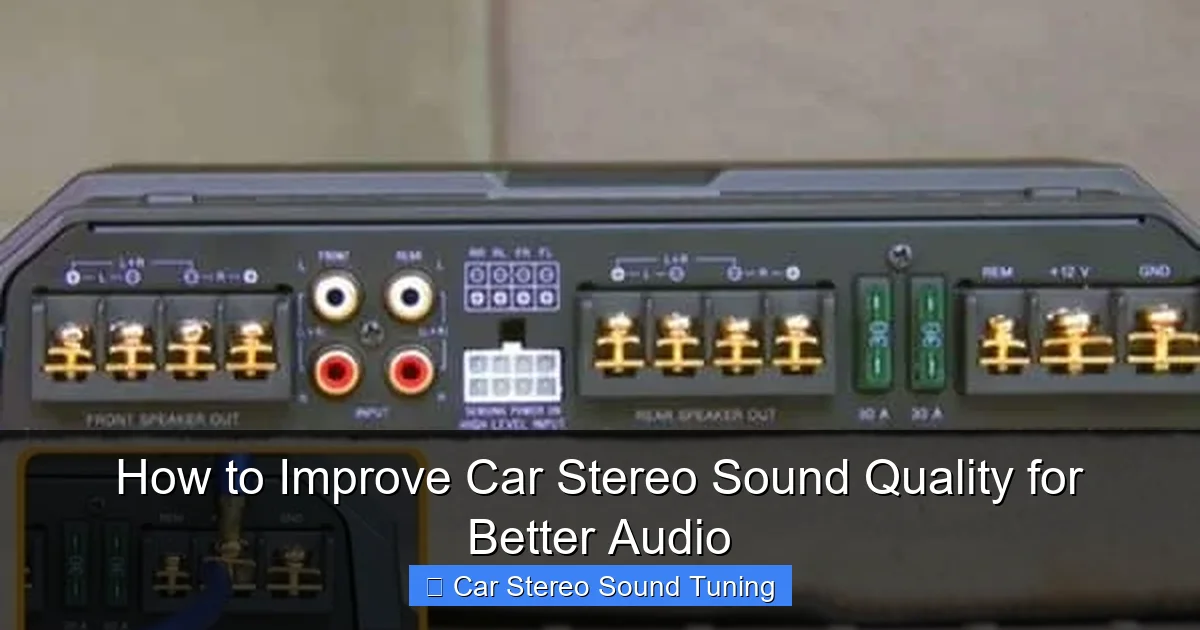
Visual guide about How to Improve Car Stereo Sound Quality for Better Audio
Image source: caraudiohunt.com
Choose the Right Type of Speakers
There are two main types: coaxial and component speakers. Coaxial speakers combine the woofer and tweeter in one unit and are easier to install. Component speakers separate the tweeter, woofer, and crossover, offering better sound imaging and clarity—ideal for audiophiles.
Match Speakers to Your Car and Music Taste
If you love deep bass and rock music, look for speakers with strong mid-bass response. For classical or vocal-heavy genres, prioritize clarity and detail. Brands like Pioneer, JBL, and Focal offer reliable options for various budgets.
Install Properly for Best Results
Use speaker adapters and sound-deadening mats during installation. This reduces vibration and improves sound isolation. Even a small upgrade like this can make a noticeable difference.
Step 2: Add a Digital Signal Processor (DSP)
A Digital Signal Processor (DSP) is like a sound engineer for your car. It analyzes and adjusts audio signals in real time, correcting delays, balancing channels, and optimizing frequency response.
Why a DSP Matters
Your car’s interior creates acoustic challenges—uneven speaker placement, road noise, and reflective surfaces can distort sound. A DSP compensates for these issues, ensuring each speaker plays in sync and at the right volume.
How to Use a DSP
Most DSPs connect between your head unit and amplifier. Use the included software or app to set time alignment (so sound reaches your ears at the same time), adjust EQ, and fine-tune crossover settings. Entry-level models like the AudioControl DQ-61 or Rockford Fosgate DSR1 are great starting points.
Step 3: Soundproof Your Vehicle
External noise is the enemy of great sound. Road rumble, wind, and engine noise force you to crank the volume, which can distort audio and damage speakers. Soundproofing reduces these distractions, letting you enjoy music at lower, safer volumes.
Focus on Key Areas
Apply sound-deadening material (like Dynamat or Noico) to doors, floor, trunk, and rear deck. These areas vibrate the most and contribute to noise leakage. Even a partial installation in the doors can significantly improve sound clarity.
Use Acoustic Insulation
Combine sound-deadening mats with closed-cell foam or mass-loaded vinyl for maximum effect. This combo absorbs vibrations and blocks outside noise, creating a quieter cabin environment.
Step 4: Tune Your Equalizer Settings
Your car stereo’s equalizer (EQ) lets you adjust bass, midrange, and treble levels. Proper EQ tuning tailors the sound to your preferences and compensates for your car’s unique acoustics.
Start with a Flat EQ
Reset your EQ to neutral (all sliders at zero) and play a familiar song. This gives you a baseline to work from.
Adjust Based on What You Hear
If vocals sound muddy, reduce the lower mids (around 200–500 Hz). If cymbals are too harsh, lower the treble (above 10 kHz). Boost the bass slightly (60–100 Hz) for warmth, but avoid overdoing it—excessive bass can drown out other frequencies.
Use Presets Wisely
Many stereos have presets like “Rock,” “Jazz,” or “Pop.” These are generic and often unbalanced. Customize your own settings instead for better results.
Step 5: Add a Subwoofer for Deep Bass
Most car speakers struggle with low frequencies. A subwoofer fills this gap, delivering the deep, powerful bass that makes music feel alive.
Choose the Right Subwoofer
Consider size, power handling, and enclosure type. An 8- or 10-inch subwoofer in a sealed box offers tight, accurate bass. A 12-inch ported sub delivers louder, more booming sound—great for hip-hop or EDM.
Power It Correctly
Match your subwoofer to a compatible amplifier. Underpowering can cause distortion; overpowering can damage the sub. Use a mono amp with sufficient RMS wattage for clean, reliable performance.
Place It Strategically
The trunk is the most common location, but placement affects sound. Try centering the sub or placing it in a corner for increased output. Use a subwoofer box with proper ventilation to prevent overheating.
Step 6: Check Wiring and Power Supply
Even the best speakers and amps won’t perform well with poor wiring or weak power. Clean, secure connections ensure maximum signal transfer and prevent distortion.
Upgrade Speaker Wire
Factory wiring is often thin and low-quality. Replace it with 16- or 14-gauge oxygen-free copper wire for better conductivity.
Secure All Connections
Loose or corroded connections cause signal loss and noise. Use crimp connectors or solder joints, and cover them with heat shrink tubing.
Consider a Capacitor or Alternator Upgrade
If you’re adding amplifiers or a subwoofer, your car’s electrical system may struggle. A power capacitor helps stabilize voltage during bass hits. For serious upgrades, consider a high-output alternator to meet increased power demands.
Step 7: Use High-Quality Audio Sources
No amount of hardware upgrades can fix poor audio files. Streaming services often compress music, reducing detail and dynamics.
Choose Lossless Formats
Whenever possible, use FLAC, ALAC, or WAV files instead of MP3 or AAC. These preserve original sound quality. If streaming, opt for high-bitrate services like Tidal HiFi or Apple Lossless.
Avoid Bluetooth Compression
Bluetooth can compress audio, especially on older codecs. Use aptX or LDAC-enabled devices for better wireless quality, or connect via USB or auxiliary cable for the best sound.
Troubleshooting Common Sound Issues
Even with upgrades, you might run into problems. Here’s how to fix the most common ones:
- Distorted sound: Check amplifier gain settings. Too high a gain causes clipping. Lower it until distortion disappears.
- No sound from one speaker: Inspect wiring and fuses. A blown fuse or loose connection is often the culprit.
- Hissing or buzzing noise: This could be ground loop interference. Ensure all components share a common ground point.
- Weak bass response: Verify subwoofer phase settings and crossover frequency. Incorrect settings can cancel out bass.
Conclusion
Improving car stereo sound quality doesn’t require a complete overhaul. Start with simple changes—like tuning your EQ or adding soundproofing—then gradually upgrade components like speakers, amplifiers, and subwoofers. With each step, you’ll notice clearer vocals, tighter bass, and a more engaging listening experience.
Remember, the goal isn’t just louder sound—it’s better sound. Take the time to fine-tune your system, use high-quality audio sources, and maintain clean connections. Your ears (and your passengers) will thank you. Now hit the road and enjoy every note like you’re front row at a live show.
🎥 Related Video: Cheap Car Stereo Sound Improvement
📺 hoohoohoblin
If your car stereo doesn’t sound good, here is how to make your car stereo sound better cheap, for around $40. Most cars come …