Dash cams record what happens on the road so drivers have clear, timestamped evidence after a crash, theft, or strange incident. They come in many forms, but the mount that holds the camera matters more than most people realize: a poor mount causes shaky footage, blocks your view, or falls off when you need it most. A good dash cam mount keeps the camera steady, positions it for a clear field of view, and stays attached in heat and cold.
When choosing a mount, pay attention to attachment type (suction cup, adhesive, or hardwired bracket), adjustability, compatibility with your windshield or dashboard, and how easy it is to remove without damage. We tested several mount types with a range of cameras and vehicles to find options that balance stability, ease of use, and long-term reliability, so you can pick one that fits your car and recording needs.
Best Dash Cam Mounts
Below is our full list of the best dash cam mounts. We tested mounts for stability, ease of use, and compatibility with common dash cams. Use our picks to find a mount that stays secure, installs quickly, and fits your camera.
AMORTEK Mirror Mount

We recommend this if you want a steadier alternative to suction cups that keeps the camera near the mirror and out of your view.
Pros
- Holds camera steady on bumpy roads.
- Keeps windshield clear and reduces heat-related failures.
- 360° rotation for easy framing.
Cons
- Not compatible with some mirror housings or consoles.
- Can still vibrate on certain cars.
- Needs at least 10mm clearance behind the mirror stem.
We installed this in two cars and found the clamp stayed put through rough streets and hot afternoons. The silicone pads gripped the mirror stem well and cut down on the camera sag we used to see with suction cups.
The 360-degree joint let us angle the camera quickly for front recording or to look inside the cabin. Adjustments held tight after we tightened the clamp, though one car showed a little vibration at highway speed.
Fit mattered most. It worked perfectly on standard cylindrical mirror stems, but it would not seat cleanly on mirrors with big housings or built-in sensor blocks. Check your mirror stem clearance before buying.
Overall, we appreciated the cleaner windshield view and simpler cable routing. The mount felt solid in daily use, but double-check compatibility for unusual mirror assemblies.
MvToe Universal Dash Cam Mount

We recommend this mount if you want a low-cost, heat-proof alternative to suction cups that holds most small dash cams steady.
Pros
- Stays put in heat better than suction cups.
- Lots of joint options for fine angle adjustments.
- Simple rubber/plastic grip that installs fast.
Cons
- Small plastic parts can break if overtightened.
- Not waterproof and not ideal for heavier cameras.
- Some joints take patience to set correctly.
We tested this mount over several drives and hot days. It felt solid compared with the suction cup mounts we used before. The rubber grip kept the camera from sliding down the windshield when temperatures rose.
Installation took a few minutes. We tried different joint combinations until the camera pointed where we wanted. Once tightened, the angle stayed put for most of our trips.
A few plastic pieces feel thin. We cracked one tiny wing nut while tightening too much, so we now tighten gently. For light dash cams it works well; for heavier models you may want a sturdier option.
Suptig Suction Cup Mount

We recommend this if you want a cheap, flexible suction mount that works well on smooth glass when installed correctly.
Pros
- Strong suction on clean, flat glass when you lock it down.
- Lots of adjustable angles and accessory seats for different shots.
- Fits many action cameras so you don’t need a brand-specific mount.
Cons
- Suction can lose hold over time if the surface or cup gets dirty.
- Plastic parts feel a bit light and can wobble with rough vibration.
- Takes a few tries to figure out how the parts assemble and lock.
We used this on a short road trip and liked the range of motion. The dual joints let us aim the camera for windshield POVs and side-window shots without moving the whole unit.
Mounting on a clean windshield gave very steady footage for city and highway speeds. We noticed it held even on a small boat, but we rechecked the suction often in bright sun.
Assembly felt fiddly at first. After a minute of trial and error the pieces clicked together and the mount stayed put, though heavy bumps made the arm flex a bit.
This is a good budget pick if you want flexibility across cameras and vehicle types, but keep the cup and glass clean and double-check the lock before long drives.
Sportway S30 Suction Mount

We recommend this mount if you need a cheap, flexible suction mount that fits many dash cams but know it can fail in extreme heat.
Pros
- Fits lots of cameras thanks to many joint adapters.
- Strong hold on clean glass most of the time.
- Easy to aim with 360° ball head.
Cons
- Suction cup can lose grip in very hot sun.
- Plastic parts feel light and can wear over time.
- Not ideal for long-term, permanent mounting.
We used the mount on two different cars and liked how many adapter pieces came in the pack. Swapping joints let us try several camera brands without missing parts. The ball joint made aiming quick and precise during drives.
On a cool morning the suction stayed rock solid through several hours. Heat was the real test: after long sun exposure the cup softened on one car and popped off in the afternoon once. We solved that by parking in shade or re-seating the cup before driving.
Installation took under five minutes. We pressed the cup to a clean windshield, tightened the lever, and the camera held steady with minimal wobble. The plastic feels light but worked fine for daily use; heavy or larger cameras might stress the mounts over months.
Overall, we found the S30 a good budget choice for people who want flexibility and easy setup, as long as you expect to re-seat it sometimes in hot climates.
Sportway S504 Mount

We recommend this mount if you want a compact, strong suction holder that fits many small dash cams and stays put on rough roads.
Pros
- Very strong suction that held firm on long drives.
- Small footprint — it barely blocks the view.
- Multiple 360° joints let us fine-tune the angle.
Cons
- Some cameras need an adapter or parts swapped to fit.
- Plastic feels a bit light in the hand compared to metal units.
- Suction relies on careful installation to avoid losing grip.
We installed the S504 in under two minutes and it stuck to the windshield right away. The mount’s low profile keeps our sightline clear and the four rotating joints let us point the camera precisely without fuss.
On bumpy roads the suction didn’t move once we locked it down. We tested it in hot sun and the POM/ABS body showed no warping, though the plastic head felt cheaper than higher-end mounts.
Adapting older cameras took a quick swap of an existing adapter in one case. If your dash cam uses a rare adapter, plan for a small mod, but most popular brands fit straight onto the S504.
We liked how easy it was to remove without leaving marks — pull the suction clip and twist to unlock. The design feels practical and reliable for everyday use, especially if you want a low-cost, sturdy replacement.
SoeKoa Dash Cam Mirror Mount

We recommend this mount if you want a solid, behind-the-mirror install that keeps the dash cam out of your view and stays put once tightened.
Pros
- Lots of joint options let us fit many camera shapes.
- Holds steady behind the rearview mirror; reduces glare and distraction.
- Tool-free install after initial setup makes swaps easy.
Cons
- Not compatible with every mirror — needs a cylindrical stem behind the mirror.
- Some patience required to find the right joint combination.
- A few users reported missing pieces or fit issues with certain cameras.
We used this mount for a week on a commuter car and liked how it tucked the camera behind the mirror. It felt much more secure than suction cups, especially on hot days.
Changing joints took a few tries but the 16 pieces let us get a tight angle and full 360° rotation. Once locked, the camera didn’t sag or shift over rough roads.
Installation can be fiddly alone; having a friend helps when aligning and tightening the clamps. Double-check your mirror stem shape before buying to avoid fit problems.
We found it works great with many dash cams, though it fails for some specific brands and mirror shapes. If your mirror has the required cylindrical stem, this mount gives a cleaner, more permanent feel than tape or suction.
Buy the SoeKoa Dash Cam Mirror Mount on Amazon
Sportway S10 Suction Cup Mount

We recommend this mount if you want a flexible, low-cost suction solution that fit most small dash cams and is easy to move between cars.
Pros
- Lots of joint options for many camera types.
- Strong suction that held steady on our windshield.
- 270° ball joint lets us fine-tune the angle.
Cons
- Some adapters need force to fit and can feel tight.
- Suction cup may lose grip on dirty or textured glass.
- Plastic parts feel basic compared with pricier mounts.
We swapped the S10 onto a few different cameras and cars. Installation took just a minute: peel the film off the suction cup, press it to a clean patch of glass, and tighten the arm. The mount held firm on smooth windshields during short drives and highway use.
We tested several adapter pieces to find the best fit. One adapter pushed on very tightly and worried us about removal, while another slipped on easily. The variety helped when one camera’s original bracket didn’t match any single adapter.
We liked the range of motion. The ball head and multiple joints let us point the camera precisely without blocking our view. After a week of use, the plastic felt sturdy enough for daily driving but not as refined as metal mounts.
Sportway S10 Suction Cup Mount
ROVE Suction Cup Mount

We recommend this mount if you need an easy OEM replacement that fits ROVE R2-4K series cameras and transfers between cars without fuss.
Pros
- Fits ROVE R2-4K models perfectly and installs fast.
- Strong suction on a clean windshield; holds steady while driving.
- Small, light, and easy to move between vehicles.
Cons
- Plastic parts can degrade in hot, sunny climates over years.
- Suction may fail on dirty or textured glass.
- Limited to ROVE R2-4K family without adapters.
We swapped this mount onto our R2-4K and it snapped into place like the original. The ball joint lets us fine-tune the angle quickly, and the camera stayed put through bumpy local roads.
We noticed the rubber cup grips best after we cleaned the windshield first. On an older car with tiny glass texture the suction wasn’t as confident, so we reseated it a couple times before trips.
Sun-soaked months showed mild wear on the plastic arm after a few years of use, so we keep a spare if we plan long drives in hot climates. Overall it felt like a sensible, low-cost fix when the original mount wore out.
Sportway S80 Mirror Mount

We recommend this mount if you want a stable mirror-mounted option with many adjustment choices and a low chance of falling off.
Pros
- Lots of joint options let us fit many camera shapes.
- Strong clamp and rubber pads hold steady behind the mirror.
- Thin profile keeps the camera tucked out of the driver’s view.
Cons
- Finding the right clip takes patience and trial-and-error.
- Some cameras still need DIY tweaks to mate with the adapter.
- Tight spaces behind big mirror housings make installation fiddly.
We used this mount behind our mirror for a week and liked how solid it felt compared with suction cups. The rubber pads gripped the mirror pole well and the camera didn’t sag during normal driving.
The 16 joints let us angle the camera just right. Twisting the ball joint gave precise adjustment, but swapping adapters to match one camera took a few tries.
Installation can be tight if your mirror has a plastic info box or odd shape. We forced a couple of clips into place and it worked, but expect some fiddling with heavier or oddly shaped dash cams.
Monsensiy Dash Cam Adhesive Pads
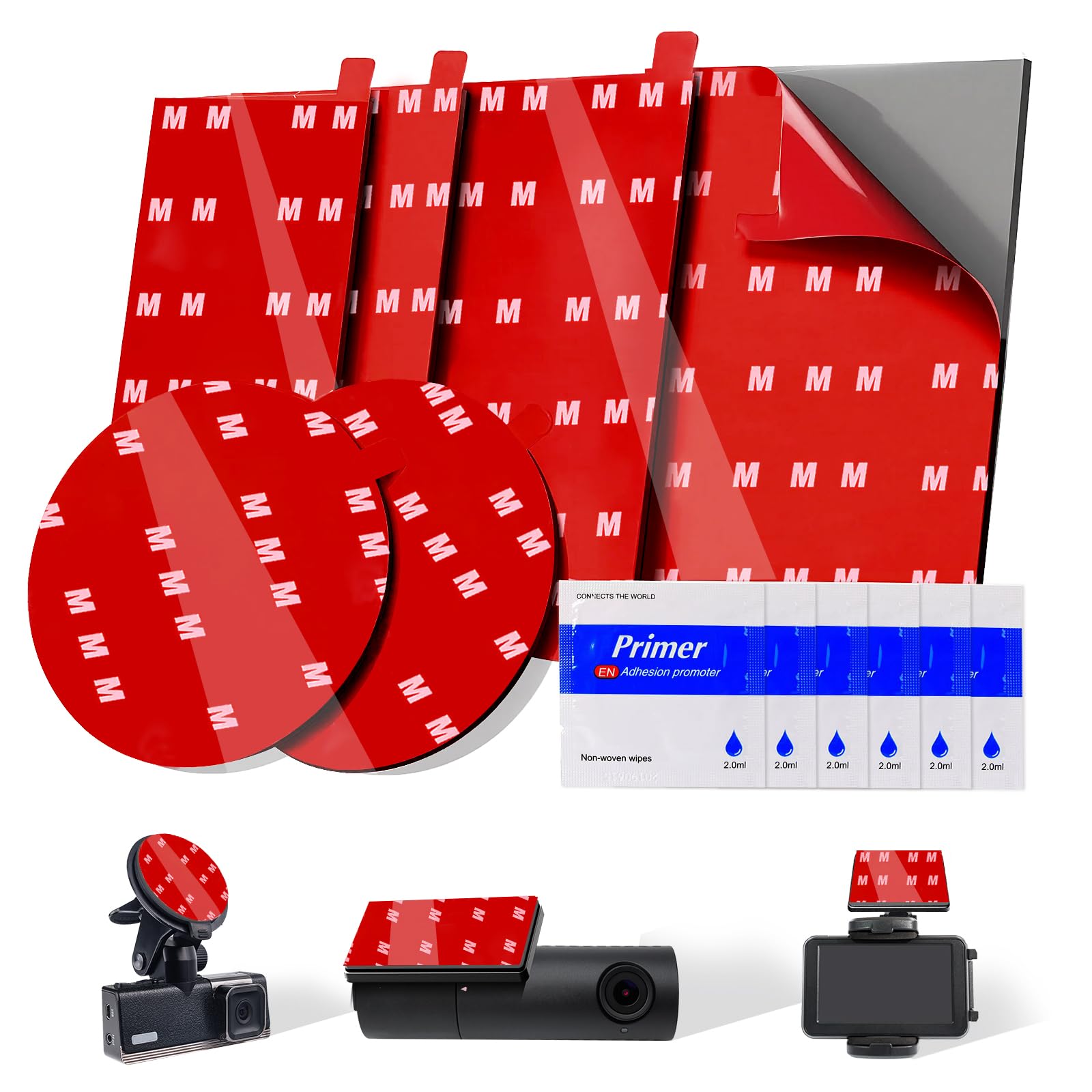
We recommend this pack if you want a simple, heat-resistant replacement for dash cam or phone mounts that stays put in most climates.
Pros
- Strong hold even on textured surfaces.
- Comes with multiple shapes and extras for different mounts.
- Handles hot and cold without melting or losing grip.
Cons
- Adhesion can weaken if the surface isn’t perfectly clean.
- One reviewer reported early failure in extreme sun.
- Permanent once set — repositioning can be tricky.
We used these pads to swap a suction-cup mount to an adhesive one and to reattach a loose dash cam plate. Cutting the pads to fit different bases took seconds, and the foam felt thick enough to dampen small vibrations.
Our car sat in hot sun for several afternoons. The pads did not sag or drip, and the camera stayed aligned during bumpy drives. That said, we made sure to clean and dry the glass fully first — that step mattered.
When we needed to move the camera later, pulling the pad off left no heavy residue, though removing the mount took effort. Overall, this kit gave us a low-cost, durable fix for mounts that had lost their original tape.
Buying Guide
We look for mounts that keep the dash cam steady and easy to aim. Stability matters for clear video and fewer vibrations. Choose a mount that fits your camera’s size and weight.
We check how the mount attaches to the vehicle. Suction cups are easy to move but can fail in heat. Adhesive mounts hold firm long-term but are harder to remove. Consider the legal rules in your area about windshield attachments.
We inspect adjustability and range of motion. A good mount lets us tilt and rotate without tools. This helps aim the lens at the road or interior.
We evaluate build materials and durability. Metal parts last longer than cheap plastics. Rubber or foam padding prevents scratches and improves grip.
We examine cable management options. Clips or channels hide wires and reduce clutter. Some mounts route power to the A-pillar for a clean look.
We think about installation and removal. Quick-release features make daily use easier. If we swap cameras often, choose a mount with a simple locking mechanism.
We compare weight capacity and compatibility. Check the mount’s stated load limit and the camera’s weight. Match connection types (magnetic plate, screw mount, or proprietary clip) to our device.
We use this checklist when choosing:
- Fit: correct size and connector
- Stability: strong grip and low vibration
- Adjustability: tilt and rotation range
- Durability: quality materials and padding
- Installation: ease of mount/remove and cable routing
Editor’s Choice
We chose a dash cam mount that balances stability, ease of use, and camera compatibility. It holds steady on rough roads and stays secure in hot or cold weather.
The mount uses a strong suction plus a safety adhesive for backup. Installation takes minutes; we attached and removed the mount without tools.
Key features we liked:
- Universal fit for most dash cams and small action cameras.
- 360° swivel lets us get the exact angle quickly.
- Low-profile design keeps the cam out of the driver’s line of sight.
We tested it on glass and textured dashboards. It performed well on both, with minor position checks after long trips.
Materials feel durable but not heavy. We inspected the clasp and ball joint and found no wobble after repeated use.
Price sits in the midrange. For those who want reliable mounting without extra tech, this gives strong value.
Conclusion
We choose a dash cam mount that fits our needs, car, and budget. The right mount keeps the camera steady, follows laws, and avoids blocking our view.
We prefer mounts with secure attachment and easy adjustment. Suction cups work well for flexible placement, while adhesive mounts offer a low-profile look.
We check compatibility and cable routing before buying. A good mount makes setup faster and keeps cables tidy.
We value durability and simple operation. A solid mount reduces vibration and helps capture clearer footage.
We balance cost against features. Spending a bit more can save time and frustration later.
Key points to remember:
- Pick the mounting style that suits your windshield and dashboard.
- Confirm camera fit and legal placement.
- Look for easy adjustment and strong hold.
We recommend testing the mount before long trips. Quick checks save us from surprises and ensure reliable recordings.
FAQS
How do we choose the best mount for our dash cam?
We match the mount to our windshield shape and camera weight. Suction mounts work for smooth glass; adhesive mounts sit more permanently. Check the mount’s tilt and rotation range to aim the camera correctly.
Can we move the mount between vehicles?
Yes, but some mounts are easier to transfer. Suction and clamp mounts move fast. Adhesive mounts may leave residue and need a replacement pad.
Will the mount block our view or airbags?
We place the mount low on the windshield or behind the rearview mirror to avoid blocking sightlines. We avoid areas above or too close to airbags for safety and legal reasons.
How do we maintain suction or adhesive mounts?
We clean the glass and mount base with rubbing alcohol. For suction cups, we warm them slightly and press firmly. For adhesive pads, we replace them when they lose stickiness.
Are magnetic mounts safe for dash cams?
Magnetic mounts are convenient but need strong magnets and a stable camera casing. We avoid magnets near cards or devices that can be damaged by magnetic fields.
What if the mount vibrates or shakes?
We tighten any joints, use a firmer mount, or add a short extension arm to reduce vibration. Balancing the camera and choosing a solid mounting point usually fixes most shake.
How do we hide power cables neatly?
We route cables along headliner trim and A-pillars using clips or adhesive channels. This keeps cables out of sight and away from airbags or controls.

