How To Store A Car Battery: 2026 Maintenance Guide

Quick Summary: Store a car battery in a cool, dry place at 40–80°F. Clean it, charge it fully, disconnect (or remove) it, and maintain 12.6–12.8V with a smart maintainer. Check voltage monthly. Avoid freezing, heat, and deep discharge. Label cables, wear gloves, and recycle old batteries safely.
Dead battery after a long sit? You’re not alone. Many drivers park their cars for weeks, then come back to a silent click. The fix starts before storage. In this guide, I’ll show you exactly how to store a car battery the right way, step by step. You’ll learn how to remove it safely, where to keep it, how to maintain charge, and how to bring it back to life when you’re ready to drive again.
What really happens to a battery in storage
Your battery does not sleep during storage. It slowly loses charge, builds sulfate on the plates, and can corrode if it sits dirty. Heat speeds this up. Cold can freeze a weak battery. Knowing these risks helps you prevent damage before it starts.

- Self-discharge: Lead-acid batteries lose 1–5% charge per month at room temp. More in heat.
- Sulfation: When voltage stays low, hard crystals form. That reduces capacity.
- Parasitic drain: If left connected in the car, modules draw power quietly.
- Corrosion: Dirt and acid residue invite moisture and surface current leaks.
- Freezing risk: A low battery can freeze near 20°F. A full battery resists freezing.
Good storage fights each one: clean, charge, disconnect, and maintain at the right voltage.
Tools and materials you’ll need
These basics make the job fast, safe, and clean. You likely have most of them. Pick a few to suit your plan and storage time.
- Gloves and safety glasses
- 8mm/10mm wrench or socket (most battery clamps)
- Battery terminal puller (optional but handy)
- Baking soda + water mix, small brush, rags
- Dielectric grease or petroleum jelly
- Battery terminal protectors (felt washers)
- Digital multimeter (DC volts)
- Smart battery maintainer (a.k.a. battery tender)
- Battery transport/keeper strap or case
- Plastic tray or mat for storage
- Permanent marker and masking tape (labeling)
Safety first: simple rules that prevent big problems
Car batteries hold energy and acid. Treat them with care. A few easy steps keep you safe and avoid damage to your car and home.
- Always wear gloves and eye protection.
- Work in a ventilated area. Avoid sparks, flames, or smoking near a battery.
- Disconnect negative (black, -) first. Reconnect negative last.
- Never lay tools across both terminals. That can short the battery.
- Lift with both hands or a strap. Batteries are heavy.
- Neutralize spills with baking soda and water.
- Follow your owner’s manual and warning labels.
- Mind airbag and electronics safety; as explained by AAA, preserving memory settings may require a memory saver on some cars.
For more general vehicle safety guidance, check trusted sources like the National Highway Traffic Safety Administration.
- See winter readiness and maintenance advice as outlined by the National Highway Traffic Safety Administration.
- Learn battery basics and testing tips from AAA’s battery maintenance guide.
How to store a car battery: step-by-step
Follow these steps in order. I keep it simple and safe. If a step does not fit your car, check your manual.

Step 1: Decide where you will store and how long
Pick a plan that matches your timeline. Less than 30 days? You can often leave the battery in the car with a maintainer. More than 30 days? Remove it and store it indoors.
- Short term (up to 4 weeks): In-car with smart maintainer or disconnect negative cable.
- Medium term (1–3 months): Remove battery. Store on a bench. Maintain monthly.
- Long term (3+ months): Remove battery. Use a quality maintainer. Check every 30–45 days.
Step 2: Record radio codes and presets (if needed)
Some vehicles lose settings when power is cut. Note codes and presets. A simple note on your phone saves time later.

- Write down radio codes, favorite stations, and clock time.
- Note seat/mirror positions if your car does not save them.
Step 3: Clean around the battery before removal
Cleaning first stops dirt from falling into the tray or on your clothes. It also prevents corrosion during storage.

- Mix baking soda and water. Brush the top of the battery and clamps.
- Wipe dry with a rag. Do not let liquid drip into vents on flooded batteries.
Step 4: Disconnect safely (negative first)
This is a key safety step. Removing the negative cable first reduces the chance of a short if your wrench touches metal.
- Turn the ignition off and remove the key.
- Loosen the negative (black, -) terminal. Wiggle it off. Tuck it aside.
- Loosen the positive (red, +) terminal. Cap or tape the end to avoid contact.
- Remove any hold-down bracket or strap.
Step 5: Lift the battery out
Use a strap if your battery has lift points. Lift straight up. Keep it level to avoid spills (flooded types).
- Watch your back. Batteries weigh 30–60 pounds.
- Keep the battery upright at all times.
Step 6: Final cleaning and neutralizing
Clean the battery once more. Get it ready for a long, quiet sit. This prevents stray current paths and corrosion.
- Scrub terminals with baking soda and water. Dry well.
- Lightly coat posts with dielectric grease or petroleum jelly.
- Install felt washers if you have them.
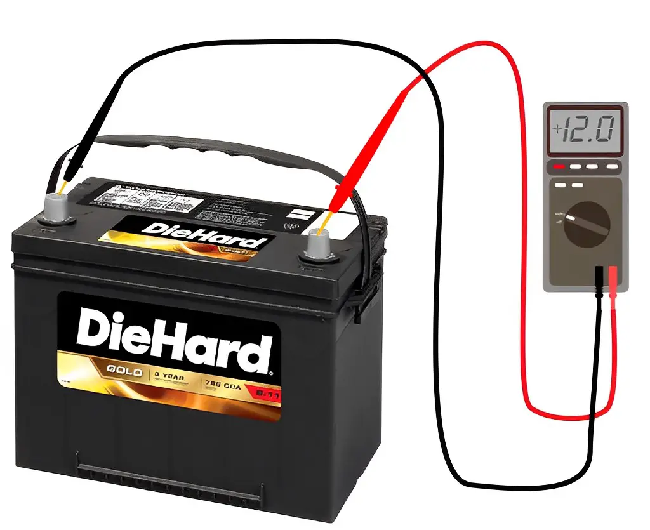
Step 7: Measure open-circuit voltage
Let the battery rest for at least 1 hour after charging or use. Then test with a multimeter. This sets your baseline.
- Set multimeter to DC volts (20V range).
- Touch red probe to + post, black to – post.
- Read the number. 12.6–12.8V is full for lead-acid. 12.4V is about 75%.
Step 8: Charge fully with a smart charger
Always store a full battery. It fights freezing and sulfation. A smart charger stops at the right point.
- Connect charger clips: red to +, black to -.
- Set the correct mode (AGM, flooded, or lithium if applicable).
- Charge until the charger shows “Full” or “Maintain.”
Step 9: Choose the storage spot
Pick a place that is cool, dry, and off the floor. Avoid heat, freezing temps, and direct sun. Keep away from sparks.
- Ideal temp: 40–80°F (4–27°C).
- Place on a shelf or wood board. Use a plastic tray under it.
- Keep out of reach of children and pets.
Step 10: Maintain during storage
You have two good options: a smart maintainer or manual checks and top-ups. I prefer a maintainer for anything over a month.
- Maintainer: Leave it connected. It will float at the right voltage.
- Manual: Check voltage monthly. Recharge at 12.4V or lower.
- Do not let it sit discharged. That causes sulfation.
Step 11: Label and log
Write the date you charged and stored the battery. Note the voltage. Keep a simple log. It takes 10 seconds and helps a lot.
- Label: “Stored 5/10, 12.74V, AGM.”
- Log future checks in your phone calendar.
Where to store your battery (and where not to)
Location matters. Heat, cold, and moisture can ruin a good battery. Pick the calmest corner of your garage or home.
- Best: Cool, dry shelf in garage or basement. No direct sun. Away from furnace or water heater.
- Okay: Unheated garage if temps stay above freezing and below 90°F.
- Avoid: Outdoors, attics, car cabins in summer, near flames, on bare concrete in humid areas.
Concrete itself does not drain a battery, but cold floors and moisture do. A wood board or mat keeps temps stable.
Battery maintainer vs trickle charger vs smart charger
These tools all charge a battery, but they do not behave the same way. A smart maintainer is the safest set-and-forget choice for storage.
| Device | How it works | Best use | Risks | My take |
|---|---|---|---|---|
| Smart maintainer (Battery Tender) | Monitors voltage, floats at safe level, auto-shuts | Long-term storage, all lead-acid types, many lithium 12V | Few if reputable brand; wrong battery mode can harm lithium | Best choice for most drivers |
| Smart charger | Multi-stage charging, often reconditioning modes | Recover low batteries, monthly top-ups | Overuse of “recond” can stress AGM | Great to own; do not leave on forever unless it has maintain mode |
| Basic trickle charger | Constant low current, no smart control | Short, supervised sessions only | Overcharge if left connected; boiling risk | Skip for storage unless watched closely |
| Solar maintainer | Low current from sunlight | Vehicles parked outside without AC power | Shadows reduce output; cheap models lack controllers | Use with a charge controller for safety |
Voltage chart: what your meter should read
Use these numbers to judge health during and after storage. Measure after the battery rests at least one hour with no load or charger.
| State of Charge | 12V Flooded/AGM Open-Circuit Voltage | Status | Action | Notes |
|---|---|---|---|---|
| 100% | 12.6–12.8V | Excellent | Store as is; maintain monthly | Ideal level when you plan how to store a car battery |
| 75% | ~12.4V | Good | Top up to 12.6–12.8V | Charge before long storage |
| 50% | ~12.2V | Fair | Charge now | Risk of sulfation if left |
| 25% | ~12.0V | Poor | Charge and test | May show slow crank |
| Dead/Discharged | <11.9V | Critical | Smart charge; test with a load tester | Could be damaged; consider replacement |
Storage schedule: a simple maintenance calendar
Set reminders and stay ahead of problems. A 5-minute check each month keeps your battery fresh and saves you a tow bill.
- Day 0: Clean, charge to 12.6–12.8V, label, store, connect maintainer if using.
- Day 30: Check voltage. 12.5V+ is fine. At 12.4V or less, charge.
- Day 60: Repeat voltage check. Inspect for corrosion or leaks.
- Day 90: Optional load test if you have a tester. Recharge as needed.
- Each 30–45 days after: Continue checks until you reinstall.
Common storage problems and how to fix them
See an issue? Use this cheat sheet. It links symptoms to causes and fast fixes you can do at home.
| Symptom | Likely Cause | Fix | Tools | Time |
|---|---|---|---|---|
| Slow crank after storage | Low voltage, mild sulfation | Smart charge to full; recheck voltage next day | Charger, multimeter | 4–12 hours |
| No crank, just clicks | Deep discharge | Charge; if voltage falls fast, replace | Charger, meter | 4–24 hours |
| Green/white crust on terminals | Corrosion from acid vapor | Clean with baking soda/water; apply grease | Brush, baking soda, rags | 10–15 minutes |
| Strong rotten-egg smell | Overcharging, boiling | Unplug charger; ventilate; test charger and battery | Charger, meter | Immediate |
| Battery case bulged | Freezing or chronic overcharge | Do not use; recycle safely | None | — |
| Voltage won’t rise past ~12.2V | Severe sulfation or bad cell | Try reconditioning mode; if no change, replace | Smart charger | 8–24 hours |
| Battery drains while stored in car | Parasitic draw from modules | Use a maintainer or disconnect negative | Wrench, maintainer | 5–10 minutes |
Special battery types: AGM, EFB, and lithium
Not all 12V batteries act the same. Know what you have. Then set your charger and plan to match it.
- AGM (Absorbent Glass Mat): Low self-discharge. Strong cranking. Use AGM mode on chargers. Avoid over-voltage “recond” cycles.
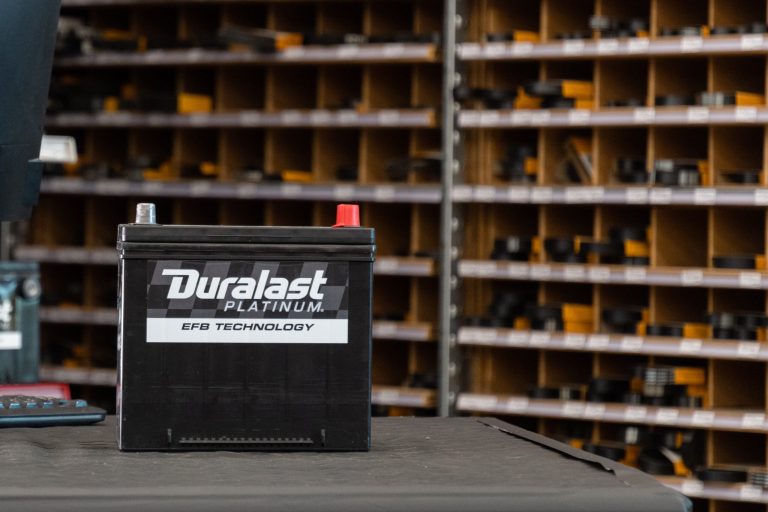
- EFB (Enhanced Flooded Battery): Common on start-stop cars. Treat like flooded, but use a modern charger with EFB support if possible.
- Flooded lead-acid: Traditional type with caps or sealed cover. Keep upright. Ventilation matters.
- Lithium (LiFePO4 12V): Very different profile. Only use lithium-compatible chargers. Store around 50–70% if the maker suggests it. Protect from cold below freezing.
If you are unsure, check the label on the case or your owner’s manual. When charging, mode selection matters more than brand.
Store in the car or remove it? Pros and cons
Both options can work. The right choice depends on where the car sits, weather, and how often you can check it.
| Option | Pros | Cons | Best for | Notes |
|---|---|---|---|---|
| Leave battery in the car | Fast restart; clock and presets may stay | Parasitic drains; heat or cold exposure; risk of theft in outdoor areas | Short-term, garage-kept vehicles | Use a smart maintainer on the car |
| Remove battery and store inside | Best protection; stable temps; zero parasitic draw | Lose presets; more effort to reinstall | Medium to long-term storage | Label cables and hold-down parts |
Climate tips: cold winters and hot summers
Weather is the number one battery killer. Adjust your plan to your climate. Small changes save big money.
- Cold climates:
- Never store a weak battery in freezing temps. Charge first.
- Move the battery indoors if the garage drops below 20°F.
- Use an AGM if your area sees deep cold often.
- Hot climates:
- Heat speeds self-discharge. Check voltage more often.
- Avoid attic or sun-baked spots. Keep it cool and shaded.
- Smart maintainer helps prevent over-discharge.
- Humid coastal areas:
- Corrosion grows fast. Clean and grease terminals well.
- Use a dehumidified space if possible.
Reinstalling after storage: wake it the right way
Do not rush this part. A short check and clean connection give you a first-try start and healthy charging.
- Measure voltage after rest. 12.6–12.8V is ideal. If low, charge first.
- Clean battery tray and cable ends. Remove rust and debris.
- Set the battery in the tray. Reinstall the hold-down snugly.
- Connect positive (+) first, then negative (-). Tighten clamps.
- Coat terminals lightly with dielectric grease.
- Start the engine. Confirm it cranks strong.
- Measure running voltage at the posts. 13.7–14.7V means the alternator charges.
If the car struggles to start, check clamps for tightness and clean contact. If it still struggles, load-test the battery. You can also ask your local shop or, as explained by Consumer Reports, use their guidance when deciding to replace.
How to store a car battery during long vehicle storage
Parking your ride for a season? Protect the battery while you protect tires and fuel. Here’s a simple car-in-storage plan.
- Wash and dry the car. Moisture invites corrosion.
- Top off the fuel and add stabilizer if sitting 60+ days.
- Decide: remove the battery or leave it with a maintainer.
- If left in: disconnect negative or use a quick-disconnect switch.
- Visit monthly. Check voltage and tire pressure. Crank the engine if the maker allows it, or leave it off to avoid moisture from short runs.
Parasitic drain: how to test before storage
If your battery keeps dying, check for draws. Fixing them saves you from jump starts and new batteries every year.
- With the car off and doors closed, connect a clamp ammeter to the negative cable.
- Wait 10–30 minutes for modules to sleep.
- Read current. Under 50 mA is normal for most cars. Over 100 mA is too high.
- Pull fuses one by one to find the circuit causing the draw.
If you are not comfortable with this test, disconnect the negative cable during storage or use a maintainer. Then plan a diagnosis later.
Jump-starting after storage: do it safely
Sometimes you still need a jump. Do it the right way to protect your electronics and avoid sparks.
- Turn both cars off. Park close but not touching.
- Connect red clamp to dead battery +, then donor +.
- Connect black clamp to donor -, then to a clean metal ground on the dead car (not the battery -).
- Start donor. Wait 2–3 minutes. Try the dead car.
- Remove clamps in reverse order. Drive 20–30 minutes to recharge, or use a charger.
Modern jump packs work well for storage lots and garages. Keep one in the trunk, charged twice a year.
Do not do these five things when storing a battery
Skip these common mistakes. They ruin good batteries fast and can be dangerous.
- Do not store discharged. Always charge first.
- Do not leave on a dumb trickle charger for weeks.
- Do not store in engine bay in extreme heat or deep cold without a maintainer.
- Do not short the posts with tools or jewelry.
- Do not ignore leaks, bulges, or strong smells. Recycle the battery.
Budget tips: stretching battery life and saving money
A few cheap habits extend life by months or even years. That keeps cash in your pocket and your car reliable.
- Own a smart charger/maintainer. It pays for itself by saving one battery.
- Check voltage monthly during storage. Five minutes, big savings.
- Clean terminals twice a year. Use baking soda and grease.
- Test your alternator annually or before long storage.
- Replace old batteries before winter if they fail a load test.
Disposal and recycling: do it the right way
Lead-acid batteries are recyclable. Most parts stores take them and even give a core credit. Handle old units with care.
- Keep upright. Place in a plastic bag or tray when transporting.
- Do not throw in the trash. Recycle at parts stores or local waste sites.
- Learn safe handling from the U.S. EPA guidance on used lead-acid batteries.
FAQ: storing a car battery
Short answers to common questions so you can act fast and with confidence.
- How long can a car battery sit unused?
A healthy, fully charged battery can sit 2–3 months at room temperature and still start the car. But test monthly. Use a maintainer for any sit longer than 30 days. - Should I disconnect the battery for storage?
Yes if you are not using a maintainer. Disconnect the negative cable to stop parasitic drain. - Can I store the battery on concrete?
Yes, but use a board or mat to reduce temperature swings and moisture. Modern cases are sealed, but cold floors still hurt performance. - What voltage is safe for storage?
12.6–12.8V at rest for lead-acid. Recharge at 12.4V or lower. - Do I need a memory saver?
It helps keep presets on some cars. If you do not mind reprogramming, skip it. Check your owner’s manual. - Is it okay to store a battery in the house?
Yes, in a cool, dry, ventilated area away from flames. Keep out of reach of children and pets. - How do I know if my battery is bad after storage?
Charge it, rest an hour, then test voltage. Load-test if possible. If it drops below 9.6V under a 15-second load at room temp, it is likely done.
Conclusion
Storing a car battery is simple when you follow a plan: clean it, charge it, disconnect (or remove it), pick a cool and dry spot, and maintain 12.6–12.8V. Check voltage monthly and recharge before it dips to 12.4V. Use a smart maintainer for long sits. When you are ready to drive, reinstall with clean, tight connections and confirm the alternator is charging. Do this, and your car will fire up the first time—no jump, no tow, no worries.