What Voltage Should A Car Battery Have: Safe Range 2026

Quick Summary: A healthy 12-volt car battery should read about 12.6 volts at rest, 13.7–14.7 volts while the engine runs, and stay above 10.0 volts during cranking. If you see 12.2 volts or lower at rest, charge or replace it. Use a multimeter for a fast check and test the alternator to confirm charging health.
If your car will not start or sounds weak, you likely ask: What voltage should a car battery have? Do not panic. You can test this at home in a few minutes. I will show you simple steps that work on any car. You will learn the right numbers, how to test with a multimeter, how to spot a bad alternator, and how to fix common battery issues.
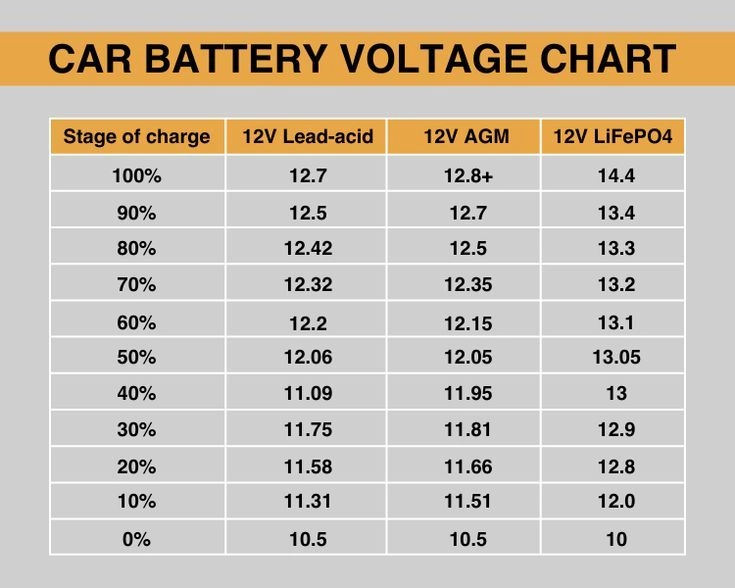
What voltage should a car battery have?
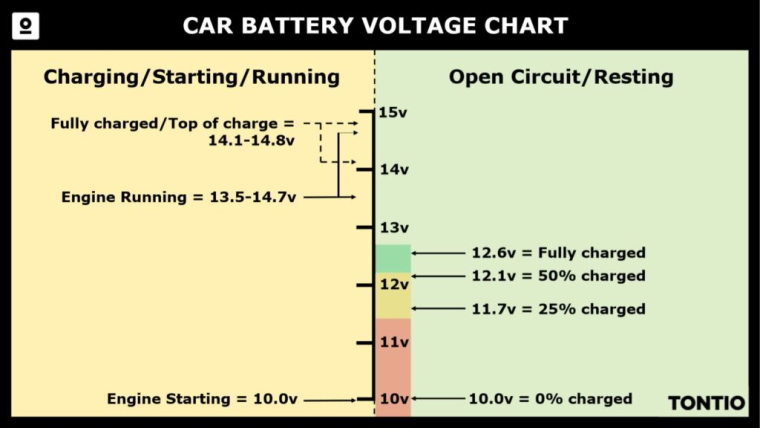
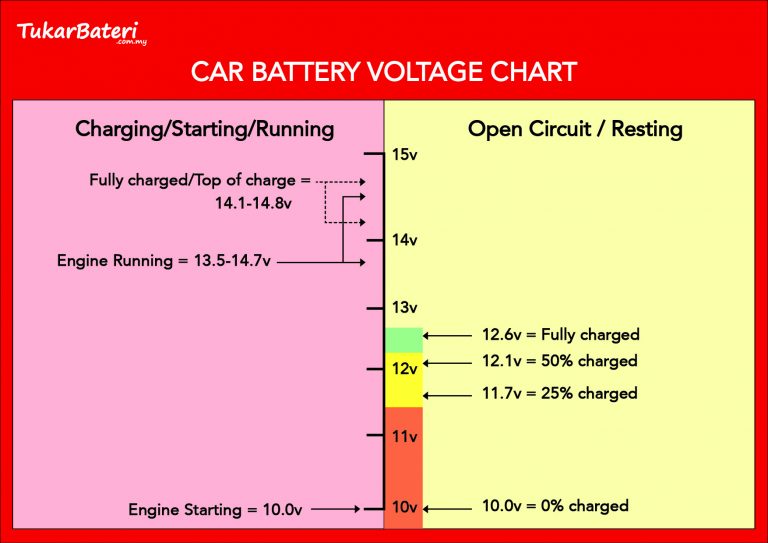
For a 12-volt lead-acid car battery, the sweet spot is 12.6 volts at rest. A strong range is 12.4 to 12.8 volts after the car sits for a few hours. While the engine runs, you should see 13.7 to 14.7 volts. During cranking, voltage should not drop below 10.0 volts for more than a split second.

- 12.8–13.0 V at rest: Fully charged AGM battery
- 12.6 V at rest: Fully charged flooded battery
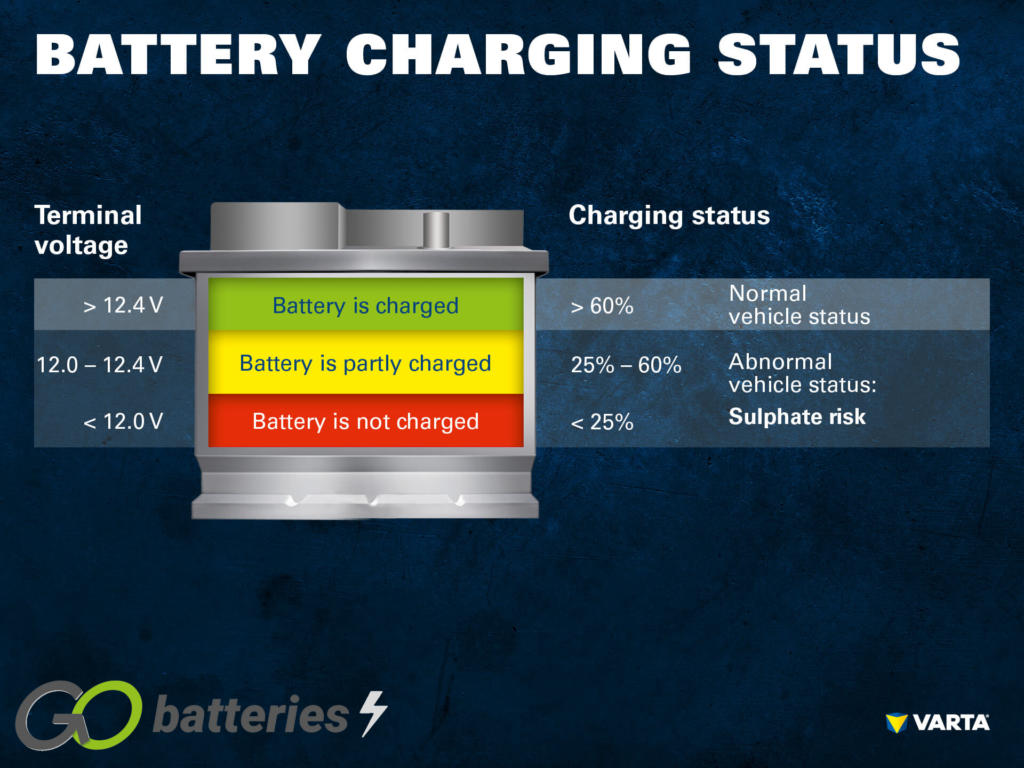
- 12.4 V at rest: About 75% charged
- 12.2 V at rest: About 50% charged (charge it soon)
- 12.0 V at rest: About 25% charged (weak)
- 11.8 V or less: Discharged or failing
- 13.7–14.7 V running: Normal alternator output (most vehicles)
- 14.8–15.2 V cold start: Brief high output on some cars is normal in cold weather
- Under 13.5 V running: Possible charging issue
If you drive a newer stop-start car with an EFB or AGM battery, the resting numbers are similar, but charging control can vary. Hybrid and EV 12-volt systems follow similar resting targets. Mild-hybrids with 48-volt systems are different and should follow the maker’s specs.
Fast checklist: Is my battery good or bad?
Use these quick signs to size up your battery and charging system before you grab tools.

- Slow cranking or clicking: Battery weak or corroded terminals
- Dash lights flicker or dim at idle: Low voltage or weak alternator
- You need a jump often: Battery near end of life or parasitic drain
- Battery light on while driving: Charging system fault
- Rotten egg smell from battery: Overcharging or internal damage
- Swollen case or leaks: Replace now
- Car dies at stops but restarts when revved: Alternator not charging well
If more than one of these is true, test voltage and inspect the cables today.
Battery voltage chart (12V lead-acid): Good vs. bad
Use this table to read your multimeter and decide what to do next. This includes a quick line that answers the big question in plain terms.
| What voltage should a car battery have? Quick reference for 12V systems | |||
|---|---|---|---|
| Voltage (V) | State of Charge | Status | What to Do |
| 12.8–13.0 | 100% (AGM, fresh off charger) | Excellent | Ready to drive |
| 12.6–12.7 | 100% (flooded) | Ideal | No action needed |
| 12.4–12.5 | ~75% | Okay | Top up with a charger if you do short trips |
| 12.2–12.3 | ~50% | Weak | Charge now; test for parasitic drain |
| 12.0–12.1 | ~25% | Poor | Charge fully; load test after charging |
| 11.8–11.9 | ~0–10% | Very low | Slow charge; battery may be damaged |
| Under 11.8 | Deeply discharged | Likely failing | Charge and test; plan for replacement |
| 13.7–14.7 (engine on) | N/A | Normal charge | Alternator healthy |
| Under 13.5 (engine on) | N/A | Low charge | Check alternator, belt, grounds |
| Over 15.0 (engine on, warm) | N/A | Overcharging | Check voltage regulator/alternator |
Tools you need to test battery voltage
These simple, low-cost tools will save you time and money.
- Digital multimeter (DC volts)
- Jumper cables or a jump starter (for emergencies)
- Battery charger or maintainer (smart charger is best)
- Wire brush or terminal cleaner
- Safety glasses and gloves
- Dielectric grease (optional, protects terminals)
How to test car battery voltage (step-by-step)
This quick test takes five minutes. It works for almost every 12-volt battery in gas, diesel, and hybrid cars.
- Park safe. Turn the car off. Remove the key. Turn off lights and accessories.
- Let the car rest. Wait 30–60 minutes if possible. This bleeds off surface charge.
- Set the meter. Put your multimeter on DC volts (20V range if manual).
- Connect leads. Red probe to battery positive (+). Black probe to negative (−) or a clean engine ground.
- Read the number. A healthy battery shows about 12.6 V. See the chart above to judge the result.
- Wiggle test. Gently move the cables. If voltage flickers, clean or tighten the terminals.
- Record the reading. Write it down for the next step: charging or alternator checks.
Safety first: Protect your eyes and car electronics
Batteries can vent gas and acid. Short circuits can spark. Be safe and go slow.

- Wear eye protection and gloves
- Keep metal tools away from both posts at the same time
- Disconnect the negative terminal first if removing cables
- Avoid open flames and smoking near batteries
- Use a quality charger with safety features
For jump-start steps and safe battery handling, see guidance from trusted sources like AAA, which explains best practices to reduce risks and protect your car’s electronics, as explained by AAA.
No multimeter? Try these options
You can still get a clue about battery and charging health without a meter.
- Built-in vehicle menu: Many cars show “battery voltage” in a hidden service menu
- OBD-II scanner: Some Bluetooth scanners display system voltage
- Headlight test: Lights that brighten with revs hint at weak charge at idle
- Battery eye (on some batteries): Green usually means charged, but still test if you can
How to test alternator and charging voltage
Your battery depends on a strong alternator. This test shows if the charging system is healthy.
- Start the car. Turn off A/C, lights, and radio.
- Measure at idle. Place probes on the battery posts. You should see 13.7–14.7 V.
- Load it up. Turn on headlights, rear defrost, blower on high. Voltage should stay at least 13.6 V.
- Rev to 2,000 rpm. Voltage should remain steady (13.7–14.7 V).
- Watch for spikes. Over 15.0 V with a warm engine can mean a bad regulator.
- Check belt and grounds. A slipping belt or corroded grounds can mimic a bad alternator.
If your alternator falls short under load, fix it fast. A weak charging system will kill a new battery in weeks.
Simple voltage drop check
Loose or dirty connections steal voltage. This quick test finds bad cables.
- With the engine running and lights on, place the black probe on battery negative (−), red probe on the alternator case. You want under 0.2 V.
- Now check positive side: black probe on alternator positive post, red probe on battery positive (+). Again, under 0.2 V is best.
- Higher drops mean dirty or loose connections. Clean or tighten and retest.
Cranking voltage and load testing
Some batteries look fine at rest but collapse under load. This test reveals that.
- Record resting voltage first (see steps above).
- Disable fuel or ignition if you know how, or just watch the meter as you crank.
- Have a helper try to start the car for 3–5 seconds.
- Watch the multimeter. Voltage should stay above 10.0 V at the lowest point.
- If it drops into the 9s fast, the battery is weak or sulfated.
- If voltage stays strong but the starter is slow, the starter or cables may be the problem.
For the most accurate check, many parts stores can do a free load test. Consumer Reports also notes that age and heat speed up internal wear, which reduces cranking power faster in hot climates, according to Consumer Reports.
Symptoms, causes, and fixes
Match what you see with the most likely cause and a fast fix you can try today.
| Symptom | Likely Cause | Quick Fix |
|---|---|---|
| Clicking, no start | Weak battery or corroded terminals | Clean posts, charge battery, try jump start |
| Slow crank, then starts | Low charge from short trips | Overnight charge, take a 30-min highway drive |
| Battery light on while driving | Alternator or belt issue | Check belt tension, test alternator output |
| Lights dim at idle, brighten with revs | Weak alternator at low rpm or dirty grounds | Clean grounds, test charging at idle and 2,000 rpm |
| Random warning lights, radio resets | Low system voltage | Charge battery, check for parasitic drain |
| Swollen or leaking battery | Overcharging or heat damage | Replace battery, test alternator regulator |
| Good voltage at rest, still no start | Bad starter, cable, or engine ground | Voltage drop test, inspect cables and grounds |
| Battery dies overnight | Parasitic draw (light, module, accessory) | Measure draw, pull fuses to isolate circuit |
| Hums or whine changes with rpm | Bad alternator bearings or diodes | Replace alternator; check ripple if possible |
Why temperature matters (cold and heat effects)
Weather changes battery behavior. Cold slows chemical reactions. Heat shortens life.
- Cold weather: At 0°F, your battery can lose 60% of cranking power. A 12.4 V battery in summer may act dead in winter.
- Hot weather: Heat speeds up plate corrosion and evaporation. Batteries fail faster in hot states even if they seem fine in summer.
- Charging in cold: Brief higher voltages (14.8–15.2 V) can be normal at cold start.
- Short trips in winter: The alternator may not recharge the battery after cold starts. Use a smart charger to help.
Tip: In cold climates, keep the battery at a full charge. Park indoors if you can. A charged battery resists freezing better than a half-charged one.
AGM vs. flooded vs. EFB vs. lithium: Voltage differences
Not all 12-volt batteries behave the same. Know what you have for the right targets.
- Flooded lead-acid (most cars): 12.6 V at rest when full
- AGM (many modern and premium cars): 12.7–12.9 V at rest when full; better under load
- EFB (stop-start systems): Similar to flooded at rest; built for frequent starts
- Lithium 12V retrofit: Different charge curves; follow maker specs; often 13.2 V nominal
Charging targets:
- Flooded: 13.7–14.7 V running (temp dependent)
- AGM: Often prefers 14.4–14.8 V; many smart alternators adjust by temperature
- EFB: Similar to flooded; designed for stop-start cycling
- Lithium: Needs a compatible charger and stable alternator control
If you replace a flooded battery with AGM on a stop-start car, you may need to “register” it with a scan tool so the charge system knows the new type and age. Many shops can do this quickly.
How to use a smart charger or maintainer
Charging the right way will make your battery last longer and hold a proper 12.6–12.8 V at rest.
- Pick the right charger. Look for a smart charger with automatic shutoff and an AGM mode if you have an AGM battery.
- Connect safely. Red clamp to positive (+). Black clamp to negative (−) or a clean ground point.
- Choose the mode. Standard, AGM, or cold mode based on your battery and climate.
- Charge slow and steady. Trickle charge brings a dead battery back better than a high-amp blast.
- Wait for “full.” Then let the battery rest 30–60 minutes and measure. You want 12.6–12.8 V.
- Use a maintainer for storage. It keeps the battery at the right level without overcharging.
Smart maintainers can prevent sulfation, which hurts capacity over time. A small investment can add years to battery life.
Jump-starting the right way
A safe jump can get you moving. A bad jump can fry electronics. Follow these steps.
- Park close but not touching. Turn both cars off.
- Clamp order:
- Red to dead battery positive (+)
- Red to donor battery positive (+)
- Black to donor battery negative (−)
- Black to a clean ground on the dead car (not the negative post)
- Start the donor car. Let it run for 2–3 minutes.
- Try to start the dead car. If it starts, let both run for a few minutes.
- Remove clamps in reverse order.
- Drive 20–30 minutes to recharge, then test battery at rest later.
If the car will not start after a few tries, do not keep cranking. You may flood the engine or overheat the starter. Test and charge the battery instead. For more safe jump-starting tips, refer to guidance summarized by AAA.
How to revive a drained battery (safely)
If your battery reads 11.8 V or less, it is very low. You may recover it with patience.
- Check the age. If the battery is 4–6 years old, plan for a replacement even if you revive it.
- Use a smart charger. Set it to a low-amp mode (2–10A). AGM mode if needed.
- Charge slow. Let it run for several hours. Do not rush.
- Rest and test. After charging, let the battery rest 1 hour. Measure voltage. You want 12.6–12.8 V.
- Load test. See if it stays above 10.0 V during a crank. If it drops low fast, it is done.
- Replace if needed. Do not trust a battery that fails under load.
Note: Some very dead AGM batteries will not “wake up” with a dumb charger. A smart charger with a recovery mode may work. If not, a shop can try a bench charge.
Parasitic drain: Find what is killing your battery
If your car dies overnight, something may be drawing power while parked.
- Charge the battery first. You need full power to test accurately.
- Measure draw. With the car off and doors closed, set your meter to amps (10A range). Place the meter in series on the negative side. Many cars will sleep after 15–45 minutes. Aim for under 50 mA when asleep.
- Pull fuses. If the draw is high, pull one fuse at a time to find the circuit that drops the draw.
- Common culprits: Glove box or trunk light, phone chargers, dash cams, aftermarket alarms, stuck relays, failing modules.
- Fix the root cause. Replace a bad switch, rewire an add-on device, or update a module at a shop.
Some cars wake up easily when you open a door or press the key fob. Use the trunk latch trick or remove the interior light fuse so the car can sleep while you test.
Clean and protect battery terminals
Dirty terminals cause voltage drop and poor starts. Clean them in minutes.
- Disconnect negative (−) first, then positive (+).
- Mix baking soda and water, or use a battery cleaner spray.
- Scrub posts and clamps with a wire brush until shiny.
- Rinse and dry. Lightly coat with dielectric grease.
- Reconnect positive (+) first, then negative (−). Tighten snug, not crushing.
- Measure voltage again. Many “mystery” issues vanish after a good clean.
When to replace your battery
Batteries wear out even if you take care of them. Here is when to swap it out.
- Age: Most last 3–5 years. Hot states may see 2–4 years.
- Failing load test: Drops under 9.6–10.0 V during crank
- Repeated jumps needed: Points to internal damage
- Swollen case, leaks, or sulfur smell
- Poor recovery after charge: Resting voltage falls fast
When you replace, match group size, CCA rating, and type (flooded, EFB, AGM). Stop-start cars often need AGM or EFB. Many vehicles require battery registration so the car charges it correctly.
Short-trip driving and battery health
Short trips starve the battery. The alternator needs time to recharge after every start.
- Do a weekly 20–30 minute highway drive if you often do short trips
- Use a maintainer if your car sits for days
- Reduce loads at idle: Turn off seat heaters, rear defrost, and blower when you park
- Fix dome and trunk lights that stick on
As noted by AAA, frequent short trips and heavy electrical loads shorten battery life. Their guidance supports top-up charging and periodic testing to prevent no-starts, as explained by AAA.
Real-world scenarios and quick fixes
Here are simple plans you can use today for common problems on the road or at home.
It is a cold morning and the car cranks slowly
Cold hurts battery output. Even a good battery can struggle after a freeze.
- Turn off all accessories before cranking
- Try one 5-second crank, then rest for 30 seconds
- If it fails, use a jump starter
- After starting, drive 30 minutes and then test resting voltage later
- If resting voltage is 12.2 V or less, charge overnight
The car sat for weeks and now it is dead
Many modern cars draw power while parked. A slow discharge is common.
- Jump start or slow charge to 100%
- Measure resting voltage after 1 hour: aim for 12.6–12.8 V
- Use a maintainer if the car will sit again
- If it dies again soon, check for a parasitic drain
Battery light came on while driving
Do not shut the engine off in a bad spot. The battery is now your only power.
- Turn off extra electrical loads
- Drive to a safe place or shop
- Test charging voltage with the engine on: if under 13.5 V, the alternator or belt is suspect
- Inspect for a broken or loose belt before driving again
I replaced the battery, but the car still cranks slow
This points to high resistance or a failing starter.
- Clean and tighten terminals and grounds
- Do a voltage drop test on cables
- Check engine-to-chassis ground straps
- If drops are fine, test the starter current draw
My stop-start system stopped working
Stop-start needs a strong battery and perfect charge control.
- Check resting voltage: under 12.4 V can disable stop-start
- Use an AGM-compatible charger to top up
- Make sure the battery is the correct EFB/AGM type and registered
- Scan for codes if the system stays off after a full charge
What affects battery voltage accuracy?
Small things can skew your readings. Set up your test right.
- Surface charge: After driving or charging, voltage can read 12.8–13.0 V. Let it rest before testing.
- Probe contact: Touch the posts, not the dirty clamps, for a true reading.
- Temperature: Cold can drop resting voltage by a few tenths.
- Meter calibration: Cheap meters vary. If a result is odd, try a second meter.
Voltage vs. cranking amps: What is the difference?
Voltage is pressure. Cranking amps are current supply. You need both to start the engine.
- A battery can show 12.6 V but still fail to deliver amps under load
- Load testing checks the battery’s real strength
- High resistance in cables can also fake a bad battery
Think of it like water: Voltage is the pressure. Amps are the flow. Choked pipes (bad cables) limit flow even with good pressure.
Charging system basics (quick primer)
Knowing the parts helps you troubleshoot faster.
- Battery: Stores energy, stabilizes voltage
- Alternator: Creates power once the engine runs
- Voltage regulator: Controls output to protect the battery and systems
- Starter: Uses a lot of current to crank the engine
- Cables and grounds: Carry power; corrosion hurts them
On many modern cars, the computer manages charging. It may lower voltage to save fuel, then raise it while braking. That is normal if readings stay in the safe range.
How to read your battery label
Your label tells you key specs. Match them when buying new.
- Group size: Physical size and terminal layout
- CCA (Cold Cranking Amps): Starting power at 0°F
- RC (Reserve Capacity): Minutes your battery can run loads if the alternator fails
- AGM/EFB/Flooded: Battery type
- Date code: Month and year built—newer is better
Choose a battery with equal or higher CCA than stock. Follow your owner’s manual if your car needs AGM or EFB for stop-start.
Battery maintenance tips that work
These small habits keep your battery at the right voltage and extend its life.
- Keep terminals clean and tight
- Use a maintainer for long sits
- Avoid repeated short trips—mix in a longer drive
- Turn off lights and chargers when you park
- Check charging voltage every few months
- Secure the battery hold-down so it does not vibrate
When in doubt about safe disposal and recycling of old batteries, follow guidance from the EPA on proper recycling locations and procedures, based on EPA recommendations.
Troubleshooting flowchart you can follow
Use this simple order of checks to avoid wasted time and parts.
- Car will not start: Measure resting battery voltage
- 12.6 V or higher: Check starter and cables
- 12.2–12.5 V: Charge fully, then retest and load test
- Under 12.2 V: Charge slowly; battery may be failing
- Starts but battery light is on: Test alternator output (13.7–14.7 V)
- Alternator low: Inspect belt, grounds, alternator
- Battery dies overnight: Check for parasitic draw
Table: Quick-start numbers for daily use
Here is a compact cheat sheet to keep on your phone or toolbox.
| Test | Target / Range | Pass / Fail | Notes |
|---|---|---|---|
| Resting voltage (12V battery) | 12.6–12.8 V (AGM up to ~12.9) | Pass | After 30–60 min rest |
| Resting voltage | 12.2 V or less | Fail | Charge soon; test for drain |
| Cranking voltage | ≥10.0 V minimum | Pass | Short dip below 10V can be okay |
| Cranking voltage | <10.0 V | Fail | Weak battery or bad cables |
| Charging at idle | 13.7–14.7 V | Pass | Warm engine, normal loads |
| Charging at 2,000 rpm | 13.7–14.7 V | Pass | Should be steady |
| Charging warm | >15.0 V | Fail | Overcharge; regulator issue |
| Parasitic draw (asleep) | <50 mA | Pass | Some cars a bit higher |
| Parasitic draw (awake) | 100–500 mA+ | N/A | Wait 15–45 min for sleep |
Do I need a bigger battery?
Bigger is not always better. Get the right size and type first.
- Match the group size so it mounts and cables fit
- Equal or higher CCA is okay
- Use AGM/EFB if your car called for it
- Consider more RC if you run accessories often with the engine off
If you add a powerful sound system or winch, you may need upgraded wiring, a high-output alternator, or a second battery.
Can short trips really hurt my battery?
Yes. Starting the engine uses a lot of energy. Short hops do not replace it.
- If most trips are under 10 minutes, use a maintainer
- Plan a weekly longer drive
- Avoid idling with heavy loads like defrost and heated seats
This keeps resting voltage near the healthy 12.6–12.8 V window and prevents sulfation.
What voltage should a car battery have after charging?
Right after a charge, you might see 12.8–13.0 V from surface charge. Let it rest for an hour. A healthy reading then is 12.6–12.8 V. If it falls to 12.3 V or lower fast, the battery may be weak.
How often should I test my battery?
Test more in harsh weather and as the battery ages.
- Every 3 months in hot or cold climates
- Before long trips
- Anytime you notice slow cranking or dim lights
- Annually after year 3 of battery age
Regular checks save you from surprise no-starts in a bad place, and they help you plan a replacement before failure.
FAQ
Is 12.4 volts good for a car battery?
It is okay but not full. It is roughly 75% charged. Top it up with a smart charger to get back to 12.6–12.8 V.
What voltage is too low to start a car?
Many cars struggle at 12.2 V or lower at rest. During cranking, if voltage dips below 10.0 V and stays there, the battery is weak or bad.
What voltage should a car battery have while running?
Most cars show 13.7–14.7 V with the engine running. If under 13.5 V, check the alternator and belt. Over 15.0 V warm can mean a bad regulator.
How long should I drive to recharge a dead battery?
It depends on how dead it was. A 20–30 minute drive helps some, but a smart charger at home is better and safer for the battery.
Why does my new battery keep dying?
Common causes include a weak alternator, parasitic draw, short trips, or loose/dirty terminals. Test each one in order.
Can I use a 14.8V charge on any battery?
Many AGMs can take 14.8 V briefly. Flooded batteries prefer up to about 14.7 V. Always follow the battery maker’s specs.
Is 15 volts too high for a car battery?
On a warm engine, yes. Over 15.0 V suggests overcharging. In cold starts, a brief high reading can be normal, but it should settle soon.
Conclusion
A healthy 12-volt car battery should read about 12.6 volts at rest, hold above 10.0 volts during cranking, and see 13.7–14.7 volts while running. If your reading is low, charge the battery, clean the terminals, and check the alternator. Use the charts and steps here to test fast and fix the real cause. Do a quick check today so your car starts strong tomorrow.