How Long Does A Car Battery Last: Lifespan Tips 2026

Quick Summary: Most car batteries last 3–5 years. In hot states, expect closer to 3 years. In cooler regions, 4–6 years is common. Check yours every 6 months after year 3. Test resting voltage (12.6V is healthy). If cranking is slow, lights dim, or voltage is under 12.2V, plan a replacement or charge now.
Your car will not start, and you’re wondering: how long does a car battery last? You’re not alone. Most drivers face a dead battery at the worst time. The good news: you can predict failure and avoid a tow. In this guide, I’ll show you simple tests, easy fixes, and smart habits to stretch battery life. You’ll learn what affects lifespan, how to test voltage, when to replace, and how to pick the right battery.
How long does a car battery last? The short answer
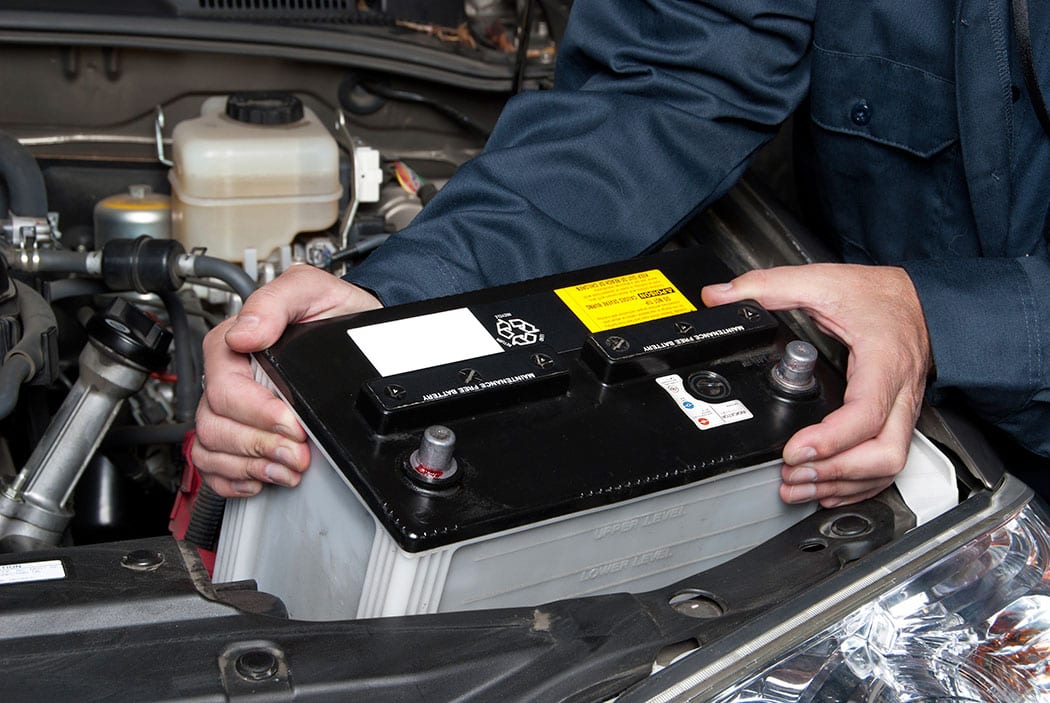
Most 12-volt car batteries last 3–5 years. Heat shortens life. Cold reduces cranking power. Driving habits and charging health matter a lot. With good care, some batteries reach 6 years. In extreme heat, many fail at year 2–3. If your battery is over 3 years old, test it now. Replace at the first signs of weak cranking or low voltage you cannot recover with charging.

| How long does a car battery last? | Typical Range | Best Case | Worst Case | Notes |
|---|---|---|---|---|
| Mild climate, mixed driving | 4–5 years | 6 years | 3 years | Regular highway trips help |
| Hot climate (AZ, TX, FL) | 2–3 years | 4 years | Under 2 years | Heat speeds internal wear |
| Cold climate (MN, ND, ME) | 3–5 years | 6 years | 2–3 years | Cold lowers starting power |
| Short trips, stop-and-go | 2–4 years | 5 years | Under 2 years | Alternator can’t fully recharge |
| AGM (quality brand) | 4–6 years | 7 years | 3–4 years | Better in heat and vibration |
How a car battery works (in simple terms)
Your 12-volt battery stores energy and delivers a strong burst to spin the starter. After the engine starts, the alternator recharges it and powers the car. Lead-acid batteries age with every cycle and with heat. Over time, they lose capacity. That is why starting gets slower, and voltage reads lower after rest.
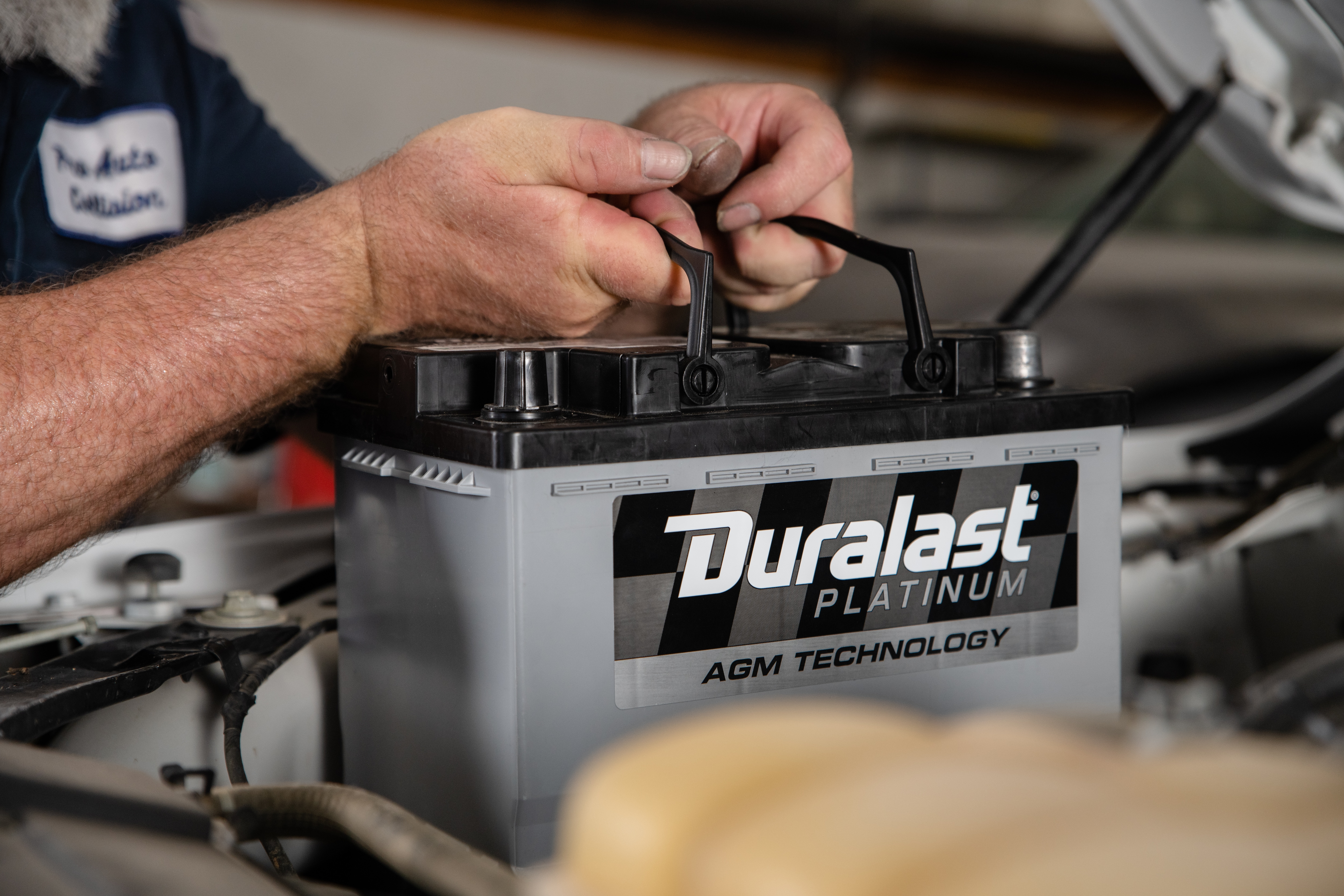
- Flooded lead-acid: Standard, cheapest, needs the most care.
- AGM (Absorbent Glass Mat): Stronger, better for heat and vibration, often used in start-stop cars.
- EFB (Enhanced Flooded Battery): Upgraded flooded for start-stop systems.
- Lithium 12V (rare in most mainstream cars): Light and steady voltage, but needs special care.
Note: The 12V battery is different from high-voltage EV packs. Even EVs use a 12V battery to power systems and boot the car.
What actually shortens battery life
Battery life depends on heat, cold, driving style, electrical load, battery type, and charging system health. Fixing small issues early adds years. Let’s break down the big factors and what you can do.
1) Climate: heat and cold
Heat is the number one battery killer. It speeds chemical breakdown and evaporates electrolyte in flooded batteries. Cold does not kill the battery but reduces available power. A weak battery that seemed fine in fall can fail on the first freezing morning.

- Hot states: Park in shade or a garage. Use heat shields if fitted.
- Cold states: Keep the battery fully charged. Consider an AGM for better cold cranking and durability.
2) Driving habits
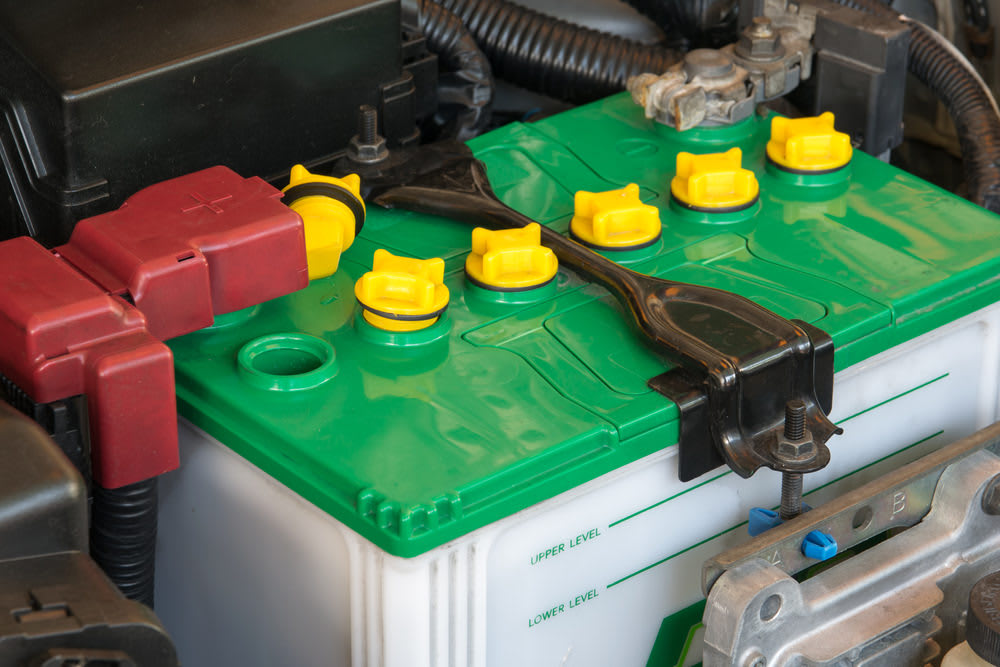
Short trips drain the battery and don’t give the alternator time to recharge. Repeated short runs leave the battery undercharged. That speeds up sulfation (crystal buildup) and reduces capacity.
- Do one 20–30 minute highway drive per week.
- Use a smart battery maintainer if you drive under 10 miles a day.
3) Electrical load and add-ons
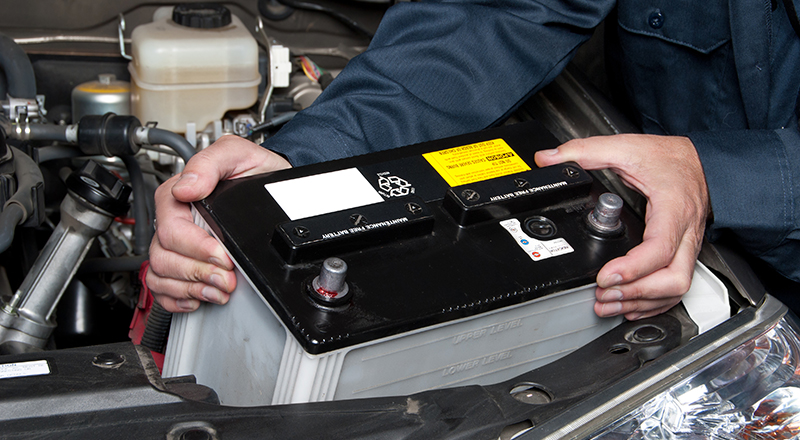
Dash cams, alarms, phone chargers, and old stereos can draw power while parked. A parasitic drain slowly empties the battery overnight or over a few days. The alternator then works hard to refill it, which heats and ages the battery.
- Unplug accessories when parked.
- Wire add-ons to switched power, not always-on circuits.
- Measure parasitic draw if the battery keeps dying.
4) Battery type and quality
AGM and EFB handle deep cycles and heat better than basic flooded batteries. A well-built battery with fresh date code will last longer. Cheap no-name batteries often fail early.

- Pick the right type for your car (AGM for start-stop if required).
- Check the date code. Buy fresh stock (ideally under 3 months old).
5) Charging system health
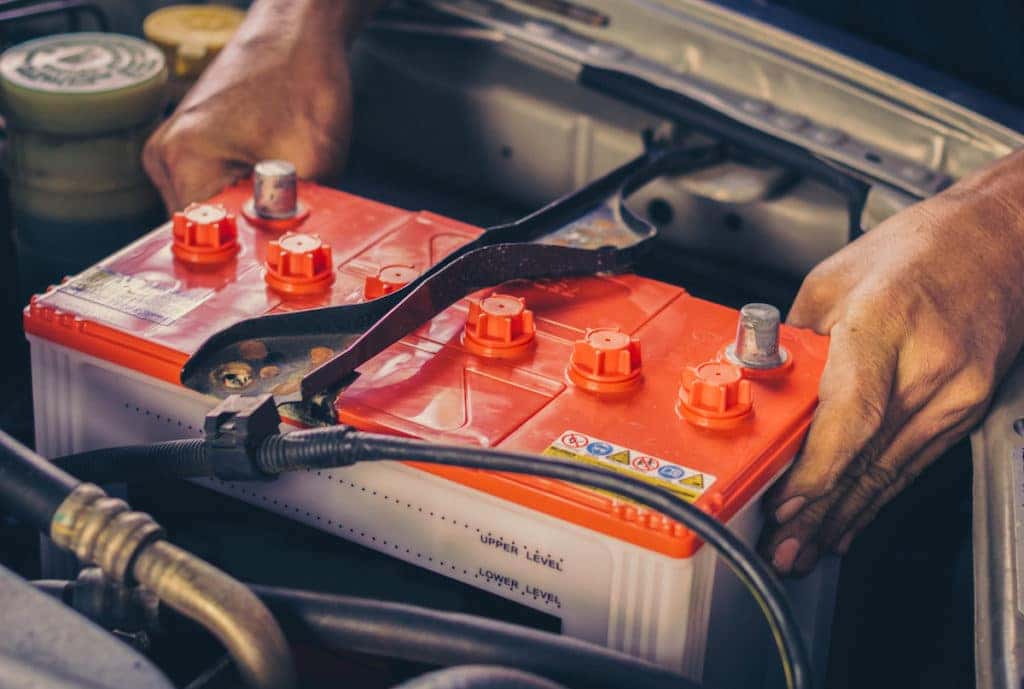
A weak alternator or bad voltage regulator can ruin a battery. Overcharging boils it. Undercharging leaves it sulfated. Loose or corroded connections also cause poor charging and hard starts.
- Test charging voltage: 13.8–14.7V at idle with accessories off.
- Clean and tighten battery terminals and grounds.
6) Maintenance and storage
Dirt and corrosion slow charging and create leakage paths. Vibration damages internal plates. Sitting discharged causes sulfation and early death. Proper storage extends life.
- Clean terminals twice a year.
- Secure the battery hold-down.
- If stored more than 2 weeks, use a maintainer.
Quick self-check: Is it the battery?
Before you buy a new battery, confirm the problem. Many no-starts are caused by loose terminals, bad grounds, or a weak alternator. Use the checks below to zero in fast. You can do this in minutes with simple tools.
- Slow crank, clicking, dim lights at start: Likely weak battery.
- No crank, lights work fine: Check starter, ignition switch, or shifter in Park/Neutral.
- Starts sometimes, loses radio presets: Loose or corroded terminals.
- Dies while driving, dash lights flicker: Alternator problem.
- Battery dies after sitting overnight: Parasitic drain or battery at end-of-life.
| Symptom | Likely Cause | Fast Fix |
|---|---|---|
| Single click, no crank | Weak battery or poor terminal contact | Clean/tighten terminals; jump-start; test voltage |
| Rapid clicks | Very low battery charge | Jump-start; charge and load test |
| Cranks slow, then starts | Aging battery or cold weather | Charge fully; test CCA; plan replacement |
| Cranks normal, no start | Fuel/spark issue (not battery) | Scan for codes; check fuel pump/fuses |
| Battery dies overnight | Parasitic draw or failing battery | Measure draw; pull fuses to find source; replace if needed |
| Stalls while driving | Alternator failure or loose belt | Check charging voltage; inspect belt; replace alternator |
Tools you need for battery testing and care
You do not need a shop full of gear. A few affordable tools will tell you 90% of what you need. Keep them in your garage for quick checks.
- Digital multimeter (DMM)
- Battery charger or smart maintainer (1–10A)
- Jumper cables or a lithium jump pack
- Wire brush or terminal cleaner
- Baking soda and water (for corrosion)
- Safety glasses and gloves
- Wrench/socket set (for hold-down and terminals)
Step-by-step: Test your battery at home
Follow these simple tests in order. They take 10–20 minutes. You will know if the battery is weak, if the alternator is bad, or if something is draining power while parked. Write down your readings.
1) Visual and safety check
Pop the hood and look first. Many battery problems are visible. A quick clean can restore contact and fix hard starts. Wear gloves and eye protection.
- Check for swelling, cracks, or leaks. Replace if damaged.
- Look for white/blue corrosion on terminals. Clean with baking soda and water.
- Ensure clamps are tight. Wiggle by hand; they should not move.
- Confirm the battery is secure with the hold-down.
2) Open-circuit voltage test (no load)
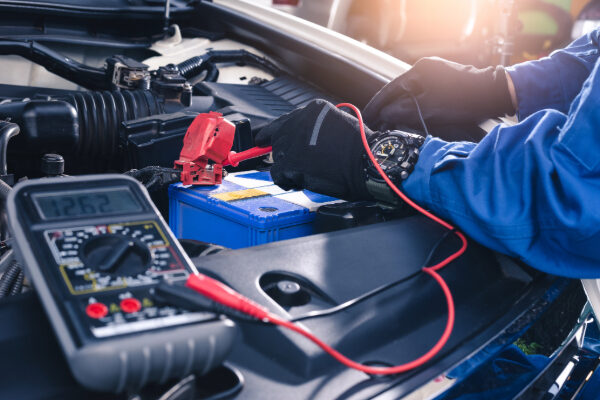
This is the fastest health check. A healthy, fully charged battery rests near 12.6V. Test after the car sits for at least 30 minutes with the engine off.
- Set the multimeter to DC volts.
- Touch red lead to positive (+), black to negative (–).
- Read and note the voltage.
- Compare to the chart below.
- 12.6–12.8V: 100% charged and healthy
- 12.4–12.5V: ~75% charged
- 12.2V: ~50% charged (needs charging)
- 12.0V: ~25% charged (very weak)
- Below 11.9V: Discharged or failing
3) Crank test (voltage while starting)
This shows if the battery can deliver a strong burst. Low cranking voltage points to a weak battery or poor connections. Do this with headlights off and blower off.
- Connect the meter as before.
- Have a helper start the engine while you watch the meter.
- Note the lowest voltage during cranking.
- Above 10.5V: Good
- 9.6–10.5V: Marginal
- Below 9.6V: Weak battery or bad terminals
4) Charging system test (engine running)
Now check the alternator. If it undercharges or overcharges, your battery will not last. Run at idle with accessories off, then on.
- Start the engine and let it idle.
- Read voltage at the battery posts.
- Expected: 13.8–14.7V (most cars), 14.2–14.8V for AGM when cold.
- Turn on headlights, rear defroster, and blower. Voltage should stay above ~13.6V.
- Under 13.5V: Weak alternator or belt/connection issue
- Over 15.0V: Bad regulator (overcharging)
5) Parasitic drain screen (basic)
If your battery dies after sitting, look for a draw. A normal sleep current is often 20–50 mA. Some cars take 20–40 minutes to enter sleep mode.
- Turn off the car, remove key, close doors (use latch trick if needed).
- Wait 30–60 minutes.
- Use a clamp meter on the negative cable or put your DMM in series (careful, follow meter limits).
- Normal: under ~50 mA. Over 100 mA can kill a battery overnight.
- Pull fuses one by one to find the problem circuit.
For more detail on battery testing steps and typical failure patterns, see guidance from AAA, which explains why extreme temperatures and short trips shorten life.
Battery voltage chart: good vs bad
Use this table to match your readings to a simple action. Voltage alone is not a full health test. But it gives a strong first call. Pair it with the crank and charging tests above.
| Resting Voltage (12V battery) | State of Charge | Condition | Action |
|---|---|---|---|
| 12.7–12.8V | 100% | Excellent | No action needed |
| 12.5–12.6V | 75–90% | Good | Top off with a short drive or maintainer |
| 12.3–12.4V | 50–65% | Low | Charge now; check for parasitic draw |
| 12.1–12.2V | 35–45% | Very low | Charge overnight; retest; consider replacement if old |
| 11.8–12.0V | 0–25% | Discharged | Charge and load test; replace if capacity won’t return |
| Below 11.8V | N/A | Deeply discharged | Try a smart charger recovery; likely replace |
Recharge or replace? Clear rules of thumb
Not every weak battery is dead. Sometimes it only needs a proper charge. Use these simple rules. They save money and prevent roadside trouble.
- Under 3 years old and only low on charge: Recharge and retest.
- 3–5 years old with repeated slow cranks: Replace soon.
- Cranking voltage under 9.6V after full charge: Replace.
- Won’t hold 12.4V after an overnight charge: Replace.
- Swollen case, leaks, or cracked: Replace now.
- Alternator overcharges (above 15V): Fix charging first, then test battery.
| Situation | Best Choice | Why |
|---|---|---|
| Battery under 2 years, left lights on | Recharge | Accidental drain, likely full recovery |
| Battery 4 years, slow crank in cold | Replace | Age + cold stress = likely failure soon |
| Battery dies after 2–3 days parked | Test for draw | Fix drain or it will kill any new battery |
| Good battery but alternator at 12.8V | Repair alternator | Undercharging ages the battery fast |
| Good voltage but heavy corrosion | Clean and protect | Poor contact causes hard starts |
Pick the right replacement battery
Match what your car needs. Do not undersize to save a few dollars. A correct, quality battery lasts longer and starts stronger. Here is how to choose with confidence.
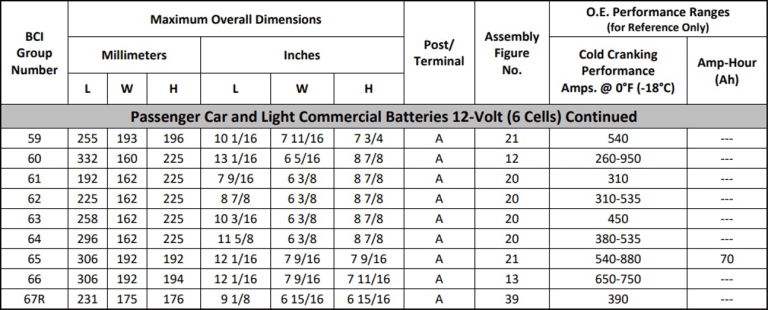
Group size (fit and terminals)
Group size controls the physical size and terminal layout. It must fit the tray and cables. Check your owner’s manual or the label on the old battery. Popular sizes include Group 24, 24F, 35, 48 (H6), 49 (H8), and 94R (H7).
- Measure the old battery if unsure.
- Make sure terminals are on the correct side (left/right positive).
Cold Cranking Amps (CCA)
CCA measures how well the battery starts the car in cold weather. Use the same or higher CCA than factory spec. More CCA helps in winter, but do not trade away quality for a bigger number on a cheap brand.
- In cold states, CCA matters more.
- AGM often offers strong CCA with better durability.
Reserve Capacity (RC)
RC is how long the battery can power the car if the alternator fails. Higher RC is better for heavy electrical loads, or if you often idle with lights, stereo, or accessories on.
- Look for RC close to or above OEM rating.
Type: Flooded, AGM, or EFB
Match the vehicle’s needs. Start-stop systems usually require EFB or AGM. Many European cars and newer vehicles prefer AGM due to heat and electrical demand.
- Standard cars: Flooded is fine; AGM is an upgrade.
- Start-stop cars: Use EFB or AGM as specified.
Warranty and date code
Warranties run 2–5 years. More important than a long warranty is buying a fresh battery. The date code tells you when it was made. Fresher stock lasts longer.
- Pick a battery built within the last 3 months.
- Prorated warranties often refund only a portion—focus on quality first.
Brand and quality
Many brands come from a few major manufacturers. Choose a well-reviewed line. Quality control and materials matter. A solid AGM from a known maker often outlasts a bargain flooded unit.
- Read owner reports and independent tests.
- Consider Consumer Reports testing for consistent, lab-based ratings.
How to replace a car battery safely (step-by-step)
Swapping a battery is easy if you follow safety steps. Take your time. Keep metal tools away from both terminals at once. Save your radio code or settings if needed.
- Park on level ground. Turn off engine and accessories. Wear gloves and glasses.
- Take a photo of the terminals and hold-down for reference.
- Disconnect negative (–) terminal first. Then positive (+).
- Remove the hold-down bracket. Lift the battery straight up.
- Clean the tray and clamps. Neutralize corrosion with baking soda and water.
- Place the new battery. Install hold-down snug, not too tight.
- Connect positive (+) first, then negative (–). Tighten firmly.
- Apply terminal protectant or dielectric grease to reduce corrosion.
- Start the car. Check for secure fit and stable voltage.
- If your car has a battery sensor (IBS) on the negative cable, do not damage it. Some cars need a battery registration with a scan tool after replacement.
Jump-start the right way (and stay safe)
Jump-starts are simple, but a wrong move can spark or damage electronics. Follow the order below. If the battery is frozen or leaking, do not jump it.
- Park donor car close. Both ignitions off. Set parking brakes.
- Red clamp to dead battery positive (+).
- Red clamp to donor battery positive (+).
- Black clamp to donor battery negative (–).
- Black clamp to a clean, unpainted metal ground on the dead car (not the negative post).
- Start donor car. Let it run 2–3 minutes.
- Start the dead car. If it starts, let both run 3–5 minutes.
- Remove cables in reverse order. Keep clamps from touching.
- Use a lithium jump pack for a safer, faster solo start. Keep it in your trunk.
- After a jump, drive for 20–30 minutes to recharge. Then test the battery.
Prevent breakdowns: a simple maintenance plan
A few small habits can double battery life. Keep it clean, charged, and secure. Plan checks around oil change intervals so you do not forget.
- Every month: Check terminals for looseness and corrosion.
- Every 6 months: Test voltage after an overnight rest.
- After 3 years: Test at every service and before winter or summer heat.
- If stored: Use a smart maintainer. Avoid repeated deep discharges.
- Clean the battery top. Dirt can slowly leak current across terminals.
- Secure the hold-down to reduce vibration damage.
According to the U.S. Department of Energy, proper maintenance and timely testing can prevent many no-start events and improve reliability for everyday drivers.
according to the U.S. Department of Energy
Real-world scenarios and fixes
Here are common issues I see in the shop and on the roadside. Use these as quick guides. They show cause and action in plain terms.
- First cold snap, car cranks slow: Battery near end-of-life. Replace or charge and load test. Keep a jump pack handy.
- New battery dies in two days: Parasitic draw from dash cam or glovebox light. Rewire cam to switched power or fix the stuck switch.
- Battery fine, but stalls while driving: Alternator or belt issue. Test charging voltage. Replace alternator if undercharging.
- Weekend-only car: Battery keeps dying. Use a maintainer and drive 30 minutes weekly. Consider AGM if heat is also an issue.
Start-stop systems and modern charging
Start-stop cars place heavy loads on the battery. They need EFB or AGM to survive frequent restarts. Smart alternators also vary voltage to save fuel. Testing ranges are still similar, but behavior changes by temperature and load.
- If your car came with EFB/AGM, replace like-for-like.
- Some cars require battery registration so the computer knows the new battery’s profile.
Common myths about battery life
There is a lot of bad advice out there. Clear these up and you will make better choices. Your wallet will thank you.
- Myth: A battery that reads 12.0V is fine. Truth: That is very low. Charge now.
- Myth: Any battery will work if it fits. Truth: Type and CCA matter.
- Myth: Short trips are harmless. Truth: They age your battery fast.
- Myth: Only winter kills batteries. Truth: Heat is worse over time.
Heat vs. cold: what to expect
Heat ages batteries. Cold exposes weakness. Plan your checks with the seasons. Keep charge high before first freeze. Protect from heat in summer.
| Condition | Effect on Battery | What to Do |
|---|---|---|
| Summer heat wave | Electrolyte loss, plate corrosion | Park in shade; check water level if serviceable; consider AGM |
| Winter cold snap | Lower cranking power, thicker oil | Keep battery fully charged; test before winter; use correct oil grade |
| Desert driving | Severe heat stress | Plan 2–3 year replacement cycle; choose AGM; maintain terminals |
| Arctic climates | Hard starts common | Max CCA; block heater; strong maintainer for parked periods |
If your car won’t start right now: do this
Stuck in a lot or driveway? Use this fast plan. It covers the basics so you can get moving. Keep it simple and safe.
- Check lights: Are the dome and headlights dim or dead? Likely the battery.
- Inspect terminals: Tight and clean? If loose, snug them up.
- Try a jump-start: Use a jump pack or cables and a donor car.
- Once started: Drive 20–30 minutes. Then test resting voltage later.
- If it dies again soon: Battery or alternator problem—test both.
Understanding sulfation and recovery
Sulfation is crystal buildup on lead plates when a battery stays undercharged. Light sulfation can be reversed by a full, slow charge. Severe sulfation is not fixable.
- Use a smart charger with a recondition mode.
- If capacity does not return to 12.4–12.6V after charging, replace the battery.
Battery care for cars you rarely drive
Weekend cars and RVs need special care. Sitting kills batteries by slow self-discharge and parasitic draws. A little planning prevents headaches.
- Use a smart maintainer, not a trickle charger.
- Disconnect negative terminal if parked for weeks (note this may reset settings).
- Store in a cool, dry place. Heat speeds aging.
Warranties, core charges, and recycling
Most states charge a core fee you get back when you return the old battery. Always recycle. Lead-acid batteries are one of the most recycled products in the world.
- Keep the receipt and warranty card in your glove box.
- Recycle at the parts store. Never toss in trash.
The Environmental Protection Agency highlights how battery recycling protects health and keeps toxic materials out of landfills. Always choose a proper recycling path.
Troubleshooting: quick decision tree
Use this simple map to decide your next step. It blends tests from above into one flow. Keep it handy in your glove box.
- Resting voltage 12.6V+: Battery is good. If hard starting, check starter or connections.
- Resting voltage 12.2–12.5V: Charge overnight. Retest in morning.
- Resting voltage under 12.0V: Deeply discharged. Charge and load test. Replace if it won’t hold 12.4V+.
- Cranking voltage under 9.6V: Replace battery (after ensuring terminals are clean and tight).
- Running voltage under 13.5V: Alternator problem. Fix before replacing the battery.
- Battery dies after 1–2 days parked: Parasitic draw over 100 mA. Hunt the circuit and repair.
Common causes of early battery failure
Most “mystery” failures are not mysterious at all. They come from a few habits or hidden faults. Fix these to beat the odds and stretch life.
- Repeated short trips and idling with heavy loads
- Undercharging from a weak alternator or belt slip
- Loose or corroded battery terminals
- Always-on accessories creating parasitic draw
- Excessive heat with no shade or insulation
- Incorrect battery type in start-stop vehicles
AGM vs. flooded: which lasts longer?
AGM batteries usually last longer, especially in heat and vibration. They resist spills and deliver strong cranking power. They cost more but often pay back in years and reliability.
| Feature | Flooded Lead-Acid | AGM |
|---|---|---|
| Lifespan (typical) | 3–5 years | 4–6+ years |
| Vibration resistance | Moderate | High |
| Heat tolerance | Lower | Higher |
| Spill/leak risk | Higher | Low (sealed) |
| Cost | Lower | Higher |
| Best use | Budget, basic vehicles | Start-stop, high-demand, hot climates |
Battery testers: multimeter vs. conductance tester
A multimeter shows voltage. A conductance tester estimates health and CCA without a full discharge. Both help, but they answer different questions. For home use, a multimeter plus a charger is enough.
- Voltage + crank test = fast, useful snapshot
- Conductance test = a deeper health picture, handy if you service many cars
Signs you should replace now (don’t wait)
These are red flags. If you see them, plan a replacement before the next big trip or weather swing. It is cheaper than a tow.
- Battery age is 4+ years and cranks are slowing
- Repeated jump-starts in the past month
- Swollen case or strong sulfur smell
- Cranking voltage below 9.6V after full charge
- Voltage falls under 12.2V within 24 hours of charging
How long does a car battery last in different driving patterns?
Your routine shapes battery life more than you think. Match expectations to how you use your car. Then plan the right checkups and tools.
| Driving Pattern | Expected Life | Risks | What to Do |
|---|---|---|---|
| Daily highway commute (20+ minutes) | 4–6 years | Heat in summer | Test before heat waves; use AGM in hot regions |
| Short local trips (under 10 minutes) | 2–4 years | Undercharge, sulfation | Weekly 30-minute drive; use a maintainer |
| Rideshare or delivery | 3–5 years | High accessories use | Test quarterly; consider higher RC |
| Weekend-only car | 2–5 years | Parasitic draw, storage | Use maintainer; disconnect negative cable when parked long-term |
Winter prep checklist (fast start insurance)
Cold mornings stress even new batteries. Do a quick pre-winter routine to avoid a no-start on a workday. A little time now prevents a big hassle later.
- Test resting voltage and crank voltage
- Clean and tighten terminals and grounds
- Check alternator belt condition and tension
- Use the right oil viscosity for winter
- Keep a jump pack charged in the trunk
Summer prep checklist (beat the heat)
High heat kills batteries from the inside. Keep them cool and fully charged. Prepare before the first heat wave rolls in.
- Park in shade or a garage
- Inspect for swelling or acid smell
- Consider AGM in hot climates
- Rinse battery top dust and dirt
- Test charging voltage on a hot day
Safety tips you should never skip
Batteries can spark and release gas. Protect your eyes and hands. One minute of safety beats an ER visit or fried electronics.
- Wear eye protection and gloves
- Remove metal jewelry before working
- Work in a ventilated area
- Always disconnect negative first, reconnect negative last
- Keep flames and sparks away
EVs and hybrids: 12V battery still matters
Even in EVs and hybrids, the 12V battery powers computers, locks, and contactors. A weak 12V can strand you, even with a full traction battery. Treat it like any other car battery.
- Test the 12V annually or after 3 years of age
- Follow maker guidance for jump-start points
- Use a compatible charger; some EVs need special procedures
Why pro testing can be worth it
Shops use conductance testers and load banks to assess health under controlled conditions. Quick tests at parts stores can flag a dying battery free of charge. If you are unsure, a professional load test saves guesswork.
- Ask for printouts of test results
- Pair results with your own readings and symptoms
Records and reminders (save money long-term)
Track battery install date and test results. Set calendar reminders for checks. This simple habit reduces surprise failures and helps you claim warranty if needed.
- Write install date under the hood with a paint pen
- Save receipts and warranty info in the glove box
- Log voltage tests in a notes app
FAQs
How long does a car battery last on average?
Most last 3–5 years. In hot states, plan for 2–3. With good care in mild climates, 5–6 is possible.
What voltage should a good car battery have?
At rest, 12.6–12.8V is healthy. While cranking, aim to stay above 10.5V. With the engine running, 13.8–14.7V is normal.
Can I revive a dead battery?
Sometimes. If it is only discharged, a smart charger can bring it back. If it will not hold charge or is over 4 years old with symptoms, replace it.
How often should I test my battery?
Every 6 months after year 3, and before winter and summer. Test sooner if cranking slows or lights dim.
Is AGM worth it?
Yes for start-stop systems, hot climates, or rough roads. AGM lasts longer and resists vibration and heat better.
What kills car batteries the fastest?
Heat, undercharging from short trips, and parasitic drains. Loose or corroded terminals are also common culprits.
Will a higher CCA battery damage my car?
No. Higher CCA is fine. It gives more starting power. Just match the correct size, type, and quality.
Conclusion
So, how long does a car battery last? In real life, plan for 3–5 years. Heat and short trips cut that down. Smart habits extend it. Test resting and cranking voltage. Keep terminals clean and tight. Fix charging issues fast. When it is time to replace, choose the right type and size. Do this, and you will avoid the dreaded no-start and keep your car ready every day.
Check your battery this week. Take a quick voltage reading. If you see 12.2V or less, charge and retest. If cranking is slow or the battery is 4+ years old, plan a replacement now. Your future self—on a cold morning—will be glad you did.