This guide walks you through how to build a car stereo system for home use, covering everything from planning and parts selection to installation and troubleshooting. Whether you’re a beginner or an audio enthusiast, you’ll learn how to create a powerful, high-quality sound setup using car audio components in your living space.
How to Build Car Stereo System Like a Pro
So, you’ve got a killer car stereo system—or maybe you’re thinking about building one—and now you want to enjoy that same powerful sound at home. Great idea! Many car audio fans are surprised to learn that you can actually use car stereo components in your living room, garage, or home theater setup. It’s not only possible, but with the right approach, you can build a car stereo system that rivals high-end home audio.
In this guide, we’ll show you exactly how to build a car stereo system for home use, step by step. You’ll learn how to choose the right parts, wire everything safely, and get the best sound possible—all without frying your gear or blowing a fuse. Whether you’re reusing old car speakers or building a brand-new setup, this guide has you covered.
Step 1: Plan Your Car Stereo Home Setup
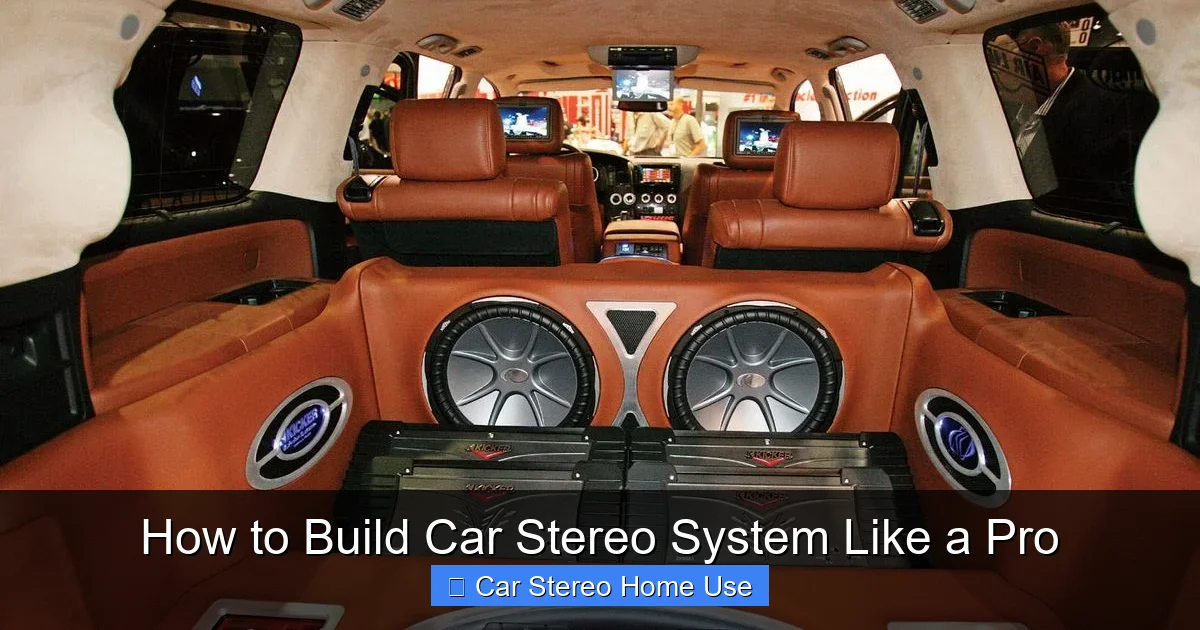
Visual guide about How to Build Car Stereo System Like a Pro
Image source: audiolover.com
Before you buy anything, take time to plan. Ask yourself:
– Where will the system go? (Living room, garage, basement?)
– What’s your budget?
– Do you want full surround sound or just great stereo?
– Will you use it for music, movies, or both?
A clear plan helps you avoid overspending or buying incompatible parts. For most home setups, a 2-channel (stereo) or 2.1 system (with a subwoofer) works best. Car audio components are designed for compact spaces, so they’re perfect for smaller rooms or DIY audio projects.
Set a Realistic Budget
Car audio can get expensive fast. Set a budget and stick to it. A basic home car stereo setup can cost as little as $150, while a high-end system might run $800 or more. Include costs for:
– Head unit (or alternative)
– Speakers
– Amplifier
– Subwoofer (optional)
– Power supply
– Wiring and accessories
Step 2: Choose the Right Components
Not all car audio gear is created equal. Here’s what to look for:
Head Unit (or Alternative)
The head unit is the brain of your system. In a car, it controls audio sources, volume, and EQ. But at home, you might not need a full car stereo deck.
Option 1: Use a car head unit with a 12V power supply. Many models have RCA outputs, Bluetooth, and USB—perfect for home use.
Option 2: Skip the head unit and use a Bluetooth receiver or streaming device (like a Chromecast Audio or Bluetooth DAC) connected directly to your amplifier.
Pro Tip: Look for a head unit with preamp outputs (RCA jacks) so you can connect it to an external amplifier for better sound.
Speakers
Car speakers come in different sizes: 6.5″, 6×9″, 5.25″, etc. For home use, 6.5″ coaxial speakers are a great starting point. They’re compact, easy to mount, and deliver solid sound.
Choose speakers with:
– RMS power handling that matches your amplifier
– Sensitivity of 88dB or higher (more efficient)
– Frequency response that covers 50Hz–20kHz for full-range sound
Amplifier
A good amplifier makes a huge difference. Car amps are compact and powerful—perfect for home use.
Look for:
– 2-channel or 4-channel amp (depending on speaker count)
– At least 50 watts RMS per channel
– Low Total Harmonic Distortion (THD) under 0.1%
– Built-in crossover for filtering bass to a subwoofer
Subwoofer (Optional but Recommended)
For deep bass, add a powered subwoofer or a separate sub + amp combo. A 10″ or 12″ sub in a sealed box works well in most rooms.
Step 3: Get the Right Power Supply
This is the most important—and often overlooked—step. Car audio runs on 12V DC power, but your home outlet delivers 120V AC. You can’t plug a car amp directly into the wall.
Option 1: 12V DC Power Supply
Buy a regulated 12V DC power supply (also called a “bench power supply” or “switching power supply”). Look for one that matches your system’s total current draw.
How to calculate: Add up the RMS wattage of all amps. Divide by 12 to get amps. Add 20% for safety.
Example: A 200-watt amp needs about 17 amps (200 ÷ 12 = 16.7). Get a 20-amp power supply.
Option 2: Use a Car Battery (Temporary)
You can test your system with a car battery, but it’s not practical for long-term home use. Batteries drain quickly and need recharging.
Option 3: AC-to-DC Inverter
A power inverter converts 120V AC to 12V DC. Choose one with enough wattage and clean output (pure sine wave is best).
Warning: Cheap inverters can cause noise and damage sensitive electronics. Stick to reputable brands.
Step 4: Wire It All Together
Proper wiring ensures clean sound and prevents fires or shorts.
Use the Right Wire Gauge
– Power wire: 8–4 AWG (depending on amp power and distance)
– Speaker wire: 16–14 AWG
– RCA cables: Shielded, high-quality
Connect the Components
1. Connect the power supply to the amplifier’s +12V and ground terminals.
2. Run RCA cables from the head unit (or Bluetooth receiver) to the amp’s inputs.
3. Connect speakers to the amp’s outputs using proper polarity (+ to +, – to –).
4. If using a subwoofer, connect it via the amp’s sub output or a separate mono amp.
Grounding Tips
– Use a solid ground point on the amplifier.
– Avoid ground loops by keeping power and signal wires separate.
– Use star grounding if you have multiple amps.
Step 5: Mount and Position Your Speakers
Where you place your speakers affects sound quality more than almost anything else.
Front Speakers
Place them at ear level, angled toward the listening position. Avoid corners or walls that cause boomy bass.
Subwoofer Placement
Try the “subwoofer crawl”: place the sub in your listening spot, play bass-heavy music, and crawl around the room. Where the bass sounds best, that’s where the sub should go.
Use Speaker Stands or Wall Mounts
Car speakers aren’t designed to sit on shelves. Use stands, brackets, or build enclosures for better sound and safety.
Step 6: Test and Tune Your System
Before you call it done, test everything.
Power On Safely
Turn on the power supply first, then the head unit. Increase volume slowly to avoid speaker damage.
Check for Noise
Listen for hum, buzz, or distortion. If you hear noise:
– Check ground connections
– Keep RCA cables away from power wires
– Use ferrite cores on cables if needed
Adjust EQ and Crossovers
Use the head unit or amp’s EQ to balance sound. Set the low-pass filter on the sub amp to around 80Hz to blend with main speakers.
Troubleshooting Common Issues
No Sound?
– Check power connections
– Verify input source is selected
– Test speakers with another amp
Distorted Sound?
– Lower the volume
– Check if speakers are blown
– Ensure amp isn’t overheating
Humming or Buzzing?
– Re-check grounding
– Use shielded cables
– Try a ground loop isolator
Overheating Amplifier?
– Ensure proper ventilation
– Don’t exceed RMS power ratings
– Use a fan if needed
Final Tips for Pro-Level Sound
– Use quality components: Cheap gear sounds cheap.
– Keep it clean: Dust and moisture can damage electronics.
– Upgrade over time: Start simple, then add better speakers or amps.
– Enjoy the process: Building your own system is half the fun!
With the right parts and a little patience, you can build a car stereo system that delivers concert-level sound at home. It’s a rewarding project that combines DIY spirit with high-performance audio.

