Yes, a car stereo can kill your battery—especially if it’s left on while the engine is off or has faulty wiring. Modern stereos with amplifiers, subwoofers, and constant memory draw small amounts of power even when idle, which over time can drain your battery completely.
Key Takeaways
- Parasitic drain is real: Even when off, some car stereos draw a small current that can deplete your battery over days or weeks.
- Aftermarket systems are bigger culprits: Upgraded stereos with amps and subwoofers often pull more power than factory units.
- Faulty wiring or grounding issues: Poor installation can cause constant power draw or short circuits that drain the battery.
- Battery age matters: Older batteries (3+ years) are more vulnerable to slow drains and may not hold a charge as well.
- Warning signs include slow cranking, dim lights, or a dead battery after sitting: These indicate possible stereo-related drain.
- Prevention includes using a multimeter to test draw, installing a capacitor, or adding a master switch: Simple fixes can save you from being stranded.
- Always turn off the stereo when parking: Even a few hours of playback with the engine off can start the drain process.
Quick Answers to Common Questions
Can a car stereo kill a battery if it’s turned off?
Yes, even when turned off, some stereos draw a small amount of power to maintain memory, clock, or Bluetooth connectivity. Over time, this parasitic drain can kill a weak or old battery.
How much power does a car stereo draw when off?
A factory stereo typically draws 0.02 to 0.05 amps when off. Aftermarket systems with amps can draw 0.1 to 0.5 amps or more, significantly increasing drain.
How can I tell if my stereo is draining the battery?
Signs include a dead battery after the car sits, slow cranking, dim lights, or a stereo display that stays on. Use a multimeter to test for parasitic drain above 50 milliamps.
Can a bad ground wire cause battery drain?
Yes, a loose or corroded ground wire can cause erratic behavior and increased power draw, leading to battery drain even if the stereo appears off.
Should I disconnect my stereo when not using the car?
If your car will be parked for more than a week, consider using a master switch or unplugging the stereo to prevent parasitic drain, especially with high-powered systems.
📑 Table of Contents
- Can a Car Stereo Kill a Battery? The Surprising Truth
- How Car Stereos Drain Your Battery
- Signs Your Car Stereo Is Draining the Battery
- Common Causes of Stereo-Related Battery Drain
- How to Prevent Your Car Stereo from Killing the Battery
- When to Call a Professional
- Conclusion: Yes, Your Car Stereo Can Kill Your Battery—But You Can Stop It
Can a Car Stereo Kill a Battery? The Surprising Truth
You love your car’s sound system—crisp highs, deep bass, and seamless Bluetooth connectivity. But have you ever walked out to your car after a weekend away only to find it won’t start? Before you blame the cold weather or an old battery, consider this: your car stereo might be the silent culprit.
Yes, it’s true—your car stereo can kill your battery. While factory-installed systems are designed to minimize power draw, aftermarket stereos or poorly installed units can quietly drain your battery even when the car is off. This phenomenon, known as “parasitic drain,” happens when electronics continue to pull small amounts of power from the battery long after the ignition is turned off.
It’s not just about blasting music with the engine off (though that definitely doesn’t help). Even when the stereo appears off, components like amplifiers, memory presets, clock displays, and Bluetooth modules may still be drawing current. Over time, this tiny but constant drain can leave you with a dead battery—especially if your car sits unused for days.
How Car Stereos Drain Your Battery
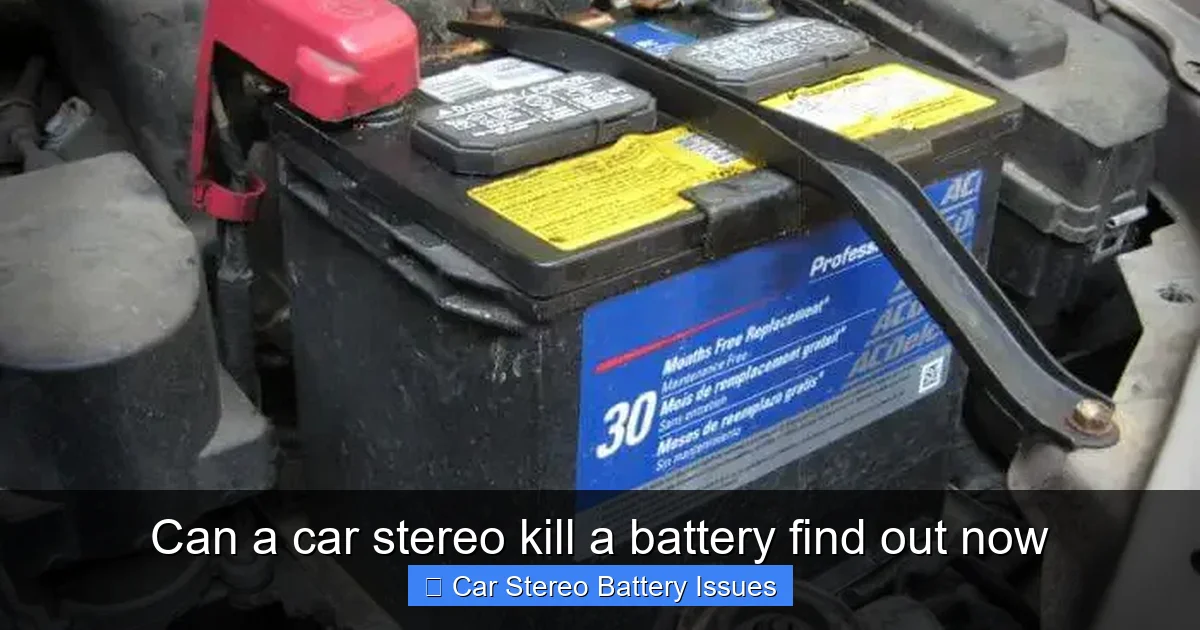
Visual guide about Can a car stereo kill a battery find out now
Image source: thepowerfacts.com
To understand how a car stereo can kill a battery, it helps to know how car electrical systems work. Your car’s battery powers everything when the engine isn’t running. Once the engine starts, the alternator takes over, recharging the battery and powering the electronics. But when the car is off, the battery is the only source of power—and it has limits.
Most car batteries are rated around 48–70 amp-hours (Ah), meaning they can deliver about 1 amp of power for 48 to 70 hours before going flat. A typical factory stereo might draw 0.02 to 0.05 amps when off—just enough to keep the clock and radio presets alive. That seems tiny, right? But over a week, that’s 3.36 to 8.4 amp-hours. If your battery is already weak or old, that’s enough to push it over the edge.
Aftermarket stereos are a different story. High-powered systems with built-in amplifiers, subwoofers, or external amps can draw significantly more power—sometimes 0.1 to 0.5 amps or more—even in standby mode. Some cheap or poorly designed units lack proper power management, meaning they never truly “turn off.”
Parasitic Drain Explained
Parasitic drain refers to any electrical device that continues to draw power from the battery when the car is off. It’s called “parasitic” because it feeds off the battery like a parasite, slowly weakening it over time.
Common sources include:
– Car alarms
– GPS trackers
– Phone chargers left plugged in
– Interior lights that don’t turn off
– And yes—car stereos
A healthy car should have a parasitic drain of less than 50 milliamps (0.05 amps). If it’s higher, something is drawing too much power. A faulty stereo is one of the most common causes.
Aftermarket vs. Factory Stereos
Factory stereos are engineered to work seamlessly with your car’s electrical system. They’re designed to enter a low-power “sleep” mode when the ignition is off, minimizing drain. They also integrate with the car’s wiring harness, reducing the risk of installation errors.
Aftermarket stereos, on the other hand, vary widely in quality and design. While many are safe and efficient, others—especially budget models—may lack proper power-saving features. Some even have amplifiers that stay partially active, drawing power even when the stereo is off.
If you’ve recently upgraded your sound system and started having battery issues, the stereo is a prime suspect.
Signs Your Car Stereo Is Draining the Battery
How can you tell if your car stereo is the reason your battery keeps dying? Look for these warning signs:
– Your car won’t start after sitting for a few days
– The engine cranks slowly or struggles to turn over
– Interior lights are dim when you first get in
– The stereo display stays on or flickers when the car is off
– You hear a faint hum or hiss from the speakers even when the stereo is “off”
These symptoms suggest your battery is being drained by something—and the stereo is a likely candidate.
Testing for Parasitic Drain
The best way to confirm if your stereo is the culprit is to test for parasitic drain using a multimeter. Here’s a simple method:
1. Turn off the car and remove the key.
2. Disconnect the negative battery terminal.
3. Set your multimeter to measure DC current (amps).
4. Connect the multimeter between the negative terminal and the negative battery cable.
5. Wait 10–15 minutes for the car’s systems to “go to sleep.”
6. Read the current draw.
If the reading is above 50 milliamps, you have a parasitic drain. To find the source, start pulling fuses one by one. When the current drops significantly, you’ve found the circuit causing the issue—likely the stereo or amplifier.
Common Causes of Stereo-Related Battery Drain
Not all stereo-related battery drains are the same. Here are the most common causes:
Faulty Wiring or Poor Installation
Improper wiring is a major cause of battery drain. If the stereo’s power wire is connected directly to the battery without a relay or fuse, or if the ground wire is loose or corroded, it can create a constant drain.
For example, if the “constant 12V” wire (which keeps memory and presets alive) is accidentally connected to a switched power source, the stereo may never fully turn off. Or worse, a short circuit could develop, draining the battery rapidly.
Always have aftermarket stereos installed by a professional or follow the wiring diagram carefully. A loose ground can also cause erratic behavior and increased power draw.
Amplifiers That Don’t Turn Off
Many car stereos come with built-in amplifiers or are paired with external amps. These components can draw significant power—even when not in use.
Some amplifiers have a “remote turn-on” wire that should only activate when the stereo is on. If this wire is miswired or stuck in the “on” position, the amp stays powered, draining the battery.
Check your amp’s power light. If it’s on when the car is off, you’ve found your problem.
Memory and Clock Functions
Even factory stereos draw a small amount of power to keep the clock, radio presets, and user settings. This is normal—but if the stereo’s internal circuitry is faulty, this “keep-alive” current can increase dramatically.
For instance, a damaged capacitor or shorted circuit board can cause the stereo to draw 0.2 amps or more just to maintain memory. Over a week, that’s over 30 amp-hours—enough to kill a weak battery.
How to Prevent Your Car Stereo from Killing the Battery
The good news? You can take steps to protect your battery and enjoy your sound system without worry.
Turn Off the Stereo When Parking
It sounds obvious, but many people leave their stereos on while parked—especially if they’re using Bluetooth or USB devices. Even a few hours of playback with the engine off can start the drain process.
Make it a habit to turn off the stereo completely before turning off the engine. If your stereo has a “sleep” or “auto-off” feature, enable it.
Install a Master Power Switch
For peace of mind, consider installing a master switch on the stereo’s power line. This allows you to physically disconnect the stereo from the battery when the car is parked for long periods.
It’s a simple and inexpensive upgrade that can prevent parasitic drain entirely. Some switches even come with key locks for added security.
Use a Capacitor for High-Power Systems
If you have a powerful sound system with an amplifier, consider adding a capacitor. A capacitor stores electrical energy and releases it quickly when needed, reducing the load on the battery.
While capacitors don’t eliminate parasitic drain, they help stabilize voltage and reduce strain on the battery during high-demand moments—like bass-heavy music.
Upgrade to a Smart Battery Isolator
A battery isolator or smart relay can automatically disconnect non-essential electronics when the battery voltage drops too low. This protects your battery from deep discharge while still allowing the stereo to function when the engine is running.
These devices are especially useful for cars with multiple accessories or frequent short trips.
Regular Maintenance and Battery Checks
Older batteries are more susceptible to drain. If your battery is more than three years old, have it tested regularly. Most auto parts stores offer free battery and charging system checks.
Also, keep your battery terminals clean and tight. Corrosion can increase resistance and make the battery work harder, reducing its overall lifespan.
When to Call a Professional
If you’ve tried the above steps and your battery still dies, it’s time to consult a professional. A certified car audio technician or mechanic can:
– Test for parasitic drain accurately
– Inspect wiring and grounding
– Diagnose faulty components
– Recommend upgrades or replacements
Don’t ignore persistent battery issues. A failing battery or charging system can lead to more serious problems down the road.
Conclusion: Yes, Your Car Stereo Can Kill Your Battery—But You Can Stop It
So, can a car stereo kill a battery? Absolutely. Whether it’s a factory unit with a glitch or an aftermarket system with poor wiring, your stereo can silently drain your battery over time. But with awareness and a few preventive measures, you can enjoy your music without worrying about being stranded.
Remember: parasitic drain is real, but manageable. Turn off your stereo when parked, check your wiring, test for excessive current draw, and maintain your battery. A little attention goes a long way in keeping your car—and your sound system—running smoothly.
Your car stereo should enhance your drive, not ruin it. Stay informed, stay charged, and keep the music playing—responsibly.
🎥 Related Video: IS YOUR MUSIC SYSTEM DRAINING YOUR CAR BATTERY? #battery #drain #marutisuzuki #carandroid
📺 Raju Radios
celerio2021 battery draining issue overnight battery draining issue in car..watch full video #subscribe #subscribenow …
Frequently Asked Questions
Can a car stereo kill a battery overnight?
It’s unlikely unless the stereo has a major fault or is left playing with the engine off. Most factory stereos draw too little power to kill a healthy battery in one night.
Do all car stereos drain the battery?
All stereos draw a small amount of power to maintain settings, but only faulty or high-powered units typically cause significant drain that leads to a dead battery.
Can a capacitor prevent battery drain from a stereo?
A capacitor helps stabilize voltage and reduce strain during high power use, but it doesn’t stop parasitic drain. It’s best used with amplifiers, not as a drain solution.
How do I stop my car stereo from draining the battery?
Turn off the stereo when parked, ensure proper wiring, test for parasitic drain, and consider a master switch or battery isolator for long-term protection.
Is it safe to leave a car stereo on while the engine is off?
It’s not recommended. Even a few hours of playback can drain the battery, especially in cold weather or with older batteries.
Can a new car stereo cause battery problems?
Yes, if it’s poorly installed, has a defective component, or draws excessive power in standby mode. Always have new stereos installed by a professional.

