If your car stereo is draining your battery fast, it’s likely due to a parasitic draw, faulty wiring, or an outdated head unit. Left unchecked, this can leave you stranded with a dead battery. The good news? Most causes are fixable with simple diagnostics and upgrades.
You hop into your car one morning, turn the key, and—nothing. The engine won’t start. You jump it, and it runs fine… until the next morning. Same story. You start wondering: *Why is my car stereo draining my battery fast?* It’s a frustrating cycle, but you’re not alone. Thousands of drivers face this exact issue every year, often blaming the battery or alternator when the real problem lies in the audio system.
Car stereos, especially modern ones with Bluetooth, touchscreens, and built-in amplifiers, are power-hungry devices. While they’re designed to turn off when the ignition is off, many still draw a small amount of current—called a “parasitic draw”—to keep memory settings, clocks, or remote sensors active. Normally, this draw is minimal (under 50 milliamps). But when something goes wrong—like a short circuit, faulty wiring, or a malfunctioning component—that tiny trickle becomes a flood, draining your battery overnight.
The good news? Most stereo-related battery drain issues are preventable and fixable. With a little know-how and the right tools, you can stop your car stereo from stealing your battery’s juice and get back to enjoying your favorite tunes without fear of a dead start.
Key Takeaways
- Parasitic draw is the #1 culprit: Even when off, some stereos keep circuits active, slowly draining your battery overnight.
- Faulty or outdated wiring can cause power leaks: Damaged insulation or poor connections create unintended current paths.
- Aftermarket stereos often draw more power: High-end systems with amplifiers and subwoofers need proper installation to avoid battery drain.
- A weak or aging battery can’t handle the load: Even a small draw can kill an old battery faster than a new one.
- Always test with a multimeter: This simple tool helps pinpoint exactly how much power your stereo is using when the car is off.
- Professional installation prevents problems: DIY setups often skip grounding or fuse checks, leading to hidden battery drain.
- Regular maintenance saves time and money: Check connections, fuses, and battery health every few months.
Quick Answers to Common Questions
Can a car stereo drain the battery when the car is off?
Yes, if it has a parasitic draw. Most stereos use a small amount of power to maintain settings, but excessive draw (over 50mA) can drain the battery overnight.
How do I test if my stereo is draining the battery?
Use a multimeter to measure current draw at the battery. Disconnect the negative terminal, connect the meter in series, and check the reading after the car sleeps.
Will disconnecting the stereo fix the battery drain?
Temporarily, yes—but only if the stereo is the source. Reconnect it carefully and fix the root cause, like faulty wiring or a stuck relay.
Can a bad ground cause battery drain?
Absolutely. A poor ground connection creates resistance, leading to heat, voltage drops, and unintended current paths that drain the battery.
Should I replace my car stereo if it’s draining the battery?
Not necessarily. Try rewiring or checking fuses first. But if the unit is old or damaged, upgrading to a newer, more efficient model may be the best long-term fix.
📑 Table of Contents
What Causes Car Stereo Battery Drain?
The root of the problem usually boils down to one of three things: excessive parasitic draw, poor installation, or component failure. Let’s break them down.
Parasitic Draw: The Silent Battery Killer
Even when your car is off, some electrical systems remain active. Your stereo might keep its clock running, save your radio presets, or stay ready for a remote control signal. This is normal—but only if the draw is small. A healthy system should use less than 50mA (milliamps) when idle.
If your stereo is pulling 100mA or more, it’s a red flag. Over 8–12 hours, that extra draw can drain a 12V car battery enough to prevent starting. Common causes include:
– A stuck relay in the stereo’s power circuit
– A malfunctioning memory backup circuit
– A short in the wiring harness
For example, a friend once installed a new head unit and noticed his battery died every weekend. He used a multimeter and found a 200mA draw—four times the safe limit. Turns out, the stereo’s “memory” wire was incorrectly connected to a constant 12V source instead of a switched one, keeping the unit partially awake.
Poor or DIY Installation
Aftermarket stereos are popular upgrades, but they require careful wiring. Many DIY installers skip critical steps like proper grounding, fuse protection, or using the correct wire gauges. This can lead to:
– Loose connections that spark or overheat
– Ground loops that create unintended current paths
– Overloaded circuits that backfeed into the battery
One common mistake? Connecting the stereo’s power wire directly to the battery without an inline fuse. If a short occurs, it can drain the battery rapidly and even pose a fire risk.
Faulty Components or Aging Hardware
Even factory-installed stereos can fail over time. Capacitors degrade, circuits corrode, and internal relays stick. An older stereo might start drawing excess power simply because it’s worn out.
If your car is more than 10 years old and you’ve never replaced the head unit, it might be time for an upgrade. Newer models are more energy-efficient and include better power management features.
How to Diagnose a Stereo-Related Battery Drain
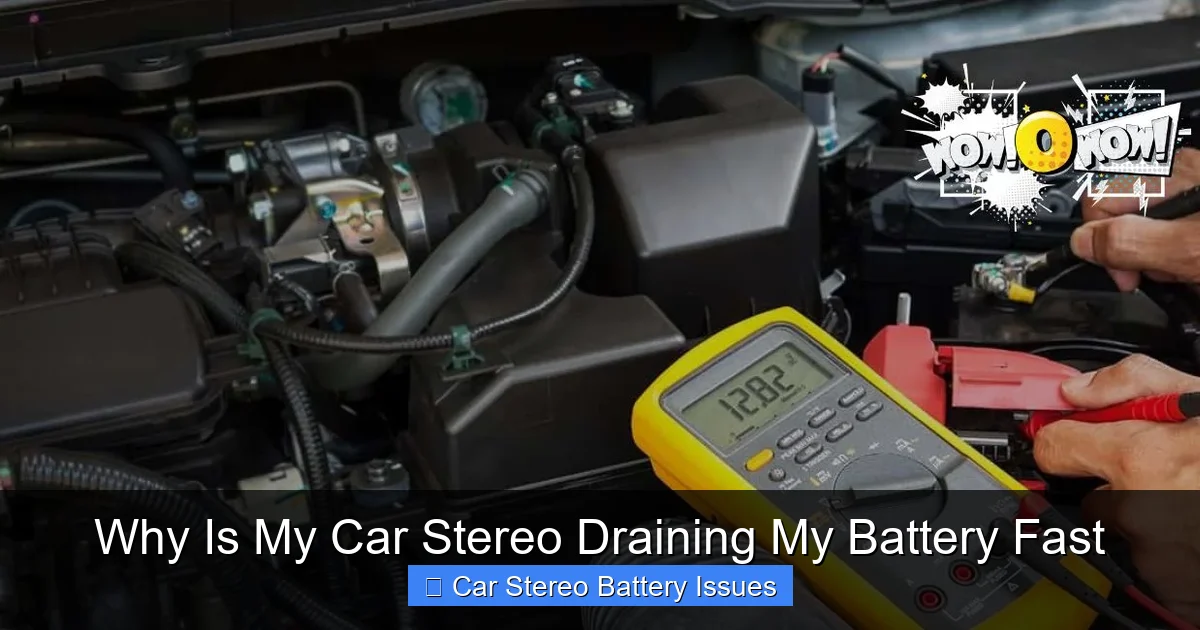
Visual guide about Why Is My Car Stereo Draining My Battery Fast
Image source: wowowow.com
Before you rip out your stereo or replace your battery, it’s important to confirm the source of the drain. Here’s a step-by-step method to test it safely.
Step 1: Rule Out Other Causes
First, make sure the problem isn’t something else—like a trunk light staying on, a faulty alternator, or a parasitic draw from another device (phone charger, dash cam, etc.). Start by:
– Turning off all accessories
– Removing any aftermarket devices
– Checking for interior lights that stay on
Step 2: Use a Multimeter to Test Parasitic Draw
This is the gold standard for diagnosing battery drain. Here’s how:
1. Turn off the car and remove the key.
2. Disconnect the negative battery terminal.
3. Set your multimeter to measure DC current (amps).
4. Connect the multimeter between the negative terminal and the negative cable.
5. Wait 10–15 minutes for the car’s systems to “go to sleep.”
6. Read the current draw.
If the reading is above 50mA, start pulling fuses one by one (starting with the radio fuse) while watching the multimeter. When the draw drops significantly, you’ve found the culprit circuit.
Step 3: Isolate the Stereo
Once you’ve confirmed the stereo is the source, check:
– Is the stereo fully off? Some units have a “standby” mode.
– Are all wires properly connected? Loose ground wires are a common issue.
– Is there visible damage to the wiring harness?
A practical tip: If you have a spare fuse, try replacing the radio fuse. A blown or weak fuse can sometimes cause erratic behavior.
Common Fixes for Stereo Battery Drain
Once you’ve identified the issue, here are the most effective solutions.
Rewire or Reconnect the Stereo Properly
If the stereo was installed incorrectly, revisiting the wiring diagram is essential. Key points:
– The **yellow wire** (constant 12V) should only power memory functions.
– The **red wire** (switched 12V) should only receive power when the ignition is on.
– The **black wire** (ground) must be securely connected to bare metal.
A loose ground is one of the most overlooked issues. Even a slightly corroded connection can cause resistance, leading to heat and power loss.
Install an Inline Fuse
If your stereo’s power wire isn’t fused, add one. A 10–15 amp inline fuse near the battery protects against shorts and reduces fire risk. It’s a cheap, easy fix that can save your car.
Upgrade to a Modern, Energy-Efficient Head Unit
Older stereos, especially those with CD players and large displays, consume more power. Newer models use LED screens, efficient processors, and better power management. Look for units with “low standby current” in the specs.
For example, a 2023 Pioneer or Sony head unit might draw only 20mA when off, compared to 80mA or more on a 2005 model.
Add a Battery Isolator or Smart Cutoff Switch
For high-end audio systems with amplifiers and subwoofers, consider a battery isolator. This device cuts power to the stereo when the battery voltage drops below a certain level (e.g., 11.8V), preventing a deep discharge.
Alternatively, a manual cutoff switch lets you physically disconnect the stereo when the car is parked for long periods.
Preventing Future Battery Drain
An ounce of prevention is worth a pound of cure. Here’s how to keep your stereo from draining your battery again.
Regular Maintenance Checks
Every 3–6 months:
– Inspect wiring for fraying or corrosion
– Tighten all connections
– Test battery voltage (should be 12.6V when off)
– Clean battery terminals with a wire brush
Avoid Overloading the Electrical System
Adding multiple amplifiers, subwoofers, or LED lights can overwhelm your car’s alternator and battery. If you’ve upgraded your audio system, consider:
– Upgrading to a high-output alternator
– Adding a secondary battery
– Using a capacitor to buffer power spikes
Use a Battery Tender for Long-Term Parking
If you don’t drive your car often (e.g., classic cars or weekend vehicles), use a smart battery maintainer. It keeps the battery charged without overcharging, preventing slow drains from killing it.
When to Call a Professional
Some issues are best left to the experts. Call a certified car audio technician if:
– You’re not comfortable working with electrical systems
– The multimeter shows inconsistent readings
– You suspect a short deep in the wiring harness
– Your car has a complex CAN bus system (common in newer models)
A professional can perform a full parasitic draw test, trace hidden shorts, and ensure your stereo is installed to code.
Conclusion
So, why is your car stereo draining your battery fast? More often than not, it’s due to a parasitic draw caused by faulty wiring, poor installation, or an aging unit. The good news is that with the right tools and a bit of patience, most of these issues are fixable at home. Start with a multimeter test, check your wiring, and consider upgrading to a modern head unit if needed.
Remember: a healthy car stereo should enhance your drive, not leave you stranded. By staying proactive and understanding how your audio system interacts with your car’s electrical system, you can enjoy great sound without sacrificing reliability. Keep your connections tight, your fuses intact, and your battery charged—and you’ll never have to worry about a dead start again.
🎥 Related Video: IS YOUR MUSIC SYSTEM DRAINING YOUR CAR BATTERY? #battery #drain #marutisuzuki #carandroid
📺 Raju Radios
celerio2021 battery draining issue overnight battery draining issue in car..watch full video #subscribe #subscribenow …
Frequently Asked Questions
Why does my car battery die after installing a new stereo?
This often happens due to incorrect wiring—like connecting the constant power wire to a switched source or skipping the ground. Always follow the wiring diagram and use a fuse.
How much power should a car stereo draw when off?
A healthy stereo should draw less than 50 milliamps (mA) when the car is off. Anything over 100mA is considered excessive and can drain the battery.
Can a blown fuse cause battery drain?
Not directly, but a blown fuse might indicate an underlying short or overload that could be causing the drain. Replace the fuse and investigate the cause.
Do amplifiers drain the car battery?
Only when active. However, poorly wired amps or those with faulty remotes can stay partially on, creating a parasitic draw. Always use a relay and proper switching.
Is it safe to leave a car stereo on overnight?
No. Even if it’s off, leaving accessories powered can drain the battery. Always turn off the ignition and remove keys to ensure all systems shut down.
Can a weak battery make stereo drain worse?
Yes. An aging battery holds less charge, so even a small parasitic draw can deplete it faster. Test your battery’s health if you’re experiencing frequent drain.

