
Designing a car stereo system for the best sound doesn’t require professional installation—just smart planning and the right components. This guide walks you through choosing speakers, amplifiers, head units, and optimizing acoustics, even if you’re using your car stereo setup at home.
How to Design a Car Stereo System for Best Sound
If you’re passionate about music, there’s nothing quite like hearing your favorite tracks the way the artist intended—clear, powerful, and full of detail. Whether you’re upgrading your car’s audio for daily drives or building a mobile-inspired sound system for home use, designing a car stereo system for the best sound is both rewarding and achievable with the right approach.
This guide will walk you through every step—from selecting components to fine-tuning your setup—so you can enjoy rich, balanced audio whether you’re on the road or relaxing at home. You’ll learn how to choose the right head unit, speakers, amplifier, and accessories, plus how to install and tune everything for optimal performance.
Step 1: Define Your Goals and Environment
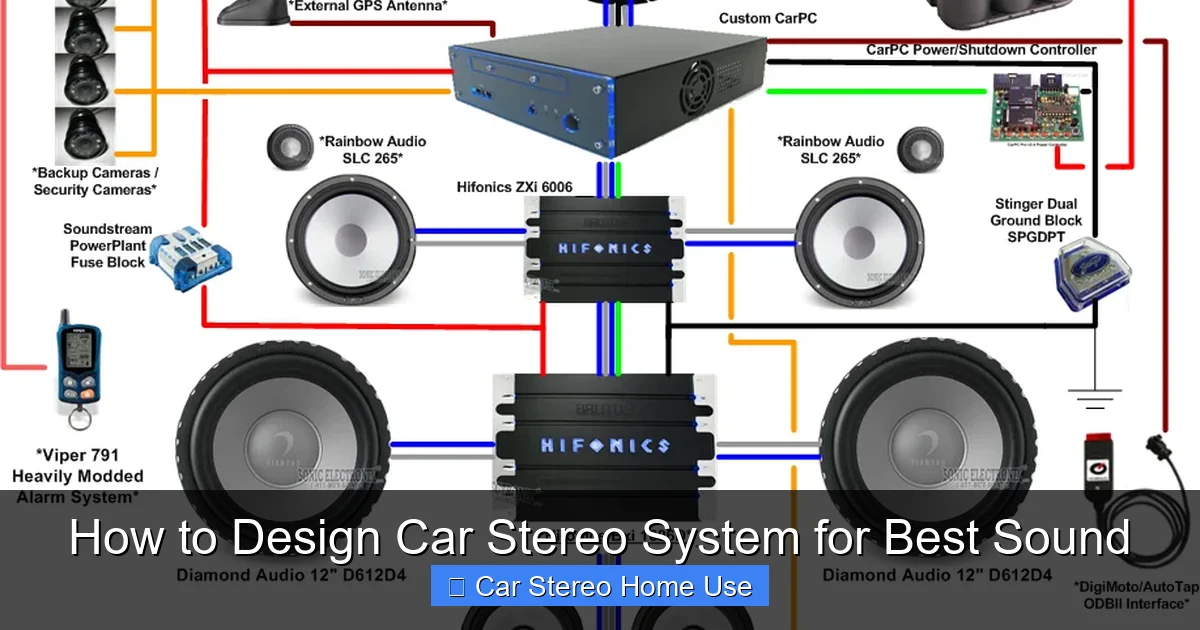
Visual guide about How to Design Car Stereo System for Best Sound
Image source: i.pinimg.com
Before buying anything, ask yourself: What do I want from my stereo system?
Are you looking for deep bass, crystal-clear vocals, or a balanced soundstage? Will the system live in your car, or are you adapting it for home use—like in a garage, workshop, or dedicated listening room?
For home use, you have more flexibility with power and speaker placement. You can use larger subwoofers or bookshelf speakers that wouldn’t fit in a car. But even in a car, thoughtful design can deliver impressive results.
Consider Your Listening Habits
- Do you mostly listen to rock, hip-hop, classical, or podcasts?
- Do you prefer loud, energetic sound or subtle, detailed playback?
- Will multiple people be listening, or is it just for you?
Your answers will guide your component choices. For example, hip-hop fans may prioritize strong bass, while classical listeners might focus on midrange clarity and imaging.
Step 2: Choose the Right Head Unit
The head unit—also called the stereo or receiver—is the control center of your system. It reads music from your phone, USB, or other sources and sends signals to your speakers and amplifier.
Look for These Features
- High-quality preamp outputs: These send clean signals to your amplifier. Aim for at least 2–4 volts.
- Built-in EQ and sound controls: Look for adjustable bass, treble, and balance, plus presets or custom EQ.
- Bluetooth and USB connectivity: Essential for streaming and charging devices.
- Compatibility with steering wheel controls: Important if you’re keeping your car’s original setup.
For home use, consider a car stereo head unit with RCA outputs so you can connect it to home speakers or a powered soundbar. Some models even support Wi-Fi or AirPlay.
Budget vs. Performance
Entry-level units ($50–$100) work fine for basic needs, but spending $150–$300 gets you better sound processing, more inputs, and improved build quality.
Step 3: Select the Right Speakers
Speakers are where the magic happens—they turn electrical signals into sound. Choosing the right ones is crucial.
Types of Car Speakers
- Coaxial speakers: All components (woofer, tweeter) in one unit. Great for factory replacements.
- Component speakers: Separate woofer, tweeter, and crossover. Offer better imaging and sound quality.
For best sound, go with component speakers if space allows. They let you place tweeters near ear level for better stereo imaging.
Match Speakers to Your Space
In a car, door speakers handle most of the sound. In a home setup, you might use floor-standing or bookshelf speakers powered by your car amplifier.
Check the speaker’s:
- Power handling (RMS): Should match your amplifier’s output.
- Sensitivity: Higher sensitivity (88dB+) means louder sound with less power.
- Frequency response: Look for a range that covers 20Hz–20kHz for full-range sound.
Step 4: Add an Amplifier for Power and Clarity
Even the best speakers sound flat without enough power. A dedicated amplifier boosts signal strength, reduces distortion, and improves dynamic range.
Why You Need an Amp
Factory head units often deliver only 10–20 watts per channel. Aftermarket amps provide 50–100+ watts, giving your speakers room to breathe.
Choosing the Right Amplifier
- Match channels to your setup: 2-channel for front speakers, 4-channel for front and rear, 5-channel if adding a subwoofer.
- Check RMS power: Should match your speakers’ recommended power range.
- Look for built-in crossovers: These help direct the right frequencies to the right speakers.
For home use, a compact 4-channel amp can power a pair of bookshelf speakers and a subwoofer, creating a mini home theater vibe.
Step 5: Install a Subwoofer for Deep Bass
If you love bass-heavy music, a subwoofer is a must. It handles low frequencies (below 80Hz) that regular speakers can’t reproduce well.
Subwoofer Options
- Powered subwoofers: Include a built-in amp—great for simplicity.
- Passive subwoofers: Need an external amp—more customizable.
For car use, compact 8″ or 10″ subs fit under seats or in trunks. For home, a 12″ sub in a sealed or ported box delivers room-filling bass.
Placement Tips
In a car, the trunk is common, but under-seat subs save space. At home, place the sub in a corner for bass reinforcement—but avoid overpowering the mix.
Step 6: Use Sound Deadening and Acoustic Treatment
Even the best gear sounds muddy in a noisy, reflective environment. Sound deadening reduces vibrations and outside noise, while acoustic treatment improves clarity.
Sound Deadening Materials
- Dynamat or Noico: Apply to doors, floor, and trunk to reduce panel rattles.
- Closed-cell foam: Use under carpet or on walls to absorb sound.
In a car, focus on doors and rear deck. At home, treat walls and corners with foam panels or bass traps to reduce echo.
Why It Matters
Less vibration means cleaner sound. You’ll hear more detail and less distortion, especially at higher volumes.
Step 7: Wire It Right
Poor wiring can ruin even the best system. Use the correct gauge wire to avoid voltage drop and overheating.
Wire Gauge Guide
- Up to 50 watts: 16–14 gauge
- 50–100 watts: 14–12 gauge
- 100+ watts: 12–10 gauge
Use high-quality RCA cables for signal transmission and secure all connections with crimp connectors or solder.
Power and Ground Wiring
Run power directly from the battery with an inline fuse. Ground to a clean, unpainted metal surface. Keep signal and power wires separated to avoid interference.
Step 8: Tune Your System for Best Sound
Installation is only half the battle—tuning makes the difference between “good” and “great” sound.
Set the Gain Correctly
Don’t max out the amp gain. Use a multimeter or test tone to set gain so the amp isn’t clipping. Clipping causes distortion and can damage speakers.
Adjust the Crossover
Set the high-pass filter on your amp to send only mid and high frequencies to your speakers (e.g., 80Hz and up). Set the low-pass filter on your subwoofer to handle only bass (below 80Hz).
Use the EQ Wisely
Boost or cut frequencies to suit your taste and environment. For example:
- Cut bass if the sound is boomy.
- Boost mids for clearer vocals.
- Reduce harsh highs if tweeters sound shrill.
Fine-Tune Speaker Placement
In a car, angle tweeters toward your ears. At home, position speakers at ear level and slightly toed-in for better imaging.
Troubleshooting Common Issues
Bass Sounds Weak
Check subwoofer phase—flip the + and – wires if needed. Ensure the crossover is set correctly and the sub isn’t overpowering the mids.
Distortion at High Volume
Likely caused by clipping. Lower the gain or volume. Make sure your amp and speakers are properly matched.
Hissing or Noise
Check RCA cables for damage. Keep them away from power wires. Ground loops can cause hum—try a ground loop isolator.
Speakers Not Working
Test each connection. Use a multimeter to check for continuity. Ensure fuses are intact.
Conclusion
Designing a car stereo system for the best sound is a blend of science and art. It starts with understanding your goals, choosing quality components, and installing them with care. Whether you’re building a system for your car or adapting it for home use, the principles remain the same: match your gear, reduce noise, and tune for balance.
With the right head unit, speakers, amplifier, and a little acoustic treatment, you can create a listening experience that rivals high-end home systems. Take your time, listen critically, and enjoy the process. Great sound is worth the effort.