Paint correction for used cars restores gloss by reducing swirls, haze, light scratches, and oxidation in the clear coat. It is usually the fastest way to make a pre-owned car look cleaner and newer without repainting.
Used-car paint often looks more tired than the rest of the vehicle, even when the body panels are straight and the car has been well maintained. Paint correction for used cars is the process of improving that dull, swirled, or hazy finish by removing or reducing visible defects in the clear coat so the paint reflects light more cleanly.
For many buyers and sellers, it is one of the fastest ways to make a pre-owned car look newer without repainting. Done well, it can restore gloss, sharpen color, and help a used car present better in photos, on the lot, or in the driveway.
- Best use: Improves dull, swirled, or oxidized used-car paint.
- Prep matters: Wash and decontaminate before polishing.
- Limits: Deep scratches and clear coat failure may need bodywork.
- Value: Helps cars look better for photos, sales, and daily driving.
- Safety: Thin or repainted panels deserve professional inspection.
What Paint Correction for Used Cars Actually Fixes in 2025
Paint correction is not a magic reset button, and it does not repair dents, rust, or deep chips. What it does well is improve the visible surface of the clear coat, which is usually where the tired look comes from on a used vehicle.
Swirl marks, oxidation, light scratches, and dull clear coat on pre-owned vehicles
The most common issues are swirl marks from improper washing, light scratches from towels or brushes, and oxidation that leaves paint looking chalky or faded. On many used cars, the clear coat also becomes dull from years of sun exposure, road grime, and automatic wash use.
These defects scatter light instead of reflecting it cleanly. That is why the car may look gray, cloudy, or uneven in bright sunlight even if the color itself is still in decent shape.
If the paint looks better in shade than in sun, you are probably seeing surface defects rather than a color problem.
Why used-car paint looks tired even when the body is in good shape
Used-car paint takes a beating from road film, wash mitt mistakes, bird droppings, tree sap, and abrasive dust. Over time, small marks build up until the finish loses depth and clarity.
That is why two cars of the same age can look completely different. One may have been hand-washed carefully, while another may have gone through years of rough washing and outdoor parking.
How to Tell If Your Used Car Needs Paint Correction or Just a Wash
Not every dull-looking car needs polishing. Sometimes a careful wash, decontamination, and wax or sealant can bring back enough shine for daily use.
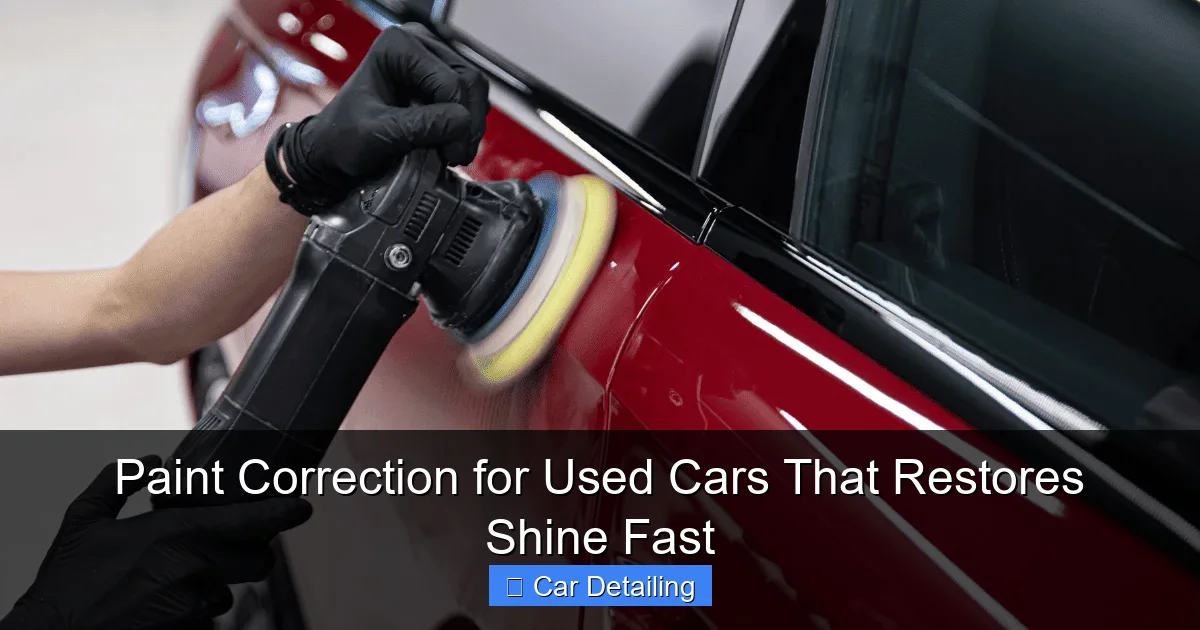
Visual guide about Paint Correction for Used Cars That Restores Shine Fast
Image source: eliteautoworksca.com
The key is to look closely at the paint under strong light before deciding whether correction is worth the time and cost.
Simple visual checks for haze, holograms, water spots, and transfer marks
Inspect the paint in direct sunlight or under a bright LED light. Haze looks like a cloudy film, holograms appear as arc-shaped buffer trails, and water spots often leave rough, etched circles that do not wash away easily.
Also look for transfer marks, which are usually paint or rubber from another surface. If the mark sits on top of the clear coat, it may be removable with careful polishing rather than a repaint.
- Wash the car first so dirt does not hide defects
- Inspect under sun or strong light
- Check for swirls, haze, and water spots
- Feel for roughness if the paint is clean
- Note any chips or deep scratches that polishing will not fix
When paint correction is the right choice for buyers, sellers, and daily drivers
Buyers often use paint correction to make a newly purchased used car feel cleaner and more cared for. Sellers use it to improve first impressions before listing, because gloss and clarity can change how a car photographs and how it is perceived in person.
Daily drivers can benefit too, especially if the paint is still structurally sound but looks neglected. If the goal is to improve appearance without committing to bodywork, correction is often the best middle ground.
For a proper surface prep before polishing, many owners also review a solid clay bar checklist for beginners smooth paint so contamination does not interfere with the finish.
Step-by-Step Paint Correction Process That Restores Shine Fast
Fast results come from good prep, not from rushing the machine. A used car can often improve dramatically with the right one-step polish, but the surface has to be cleaned and inspected first.
Inspection, decontamination, clay bar prep, and paint thickness awareness
Start by washing the car thoroughly, then decontaminate the paint to remove bonded grime, tar, and embedded fallout. If the surface still feels rough after washing, a clay bar or clay mitt can help create a smoother surface for polishing.
Paint thickness awareness matters because used cars may have repainted panels or thin clear coat from previous polishing. You do not need a lab measurement to know that caution is important, but a paint gauge and careful inspection can reduce risk when the vehicle has a mixed history.
Clay and polishing work best on clean paint. If the surface is contaminated, the pad can drag debris and create fresh marks.
One-step correction vs. multi-stage correction for faster results
One-step correction uses a product and pad combination that can remove light defects while adding gloss in a single pass. It is usually the fastest option for used cars with moderate swirls and mild haze.
Multi-stage correction is more thorough. It may involve a heavier compound first, followed by a finer polish to refine the finish. That approach can produce better results on neglected paint, but it takes more time and can remove more clear coat.
Machine polishing basics and why pad/product choice matters
Machine polishing is about matching the tool to the paint. A softer pad and lighter polish may be enough for a newer car with light wash marks, while a more aggressive pad and compound may be needed for oxidized or heavily swirled paint.
Speed, pressure, and working time also matter. Too much aggression can leave haze, while too little may not correct anything at all. This is why the same product can perform differently from one used car to another.
Do not keep polishing just because the paint is not perfect. Deep scratches, etching, and thin clear coat can become worse if you chase them too hard.
Best Results by Paint Condition: Practical Examples for Used Cars
The best correction plan depends on the car’s age, color, and condition. A light one-step polish may be enough for one vehicle, while another needs a more careful multi-stage approach.
Freshly purchased sedan with dealer-installed swirl marks
A sedan that looks glossy in the lot but shows circular swirls under sunlight is often a strong candidate for a one-step correction. These marks usually come from rushed washing, towel use, or dealership prep.
In many cases, a careful wash, clay treatment, and a light polish can dramatically improve the finish without making the process overly complicated. This is one of the quickest ways to make a used sedan look cleaner and newer.
Older SUV with oxidation and faded clear coat
An older SUV that has spent years outdoors may need more than a simple polish. Oxidation can make the paint look flat, and in some cases the clear coat may already be thinning or failing.
Correction may still help, but expectations should be realistic. If the clear coat is heavily damaged, polishing can improve gloss only to a point before repainting becomes the better option.
Black paint vs. white paint: why correction results look different
Black paint usually shows the biggest visual improvement because it reveals every swirl, haze mark, and polishing trail. When corrected well, it can look dramatically deeper and glossier.
White paint can still benefit a lot, but the difference may be subtler. The car may look cleaner, brighter, and more uniform, even if the before-and-after change is not as dramatic in photos.
Common Mistakes That Can Make Used-Car Paint Look Worse
Paint correction can improve a used car quickly, but mistakes can create new defects or reduce clear coat too aggressively. That is why technique matters as much as the product itself.
Using the wrong compound, pad, or polisher speed
An aggressive compound on a soft pad may leave haze, while a mild polish on a soft pad may not remove enough defects. The wrong machine speed can also generate excess heat or leave a weak correction result.
The safest approach is to test a small area first. If the result is good enough, there is no reason to move to a harsher setup.
Skipping decontamination before polishing
Polishing dirty paint is one of the fastest ways to create more marks. Embedded grit can act like sandpaper when the pad moves across the surface.
That is why washing alone is not always enough. If the paint feels gritty, decontamination should happen before any machine work begins. For readers who want a smoother prep routine, a safe clay bar process for a flawless finish can help reduce the chance of dragging contamination across the clear coat.
Overcorrecting thin paint or chasing deep scratches that won’t fully remove
Not every scratch is worth removing. If a mark catches a fingernail, it may be too deep to safely polish out completely, especially on a used car with unknown paint history.
Overcorrecting can create more risk than value. In those situations, improving the appearance of the surrounding paint is often smarter than trying to erase every last defect.
Paint Correction Cost, Time, and Value Comparison
The value of paint correction depends on the car’s condition and your goal. A quick polish can be worth it for a daily driver, while a more complete correction may make sense before a sale or trade-in.
DIY vs. professional detailing cost differences in 2025
DIY correction usually costs less in materials but more in learning time. It also carries a higher chance of uneven results if the paint is unfamiliar or the tools are not used correctly.
Professional detailing costs more, but it can save time and reduce risk, especially on dark paint or complex finishes. Pricing varies widely by location, vehicle size, and condition, so it is best to compare quotes rather than assume one fixed number.
Cost depends heavily on the car’s condition and the level of correction. A light refresh, a full correction, and a repaint are very different jobs.
When paint correction is worth it before selling or trading in a used car
If the car presents poorly in photos or under sunlight, correction can improve perceived value even when mechanical condition is unchanged. That matters because first impressions often influence how seriously a buyer or dealer evaluates the vehicle.
It is especially useful when the paint is tired but still salvageable. If the car already needs bodywork, however, correction may be a temporary visual improvement rather than a long-term fix.
Comparing quick polish, full correction, and repainting
A quick polish is best for light swirls and mild dullness. A full correction is better for heavier defects and more noticeable gloss loss, but it takes longer and should be done carefully.
Repainting is the most expensive and invasive option. It is usually reserved for severe clear coat failure, deep damage, or panels that no longer respond well to polishing.
| Option | Best For | Limit |
|---|---|---|
| Quick polish | Light swirls and haze | Won’t fix deeper defects |
| Full correction | Moderate to heavy surface wear | Takes more time and skill |
| Repainting | Severe clear coat failure | Highest cost and longest turnaround |
When to Call a Detailer: Expert Help and Safety Warnings
Some used cars are simple correction projects, but others need a trained eye before any machine touches the paint. That is especially true when the finish may already be thin, repainted, or damaged.
Warning signs of thin clear coat, repainted panels, or severe damage
Be cautious if the paint looks uneven, has obvious overspray, or shows color mismatch from panel to panel. These can be signs of previous repair work, which means the finish may not behave like original factory paint.
If polishing reveals primer, the clear coat may already be compromised. At that point, stop and assess whether spot repair or repainting is the safer route.
Why professional inspection matters for luxury, dark-colored, or high-value used cars
Luxury vehicles and dark colors often show defects more clearly, and they can also be less forgiving during correction. A small mistake on a black hood or a high-end finish is easier to see than on a lighter daily driver.
Professional inspection matters when the car is valuable, the paint history is unknown, or the owner wants the best possible finish without unnecessary risk. In those cases, the extra caution is often worth it.
If a panel has been repainted, polished aggressively before, or shows signs of clear coat failure, ask a professional before using a compound or cutting pad.
Final Recap: The Fastest Way to Bring Back Shine on a Used Car
Paint correction for used cars is one of the most effective ways to restore gloss fast when the paint is dull but still structurally sound. The best results come from good washing, proper decontamination, careful inspection, and choosing the least aggressive method that still improves the finish.
Key takeaways on restoring gloss, improving appearance, and protecting resale value
Used-car paint often looks tired because of swirls, oxidation, and surface contamination, not because the car is beyond saving. A smart correction process can make a big visual difference, especially before listing, trading, or simply enjoying the car again.
The main rule is simple: correct what can be safely improved, and leave deep damage or thin paint to a professional when needed. That approach gives you better shine, less risk, and a more confident result.
Frequently Asked Questions
It reduces visible defects like swirls, light scratches, haze, and oxidation in the clear coat. The goal is to restore gloss and make the paint reflect light more cleanly.
Usually not fully. If a scratch catches a fingernail or goes through the clear coat, polishing may only improve it rather than remove it.
Often yes, if the paint looks dull or swirled. Better gloss and cleaner photos can improve first impressions and help the car present better to buyers.
In many cases, yes. Decontaminating the paint first helps prevent embedded grit from being dragged across the surface during polishing.
It depends on the car’s condition, size, and correction level. A light one-step polish is faster, while a multi-stage correction takes more time.
Hire a professional if the paint may be thin, repainted, or severely damaged. It is also a smart choice for dark, luxury, or high-value vehicles where mistakes are easier to see.

